Sintered stone and quartz are both manufactured countertop materials, but they handle heat, sunlight and fabrication differently. Sintered surfaces generally offer an advantage where high heat resistance or exterior use is important. Engineered quartz can be a practical choice for an indoor kitchen when its design, care requirements and local fabrication options suit the project.
The best choice is the exact product that fits your use, layout and complete installed budget. Both can chip at vulnerable edges, both need properly planned support, and neither material name establishes every performance limit. This guide compares sintered stone vs quartz for everyday use and explains what to check before approving a slab or quotation.
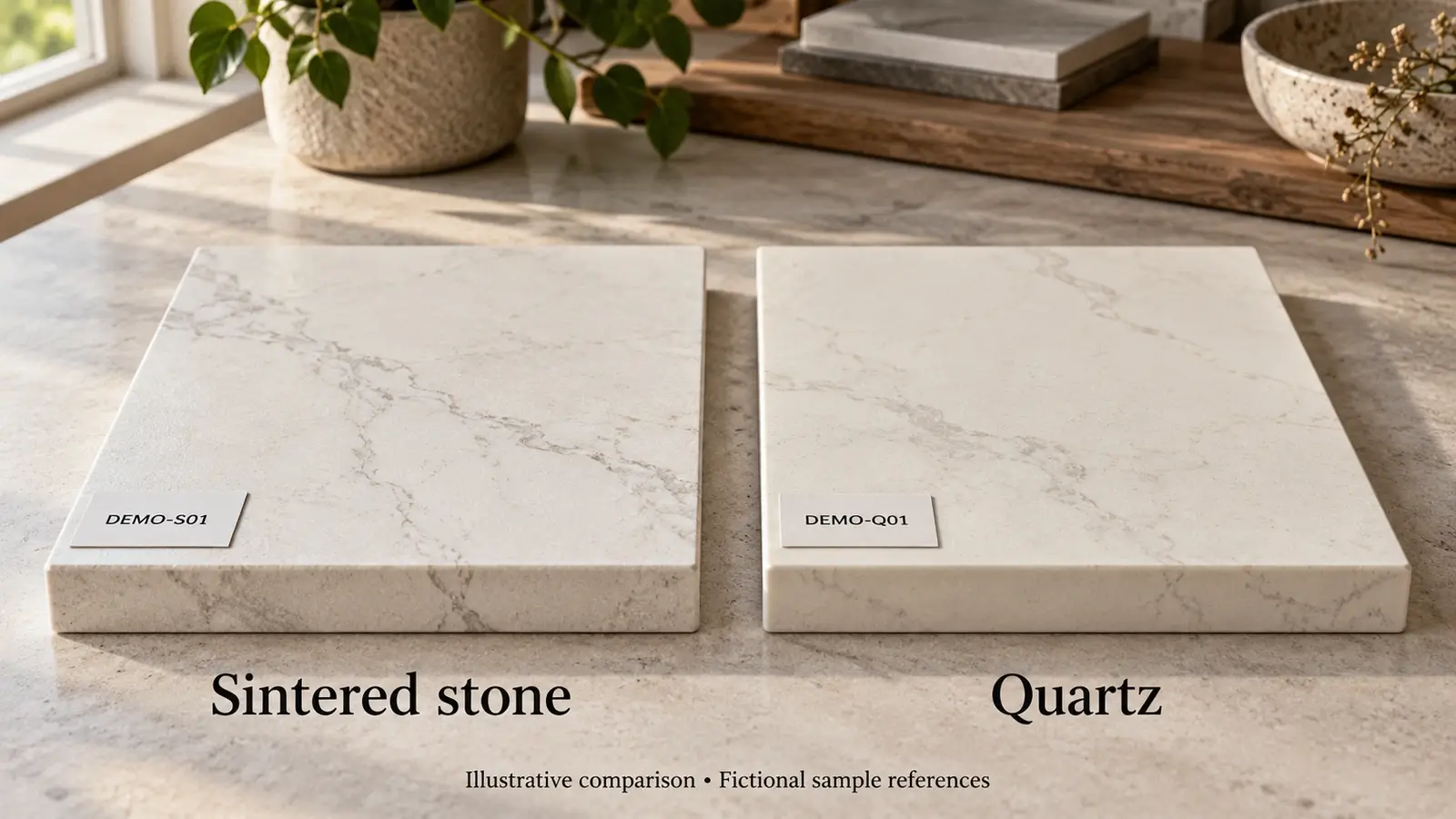
Sintered Stone vs Quartz at a Glance
| Detail | Sintered stone | Engineered quartz |
|---|---|---|
| Slab body | Minerals consolidated through high-temperature processing | Mineral aggregate with resin binder and pigments; formulations vary |
| Heat | Often a selection advantage; follow product care and appliance details | Protect from direct or sustained heat as the manufacturer directs |
| Sunlight and outdoors | Many products are marketed for exterior use; verify the exact system | Standard indoor products may restrict UV exposure; dedicated outdoor products exist |
| Scratches and impact | Hard surface, but exposed edges and cutouts can chip | Resists everyday wear, but edges can chip and surfaces can mark |
| Sealing and cleaning | Normally no routine surface sealing; finish-specific care applies | Normally no routine surface sealing; product-specific cleaning applies |
| Pattern and edges | Check the cut edge, through-body design and mitered details | Check the actual slab, cut edge and seam alignment |
| Fabrication | Requires tools and methods suited to the selected slab | Requires the selected product’s cutting, support and installation guidance |
| Cost | Product, thickness, yield and fabrication determine the quote | Product, thickness, yield and fabrication determine the quote |
These are selection tendencies, not test results for every slab. Ask for the current technical and care documents for the product and finish being quoted.
What Is Sintered Stone
Sintered surfaces are made by compacting mineral raw materials and consolidating them through high-temperature processing. The slab body generally does not use the polymer resin binder found in traditional engineered quartz. Recipes, surface decoration and production methods vary between brands.
You may encounter terms such as sintered stone, ultra-compact surface and porcelain slab in the same showroom. Identify the actual manufacturer, product family and declared material before comparing technical data. A commercial label or marble-look photograph does not identify the complete construction, backing or fabrication requirements.
What Is a Quartz Countertop
Engineered quartz traditionally combines quartz or other mineral aggregate with polymer resin and pigments. The binder and aggregate form a manufactured slab with a range of colors and patterns. Quartz countertops are different from natural quartzite, which is a quarried stone.
Composition Varies Between Product Ranges
Avoid assuming that every modern product contains the same percentage of quartz. Some manufacturers now offer hybrid mineral formulations with substantially different compositions. Use the current product declaration and fabrication documents for the supplied range, rather than a generic percentage from an older buying guide.
If natural marble is also on your shortlist, our quartz vs marble countertop comparison covers the differences in etching, staining and care.
Heat Resistance and Hot Cookware
Heat is a useful reason to compare the materials, but a broad heat-resistance claim is not permission to place every hot appliance or pan directly on the surface. Read the care instructions together with the cooktop or appliance installation requirements.
Quartz Needs Protection from Direct Heat
Resin-bound quartz can be damaged by direct or sustained heat and sudden temperature changes. Protect it with the hot pads or trivets specified by the manufacturer. Heat-producing countertop appliances can also need protection; the issue is not limited to a pan moved from the stove.
Cambria, for example, recommends suitable protection beneath cookware and appliances such as slow cookers and air fryers. Confirm the requirements for the actual product rather than treating all quartz formulations as identical.
Sintered Products Still Have Care Limits
Many sintered surfaces are selected for stronger heat resistance, but manufacturer instructions differ. Some permit hot cookware, while others recommend heat pads. The selected thickness, finish, cutout and support assembly also matter.
Use a trivet as a practical default until the manufacturer confirms otherwise for the product. A heat-resistant slab does not establish that the adhesive, backing, joint or adjoining cabinetry can accept the same exposure. Resolve appliance clearances and heat interfaces before fabrication.

Sunlight and Outdoor Countertops
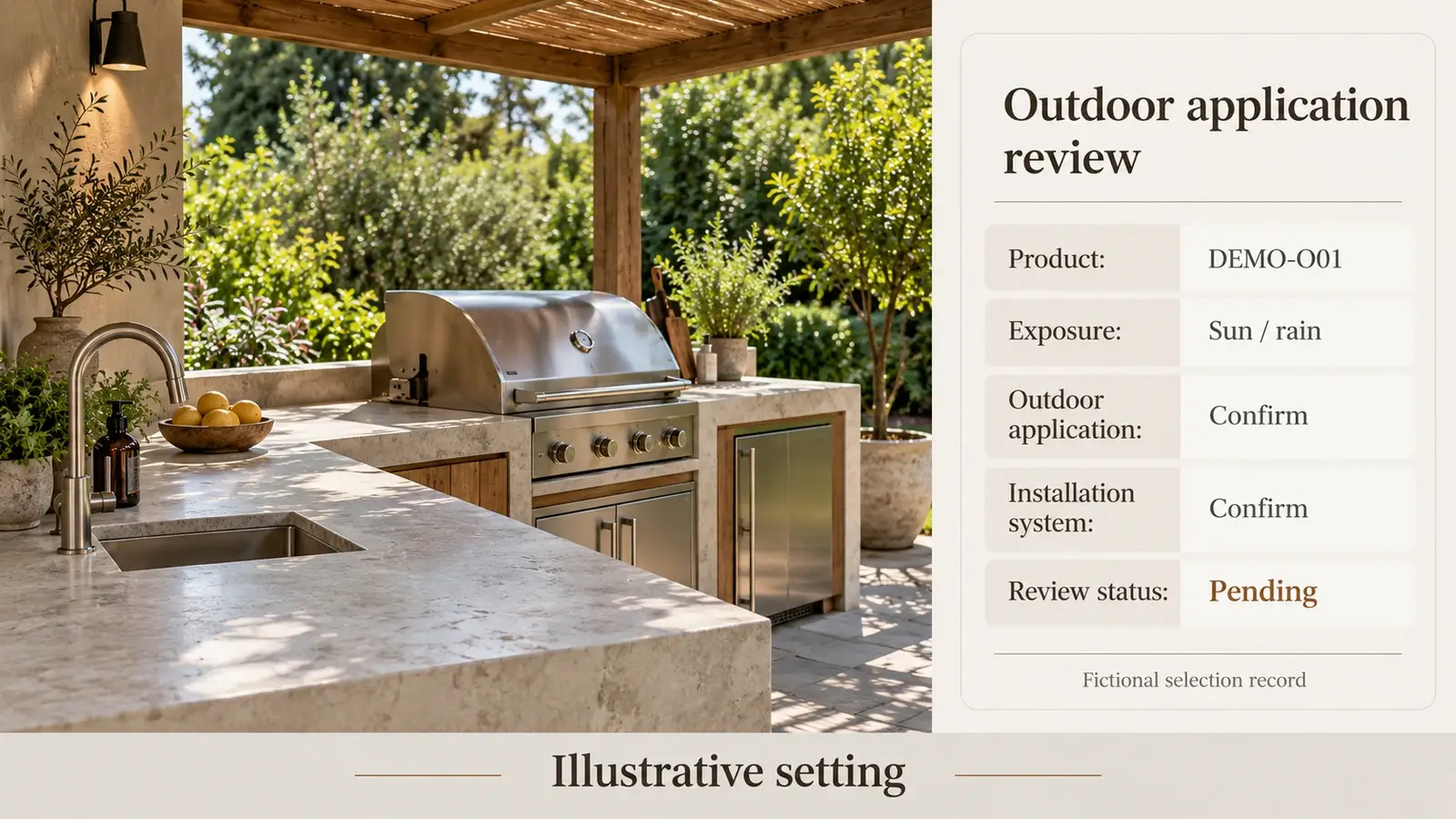
Sintered products can be useful for outdoor kitchens and other exposed settings when their declared applications and installation system match the environment. Verify UV stability, weather exposure and the local conditions relevant to the project.
Standard Indoor Quartz and Outdoor Quartz Are Different
Do not assume that an indoor quartz product is suitable outside. UV exposure and weather can fall outside its stated use or warranty. A roof over an outdoor kitchen does not automatically make the counter an indoor application.
Dedicated outdoor quartz products are an exception. Caesarstone 406 Clearskies, for example, is identified by its manufacturer as quartz with an outdoor application. That approval belongs to the specified product; it does not extend to every color or range sold by the same brand. Confirm local availability and the applicable installation and warranty terms.
Scratches, Chips and Repairs
Both materials can resist routine wear, but surface hardness and scratch resistance do not establish resistance to every impact. Use a cutting board and protect exposed corners from heavy objects. The area beside a sink or dishwasher deserves particular attention because cookware can strike its edge.
Edge Shape and Cutouts Matter
Ask the fabricator to confirm the proposed edge profile, cutout corners and narrow sections against the current product manual. A sharp-looking edge may need a small approved easing or bevel. Do not copy a corner radius or support rule from another material.
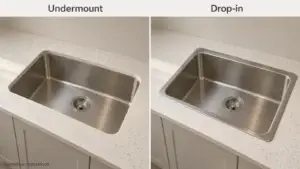
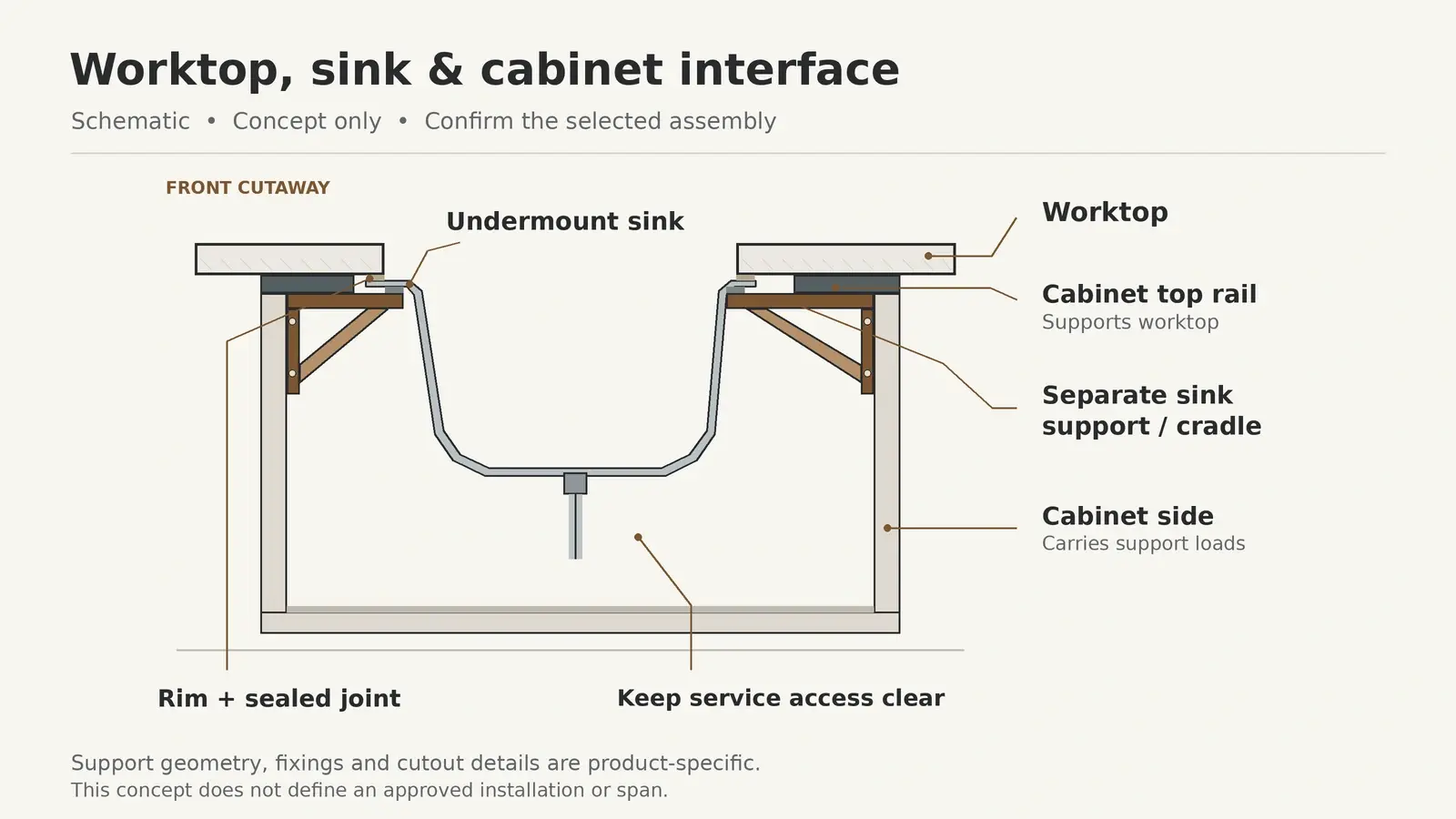
Compare an actual finished edge sample when chipping, appearance or cleaning access is a concern. For sink coordination, our undermount vs drop-in sink guide explains how the opening, rim and supports affect the countertop detail.
Discuss Repair Options Before Ordering
A specialist may be able to improve some small chips, but the result depends on the damage, color, finish and material. Do not assume a repair will be invisible or restore a cracked piece to its original condition. Ask who will assess damage and what replacement or repair process applies to the selected product.
Stains, Sealing and Daily Cleaning
Both categories normally offer low-porosity surfaces and do not require the recurring surface sealing associated with some natural stones. Installation joints and wet-area interfaces still need the specified sealing details; these are separate from sealing the slab face.
Wipe spills promptly and clean with a soft cloth and an approved routine cleaner. Follow the manufacturer’s stain-removal procedure when a mark remains. A cleaner permitted for one product may be unsuitable for another, even when the surfaces look similar.
Compare the Finish as Well as the Material
A polished, matte, honed or textured finish can show fingerprints, residue and metal marks differently. Review a sample under the planned lighting and ask about the exact finish’s cleaning requirements. Avoid choosing a matte surface solely because it is described as low maintenance, or assuming stain resistance means no cleaning is needed.
Slab Appearance, Edges and Seams
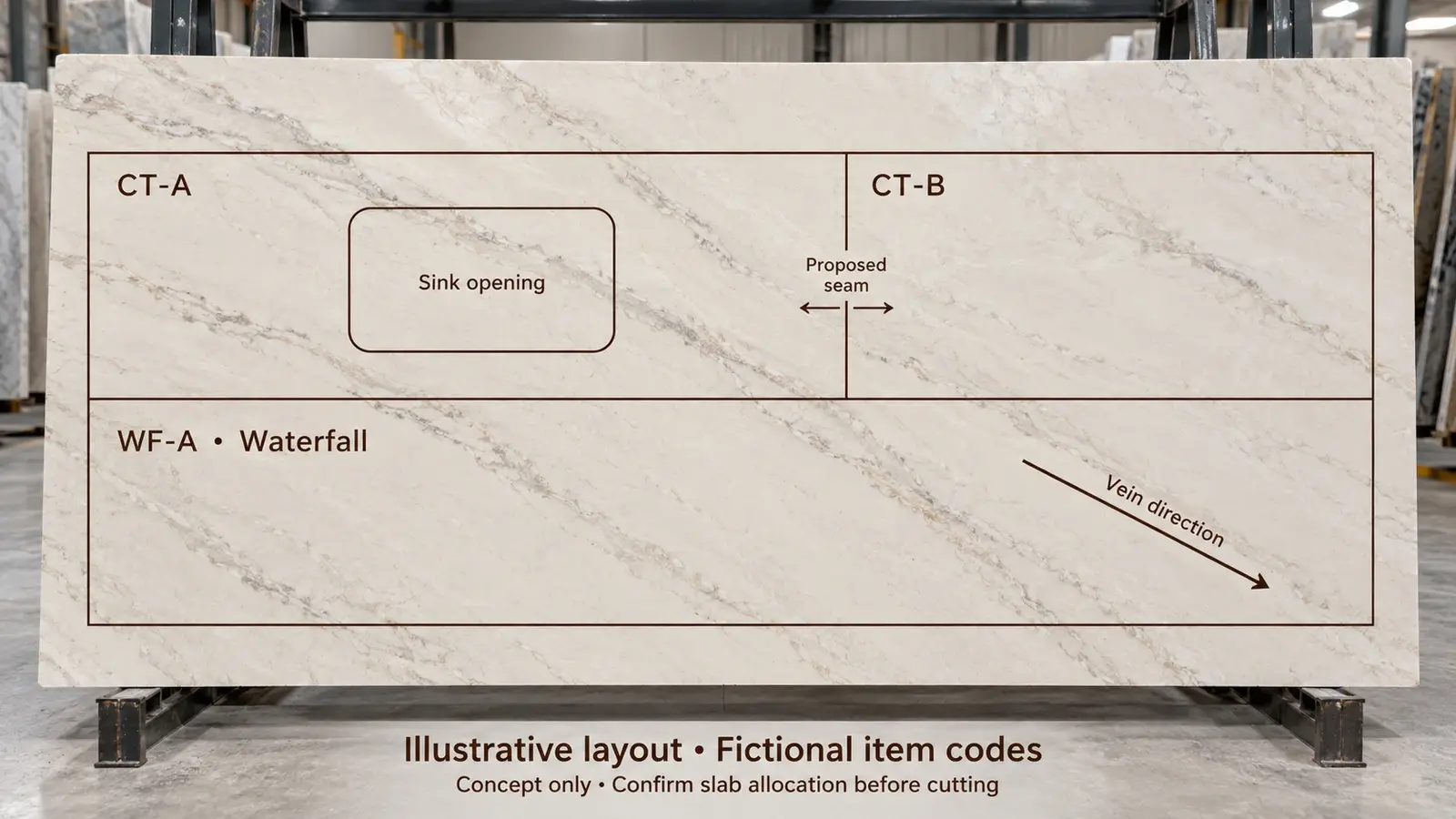
Both sintered stone and quartz offer stone-inspired patterns and simpler colors. A small sample can establish a general direction, but it may not show the full vein scale, repeated graphics or variation across a slab. Review full-slab images or the actual allocated slabs before agreeing the cutting layout.
Check Whether the Pattern Continues at the Edge
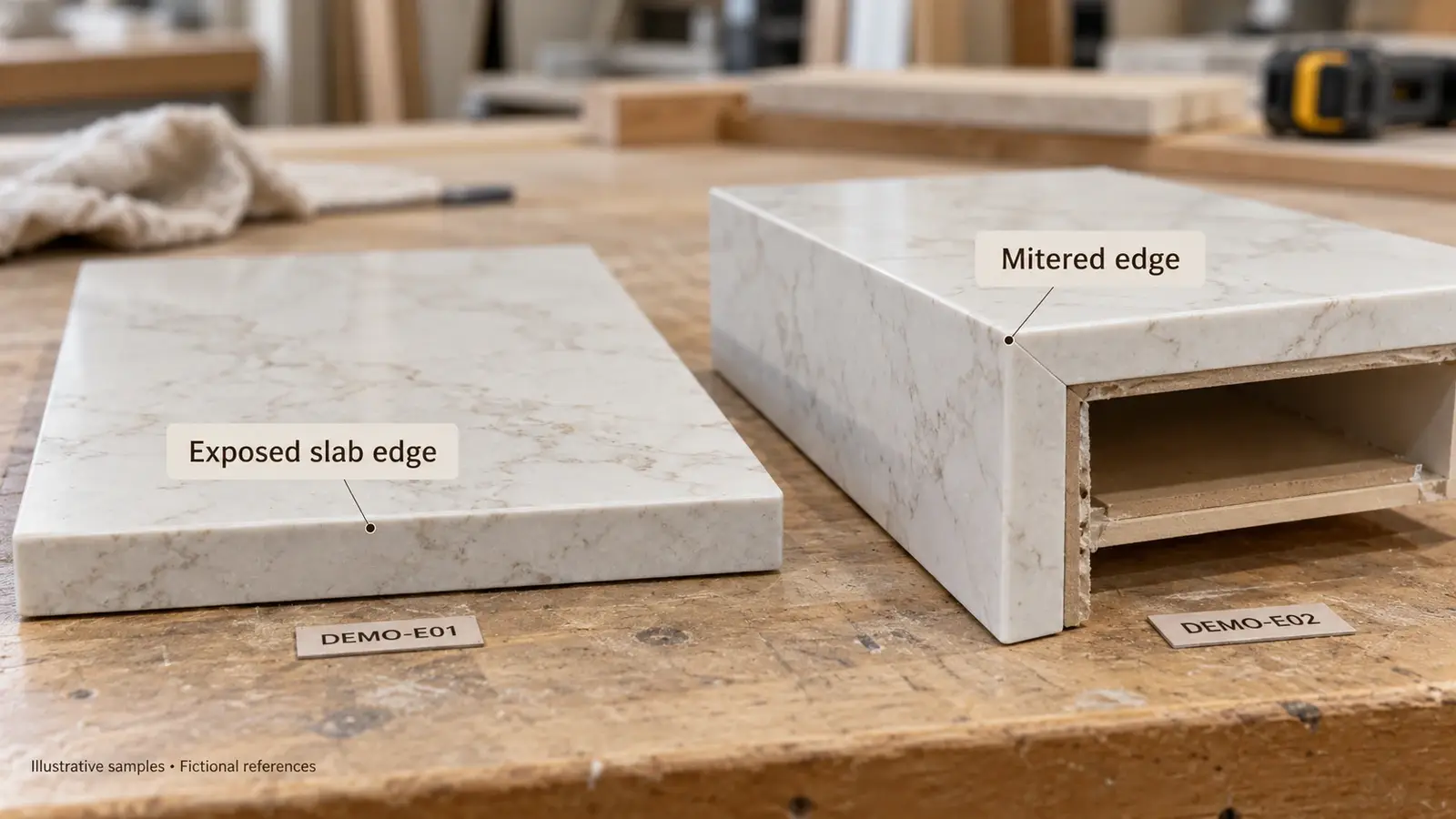
Do not assume that every sintered surface is only printed on its face, or that every quartz design carries identical veining through the thickness. Through-body and surface-decorated products exist. Ask to see the selected material cut and finished at the proposed edge.
A mitered edge can change the apparent depth of a countertop, but that visible depth is different from the slab’s actual thickness. For a waterfall island, approve vein direction and the relationship between the horizontal top and vertical panel. Record what the fabricator can achieve with the chosen slabs.
Our white quartz countertop selection guide can help review undertones, finish and cabinetry combinations.
Approve Seams Before Cutting
Slab size, usable area, cutouts and access affect seam locations. A large island may require a different slab or a seam even if the showroom sample looks continuous. Review the proposed joint, pattern alignment and finish with the fabricator. Matching the surface category alone does not guarantee an uninterrupted vein across pieces.
Fabrication, Support and Installation
Choose a fabricator with experience in the exact product. Confirm the current manual for the destination market, because cutting and support details can vary by product, thickness and region. Generic countertop dimensions are not fabrication instructions.
Cabinet Support and Overhangs
Review cabinet readiness, support points, seating overhangs, brackets and appliance openings as one assembly. A thicker-looking edge does not authorize a longer unsupported span. The fabricator and responsible project team should confirm the actual support design.
Coordinate the slab with the kitchen cabinetry and island package so cabinet levels, finished counter height, sink fit and appliance interfaces are resolved together.
Handling and Site Access
Confirm the size and weight of fabricated pieces and the route from delivery to installation. Doorways, stairs, lifts, turns and temporary storage can affect whether a large top can arrive in one piece. Protect cutouts and finished edges during transport and keep piece marks tied to the approved drawings.
Request the product’s current safety data and appropriate workshop fabrication process. The mineral category or a resin-free description alone does not establish the handling or cutting precautions.
Sintered Stone vs Quartz Cost
There is no dependable price ranking across all brands, regions, finishes and thicknesses. A premium quartz design can cost more than a simpler sintered surface, while a demanding sintered layout can add fabrication cost. Compare complete quotations for the same plan and scope.
| Quote item | What the offers should identify |
|---|---|
| Material | Manufacturer, product code, finish, thickness, allocated slabs and quantity |
| Slab yield | Usable slab dimensions, cutting layout, number of slabs and spare pieces |
| Fabrication | Templates, sink and cooktop openings, tap holes, edge profiles and seams |
| Support | Backing, brackets and the party supplying each item |
| Delivery | Packing, piece labels, transport, lifting and site-access assumptions |
| Installation | Included fitting, joints, protection, exclusions and handover documents |
A price per area can be useful for an early estimate, but it may omit cutouts, slab waste, edge work or installation. Ask suppliers to state those exclusions. Confirm the measuring and template stage before releasing a fabrication order.
Which Material Fits Your Project
Indoor Kitchens
Quartz may suit an indoor kitchen when its chosen design, care routine and fabrication support fit the household. Sintered stone may be worth comparing when heat tolerance or a particular slab finish is a priority. In either case, plan the sink, cooktop, edge and support before choosing by appearance alone.
Bathrooms and Vanities
Review cosmetics, cleaning products, basin shape, tap holes, splashbacks and wall interfaces. Either category can work when the selected product and detail suit the application. Use our custom bathroom vanity top guide to organize measurements, openings and quotation scope.
Outdoor Kitchens
Start with a product explicitly declared for the exposure. Compare an appropriate sintered surface with any dedicated outdoor quartz option available for the project. Confirm the complete installation and care requirements, including heat sources, weather protection and local support.
Sample and Ordering Checklist
- Identify the exact product family, color, finish, thickness and intended location.
- Review current technical data, care instructions and the regional fabrication manual.
- Approve the slab or batch appearance, edge sample, seam layout and any waterfall detail.
- Confirm sink and appliance templates, cutouts, supports and final measurement responsibility.
- Compare the same material, fabrication, packing, delivery and installation scope in every quotation.
- Record the current drawing revision, accepted alternatives and authorization to order.
Use the finish schedule template to connect the approved countertop reference to its room and supporting documents. Keep color selection, drawing approval and order release distinguishable so an accepted sample is not mistaken for permission to cut.
Get Help Reviewing Your Countertop Package
Our stone slab and fabrication coordination page explains the information needed to define material identity, slab layout, edges, cutouts and packing. Send George House Material your kitchen or vanity drawings, product references, quantities and delivery destination. Request a coordinated material quotation so we can review the available scope and identify missing details.
Frequently Asked Questions
Is Sintered Stone Better Than Quartz?
Sintered stone may offer an advantage for heat or exterior exposure, while quartz may fit an indoor project’s design and procurement needs. The right choice depends on the exact product, fabrication details and installed cost.
Can You Put a Hot Pan on Sintered Stone?
Follow the selected product’s instructions. Some manufacturers permit hot cookware, while others recommend protection. Use a trivet unless the manufacturer confirms direct contact is appropriate for the product and application.
Can Quartz Be Used Outdoors?
Only use a product specifically approved for that exposure. Standard indoor quartz may restrict outdoor use, while dedicated outdoor quartz ranges exist.
Which Material Is Cheaper?
Neither is always cheaper. Compare the same countertop plan, slab allocation, finish, fabrication, support, delivery and installation scope.
Do Sintered Stone and Quartz Need Sealing?
They normally do not need routine surface sealing. Follow the selected finish’s care instructions and separately detail installation joints and wet-area interfaces.
Is Quartz the Same as Quartzite?
No. Engineered quartz is a manufactured surface commonly using a resin binder. Quartzite is natural stone and requires its own product selection and care review.