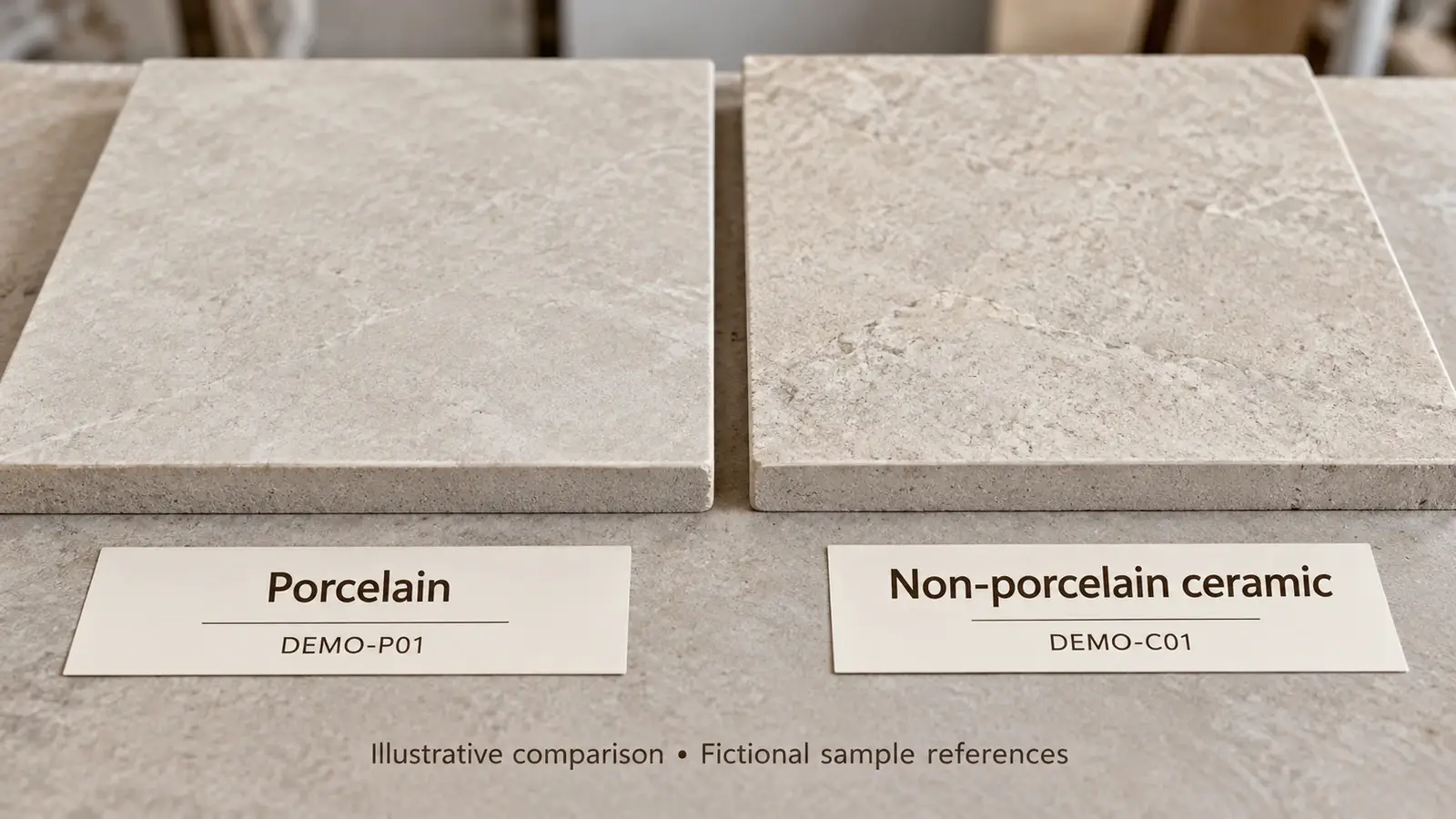
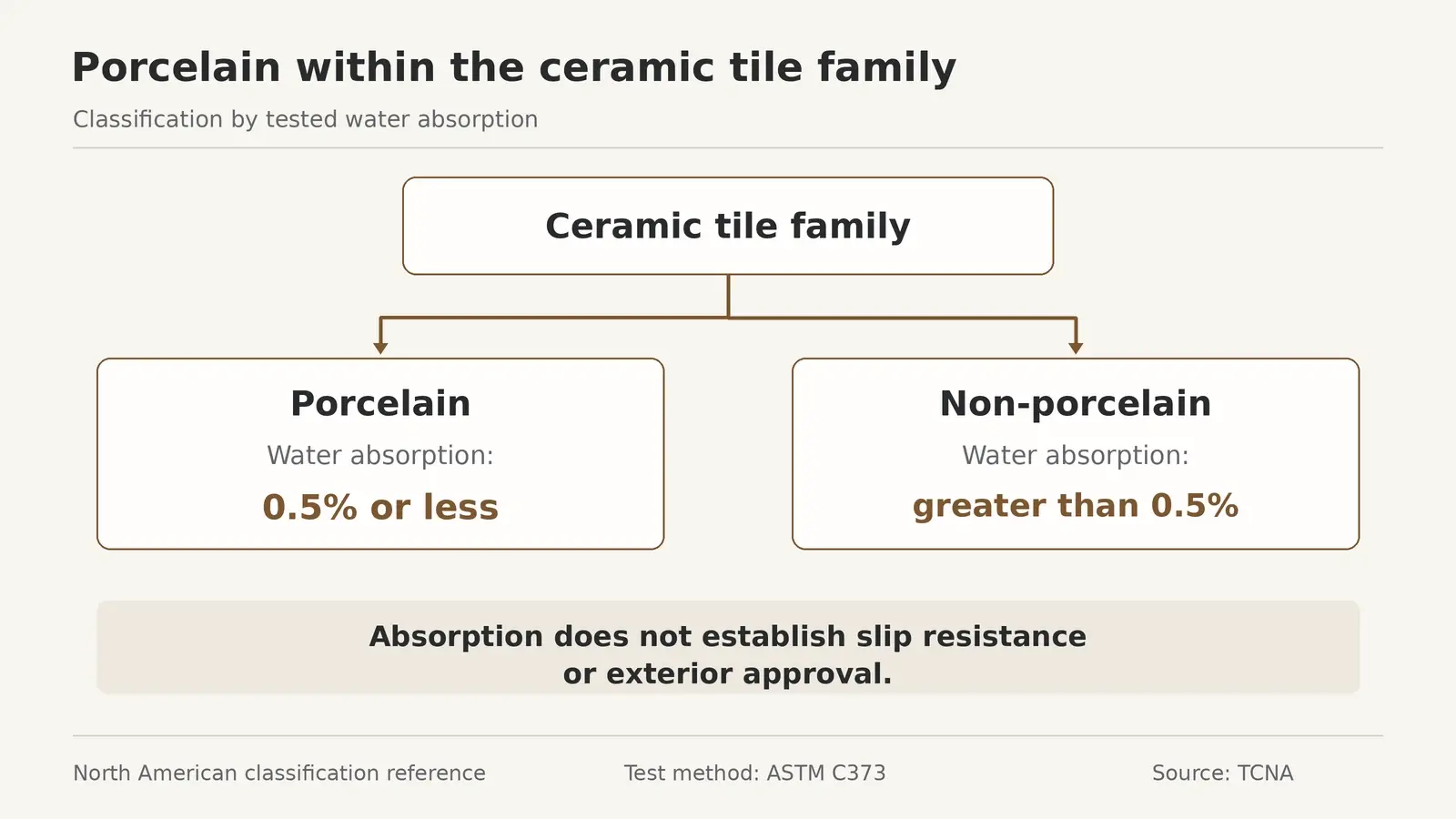
The main difference between porcelain and ceramic tile is the tile body’s water absorption. Porcelain is a type of ceramic tile with a defined low absorption rate. In everyday shopping, however, ceramic usually means non-porcelain ceramic tile. That is the comparison used in this guide.
Porcelain is often worth considering for demanding floors and selected wet or exterior applications. Non-porcelain ceramic can offer good value for indoor floors and decorative walls when the exact product is approved for that use. Neither is the best choice for every room: compare the tile’s declared application, finish, installation requirements and complete cost before buying.
Porcelain vs Ceramic Tile at a Glance
| Detail | Porcelain tile | Non-porcelain ceramic tile |
|---|---|---|
| Water absorption | 0.5% or less under the ASTM C373 classification described by TCNA | Greater than 0.5% under that classification; products vary |
| Floors and walls | Select a product approved for the intended floor or wall | Floor-rated and wall-only products both exist |
| Wet areas | Low absorption is useful, but wet-use approval and waterproofing still matter | Some products suit bathrooms and wet walls; check the precise use |
| Exterior use | Many exterior options; verify climate and product approval | Some exterior-rated products exist; do not assume indoor tile will work |
| Cutting and installation | Dense bodies can require more demanding cutting and suitable bonding products | Many products are easier to cut; format and layout still affect labor |
| Appearance | Broad choice of colors, stone effects and wood looks | Broad choice of glazed colors, patterns and decorative finishes |
| Care | Follow the tile finish and grout instructions | Follow the tile finish and grout instructions |
| Cost | Often a higher material cost, with substantial variation | Often a lower material cost, with premium exceptions |
These are selection tendencies. A material name does not establish floor suitability, slip resistance or the installed price.
What Is the Difference Between Porcelain and Ceramic Tile
Both belong to the fired ceramic tile family. Manufacturers form mineral raw materials and fire the body; recipes, finishes and processes differ between collections. Porcelain bodies are generally dense, but body color and a showroom photograph cannot verify the classification.
Water Absorption Is the Key Classification
The Tile Council of North America describes porcelain as tile with water absorption of 0.5% or less when tested using ASTM C373. Non-porcelain tile exceeds that threshold. Ask for the selected product’s technical sheet and relevant test method rather than relying on the word porcelain on a sales label.
This is a North American standards reference. Confirm the standards and documents required for your project’s destination. A low absorption result does not also certify slip performance, frost resistance or an entire waterproof assembly.
Glazed and Unglazed Are Separate Descriptions
Porcelain can be glazed or unglazed. A glaze describes the surface treatment; porcelain describes the body classification. Non-porcelain ceramic also includes different surface constructions. Compare the actual finish and its care instructions rather than assuming that porcelain always has color and pattern through its full thickness.
If you are also comparing stone, mosaics or other materials, our guide to different kinds of floor tiles covers the broader choices.
Is Porcelain More Durable Than Ceramic Tile
Porcelain’s dense body can be useful for demanding applications, but durability includes several different properties. Surface abrasion, scratching, breaking strength and impact damage are separate checks. A floor-rated ceramic tile may be suitable for a room where a decorative porcelain wall tile is not.
Read the Floor Use and Wear Information
Start with the manufacturer’s floor or wall declaration and traffic guidance. Where a glazed abrasion class or PEI rating is supplied, it describes surface wear rather than overall quality, slip performance or water absorption. Marazzi’s published abrasion guidance, for example, does not recommend Class 0 for floors.
Do not use one rating to answer every performance question. A kitchen floor, bedroom and commercial entrance can need different product evidence even when all three are porcelain.
Both Materials Can Chip or Crack
Dropped objects, unsupported areas and movement can damage either type. A chip may expose a body color different from the face, so inspect a cut edge when appearance matters. Proper substrate preparation, suitable setting materials and the intended installation method help the selected tile perform as designed.
Retain matching spare tiles with the product and batch references. Replacing one damaged piece later is easier when the original selection remains identifiable.
Porcelain vs Ceramic Tile for Bathrooms and Showers
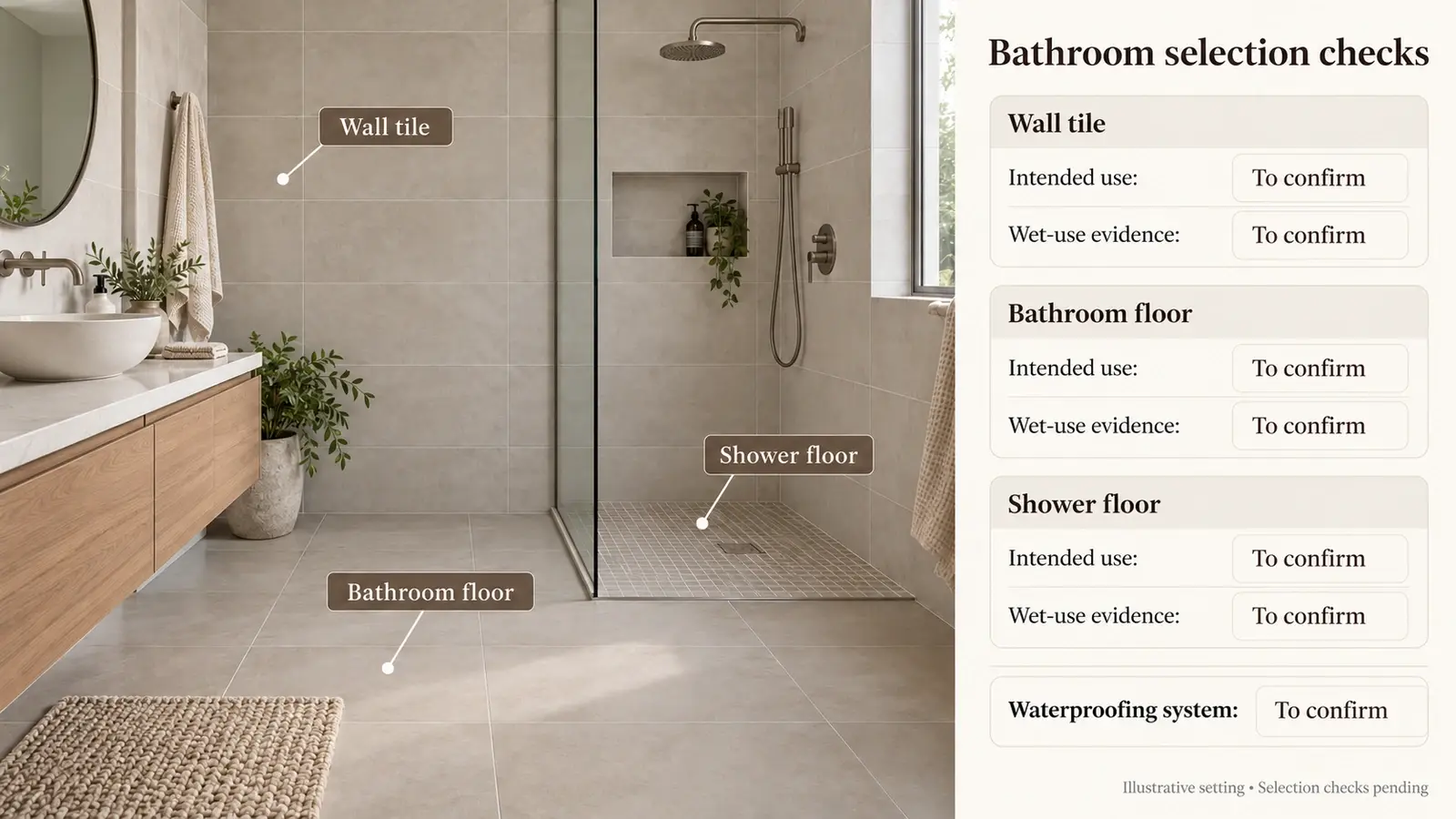
Porcelain’s low absorption makes it a useful candidate for many bathroom applications. Ceramic can also be appropriate when the product is approved for the specific wall or floor location. Separate shower walls, the shower floor and the bathroom floor when checking use guidance.
Match the Format to the Drain and Slope
Small modules can make it easier to follow changes in slope around some drains. Large tiles may suit other designs when the drain, cuts and falls are coordinated. More grout joints do not by themselves prove that a shower floor will resist slipping. Confirm the tile, any sheet backing and the installation system for that location.
Tile Does Not Replace Waterproofing
Low absorption in the tile body does not make the shower assembly waterproof. Ordinary grout joints are not a substitute for the specified waterproofing method. Coordinate the substrate, waterproofing, drain connection, penetrations, slopes and joints before selecting the final tile layout.
Which Tile Has Better Slip Resistance
Neither porcelain nor ceramic has a category-wide slip advantage. A polished face, textured face and matte face may perform differently, but the appearance alone is insufficient evidence. Request the exact product’s test information and manufacturer-approved use for the expected water, footwear, contaminants and cleaning regime.
Understand the Limits of DCOF 0.42
Daltile explains the wet DCOF benchmark of 0.42 in the context of level interior floors expected to be walked on when wet, using ANSI A326.3 measurements. It is not a universal approval for shower floors, outdoor paving, ramps, grease-exposed areas or continuously wet barefoot settings.
A test value also does not guarantee that slipping cannot occur. Use the appropriate product-use classification and project requirements, then plan drainage and maintenance. Confirm the locally applicable criteria rather than copying a single number from another project.
Porcelain vs Ceramic Tile for Outdoor Use
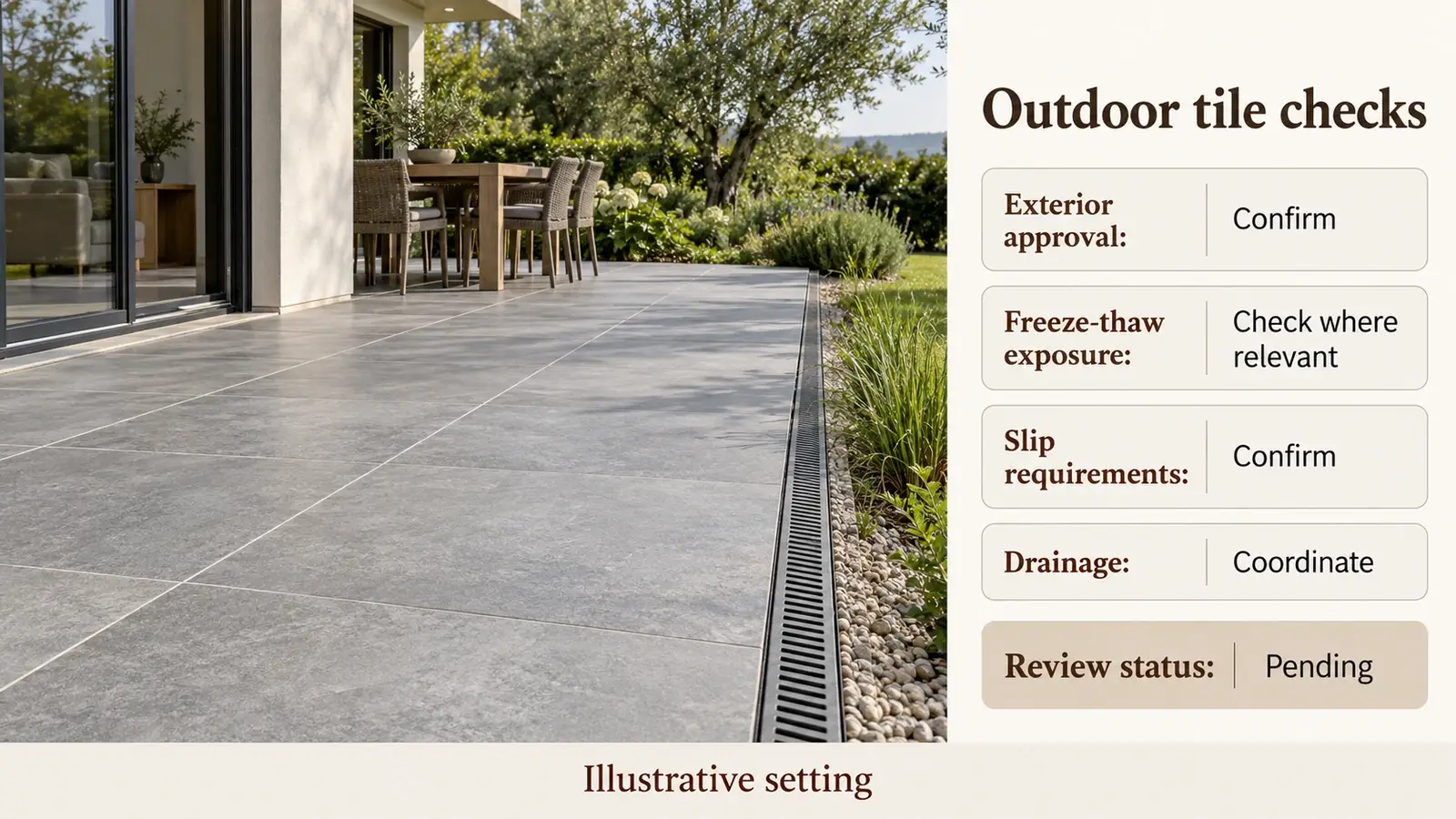
Porcelain offers many outdoor choices, but confirm that the exact tile is approved for the exposure. A covered terrace can still face wind-driven rain, tracked water or freezing conditions. Some non-porcelain products, including certain quarry tiles, are also rated for exterior applications.
Where freeze-thaw conditions occur, request frost-resistance information and the manufacturer’s exterior-use declaration. The full assembly matters: trapped water, poor drainage and voids in the setting bed can damage an installation even when the tile is frost resistant. Include the appropriate slip requirements, movement joints, fixing system and maintenance plan in the selection review.
Porcelain vs Ceramic Tile Cost
Ceramic often has a lower upfront material price, while porcelain can cost more. That tendency does not rank every collection: decorative ceramic may cost more than a basic porcelain product. Availability, size, finish, order quantity and destination also change the comparison.
Compare the Complete Installed Scope
| Cost item | What to include in both offers |
|---|---|
| Tile supply | Exact product, finish, actual size, thickness and quantity |
| Preparation | Substrate work and any required waterproofing or other specified layers |
| Setting materials | Compatible adhesive or mortar, grout and joint materials |
| Installation | Tile format, pattern, cuts, handling and agreed mock-up |
| Finishing pieces | Trims, skirting, thresholds and transitions |
| Order and delivery | Carton rounding, agreed waste allowance, spares, packing and transport |
A price per square foot or square metre may omit preparation, cuts or delivery. Ask suppliers and installers to state exclusions and price the same layout. Use an allowance based on room geometry, pattern and tile dimensions rather than a single waste percentage for every job.
Cutting and Installation Differences
Many porcelain products are harder to cut than non-porcelain ceramic. Confirm the cutting equipment and setting products for the selected tile, especially where there are detailed openings, exposed edges or large pieces. The material category alone does not determine whether a project is a suitable DIY task.
Rectified Edges Do Not Mean Porcelain
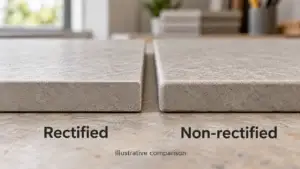
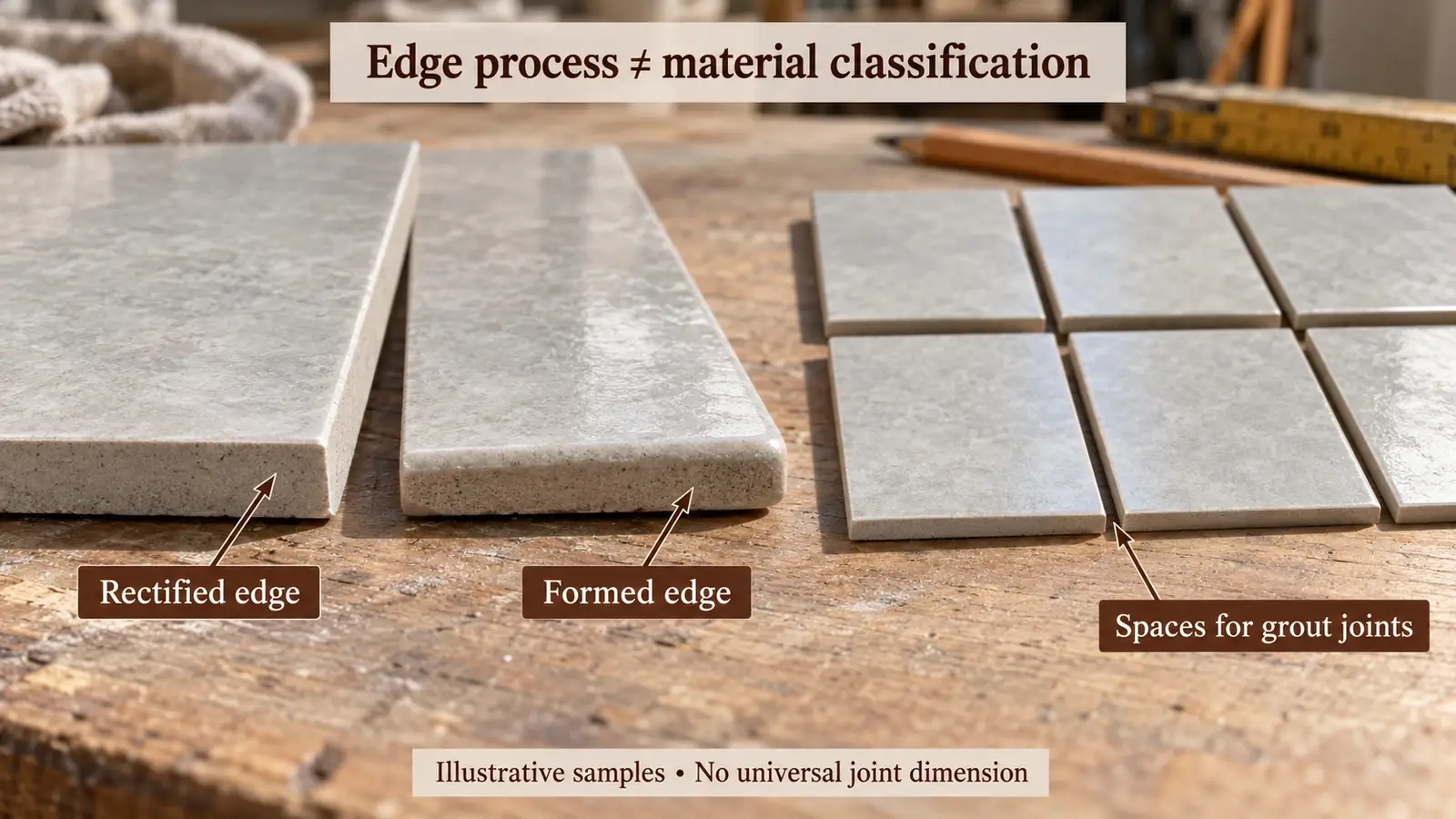
Rectified describes mechanically finished edges. It is separate from the porcelain classification and from a polished surface finish. Both material choices need an agreed joint width, and rectification does not permit a joint-free installation.
Our rectified vs non-rectified tile comparison explains edge variation, grout appearance and layout checks.
Large Formats Need Their Own Review
Tile size, curvature, substrate flatness and the pattern can affect the finished result. Agree how the installer will check support and mortar coverage, manage cuts and review adjacent edge heights. Keep movement joints separate from ordinary grout joints.
Use our large format tile installation and layout guide when assessing a larger module. Avoid assuming a leveling system can compensate for an unsuitable substrate or replace the specified installation method.
Cleaning, Sealing and Maintenance
Routine cleaning can be straightforward for both materials when the finish and grout suit the room. Remove grit, clean with an approved product and follow the rinse instructions so residue does not build up. Select the cleaning method for the installed surface rather than for the porcelain or ceramic label alone.
Glazed tile faces generally do not need penetrating sealing. Unglazed or polished products can have different instructions, and grout may have separate sealing requirements. Confirm the tile and grout manufacturers’ guidance; a sealer does not upgrade a wall tile into a floor tile or make the assembly waterproof.
Colors, Patterns and Sample Appearance
Both categories offer a wide range of designs. Do not assume body type dictates color, scale or style. Compare the face, edge, texture and approved shade variation, then view several pieces beside the finishes that will remain.
For timber-inspired patterns, the wood-look tile guide covers comfort, grout and room conditions. For kitchen palettes and setting-out, review our kitchen floor tile color and layout guide with the proposed cabinet and countertop samples.
Porcelain Tile Pros and Cons
Advantages
- Defined low water absorption supports selection for many demanding applications.
- Many collections offer floor, wall and exterior options with their own approved uses.
- Broad choice of decorative effects and formats.
Limitations
- Cutting and handling may be more demanding, especially in large formats.
- Material or installation costs may be higher for the selected product.
- The porcelain label does not establish slip, frost or traffic suitability.
Ceramic Tile Pros and Cons
Advantages
- Many non-porcelain products offer an economical indoor option.
- Many are easier to cut, which can help with smaller pieces and detailed layouts.
- Wide choice of glazed colors and decorative wall finishes.
Limitations
- Water absorption varies, so exposure must match the exact product.
- A wall-only decorative tile is unsuitable for floor traffic.
- Exterior and freeze-thaw approval cannot be assumed from an indoor collection.
Which Tile Should You Choose
For an indoor backsplash or decorative wall, consider a suitable ceramic product when its finish, dimensions and price fit the design. For an indoor floor, compare floor-rated products from both categories. For bathrooms or exterior areas, prioritize the precise exposure and approved use before deciding on appearance.
Porcelain is worth paying more for when the chosen product addresses a real application need. A suitable ceramic tile can be the better value when it meets the room’s requirements. Browse our project tile options with the room location, finish and installation conditions already identified.
Sample and Ordering Checklist
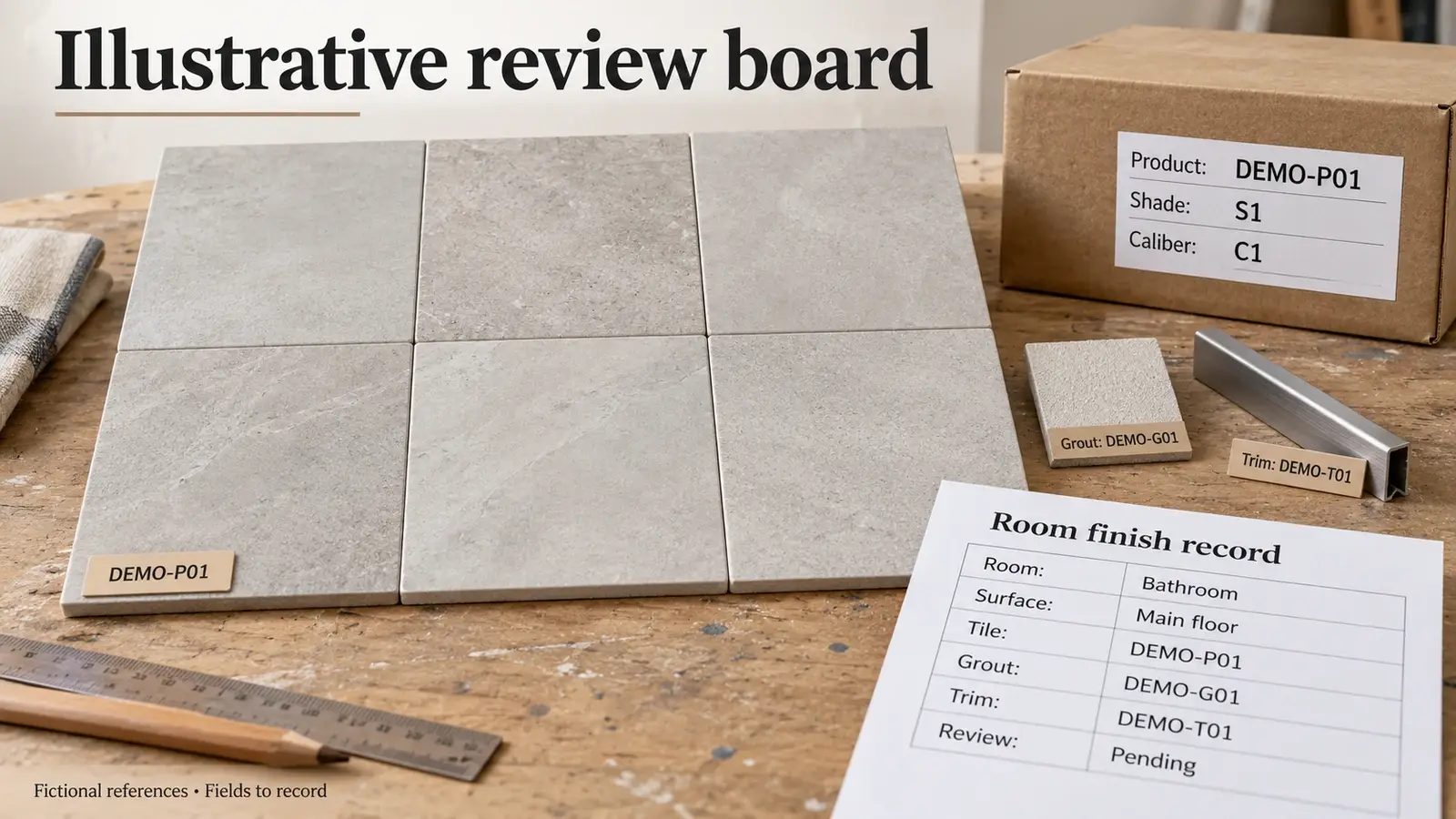
- Record the manufacturer, collection, product code and porcelain or non-porcelain classification.
- Confirm floor or wall use, water absorption and the required wear, wet-use or exterior evidence.
- Check actual dimensions, thickness, edge type, shade and caliber information.
- Review several pieces with the proposed grout, trims, pattern and lighting.
- Confirm substrate, waterproofing where needed, setting materials and joint details.
- Compare quantities, carton increments, agreed cutting allowance, spare stock and delivery scope.
Use the finish schedule template to connect each selected tile to its room and sample reference. Keep sample acceptance traceable separately from authorization to order.
Get Help Reviewing Your Tile Selection
Send George House Material your room plans, finish schedule, quantities, preferred tile references and delivery destination. We can review the available material scope and identify the product and quotation details still needed. Send your tile schedule or BOQ to start the review.
Frequently Asked Questions
Is Porcelain Tile Better Than Ceramic Tile?
Porcelain has defined low water absorption, but that does not make it better for every use. Compare exact products for the room, finish, installation requirements and complete cost.
Can Ceramic Tile Be Used on Bathroom Floors?
Yes, when the product is approved for that floor location and wet exposure. Check the use declaration and suitable installation system; a ceramic wall tile is not automatically suitable.
Is Porcelain Tile Waterproof?
Porcelain has very low water absorption, but the installed assembly still needs the appropriate waterproofing, drainage and joint details. Tile and ordinary grout do not replace those layers.
Is Porcelain Always More Expensive?
No. Ceramic is often cheaper upfront, but collections overlap in price. Compare tile supply, preparation, installation, accessories and delivery for the same room.
Is Matte Porcelain Tile Always Slip Resistant?
No. A matte appearance does not prove wet-use performance. Check the exact product’s test information, approved application and maintenance requirements.
Can Porcelain Tile Be Used Outside?
Use a product approved for the exterior conditions, including any freeze-thaw exposure. Confirm drainage, slip requirements and the complete installation system before ordering.
Do Porcelain and Ceramic Tiles Need Sealing?
Glazed faces generally do not need penetrating sealing. Other finishes and grout can have separate requirements, so follow the selected products’ care instructions.