The main difference between engineered hardwood and solid hardwood is the plank construction. Engineered hardwood has a real-wood surface bonded to a supporting core; solid hardwood is one piece of wood from top to bottom. Engineered construction usually provides greater dimensional stability, while solid hardwood generally offers more scope for future sanding and refinishing.
Choose engineered hardwood when an approved product suits a concrete slab, a below-grade room or a particular heating system. Choose solid hardwood when the room and subfloor are suitable and long-term refinishing is a priority. Neither label alone tells you how well a floor will resist scratches, handle water or fit the installed budget.
This engineered hardwood vs. solid hardwood comparison explains the differences that matter before ordering, including cost, durability, moisture, installation and maintenance.
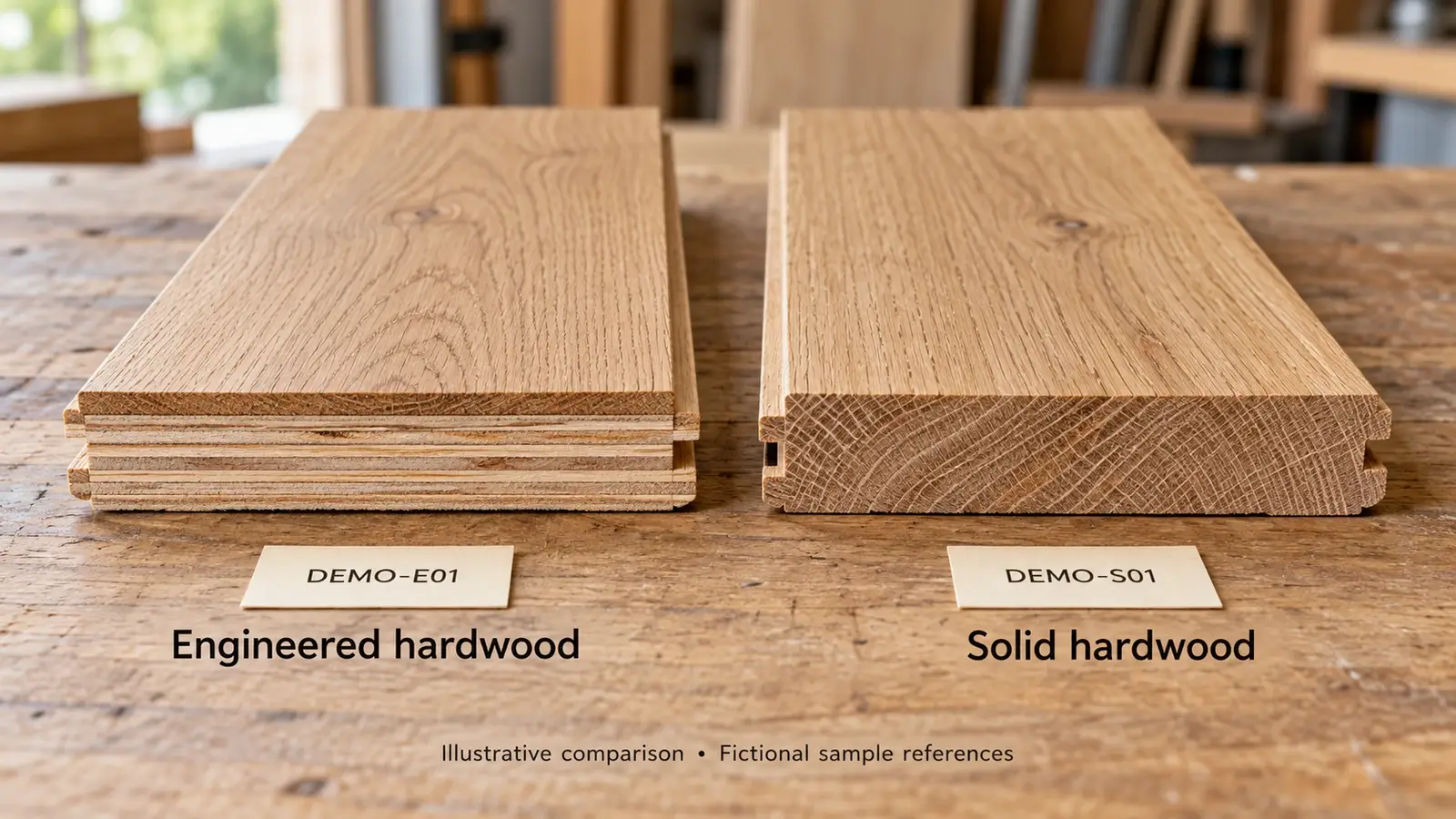
Engineered Hardwood vs Solid Hardwood at a Glance
| What to compare | Engineered hardwood | Solid hardwood |
|---|---|---|
| Construction | Real-wood surface over a layered or composite supporting core | One piece of wood throughout the plank |
| Seasonal movement | Usually less expansion and contraction; still responds to moisture | Typically more sensitive to moisture changes |
| Scratches and dents | Depend on the surface species, finish and use | Depend on the species, finish and use |
| Sanding and refinishing | Limited by the usable wood surface and product instructions; some products cannot be sanded | Generally more scope, subject to remaining wood above the joint profile and floor condition |
| Concrete and basements | More product options may be available; approval and moisture checks are essential | Commonly on or above grade; concrete installations need a specifically approved system |
| Installation | May be glued, fastened or floated, depending on the product | Commonly fastened to a suitable wood subfloor; other systems require approval |
| Cost | Can overlap with or exceed solid hardwood | Can overlap with or exceed engineered hardwood |
For a wider material comparison, start with our guide to flooring options by room, then narrow the shortlist to products approved for the intended space.
What Is Engineered Hardwood Flooring
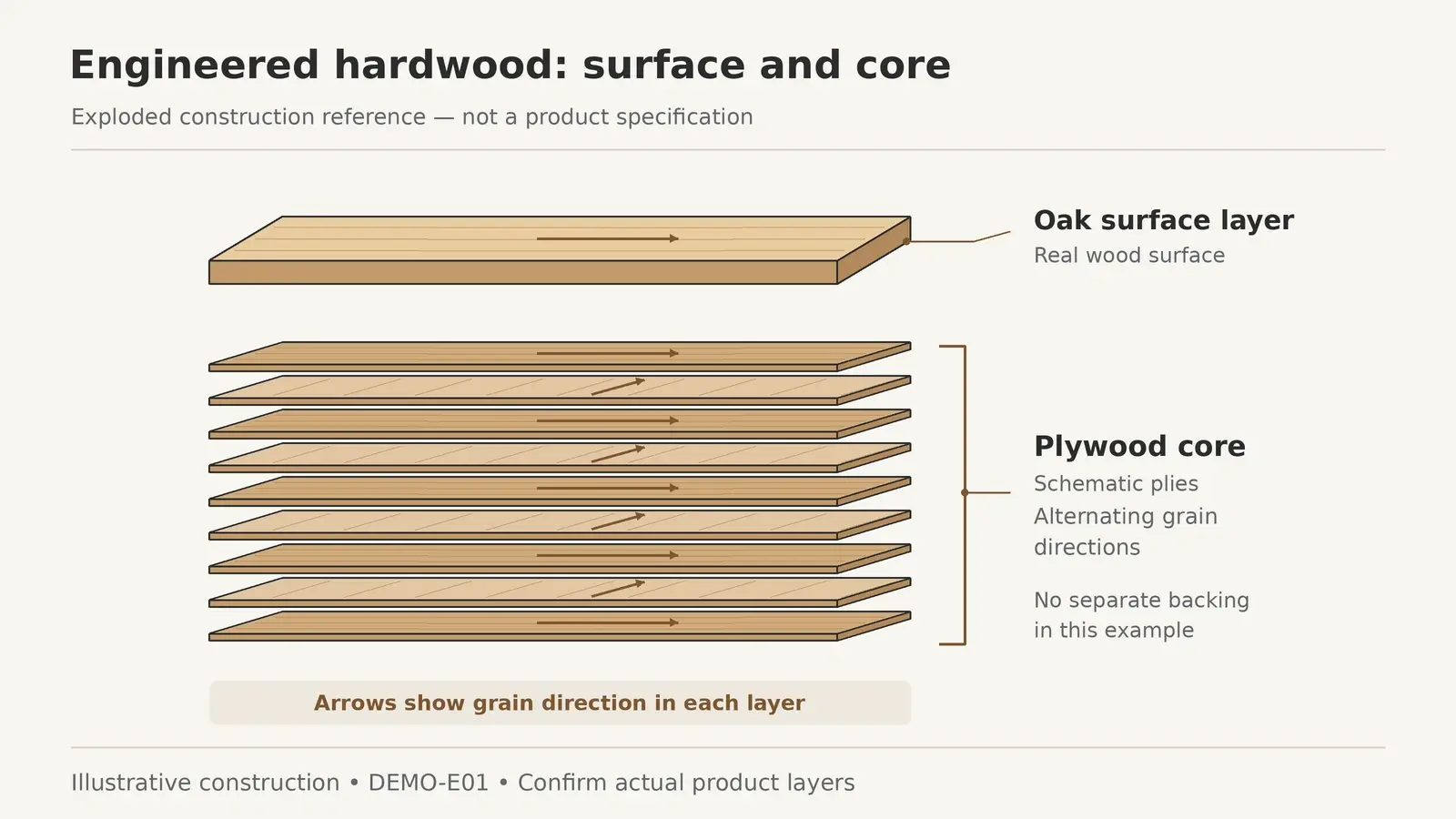
Engineered hardwood has a visible layer of real wood bonded to a supporting structure. That structure may contain crossed wood layers or a composite core, depending on the product. The visible species, surface thickness, core and bonding system should all be identified in the specification.
Advantages of Engineered Hardwood
Its main advantage is dimensional stability. The supporting construction usually limits movement compared with a solid plank under similar conditions. This can make an approved engineered product useful for wide boards, concrete substrates and some below-grade installations.
Installation flexibility is another advantage. Certain products permit glue-down, mechanical fastening or floating installation, which can help resolve a particular subfloor or renovation constraint.
Disadvantages of Engineered Hardwood
The available wood surface limits future sanding. Two planks with the same overall thickness can have different surface-layer thicknesses and different refinishing options. Thin-surface products may offer no sanding option at all.
Engineered flooring also varies substantially between ranges. A layered core does not establish water protection, bond quality, acoustic performance or radiant-heat approval. Compare the actual product documents rather than treating all engineered floors as equivalent.
Engineered Hardwood Is Different from Laminate and SPC
Engineered hardwood has a real-wood wearing surface. Laminate and SPC floors generally achieve their wood appearance through a decorative layer. They belong in a separate material comparison, even when samples look similar.
If a wood appearance is the priority and you are also considering resilient flooring, our SPC flooring guide explains the product and installation details to review.
What Is Solid Hardwood Flooring
Solid hardwood is made from a single piece of wood. The same species continues through the plank, although the entire thickness is not available for sanding: the joint profile and remaining wood above it create practical limits.
Advantages of Solid Hardwood
Solid hardwood generally provides more scope for sanding and refinishing over its service life. This can suit owners who want to restore a worn surface or change the floor color later, provided the particular floor remains suitable for the work.
It is also a familiar option for suitable wood subfloors in dry, controlled interiors. Species, cut, grade, width and finish offer several ways to achieve the desired appearance.
Disadvantages of Solid Hardwood
Solid boards respond to changing moisture conditions and can develop gaps, cupping or other movement when the floor and environment are poorly matched. Board width, wood characteristics and installation details affect that response.
Conventional solid flooring is commonly limited to on-grade or above-grade locations. A concrete slab, basement or radiant-heating system needs careful product-specific review; do not assume the installation used in one upstairs room can be repeated throughout the house.
Which Hardwood Is More Durable
Engineered hardwood is not automatically easier to scratch, and solid hardwood is not automatically harder to dent. Both expose a wood surface to daily use. Species influence dent resistance, while the finish and maintenance affect surface wear. A wood hardness rating is not a scratch-resistance guarantee.
For pets and busy households, compare the finish system, care requirements and sample appearance as well as the construction. Grit under shoes, dragged furniture and pet nails can damage either type. Mats, suitable furniture pads and regular grit removal help protect both.
Color and texture affect how visible wear becomes. View several boards under the room's lighting rather than choosing from a small swatch. Our light wood floor selection guide covers appearance, samples and coordination with adjoining finishes.
Can Engineered Hardwood Be Refinished
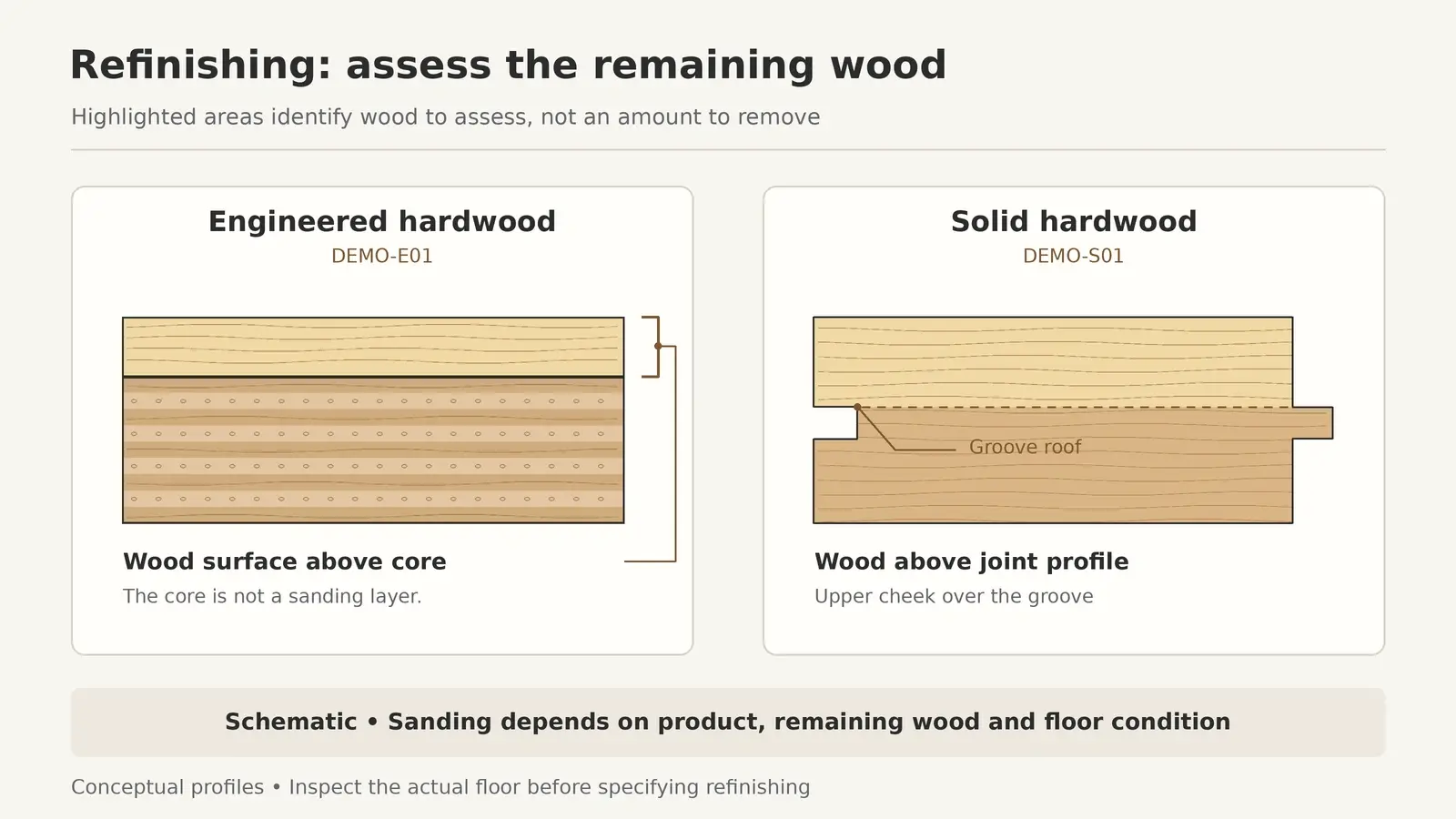
Some engineered hardwood can be sanded and refinished; some cannot. The decision depends on the remaining wood surface, floor flatness, previous sanding, current damage and the manufacturer's permitted process. Ask for the actual surface-layer specification and written refinishing guidance before buying.
Recoating and Sanding Are Different Jobs
A maintenance coat renews a compatible existing finish after the required preparation. A full sand and refinish removes the finish and some wood, which uses part of the available sanding allowance. A recoat will not necessarily remove deep dents or damage in the wood.
Oil-finished and film-finished floors can also need different maintenance products and repair methods. Confirm the finish type before selecting a cleaner or treatment.
Solid Hardwood Also Has Refinishing Limits
Solid construction does not mean unlimited sanding. Previous refinishing, exposed fasteners, joint depth, severe damage and unevenness may restrict what remains possible. Have a qualified flooring professional assess an existing floor before promising a particular number of future refinishes.
Keep spare boards and the original product reference. A local repair may require plank replacement, and new boards may differ in color from an aged floor.
Moisture Concrete and Radiant Heat
Stability Does Not Establish Waterproofing
Engineered construction does not by itself make a floor waterproof. Both floor types need moisture management, prompt spill cleanup and the specified indoor conditions. A product sold with a water warranty may have limits on exposure time, installation details and covered damage; read those terms separately.
Do not use a wood floor to solve a leak, damp slab or wet basement. Where frequent wetting or a wet-area installation is expected, consider a different material system. Our wood-look tile guide offers another route to a timber appearance, with its own substrate and installation checks.
Basements and Concrete Slabs
For a below-grade room, shortlist only products expressly approved for that location. Engineered flooring may be an option when the basement and substrate meet the stated requirements. A below-grade approval is not permission to install over unresolved moisture.
Over concrete, confirm the flooring, adhesive or underlay, moisture-control system and subfloor preparation together. Some solid installations require an additional suitable wood subfloor. Account for the resulting floor height at doors, stairs and adjoining rooms.
Radiant Heating Needs Written Approval
Some engineered products are approved over radiant heat, but the approval is not universal. Solid-product restrictions also vary, and some manuals prohibit radiant installations entirely. Check the exact species, board dimensions, heating system and installation method before ordering.
Follow the floor and heating manufacturers' requirements for commissioning, temperature control, surface-temperature limits and humidity. Do not apply one brand's temperature limit or start-up sequence to every wood floor.
Installation and Acclimation
Match the Method to the Plank and Subfloor
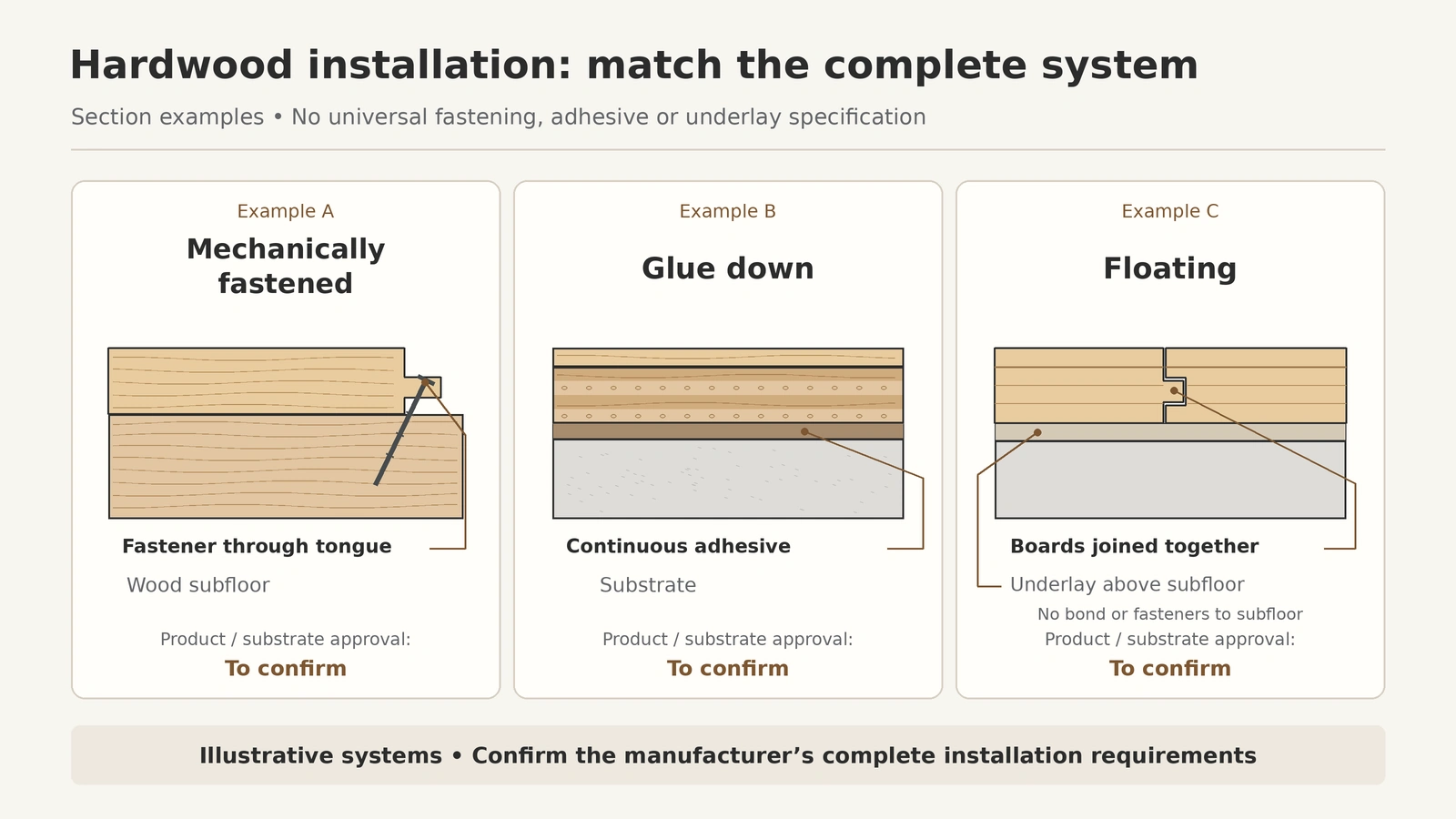
Fastened floors need a suitable supporting substrate and approved fasteners. Glue-down floors need the specified adhesive and preparation. Floating floors connect the boards to one another rather than fastening them to the subfloor; only products designed for that arrangement should be installed this way.
Not every engineered plank has a click joint, and not every tongue-and-groove plank can be floated. Include the approved jointing method, movement clearances, underlay and transition details in the installation scope.
Check Flatness and Moisture Before Installation
The substrate should be clean, dry, flat and structurally sound within the selected system's tolerances. A surface can be level overall and still contain local high spots or dips that need correction.
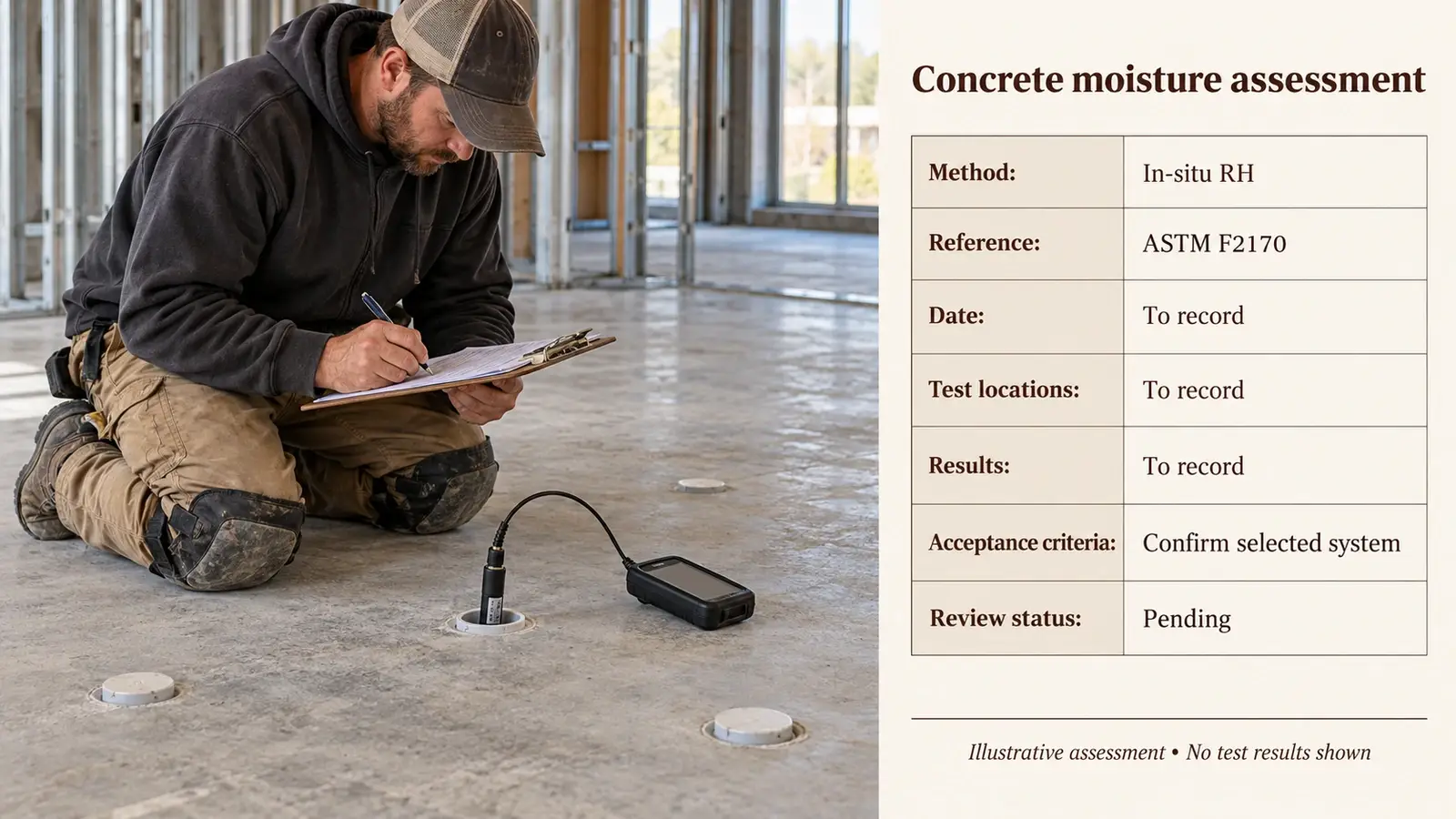
Use the moisture-test methods and acceptance criteria specified for the flooring, substrate and adhesive system. Record the results and room conditions. A slab that looks dry is not a substitute for the required assessment.
Avoid a Universal Acclimation Waiting Time
Acclimation is not simply leaving every product in the room for 48 or 72 hours. Requirements differ: some engineered instructions do not require a fixed acclimation period, while solid products may need conditioning until the stated moisture conditions are achieved.
Follow the exact storage and acclimation instructions, complete wet work and establish the required service environment before installation. Keep the indoor conditions within the permitted range afterward.
Engineered Hardwood vs Solid Hardwood Cost
Neither construction is consistently cheaper. A premium engineered floor can cost more than a basic solid floor, and a lower plank price can be offset by substrate preparation or installation work. Compare quotations for equivalent species, grade, finish, dimensions and project conditions.
| Cost item | What the quotation should identify |
|---|---|
| Flooring supply | Product reference, construction, species, grade, dimensions and finish |
| Order quantity | Net area, pack coverage, layout waste and agreed spare boards |
| Subfloor work | Removal, repairs, flattening, testing and moisture-control provisions |
| Installation | Approved fixing or jointing method, adhesive, underlay and labor |
| Interfaces | Skirting, transitions, thresholds, stairs and door adjustments |
| Delivery and handover | Freight, taxes where applicable, protection, care products and records |
Ask each supplier or installer to price the same scope and identify exclusions. For imported materials, compare the delivered project cost in the same currency and on the same commercial terms. An online material price alone is not an installed-floor budget.
Future refinishing can add value if it is technically possible and you intend to use that option. It does not establish a fixed lifespan or guarantee a higher resale value.
Which Hardwood Should You Choose
Choose engineered hardwood when greater stability or an approved installation system is the deciding factor. It is often the first category to investigate for a concrete slab, a wide-board design or a below-grade room. Check the usable wood surface if future sanding matters.
Choose solid hardwood when the room and subfloor suit the product and you value the ability to restore the wood surface over time. Confirm that the environmental conditions and movement details are realistic for the building.
For either choice, approve these details before placing an order:
- The room location, substrate, expected moisture exposure and heating system.
- Product construction, species, grade, surface-layer thickness where relevant, dimensions and finish.
- Installation method, preparation, moisture testing and movement clearances.
- Representative boards showing the accepted color, grain and natural variation.
- Maintenance, refinishing guidance, warranty, quantities and spare material.
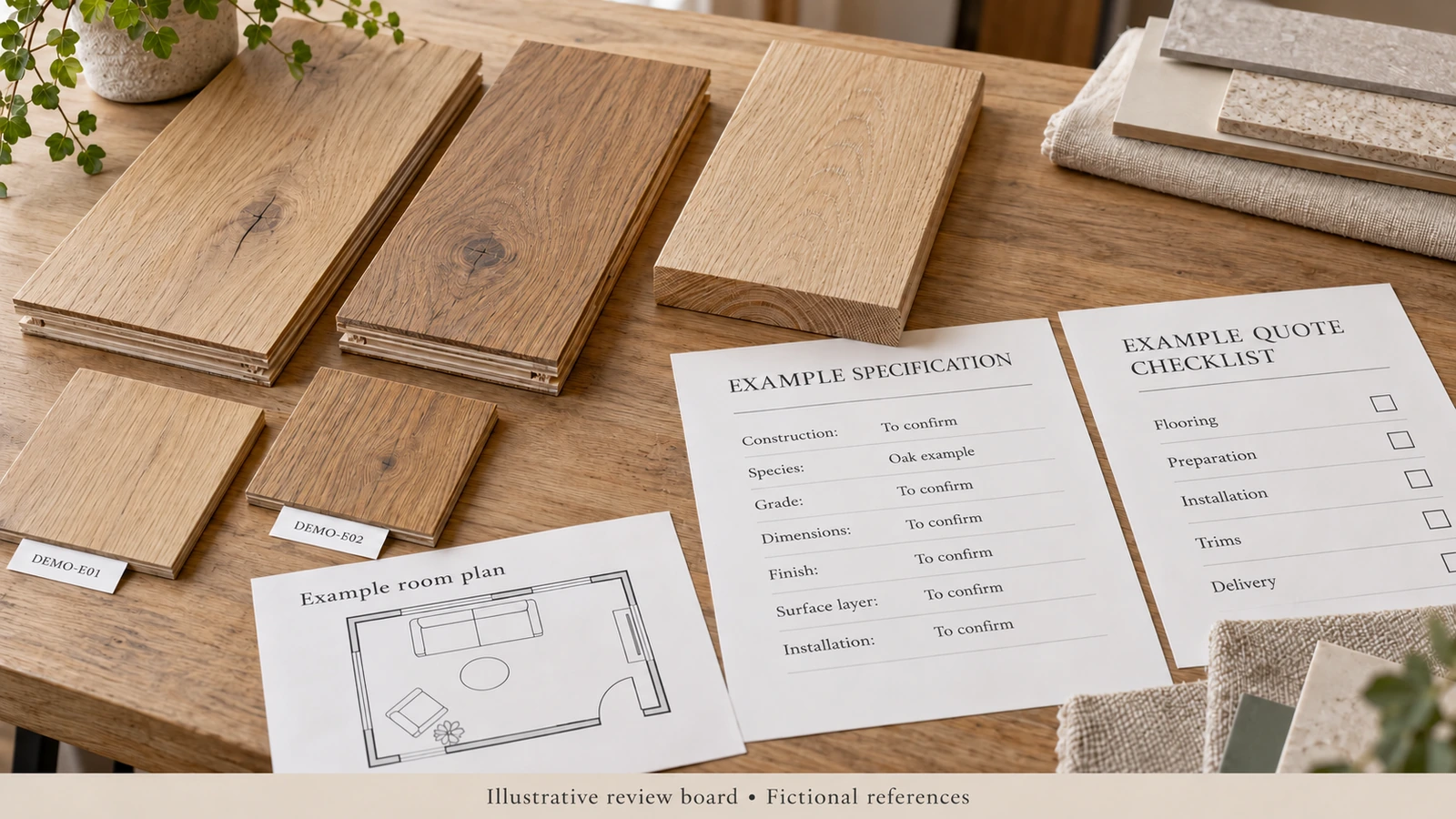
Use a room finish schedule to connect each floor reference to its location, sample and installation requirements. For a whole-house project, the villa material selection guide also helps coordinate flooring with other material packages.
Request a Flooring Comparison for Your Project
Send George House Material your flooring schedule or BOQ with room areas, substrate information, reference images, project location and delivery needs. Ask for alternatives to be identified by construction, species, finish, board size and product documentation so you can compare them on the same basis.
Frequently Asked Questions
Is Engineered Hardwood Real Wood
Yes. Its wearing surface is real wood, bonded to a supporting core. Core materials and wood surface thickness vary, so check the product specification.
Does Engineered Hardwood Scratch More Easily
Not necessarily. Surface species, finish, grit, furniture movement and care matter more than the engineered or solid label alone. Neither category is scratch proof.
How Many Times Can Engineered Hardwood Be Refinished
There is no universal number. Some products cannot be sanded; others allow refinishing subject to the remaining wood surface, floor condition and manufacturer instructions. Recoating is a separate maintenance process.
Is Engineered Hardwood Better for a Basement
An approved engineered product may be suitable below grade when moisture and substrate requirements are met. It should not be installed as a remedy for dampness or flooding.
Can Solid Hardwood Be Installed Over Concrete
It can be possible with an approved system, often including a suitable additional wood subfloor. Confirm the exact product instructions and moisture-control requirements before specifying the build-up.
Which Hardwood Is Better for Underfloor Heating
Start with products explicitly approved for the proposed heating system. Engineered construction alone does not establish compatibility, and some solid floors prohibit it. Follow the exact temperature and commissioning requirements.
Is Engineered Hardwood Cheaper Than Solid Hardwood
Sometimes, but the price ranges overlap. Compare equivalent products and include subfloor work, installation, accessories and delivery in the total quote.