By George House/16,July,2025

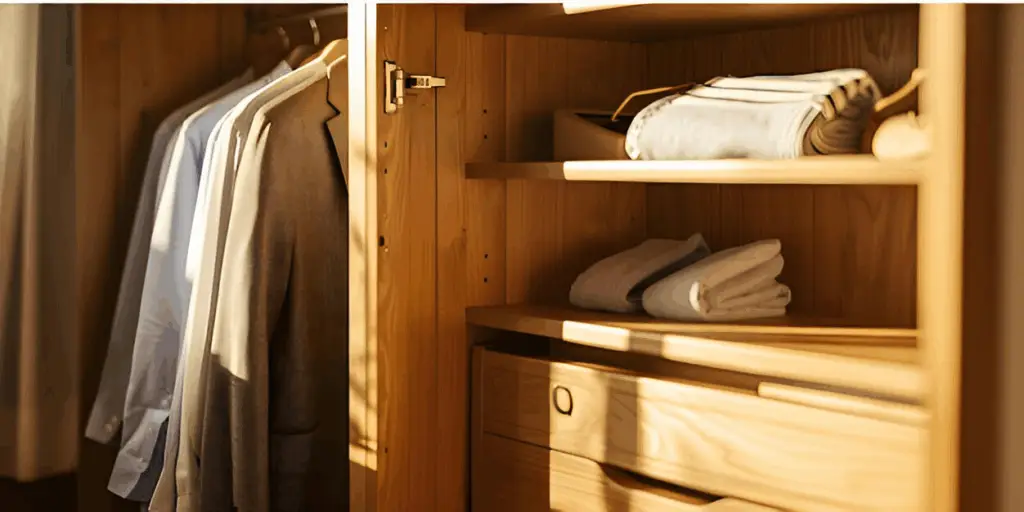
A cedar closet uses aromatic cedar as solid boards, tongue-and-groove lining, veneer, shelving, or removable accessories. The material is selected mainly for its appearance and characteristic scent. It can be a useful wardrobe finish, but it should not be specified as a guaranteed insect treatment, humidity-control system, or substitute for clean, dry storage.
What counts as a cedar closet?
A project can use cedar in several ways. A fully lined closet provides the most continuous appearance. Cedar panels or shelf liners can retrofit an existing wardrobe or cabinet. Blocks, hangers, and inserts are movable options, but their scent and surface area are limited.
- Solid lining: verify species, board thickness, profile, exposed face, backing, and fastening method.
- Veneered panel: verify substrate, edge treatment, adhesive, and formaldehyde or emissions documentation required by the project.
- Removable insert: coordinate clear internal dimensions, shelf positions, hanging rails, and cleaning access.
- Chest or sealed container: confirm hinges, lid support, ventilation instructions, and safe use around children.
Benefits—and important limits
Unfinished aromatic cedar has a recognizable scent and can give a closet a warm wood finish. It may also make small scratches less visible than a painted surface. The actual result depends on species, grade, moisture content, exposed surface area, finish, and use.
Cedar should not be presented as reliable moth control. The University of Kentucky notes that cedar closets and chests are seldom effective when they cannot maintain a sufficient concentration of cedar oil. UC IPM emphasizes laundering or dry cleaning, housekeeping, monitoring, and suitable storage. Cedar scent can fade, and removable cedar products do not make an open closet airtight.
Cedar also does not correct a damp room. Moisture sources, ventilation, air conditioning, leaks, and indoor relative humidity must be addressed separately. Store only clean, dry textiles, and follow the garment manufacturer’s care instructions.
What to specify before ordering
- Botanical or commercial species name and country of origin.
- Solid wood or veneer construction, thickness, grade, grain direction, and allowable natural variation.
- Moisture-content target at delivery and acclimation requirements for the project climate.
- Finished and unfinished faces; coatings can change appearance, odor, and cleaning behavior.
- Panel layout, trims, corners, shelf interfaces, access panels, sockets, and ventilation grilles.
- Substrate, fixing method, adhesive data, fire-performance information, and emissions documents where required.
- Shop drawings, physical sample, mock-up, packing method, and replacement-piece allowance.
For a complete wardrobe package, coordinate cedar lining with the wardrobe layout, hardware, shelf loading, door clearances, lighting, and the room’s moisture strategy. Coordinate the timber specification with other solid-wood products where a consistent species or finish is required. Record approved materials in the finish schedule rather than relying on a catalog image.
Cleaning and refreshing the surface
Vacuum dust with a soft attachment and use a lightly damp cloth only if the supplier permits it. Do not saturate the boards. Before sanding or applying a refresher product, confirm that the cedar is solid rather than a thin veneer, isolate clothing, test a concealed area, and follow the product’s safety and ventilation instructions. Sanding changes dimensions and surface appearance, so it should not be treated as a fixed annual task.
Cedar closet RFQ checklist
- Closet plan, elevations, clear internal sizes, and lining area.
- Species, construction, thickness, finish, sample, and acceptable color range.
- Substrate, fixing, edge and corner details, ventilation, and interfaces.
- Required certificates, shop drawings, mock-up, warranty terms, and maintenance manual.
- Quantity, spare material, packaging, delivery sequence, and site storage conditions.
The best cedar closet specification treats cedar as one component of the storage system. Verify the physical sample, details, and supplier documents, then combine the material with clean garments, controlled moisture, and a practical inspection routine. Include drawings, quantities, and required documents when you request a project quotation.