By George House/11,Mar,2026
Proper measurements are needed to create a comfortable kitchen or bathroom. This is an aspect that is not considered by many homeowners during renovations. However, a single figure has more influence on posture, comfort, and daily routine than anticipated. That is countertop height.
When surfaces are either too high or too low, individuals experience tension when cooking or grooming. Designers tend to adhere to proven principles that are comfortable and practical.
We will describe popular standards, seating size, accessibility regulations, and design plans to enable homeowners to create useful spaces that really work.
Kitchen Standard Residential Heights
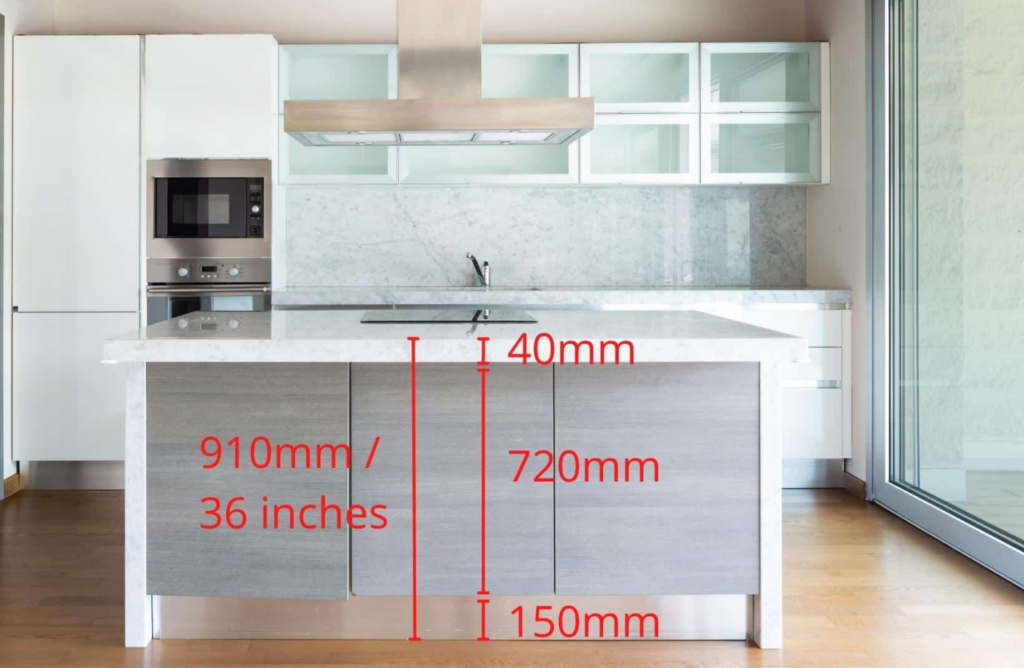
The majority of residential kitchens are based on a simple standard that builders rely on. The average height of the countertop is 36 inches above the finished floor. This dimension is effective with most adults as it is consistent with average elbow positions during food preparation.
Kitchen counters adhere to that principle. Appliance compatibility is also a factor that designers put into consideration when determining the final countertop height. Dishwashers, ranges, and cabinets are compatible with the 36-inch standard.
This alignment produces a smooth surface within the workspace. Nevertheless, personalization can enhance comfort. Taller people might want higher counters, and Shorter users lower. The standard is thus seen by the builders as a guideline and not a strict rule.

Bathroom Vanity Standard Residential Heights
Bathrooms do not work the same as kitchens. Grooming activities involve more contact with the countertop. Individuals incline toward sinks and mirrors in their day-to-day activities. Designers thus consider the dimensions of vanity before installation. Let us describe typical standards in bathrooms.
Standard/Old School: 30–32 inches
Vanities in older houses are usually between 30 and 32 inches high. The height of the countertop was previously thought to be appropriate by builders for the majority of adults. With time, homeowners started experiencing posture pain when grooming.
The lower vanity surfaces may at times compel the user to bend forward. That stooping causes unwarranted back pressure in day-to-day activities. In spite of these fears, the traditional aspect is still evident in most households. Others use it on children or shorter adults.
The height of the countertop is sometimes maintained in renovation projects to match older cabinetry systems. Current design trends are slowly changing to higher heights of vanity since they will lessen the bending when performing the grooming process.
Comfort Height: 36 Inches
The comfort height vanities are 36 inches, which is equal to the normal kitchen counters. This counter top height has become popular in recent years. It is less taxing on the backs and shoulders of many homeowners.
This modification is particularly valued by taller adults when performing their daily activities, such as brushing teeth or washing hands. Vessel sinks and contemporary faucet designs also go well with a higher countertop height.
Such fixtures tend to need extra vertical space over the cabinet surface. The other benefit is storage space. Taller cabinets have deeper drawers and more shelf space. That enhancement assists families in arranging bathroom supplies in a more effective way.
Laundry Room: 36 Inches On Average
Laundry rooms are based on a pragmatic standard that resembles kitchens. The majority of laundry counters are about 36 inches. This counter top height enables the homeowners to fold clothes without straining too much.
An easy folding table close to these machines enhances efficiency in the workflow. Washing chores can be very demanding in terms of standing. An appropriate countertop height minimizes fatigue during folding and sorting.
Counters are often mounted over front-loading washers and dryers by designers to make the most of the vertical space. Storage above the folding area is also a good idea in the cabinet to enhance organization. This mix turns a simple laundry room into a properly organized working environment that facilitates daily home activities.

Seating Heights (Dining and Social)
Countertops are used as meeting places. Families have meals, talk to friends, or do homework at kitchen islands. Sitting thus needs a lot of height coordination. There are various types of seating associated with certain surface measures. Knowledge of such relationships assists homeowners in selecting comfortable stools or chairs that suit the preferred countertop height.
Kitchen Table/Desk
Normal kitchen tables and desks are 30 inches in height. This counter top height is comfortable to sit on with normal chairs. The dimension coincides with the office ergonomics of desks.
Research conducted at Cornell University states that a 30-inch surface height lowers the strain on the wrist when performing seated work activities. The same applies to dining tables since the posture is the same during meals.
Tables, though not kitchen counters, do interact with the counter height of the surrounding environment in the kitchen. Designers usually ensure that there is a visual distinction between work areas and dining.
Balanced interiors are achieved through consistent proportions. The families thus feel comfortable in the process of cooking and dining.
Counter Height
Counter height seating is used on surfaces that are 36 inches high. This measurement is used in many kitchen islands since it is the same as the standard countertop height requirements.
Counter height stools are usually approximately 24 to 26 inches high. Such spacing gives room for comfortable legroom under the surface. The designers want the distance between the seat and the counter to be approximately 10 to 12 inches.
Counter height seating promotes casual dining and socialization. Visitors are able to relax as chefs go on with food preparation. This seating promotes talking at dinner tables. Families, thus, like islands that have preparation surfaces as well as relaxed seating.
Bar Height
The height of bar height counters is typically 40-42 inches. This higher counter top height establishes a separate social area in kitchens or entertainment rooms.
Bar stools that are used in this arrangement are typically 28 to 30 inches high. The elevated height gives the pub-style environment of meetings. It gives the illusion of dividing entertainment areas and cooking areas.
This is a popular arrangement with many homeowners who have guests. The high counter provides a comfortable environment and keeps the counter out of the way of the cooking zone.
Design Tips for Personalization
Normal measurements provide a good baseline. However, each family has its own tastes and habits. Countertop height is often designed to suit designers to provide more comfort and functionality. The strategies below assist homeowners in customizing surfaces to their own requirements.
The Elbow Rule
According to the Occupational Safety and Health Administration (OSHA), work surfaces that are located slightly below the level of the elbow minimize muscle exhaustion. This location facilitates easy food preparation in extended cooking periods.
Homeowners also use the height of their elbows to determine the size of the cabinets. The final countertop height is then modified by the builders to fit the main cook.
Multi-Level Islands
Many modern kitchens feature islands with multiple surface heights. One section may follow standard countertop height for food preparation. Another section may rise to bar height for seating.
This arrangement supports multiple activities within the same area. Children can complete homework while adults prepare meals nearby.
Material Thickness
Countertop materials vary widely in thickness. Granite slabs often measure around 3 centimeters, while some engineered surfaces may be thicker or thinner.
Material thickness directly affects final countertop height calculations. Builders must consider cabinet height plus material thickness to reach the intended measurement.
Wrapping Up
Choosing the correct countertop height shapes comfort in kitchens, bathrooms, and laundry rooms. Standard measurements provide useful guidance. Personal habits still influence the final decision.
George Group offers reliable cabinet and countertop solutions that help homeowners build practical spaces with balanced proportions and lasting functionality.