Non-slip floor tiles are hard-surface flooring products selected for slip-resistance-related properties under defined test and use conditions. No tile is “slip-proof.” Suitability depends on the exact product, expected water or contaminants, slope, drainage, footwear, traffic, cleaning, wear and installation.
Use manufacturer classifications and test data that match the project and market. Do not select a tile from texture, gloss level, a generic R-number or a marketing phrase alone.

What “Non-Slip” Means
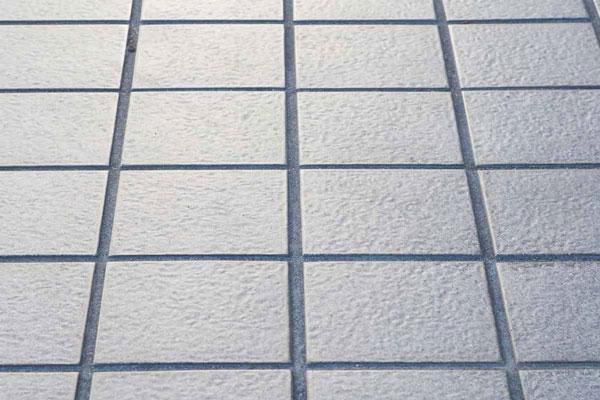
Slip resistance is not a permanent guarantee that a person cannot fall. Water, soap, oil, dust, worn footwear, slope, surface wear and maintenance can change the condition. The Tile Council of North America explains that dynamic coefficient of friction (DCOF) is useful for comparing hard surfaces but is not synonymous with slip resistance and does not predict every slip event.
DCOF and R-Ratings Are Different Systems
| System | What it describes | Selection control |
|---|---|---|
| ANSI A326.3 | Laboratory and field test method for DCOF of hard-surface flooring, with product use classifications | Use the manufacturer’s declared classification and project conditions |
| DIN 51130 R-rating | Shod-foot ramp test under specified conditions, commonly expressed from R9 to R13 | Use the required standard, exact report and local specification; do not convert directly to DCOF |
| Other national or project methods | May address different contaminants, footwear, barefoot areas or test procedures | Follow the destination standard and qualified specifier’s requirements |
The current ANSI A326.3 information from TCNA uses product use categories such as Interior, Dry; Interior, Wet; Interior, Wet Plus; Exterior, Wet; and Oils/Greases. A measured value should not be the only selection factor. R-ratings use another method and should not be mapped to universal room recommendations without the applicable project standard.

Where Non-Slip Floor Tiles May Be Needed
| Area | Conditions to define | Evidence to request |
|---|---|---|
| Dry interior circulation | Traffic, cleaning method, footwear and tracked-in moisture | Applicable dry-interior classification or project-required test data |
| Bathrooms and interior wet areas | Barefoot or shod use, water, soap, drainage, slope and cleaning | Classification and report applicable to the intended wet use |
| Commercial kitchens or food areas | Oil, grease, food residue, intensive cleaning and footwear | Manufacturer declaration or test evidence for the expected contaminants |
| Exterior terraces and entrances | Rain, drainage, slope, freeze-thaw exposure, dirt and wear | Exterior-wet suitability plus relevant durability information |
| Pool surrounds | Barefoot use, standing water, chemicals, drainage and local safety rules | Project- and jurisdiction-specific classification and documentation |
| Ramps and inclined surfaces | Slope, direction of travel, drainage, footwear and accessibility | Qualified design review; do not assume a level-floor classification covers a ramp |
The location name alone is not enough. Two bathrooms or entrances can have different water exposure, traffic and maintenance. Final selection should be made by the project specifier using the exact product data and local requirements.
Surface, Size, Grout and Drainage
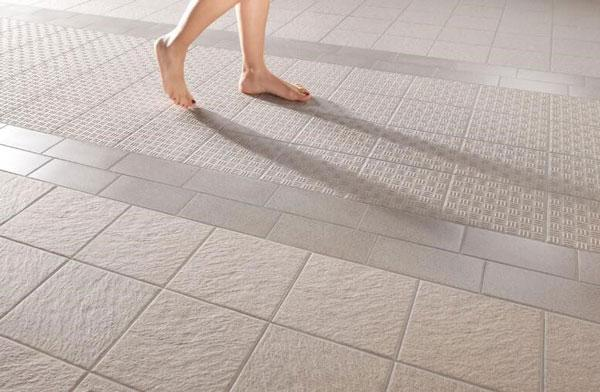
- Surface texture: deeper textures may improve grip in some conditions but can increase cleaning effort and retain contaminants.
- Tile size: smaller modules can create more grout joints and help form slopes, but grout lines do not guarantee slip safety.
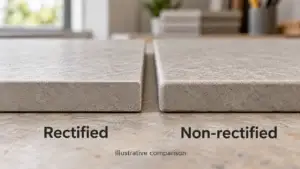
- Edges and joints: coordinate rectified or non-rectified edges, joint width, lippage control and movement joints.
- Slope and drainage: standing water can increase risk. Coordinate falls, drains, transitions and water flow with the substrate and waterproofing design.
- Finish variation: verify that samples and test reports refer to the same surface, color, production reference and treatment as the proposed tile.
Exterior and High-Exposure Areas
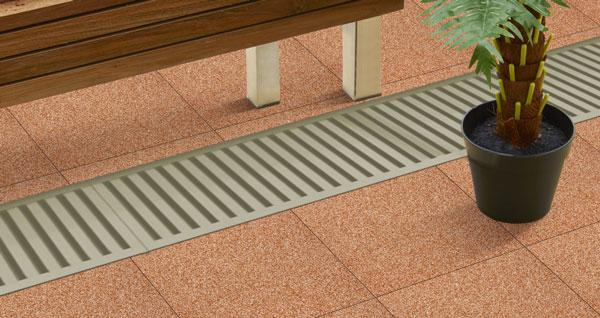
For outdoor areas, also review water absorption, freeze-thaw exposure where relevant, breaking strength or load requirement, stain resistance, thermal movement, substrate, adhesive, grout and movement joints. A tile that suits an interior wet area is not automatically suitable outdoors.
Cleaning and Maintenance Affect Slip Resistance
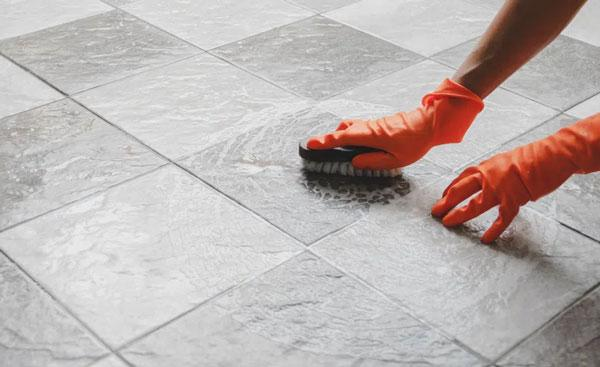
- Follow the tile and cleaning-product manufacturer’s instructions.
- Remove loose grit before wet cleaning to limit abrasion and residue.
- Use a method that reaches textured recesses and removes the actual contaminant.
- Avoid assuming bleach, acid, baking soda or one “neutral” cleaner suits every tile, grout or coating.
- Inspect for worn surfaces, damaged grout, lippage, ponding water and blocked drains.
- Reassess the floor when use, contaminants, cleaning chemicals or traffic change.
Non-Slip Tile RFQ and BOQ Checklist
- Area reference, room or zone and quantity
- Interior or exterior use and expected traffic
- Dry, wet, barefoot, oil, grease or other contaminant condition
- Flat floor, ramp, stair, pool surround or other special geometry
- Required test method, product use classification and destination standard
- Tile type, nominal size, thickness, finish, color and edge
- Water absorption, frost or load requirements where relevant
- Substrate, waterproofing, slope, drains, adhesive, grout and joints
- Representative sample and exact test report for the proposed surface
- Cleaning, maintenance and replacement information
- Packing, batch control, spare quantity and delivery sequence
George House Material can coordinate tile schedules, samples, quotations and supporting product information around the available project requirements. Review the project tile range and send the floor plan or BOQ through the project enquiry page.
Frequently Asked Questions
Does a higher R-rating always mean the tile is right for the project?
No. The required test method, contaminants, cleaning, footwear, slope and local specification must be considered. A rougher surface can also be harder to clean.
Are matte tiles automatically non-slip?
No. Appearance alone is not evidence. Review the exact product’s classification or test data for the intended use.
Do smaller tiles prevent slips?
Smaller modules may add grout joints and help form drainage slopes, but they do not guarantee slip resistance. Product properties, installation and maintenance still control the floor condition.