By George House/15,Apr,2026
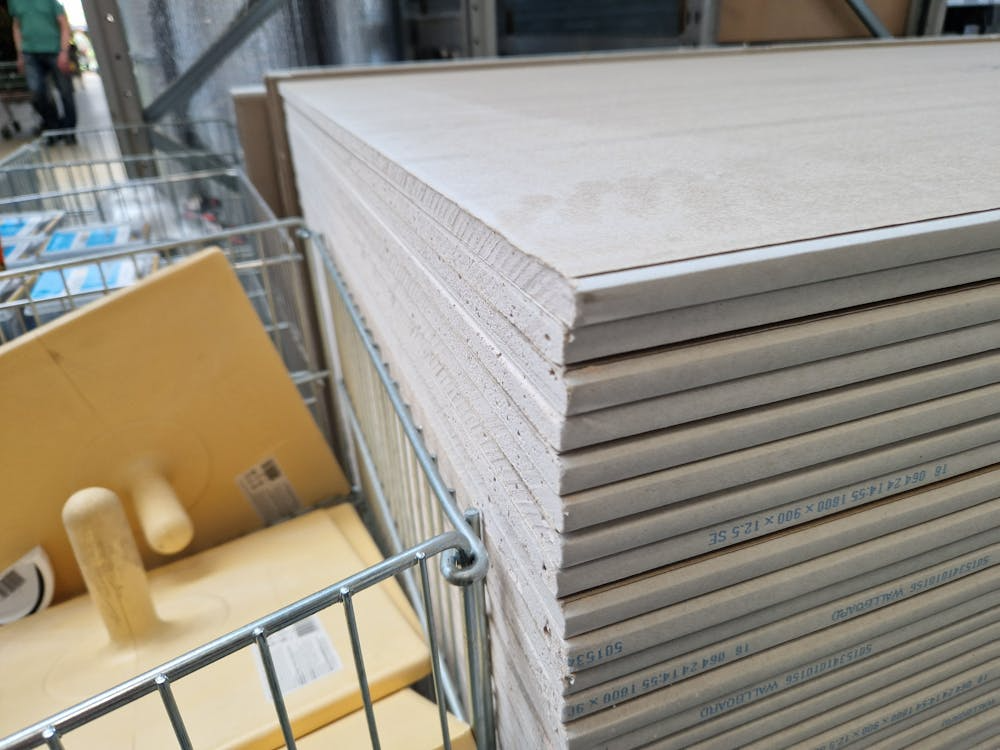
Sheetrock vs drywall is mainly a question of brand name versus product category. Drywall is the general term for gypsum-board wall and ceiling panels, while Sheetrock is a brand used for products within that category. The project decision should focus on the exact panel type, thickness, edge, performance documentation and finish requirement.
Do not assume that every panel is interchangeable. Wet exposure, fire-resistance assemblies, acoustics, impact risk, framing, fasteners and local code requirements can change the approved system.
Sheetrock and Drywall Compared
| Question | Drywall | Sheetrock |
|---|---|---|
| What is it? | A generic category of gypsum-based panels | A brand name associated with specific gypsum-panel products |
| How should it be specified? | By manufacturer, product code, type, size and tested assembly | By the exact branded product and the same project criteria |
| Does the name prove performance? | No; verify the selected panel and complete system | No; verify the selected branded product and complete system |
| Can products be substituted? | Only after equivalent documentation and system compatibility are reviewed | Only through the project’s approved-substitution process |
Choose the Panel for the Exposure
| Condition | Selection Questions |
|---|---|
| General dry interior | What thickness, framing spacing, edge and finish level are required? |
| Humid or splash-prone area | Is gypsum board permitted, and what moisture-resistant product and finish system are approved? |
| Fire-resistance requirement | Which tested wall or ceiling assembly must be reproduced, including framing and fasteners? |
| Acoustic separation | Which complete assembly, joints, penetrations and perimeter seals meet the target? |
| Impact or fixing load | Are backing, denser panels or another substrate needed for the expected use? |
| Curved or detailed surface | What radius, layer build-up and installation method does the manufacturer permit? |
Where gypsum board meets stone or another heavy finish, coordinate substrate capacity, movement and fixing requirements with the types of stone selection guide.
Coordinate Openings and Interfaces
Wall thickness affects door jamb depth, trims, reveals and hardware clearances. Confirm the framed opening and finish build-up alongside the standard door frame width guide before closing the wall.
- Provide backing for cabinets, handrails, screens and wall-mounted fixtures.
- Coordinate service penetrations before board installation.
- Keep required movement and control joints continuous through the finish system.
- Protect board edges from standing water and unsuitable storage conditions.
- Use accessories, compounds and fasteners accepted for the selected panel and assembly.
Specify the Finish Level and Lighting
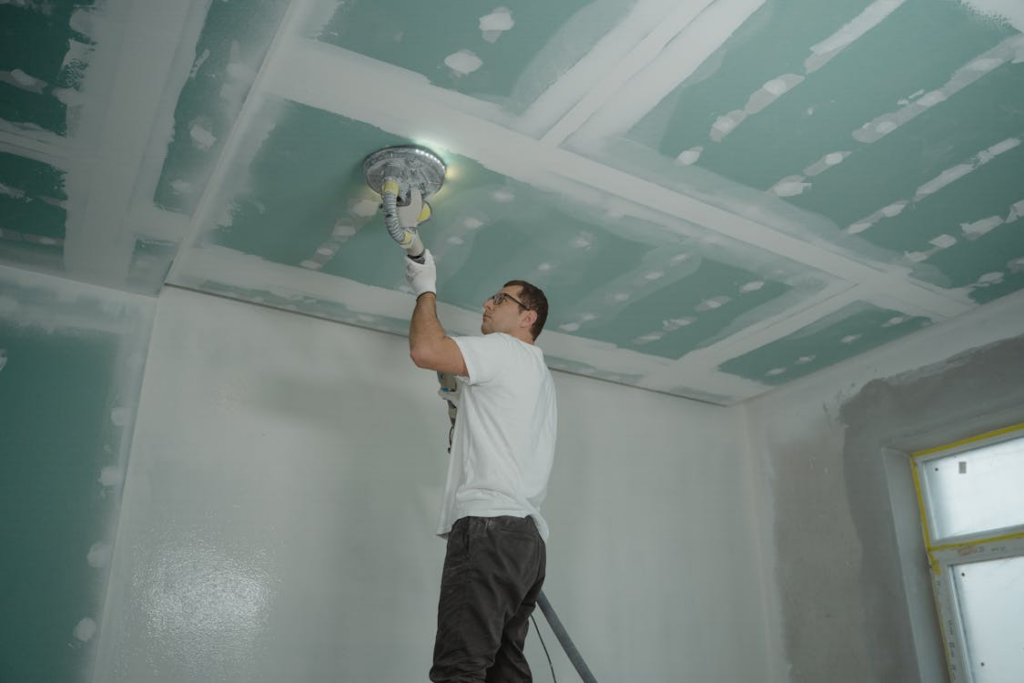
Finish expectations should match the final decoration, viewing distance and lighting. Strong grazing light can reveal joints and surface variation that are less visible under diffuse lighting. State the required finish level, mock-up area, primer, paint sheen and acceptance conditions before work begins.
Renovations also need sequencing and protection controls. The apartment renovation planning guide helps connect wall work with occupied-building access, services and room-by-room decisions.
Basement and Moisture-Risk Conditions
Gypsum panels should not be used to conceal an unresolved leak, damp substrate or condensation problem. Diagnose the moisture source, dry the assembly, and select materials for the verified exposure. Review below-grade layout and moisture controls in the basement design guide.
Drywall RFQ and Submittal Checklist
- Wall and ceiling types keyed to plans, elevations and room finishes
- Manufacturer, product code, thickness, width, length and edge profile
- Framing, backing, fasteners, adhesive, joint treatment and accessories
- Required fire, acoustic, moisture, impact or other system documentation
- Penetration, perimeter seal, head-of-wall and movement-joint details
- Finish level, primer, decoration system, lighting condition and sample panel
- Delivery, dry storage, handling, installation sequence and protection
- Approved substitution, inspection, repair and closeout procedures
Material claims should also be product-specific. If environmental criteria apply, use the evidence hierarchy in the sustainable home materials guide to request relevant declarations rather than relying on broad labels.
Specify the System, Not the Nickname
For procurement, Sheetrock vs drywall is not a performance conclusion. Identify the intended assembly, exposure, finish and evidence, then approve the exact panel and compatible components that meet those requirements.