By George House/16,May,2026
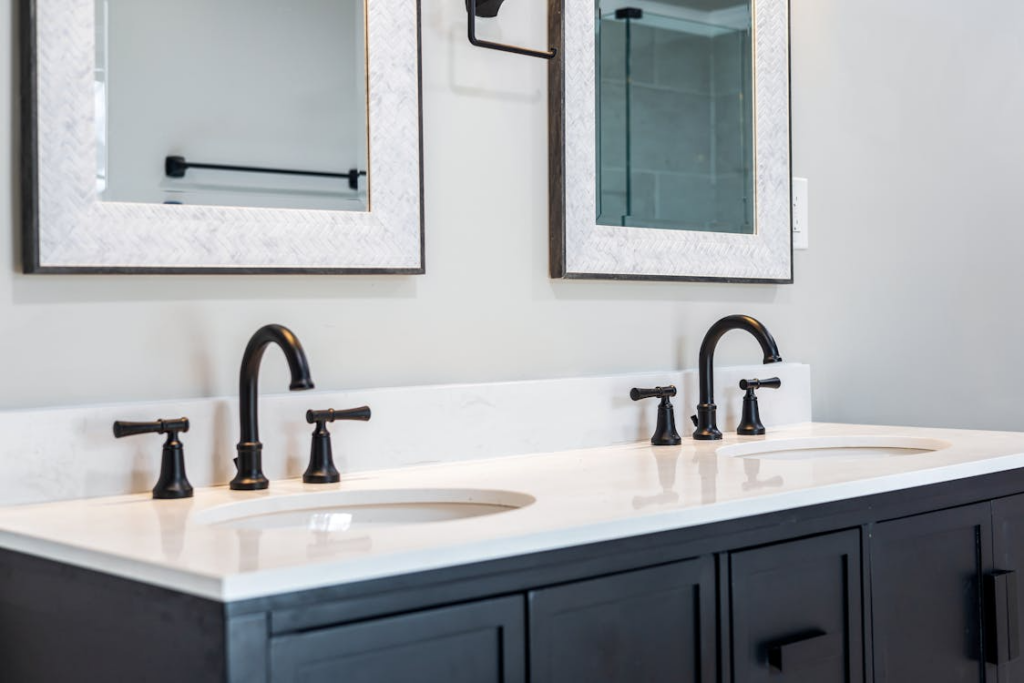
A standard vanity height is commonly planned between 30 and 36 inches (762–914 mm) from the finished floor to the cabinet or counter, but the correct project dimension depends on what is being measured. A vessel basin adds height above the counter, while a drop-in or undermount basin keeps the usable rim closer to the worktop. User needs, plumbing, mirror position and local accessibility requirements can all change the final dimension.
Use common dimensions as early planning references, not automatic ordering sizes. Record the finished-floor datum, counter level, basin type and installed basin-rim height on the elevation. Then coordinate the selected product data before approving the cabinet.
Standard Vanity Height Reference
| Planning reference | Typical use | Critical check |
|---|---|---|
| 30–32 in (762–813 mm) | Traditional or lower vanity layouts | User fit, storage and whether the basin raises the usable rim |
| 34 in (864 mm) | Project-specific accessible layouts may use this as a maximum reference | Governing rules, rim or counter measurement, knee space and clear floor area |
| 34–36 in (864–914 mm) | Common comfort-height residential planning range | Final basin-rim height, faucet reach and mirror relationship |
| Project-specific | Vessel basins, children’s rooms or shared facilities | Approved basin dimensions and actual users |
(Source)
Measure Every Height from the Finished Floor
Drawings should state whether a dimension reaches the cabinet carcass, counter surface, basin rim or top of a vessel basin. These are not interchangeable. Tile build-up, stone thickness and an above-counter bowl can move the final usable height several inches even when the cabinet is manufactured exactly as ordered.
Confirm the finished floor level before site measurement and mark the reference on the elevation. The broader countertop height planning guide explains how datum and work-surface use affect other rooms, while this page stays focused on bathroom vanities.
Coordinate Vanity Height with the Sink Type
Drop-In and Undermount Sinks
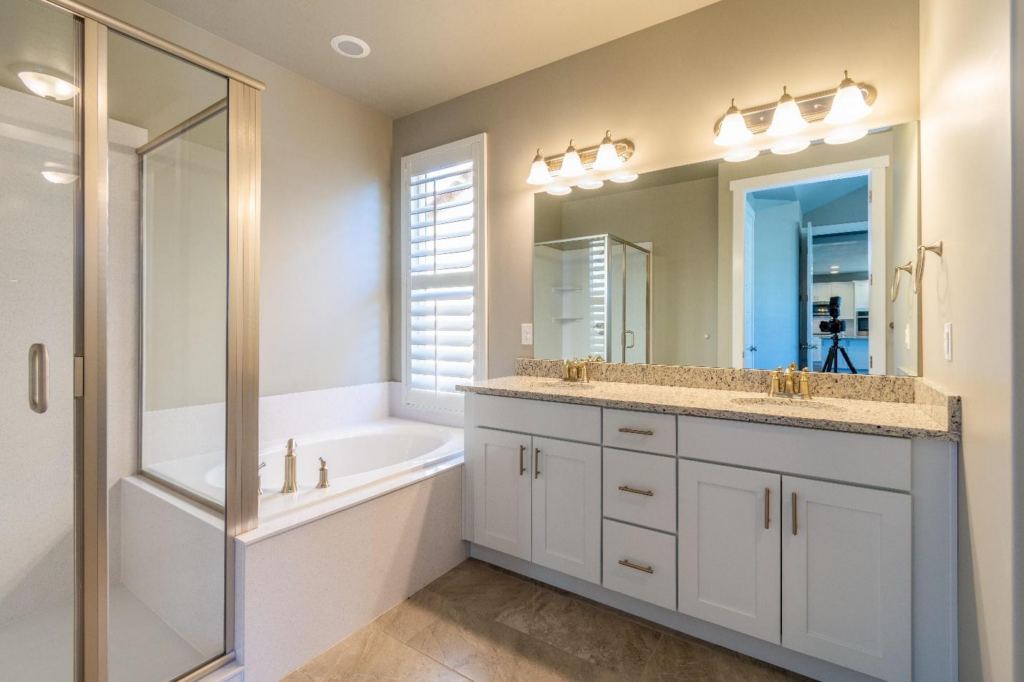
With a drop-in or undermount sink, the counter usually establishes the main working height. Still, the sink rim, bowl depth, waste fitting and drawer arrangement must fit together. A deep bowl can conflict with the top drawer or force the trap lower than expected.
Vessel Sinks
A vessel basin sits partly or fully above the counter. Lower the cabinet and counter as needed so the installed rim remains comfortable. The product drawing must show the basin height, outlet position, faucet relationship and any mounting ring. Do not apply a 36-inch cabinet height and then add a tall bowl without checking the result.
(Source)
Plan for Users and Project Accessibility Requirements
A household vanity should suit the people who use it and the tasks performed there. Review standing posture, reach to the faucet, children’s use and whether more than one user needs the basin. A taller cabinet is not automatically more ergonomic, and a lower cabinet is not automatically accessible.
Where U.S. ADA requirements apply, the U.S. Access Board states that the higher of the lavatory rim or counter is 34 inches maximum, together with other clearances and controls. Confirm the governing code and complete layout rather than treating height alone as compliance. Nearby fixture coordination can be checked against the comfort-height toilet selection guide and the shower dimension planning guide.
Technical reference: U.S. Access Board — Lavatories and Sinks.
Check Plumbing, Storage and Door Clearances
Set the water supplies, waste outlet and trap around the chosen basin and cabinet construction. Record any removable access panels and confirm whether drawers require notches or reduced depth. In an accessible layout, knee and toe space and pipe protection can substantially change the cabinet design.
Also test door and drawer swings against the bathroom door, toilet, shower screen and circulation route. A vanity that fits the wall can still be unusable if hardware collides or a drawer cannot clear the basin waste.
For a double vanity, dimension both basin centerlines and check the clear space between users, faucet handles and mirrors. Do not divide the cabinet width in half without checking drawer modules and waste positions. If the vanity is wall-hung, record the supporting wall construction and fixing zone; the finished counter height must remain correct after the brackets, carcass and top are assembled.
Coordinate the Mirror, Faucet and Backsplash
Vanity height affects the faucet, splash, mirror and lighting. Confirm spout reach into the bowl, handle clearance, wall-mounted faucet rough-in and space for cleaning behind a vessel basin. Draw the mirror and backsplash from the same finished-floor datum, including outlets and wall lights.

(Source)
Vanity Drawing and BOQ Checklist
- Room number and vanity mark
- Finished-floor datum and counter height
- Basin type, model, rim height and cutout
- Counter material, thickness, edge and backsplash
- Cabinet width, depth, construction and exposed finish
- Faucet model, mounting and spout reach
- Supply, waste, trap and access locations
- Drawer, door and nearby fixture clearances
- Mirror, lighting and outlet dimensions
- Accessibility criteria where applicable
Standard Vanity Height FAQ
Is a Bathroom Vanity Usually 34 or 36 Inches High?
Both appear in current residential planning. A 34-inch counter can suit some projects, while 36 inches is a common comfort-height reference. Select the dimension after checking the basin, users and project requirements.
How High Should a Vanity Be with a Vessel Sink?
Start with the desired installed basin-rim height, subtract the vessel basin’s height above the counter, then coordinate counter thickness and cabinet construction. Verify the calculation on the approved product drawing.
Finalize the Vanity Schedule Before Ordering
The most reliable standard vanity height is the one defined consistently across the plan, elevation, plumbing drawing, cabinet shop drawing and product schedule. Use the 36-inch bathroom vanity guide for that common size and the sanitary ware selection overview to coordinate basins, faucets and adjacent fixtures before quotation.