If you are choosing between two otherwise identical windows, a warm-edge spacer usually keeps the room-side edge of the glass warmer on cold nights. It is worth pricing if water often collects along the bottom of your bedroom windows in winter. To judge the extra cost, ask for the whole-window U-factor for each option and the price difference for the openings you plan to order.
A window with a conventional aluminum spacer can still be a sensible buy if it meets your project’s energy target and winter condensation is rarely a problem. If your main concern is a room that overheats in afternoon sun, check the glass’s solar properties and the shading first.
What sits at the edge of double glazing?
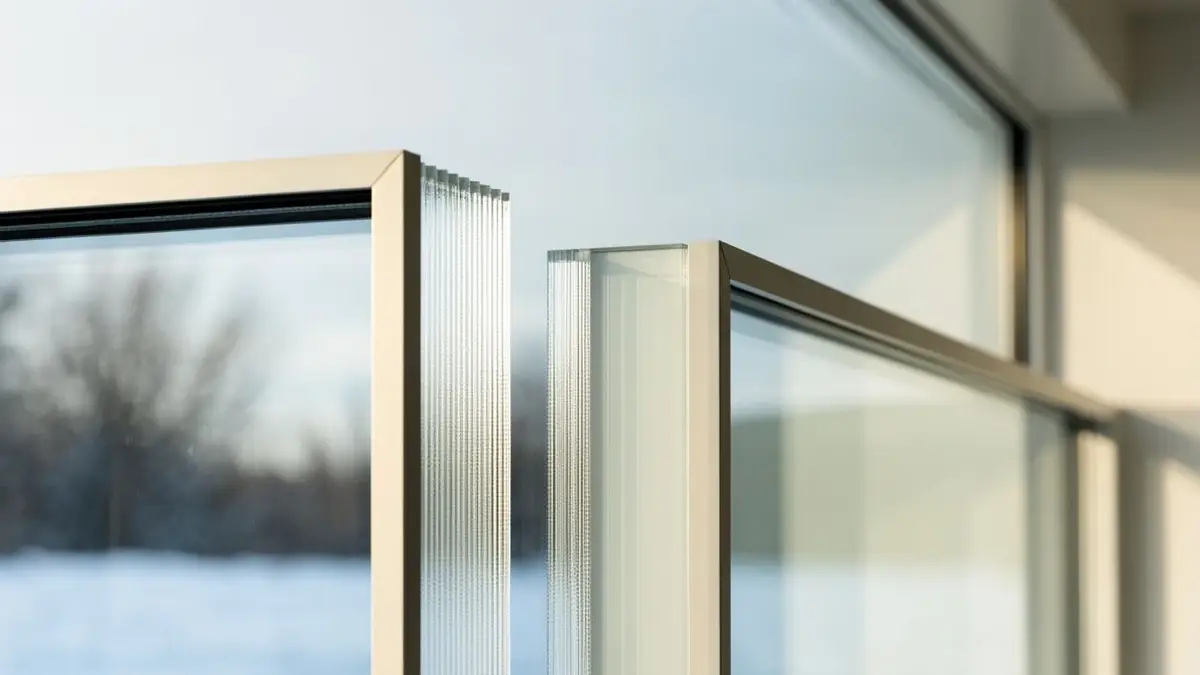
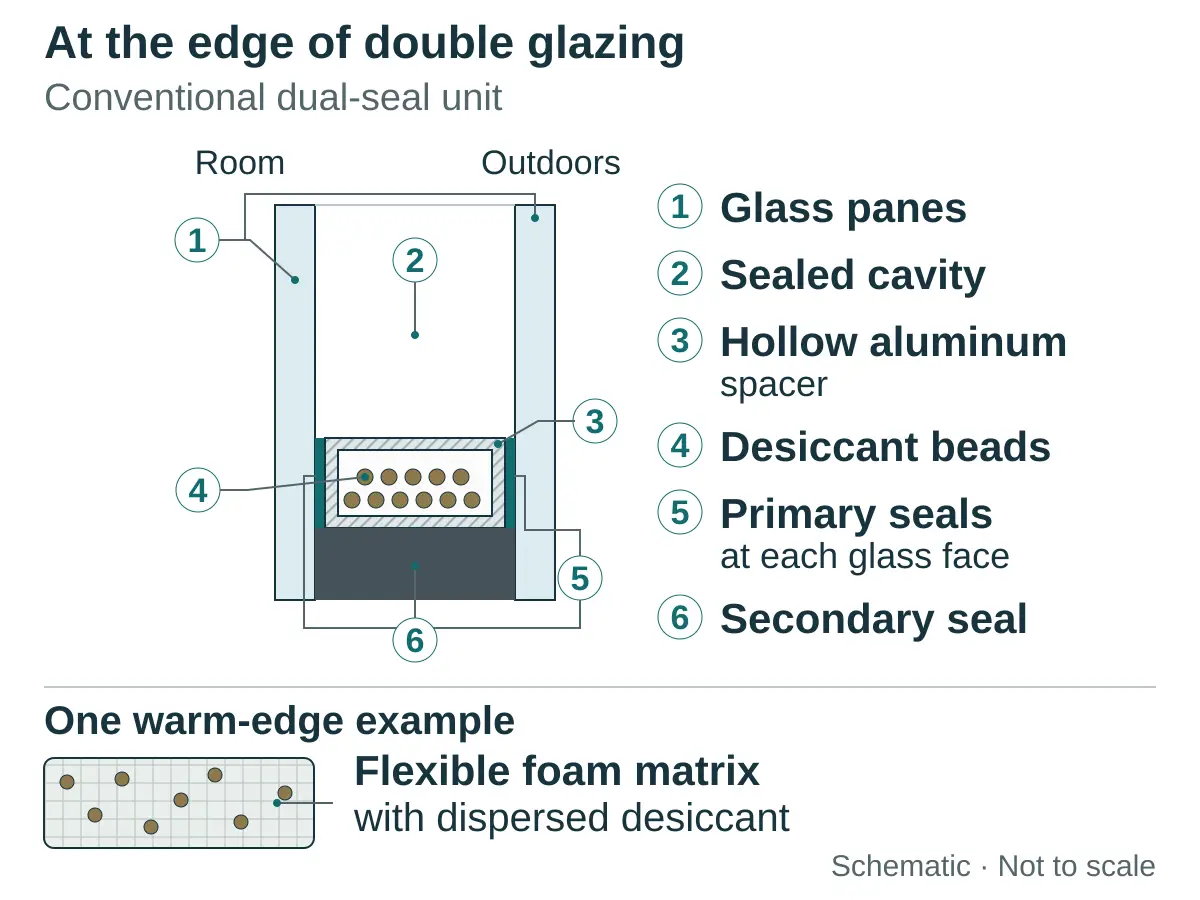
Look through a double-glazed window near one corner. The narrow strip running between the two panes is the spacer. It holds them apart around the perimeter of the insulating glass unit (IGU), leaving a sealed cavity for air or gas. A conventional aluminum spacer, usually written “aluminium spacer” in Australia, is often a hollow metal bar.
In a typical dual-seal unit, a thin primary seal runs where each side of the spacer meets the glass. It limits moisture entering the cavity and helps retain any insulating gas. A secondary seal behind the spacer bonds the assembly together. A drying agent called desiccant traps residual moisture in the cavity. It may sit inside a hollow bar or be built into a flexible spacer. Guardian Glass illustrates these components.
How the two spacers compare
| What changes | Conventional aluminum | Warm edge |
|---|---|---|
| Path for heat | The metal bar conducts heat readily across the edge of the cavity. | Foam, polymer-and-metal hybrids and some thin stainless-steel designs reduce that heat path. |
| On a cold night | The glass next to the bar can cool enough for indoor moisture to condense there first. | With the same glass and frame, the room-side edge can stay warmer. Humid indoor air can still condense on it. |
| What to identify | Ask for the spacer description and cavity width on the glass specification. | Ask for the spacer make and model. A dark finish alone tells you little about its construction. |
Which whole-window rating should you ask for?
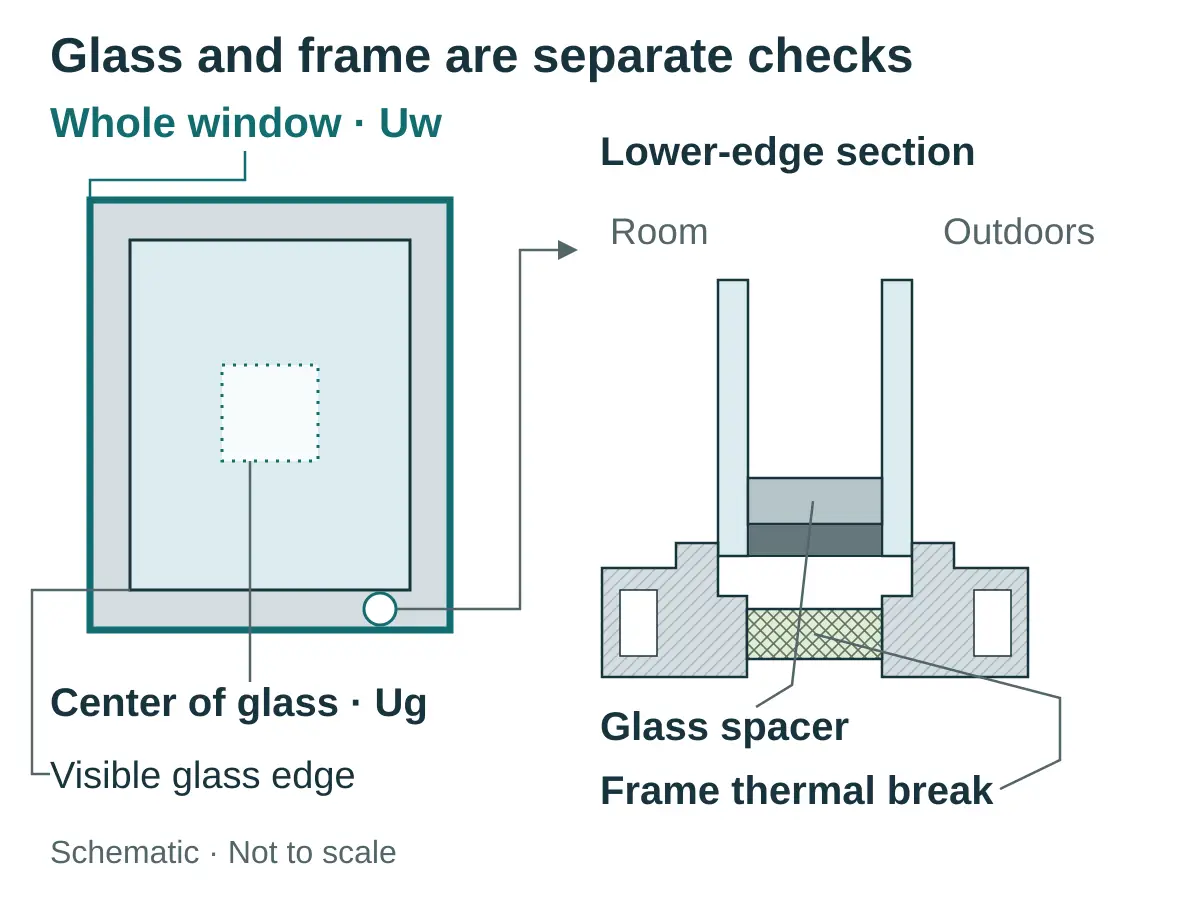
A glass brochure may give a center-of-glass U-value, often marked Ug. That figure describes heat transfer well away from the spacer. Two units with the same panes, coating, cavity and gas can have the same center value and different edge temperatures. For the purchase decision, ask for the U-value of the assembled window, which includes the glass, its edge and the frame. A lower value means less heat passes through at the same temperature difference.
The insulating strip inside a thermally broken aluminum frame sits in a different place. It separates the inner and outer sections of the metal frame. A quote can specify a thermally broken frame and still leave the glass spacer unspecified. See how a frame thermal break works.
Australia: match the WERS listing to your quote
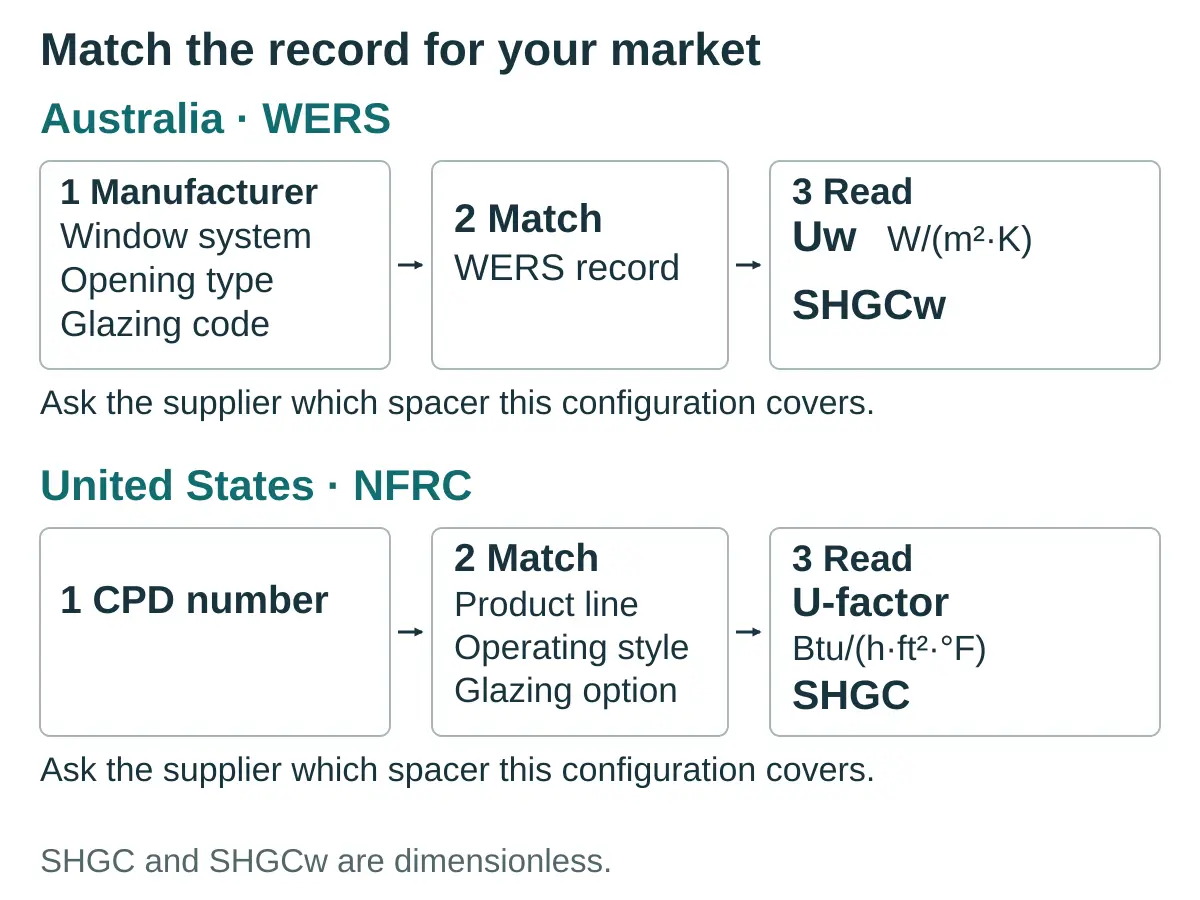
If a quote cites the Window Energy Rating Scheme (WERS), ask for the manufacturer, window system, opening type and glazing code behind its whole-window Uw, expressed in W/(m²·K). Look up that combination in the WERS product directory. Have the supplier confirm in writing which spacer the glazing code covers, especially if the quote offers an upgrade. If your house has an energy assessment, check its required Uw and SHGCw for that opening.
SHGCw is the whole-window solar heat gain coefficient. A lower number admits less solar heat. That can help with an exposed west-facing room, while a shaded opening or a room that benefits from winter sun may call for a different choice. Australia’s YourHome glazing guide explains how orientation and shading affect that decision.
United States: match the NFRC product record
Ask for the National Fenestration Rating Council (NFRC) label or Certified Products Directory number for the quoted version. Match the product line, operating style and glass option in the NFRC Certified Products Directory. Read the whole-product U-factor and SHGC together. US U-factors are commonly reported in Btu/(h·ft²·°F). Compare the two quotes in the same units and under the same rating method.
NFRC uses standard model sizes for comparison. If your designer needs a value calculated for the actual opening, ask for it separately. If a supplier provides a condensation rating, check its name, too. NFRC labels may show Condensation Resistance (CR) or Condensation Index (CI). Compare CR with CR, or CI with CI. Within the same method, a higher score means greater resistance to interior condensation under the rating conditions. See the NFRC label guidance.
What a spacer change looked like in one window
In a published Cardinal Glass simulation, a generic wood or vinyl frame model used the same low-e double glazing, half-inch argon cavity and spacer sightline for each option. The aluminum spacer gave a whole-window U-factor of 0.28 Btu/(h·ft²·°F). Cardinal’s XL Edge spacer gave 0.26. At the line where the visible glass meets the frame, the modeled temperature rose from 30.8°F to 35.9°F under the study conditions (Figure 2-8).
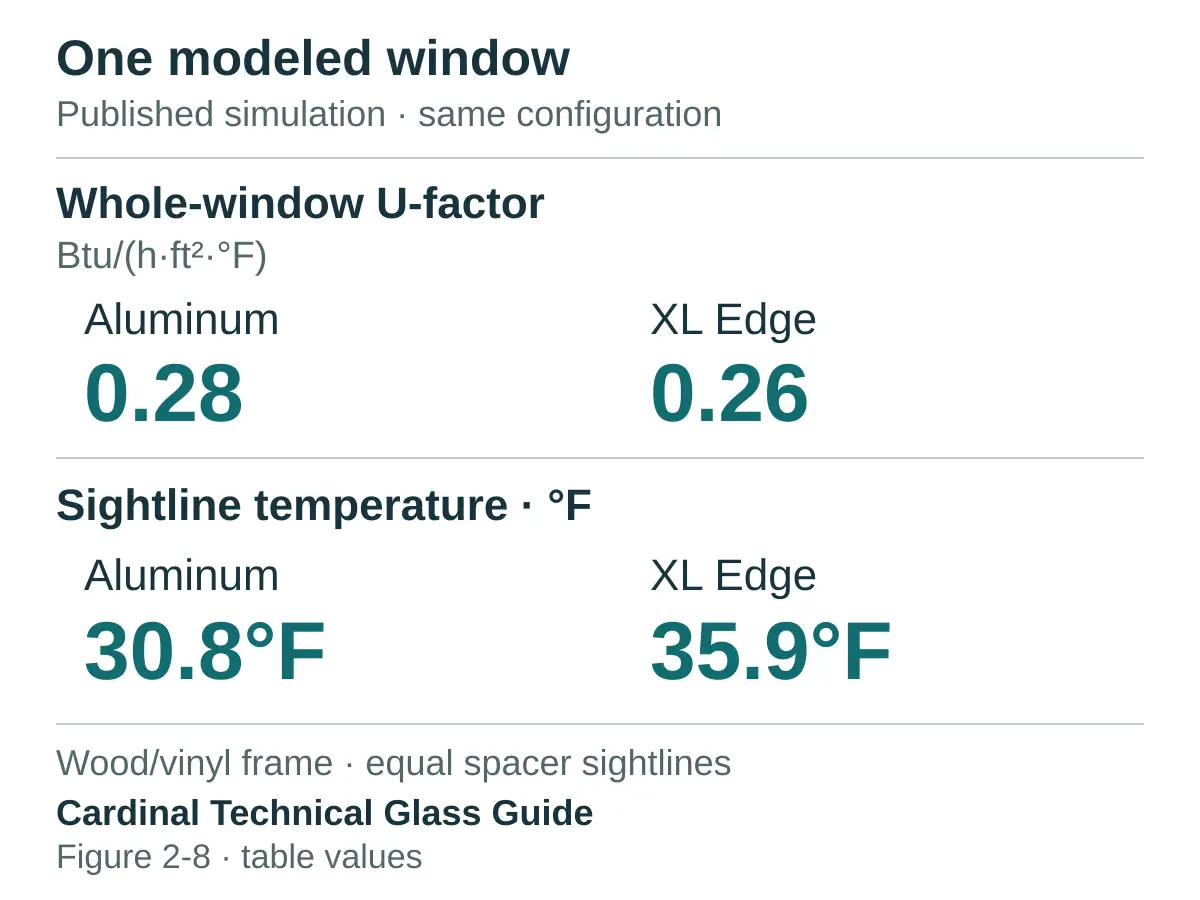
Those two readings answer different questions. The U-factor describes heat flow through the window as a whole. The local temperature helps explain why someone concerned about wet glass edges might care about a small change in that rating. To estimate what happens at your window, the supplier needs your frame and glass combination.
Where is the condensation?
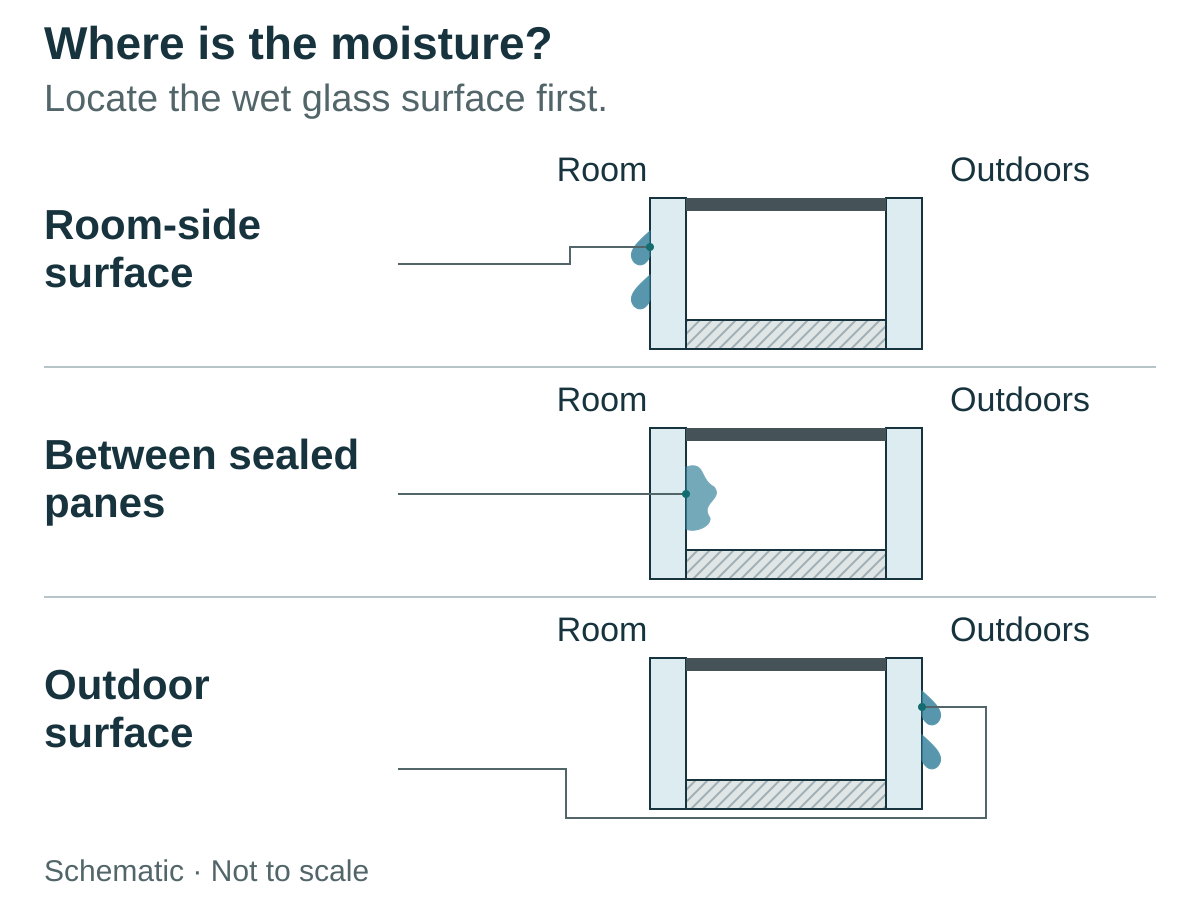
Before paying to change the glazing, find out which surface gets wet. A spacer can influence the temperature of the room-side glass edge. It has little bearing on the moisture added to a room by a shower, or on dew forming outdoors. The checks below follow Pella’s guide to window fogging.
| Where you see it | How to check | What to do next |
|---|---|---|
| Room-side edge | A dry cloth clears the droplets from inside. They may return first near the bottom edge on cold mornings. | Note the room humidity and outdoor temperature when it happens. Check bathroom extraction and airflow behind closed blinds. A warmer edge can help if the glass is still getting cold. |
| Between sealed panes | Mist appears within the cavity and stays after the accessible glass surfaces are clean and dry. | Moisture inside the sealed unit can indicate a seal problem. Photograph it, record the window ID and ask the supplier about a glass-unit inspection and seal-failure cover. |
| Outdoor face | Dew is on the exterior surface and often clears as the morning air or glass warms. | Note the weather and whether the dew clears. Exterior dew by itself gives you little reason to change the spacer. |
When is the warm-edge upgrade worth pricing?
Cold winters or repeated wet edges. Give warm edge priority when the room-side perimeter is where water first collects. Water can form when the glass cools to the dew point of the room air. If both quotes show the same rounded whole-window U-factor, ask for an inside edge-temperature comparison using the same indoor temperature, humidity and outdoor temperature. That is more useful for this particular question than another center-of-glass number.
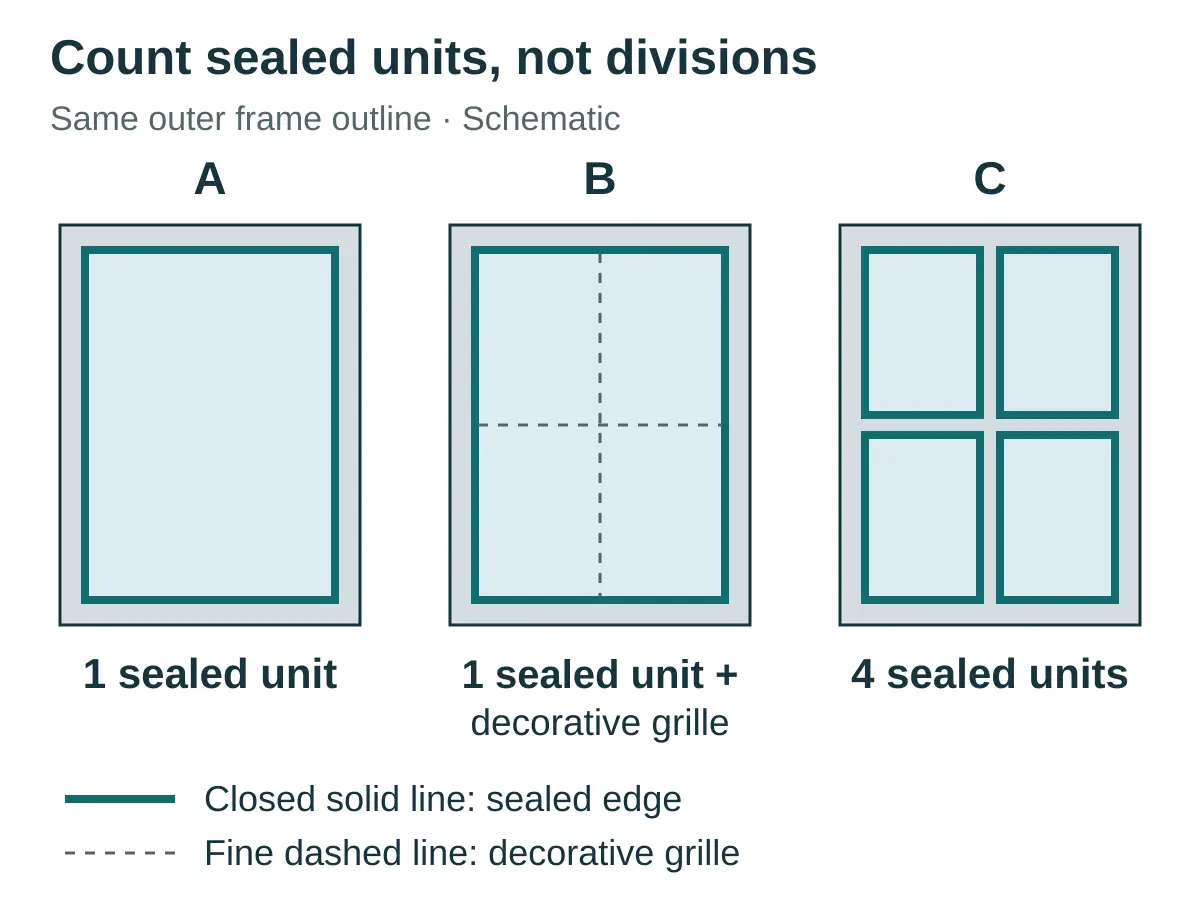
Several small panes. A row of separately glazed windows has more glass edge per unit of glass area than one large pane. If your design uses several small IGUs, ask about that layout. A decorative grille over one sealed unit does not create a separate sealed edge around every square.
A tight budget or a hot, sunny room. When the aluminum option meets the required whole-window values and cold edges are a minor concern, it is reasonable to keep it. If afternoon heat is the issue, compare SHGC and exterior shading before spending the glazing allowance on a spacer. Check the ratings for the window and door systems on your plan. A fixed window and a sliding glass door can have different ratings even with the same glass.
How to compare two quotes before ordering
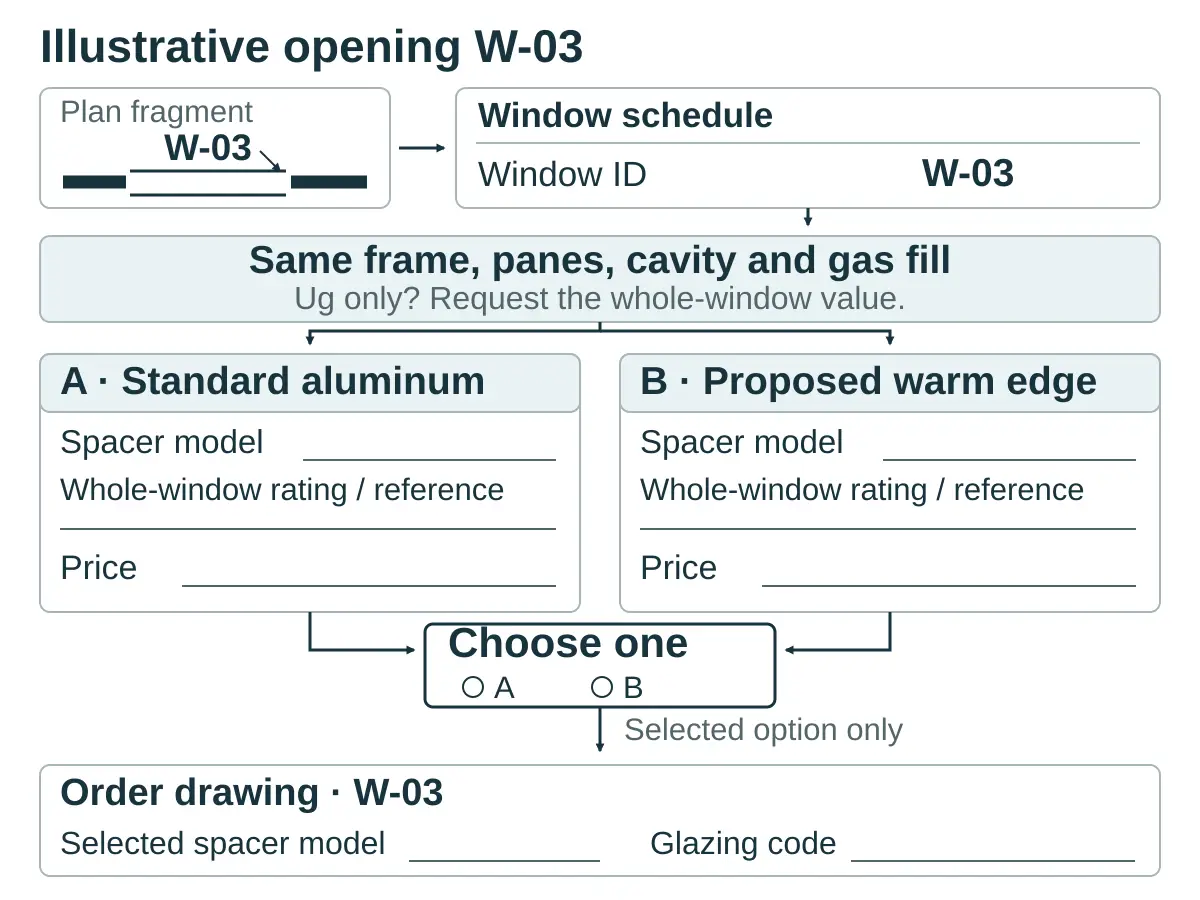
Pick one opening and ask the supplier to price it twice. A window schedule template gives both quotes the same reference. For example, mark the bedroom window W-03 on the plan and use W-03 on the quote, the glass specification and the order drawing.
| On the quotation | What to match or request |
|---|---|
| Opening and frame | Same quantity, frame dimensions, frame series, thermal break and opening type. Name the window or glazed door on each line. |
| Glass and spacer | Same panes, thicknesses, low-e coating, cavity width and gas fill. Name the baseline and alternate spacer systems, including the compatible seal system for each. |
| Rated performance | Request the whole-window U-factor or Uw, SHGC, units and rating reference for each version. If a record lists a glass code, ask the supplier to link it to the offered spacer. |
| Price and warranty | Ask for the extra cost per opening and for the complete order on the same delivery and installation terms. Ask how long the warranty covers fogging between the panes, who supplies the replacement IGU and who pays for freight and fitting. |
A request you can copy into your quote
“Please price W-03 with the standard aluminum spacer and with your proposed warm-edge spacer. Keep the frame, glass, cavity and gas fill the same. For each option, list the spacer model, whole-window U-factor and SHGC, rating reference, and price. Please flag any change needed to the glass or frame.”
The spacer material alone tells you little about service life. The seals and the way the unit is made also matter, which is why the written seal warranty belongs beside the price. If one reply gives only a glass U-value and the other gives a whole-window value, leave that comparison open. Ask for the missing whole-window figure. Once you choose, record the spacer model and glass code on the approved drawing so a later substitution can be checked against the original rating. For custom units, drawing and sample coordination can keep the sample reference and the drawing revision together.
Request a window and door quotation
For a home build or renovation, send your window schedule or drawings to George House Material. Include the opening sizes and quantities, opening styles, project location and target delivery date. If you have an energy report or an existing quote, attach the relevant page and mark the openings where you want a warm-edge alternative priced.