By George House/30,Sep,2025
Pocket door hardware is a coordinated system, not just a recessed pull. The track, rollers, hangers, stops, guides, frame, jambs and operating hardware must suit the door’s weight, thickness, dimensions and intended use. The wall must also have enough clear pocket depth and length, with no conflicting services. Selecting these parts together helps avoid rubbing, noisy travel, weak fixing and difficult maintenance.
Main Parts of a Pocket Door Hardware System
- Track and hangers: carry the moving leaf and control the travel path.
- Rollers or trolleys: must be rated for the actual door weight and expected operating frequency.
- Stops and anti-jump features: limit travel and help keep the hangers correctly engaged.
- Floor guide: controls lateral movement without creating avoidable friction.
- Pocket frame and split studs: create the wall cavity and support the finish system.
- Jambs and trim: finish the opening while preserving service or removal access where required.
- Pulls, locks and edge pulls: provide operation, privacy or security appropriate to the room.
The parts of a door guide identifies common door and frame terminology. For the overall assembly and planning context, review the pocket door planning and selection guide. Hardware should be selected from coordinated manufacturer data rather than mixing components that happen to fit individually.
Check Door Size, Weight and Wall Depth
Confirm the finished door dimensions, construction, weight, thickness and any glass, mirror or decorative facing. Then check the hardware rating and the wall manufacturer’s pocket requirements. A heavier or taller leaf may need a different track, hanger spacing, framing and fixing method. Soft-close or synchronized systems can also have minimum door sizes and added clearance requirements.
The wall must accommodate the pocket frame, finish boards, jambs and the entire open leaf while remaining free of pipes, ducts, electrical boxes and other obstructions. Coordinate floor finish levels, head support and adjacent framing before construction. Use the door width and clear-opening guide to organize early dimensions, then verify the required passage width and local project criteria.
Handles, Locks and Accessibility
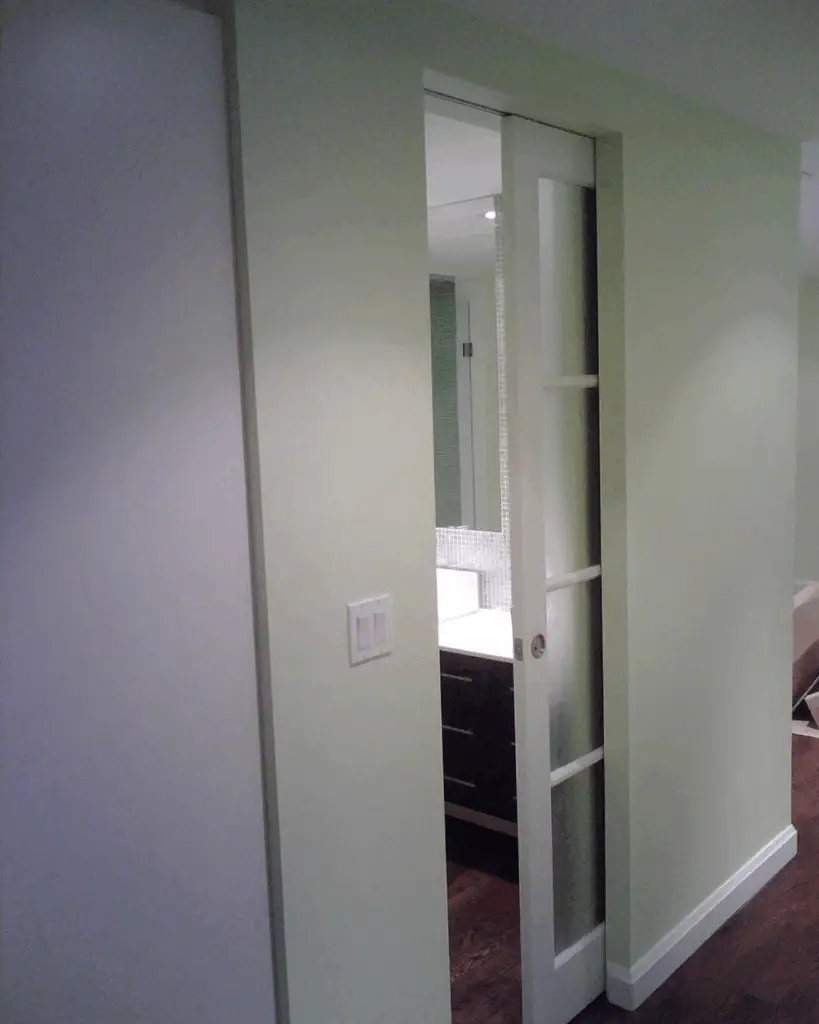
Choose pulls and locks by function, hand clearance, door thickness and the amount of leaf that remains exposed when open. A bathroom may require a privacy set with emergency release; a passage door may need pulls only. Confirm backset, edge preparation and strike details before machining. Recessed hardware should not weaken a narrow stile or conflict with glazing.
A pocket door does not automatically satisfy accessibility requirements. Operating force, clear opening, maneuvering space, threshold, handle form and opening/closing control must be assessed for the specific project. Where accessibility is required, document the criteria in the door and hardware schedules and verify the complete installed assembly.
Installation and Service Access
Install the track level and straight to the approved support detail. Check the pocket for protruding fasteners and confirm that the door remains plumb through its travel. Set guides and stops without binding, then test slow and normal operation repeatedly. Before closing the wall, photograph concealed framing, fixing and service clearances. Protect the track from compound, dust and debris during finishing.
Plan how rollers, stops and soft-close components can be adjusted or replaced. A removable head detail or manufacturer-approved access method can prevent unnecessary demolition. Maintenance usually begins with inspection and cleaning; lubricants should be used only when the product instructions specify them. The project windows and doors hub can help coordinate the leaf, frame and hardware as one scope.
Pocket Door Hardware RFQ Checklist
- Door mark, quantity, location, handing and required clear opening.
- Leaf dimensions, thickness, construction, weight and finish.
- Wall type, overall thickness, pocket length and framing responsibility.
- Track, hanger, roller, guide, stop and soft-close requirements.
- Pulls, locks, privacy function, finish and accessibility criteria.
- Head support, jamb details, service access and wall-finish interfaces.
- Shop drawings, samples, testing, installation, spares and warranty.
For a project-specific hardware comparison, send your door schedule, wall details, leaf data and finish requirements. Complete inputs allow suppliers to verify capacity and compatibility before quotation.