By George House/15,Aug,2025
Standard interior door size usually refers to a familiar leaf module, not a universal opening requirement. A door schedule must distinguish leaf width and height from frame size, rough opening and usable clear passage.
This guide compares common residential interior door modules and explains how wall depth, swing, accessibility, hardware and performance affect the final selection. Use the figures for early planning, then verify the selected product, approved drawings and applicable local requirements before ordering.
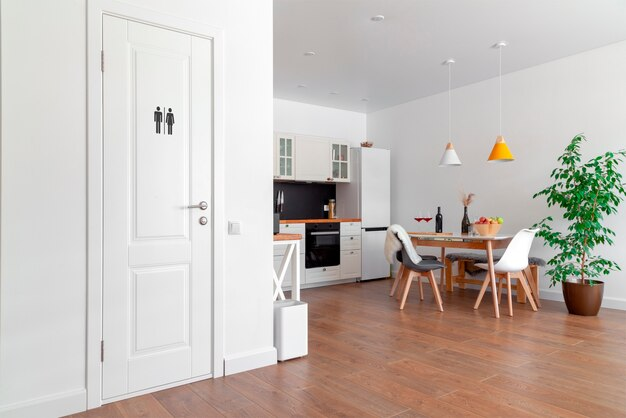
Common Interior Door Leaf Sizes
| Leaf Width | Possible Residential Use | Planning Note |
|---|---|---|
| 24 in (610 mm) | Closet, pantry or constrained existing opening | Narrow for a primary passage; verify local requirements |
| 28 in (711 mm) | Compact bedroom or bathroom opening | Check furniture, clear passage and future use |
| 30 in (762 mm) | Common room opening | Coordinate swing and frame profile |
| 32 in (813 mm) | Wider room opening | Does not automatically provide 32 inches clear |
| 34 in (864 mm) | Selected wider routes | Check wall length and hardware projection |
| 36 in (914 mm) | Wide passage, furniture route or selected accessible layout | Verify clear width by the required measurement method |
Room labels do not determine final width. Compare route and clear-opening considerations in the average door width guide, then record the selected leaf in the opening schedule.
Common Heights and Thicknesses
| Dimension | Common Planning Reference | Verify Before Ordering |
|---|---|---|
| Leaf height | 80 in (2032 mm) is common in North American residential work | Market, floor build-up, ceiling, transom and local code |
| Tall leaf | 84 or 96 in (2134 or 2438 mm) may be used for design-led interiors | Weight, hinges, frame stiffness, warp tolerance and lead time |
| Residential leaf thickness | 1â in (about 35 mm) is a common reference | Core, rating, hardware, rebate and manufacturer |
| Special-performance leaf | May be thicker than the common residential module | Fire, acoustic, security, height and hardware requirements |
The door height guide shows how finished-floor level and frame head change the installed result. Do not convert an imperial module to a nearby metric size and assume the frame or hardware will remain compatible.
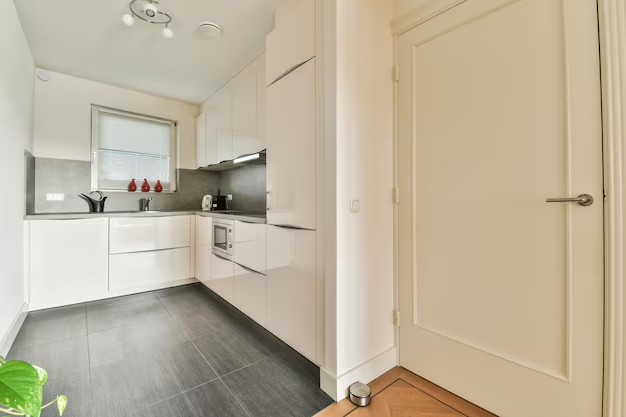
Four Dimensions That Must Stay Separate
| Dimension | What It Measures | Why It Differs |
|---|---|---|
| Door leaf | Physical moving panel | Includes the full panel, not the passage |
| Frame rebate or stop opening | Space in the frame that receives the leaf | Allows for operating clearances |
| Overall frame | Outside-to-outside assembled frame | Depends on profile and frame material |
| Rough opening | Wall opening before frame and perimeter joint | Includes product-specific installation allowance |
| Clear opening | Usable passage with the leaf open at a defined position | Reduced by stops, hinges and the open leaf |
Coordinate wall thickness and frame profile with the standard door frame width guide. A generic rough-opening allowance can fail when a metal frame, fire stopping, thick wall finish or nonstandard anchor is used.
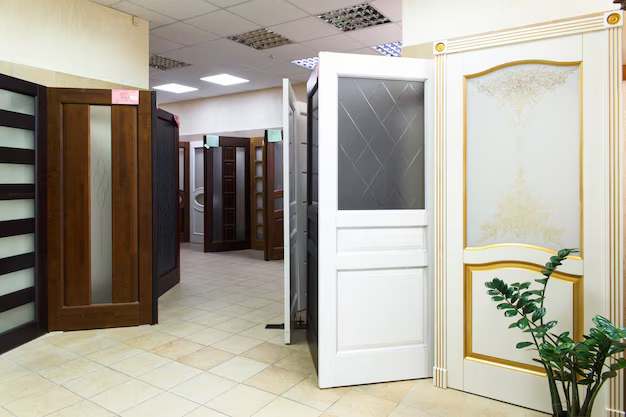
Accessibility Uses Clear Opening
Where the 2010 ADA Standards apply, door openings generally provide at least 32 inches (815 mm) of clear width, measured according to the door type and position. Consult the official 2010 ADA Standards for Accessible Design and the adopted local accessibility rules.
A nominal 32-inch leaf normally gives less than 32 inches of clear passage. Hinges, pivots, stops, leaf thickness and surface hardware affect the result. Also review maneuvering space, threshold, opening force, closing speed and operable hardware along the full accessible route.
Size by Door Type and Use
- Bedroom: balance privacy, furniture movement, circulation and possible accessible use.
- Bathroom: coordinate clear passage, fixture layout, maneuvering space, privacy and wet-area finishes.
- Closet or pantry: check usable access past shelves, side returns and door overlap.
- Utility room: size the route for appliance delivery, maintenance and ventilation.
- Pair of doors: identify active and inactive leaves, clear opening, bolts and meeting-stile hardware.
- Pocket or sliding door: include track, pocket, guides, overlap, pull hardware and maintenance access.
- Fire or acoustic door: select a complete compatible assembly; size can affect rating, hardware and seals.
For a bedroom-specific example, review the average bedroom door size guide together with the full opening schedule.
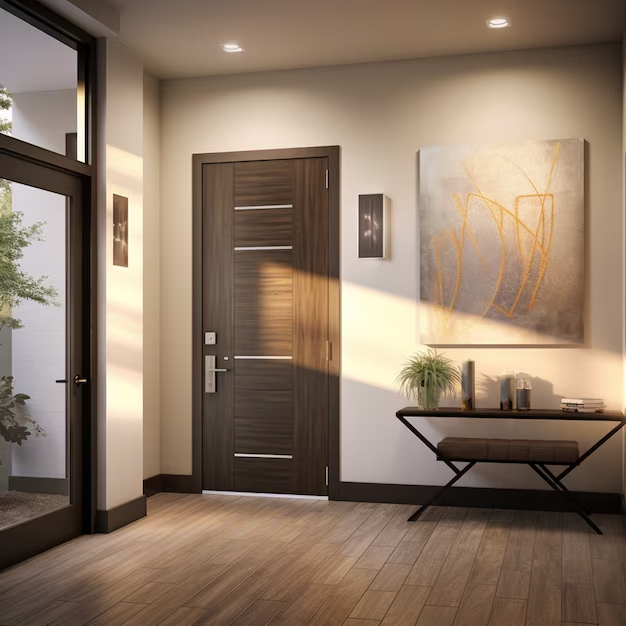
How to Measure an Interior Door Opening
- Confirm whether the order is leaf only, prehung or a complete frame assembly.
- Measure leaf width and height at multiple points.
- Measure the frame rebate, overall frame and accessible rough opening separately.
- Record finished wall thickness and finishes on both faces.
- Check opening plumb, level, square and diagonal variation.
- Record handing, swing, hinge locations, latch backset and hardware height.
- Measure the required clear passage using the prescribed method.
- Check floor levels, undercut, threshold and nearby furniture or fixtures.
- Photograph the opening and confirm the manufacturer’s installation allowance.
Use the door measurement checklist to keep replacement measurements consistent across multiple openings.
Interior Door Schedule and RFQ Checklist
- Door mark, room names, quantity and opening type
- Leaf width, height, thickness, core, facing and finish
- Frame material, profile, depth, finish, anchors and trims
- Overall frame, rough opening and required clear opening
- Wall type, finished thickness and perimeter joint
- Handing, swing and adjacent clearances
- Complete hardware set, locks, hinges, closer, stops and seals
- Fire, acoustic, security, accessibility or durability performance
- Glazing, louvers, undercut and ventilation requirements
- Shop drawings, samples, delivery sequence, installation and warranty
Confirm the Complete Opening
A standard interior door size is only the starting point. The correct order coordinates the leaf, frame, wall, clear passage, swing, hardware and performance. Freeze dimensions after the schedule, product data and site measurements agree.