The main difference between rectified and non-rectified tile is the edge finishing. Rectified tile has its edges mechanically cut or ground after firing to produce more consistent dimensions. Non-rectified tile keeps its manufactured edges, which can have greater variation in size and profile. This affects the grout joint and the appearance of the installed surface.
Choose rectified tile when you want a regular grid and a less prominent joint, provided the product and installation support that choice. Choose non-rectified tile when its edge character and recommended joint suit the design. Either can be a good-quality product. Before ordering, compare the actual tile samples, joint requirements and complete installation cost.
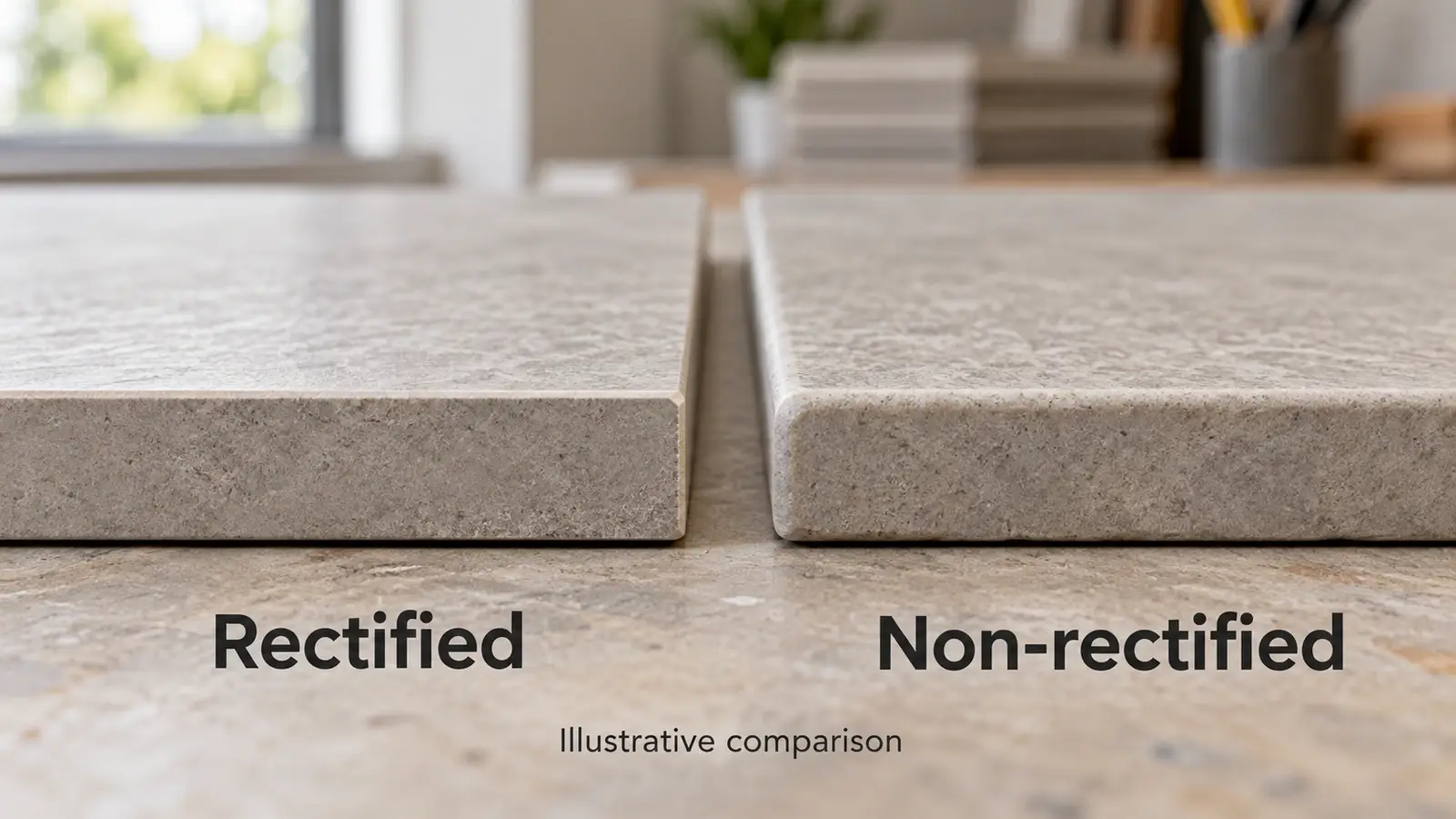
Rectified vs Non Rectified Tile at a Glance
| Detail | Rectified tile | Non-rectified tile |
|---|---|---|
| Edge finishing | Mechanically finished after firing | Retains the formed edge |
| Dimensions | Generally more consistent within the product tolerance | Can show more variation between pieces |
| Grout joint | May allow a narrower joint when permitted | Often needs more joint allowance for variation |
| Visual effect | Regular grid and clearly defined corners | Softer or more varied edge profile |
| Installation | Tight joints make small alignment differences conspicuous | Size variation must be balanced through the layout |
| Price | Additional processing may affect price | Not automatically the cheaper installed option |
| Performance | Check the exact tile data and intended use | Check the exact tile data and intended use |
The comparison describes common tendencies. It does not specify a grout width or establish that one tile is suitable for every floor, wall or wet area.
What Is Rectified Tile
Rectification finishes the tile edges to a more precise facial dimension, meaning the length and width of the tile face. The result is typically straighter sides and more consistent corners. Rectified porcelain is common, but rectification describes an edge process rather than a material category or surface finish.
Rectified Does Not Mean Perfectly Flat
Rectification does not remove every manufacturing tolerance or establish that the tile face has no curvature. A tile can have precise edges and still show warpage. It also does not make a polished finish more slip resistant, prove exterior suitability or eliminate the need for proper support beneath the tile.
Compare edge type separately from the tile body, surface finish and application. Our guide to different kinds of floor tiles explains the broader selection checks.
What Is Non Rectified Tile
Non-rectified tile retains the edges produced during forming and firing instead of having all sides mechanically finished afterward. Depending on the collection, those edges may be quite regular, gently rounded or deliberately uneven. A non-rectified label does not automatically mean a rustic appearance or poor dimensional control.
The installer needs enough joint allowance to work with the actual variation. Several pieces from the proposed product provide a more useful reference than one display sample. Inspect the edges, face dimensions and carton information before deciding how narrow the joint should be.
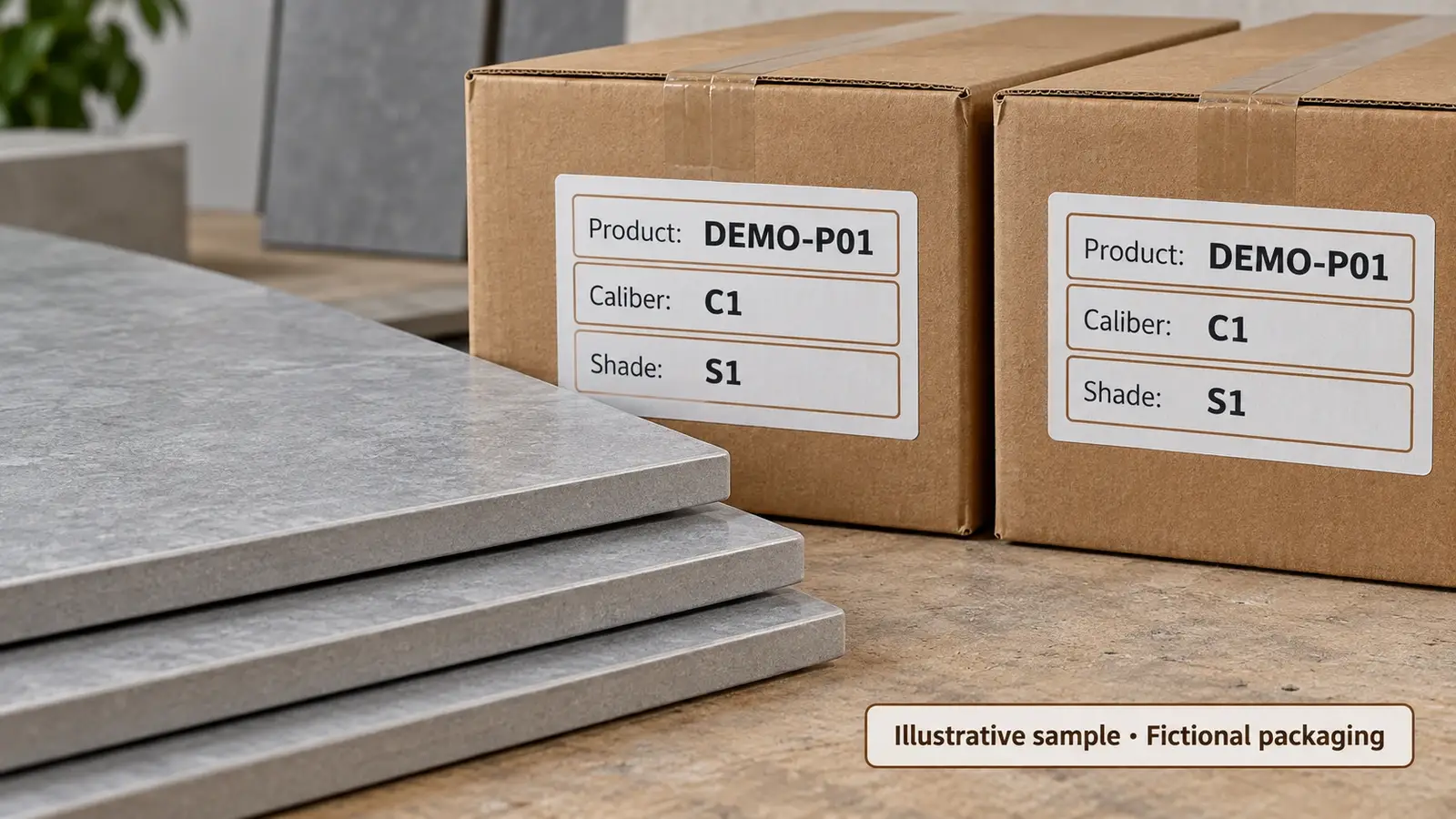
Caliber and Shade Are Different Checks
Caliber identifies tile size or a size grouping used by the manufacturer. Shade or dye lot identifies appearance variation between production runs. Their coding systems vary, so ask the supplier to explain the codes shown on the cartons.
For one continuous area, coordinate compatible caliber and shade information and confirm the supplier's batch plan. Do this with both edge types. A shared catalog name or nominal size does not establish that deliveries from different batches will line up or look identical.
Grout Joint Width for Rectified and Non Rectified Tile
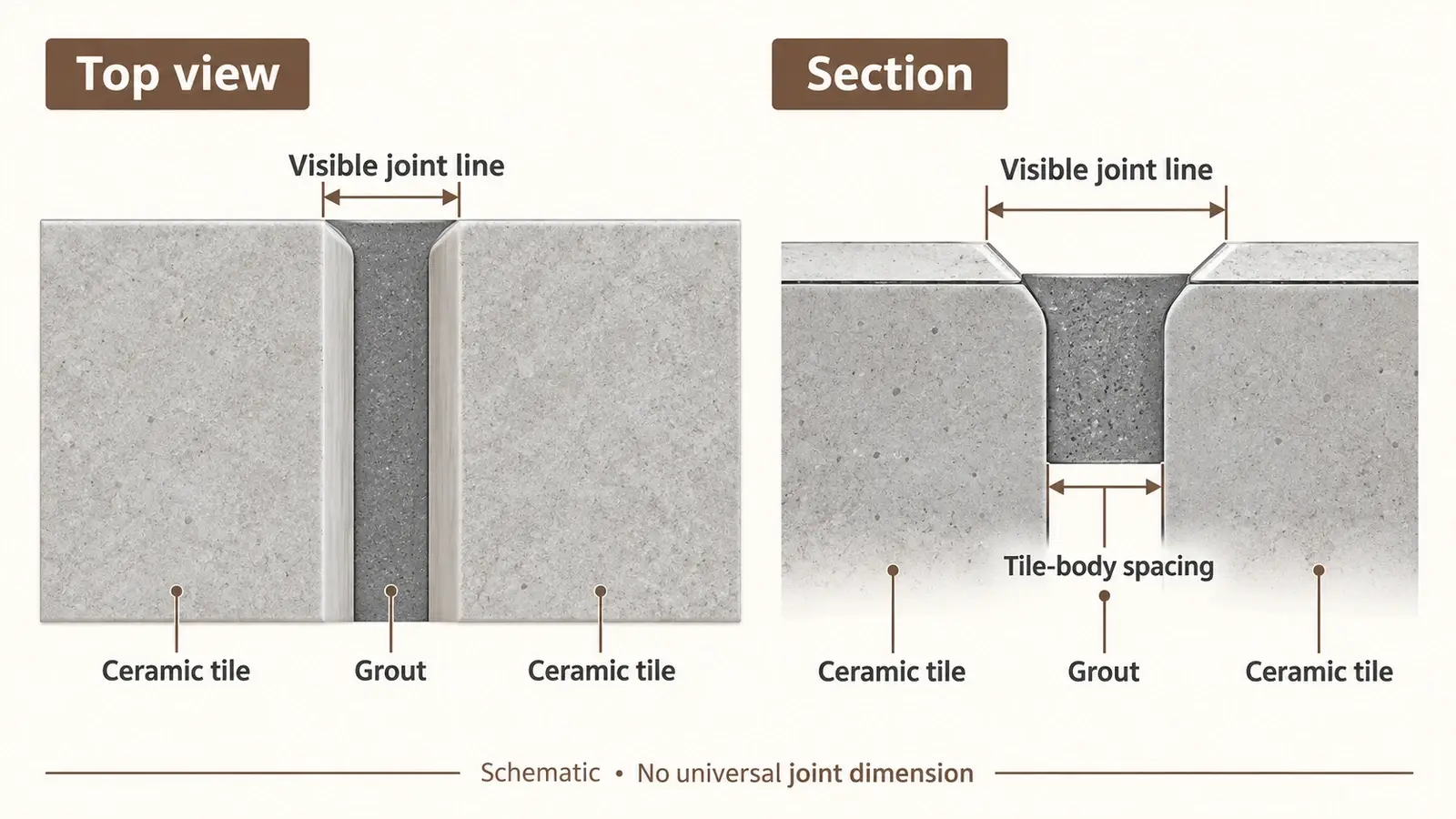
Both types need grout joints. A joint provides space to accommodate dimensional variation and to fill the separation between tiles. Buying rectified tile does not authorize a joint-free installation or make a 1/16-inch joint suitable for every product.
Use Product Guidance Rather Than a Universal Width
Check the tile manufacturer's recommendation, measured variation, proposed pattern and the grout product's supported width. If the desired joint conflicts with those requirements, change the joint or select a different product before ordering.
For a specific example, Daltile's Exposition Incognito 12 × 24 matte tile is listed as rectified with a recommended 1/8-inch grout joint, approximately 3.2 mm. That is a recommendation for the identified product, not a minimum to apply to every rectified tile. Product and layout instructions can require a wider joint.
The Visible Line Can Differ from the Spacing
A bevel or rounded shoulder changes how the joint looks at the face of the tile. The visible line may appear wider than the spacing between the tile bodies. Compare an installed or grouted sample when the visual width matters; a spacer and an ungrouted dry layout may not show the finished effect accurately.
Grout Joints and Movement Joints Have Different Roles
Ordinary grout joints do not replace movement, perimeter or change-of-plane joints. Those details must follow the selected installation system and project requirements. Keeping grout lines visually narrow does not justify rigidly filling joints intended to accommodate movement.
Installation Differences That Affect the Result
Both edge types need a suitable substrate, compatible setting materials and an agreed layout. Rectified edges can make an accurate grid easier to define, while a tight joint can reveal small errors. Wider joints help manage dimensional variation but cannot correct an unsuitable substrate or poor installation.
Understand Warpage and Lippage
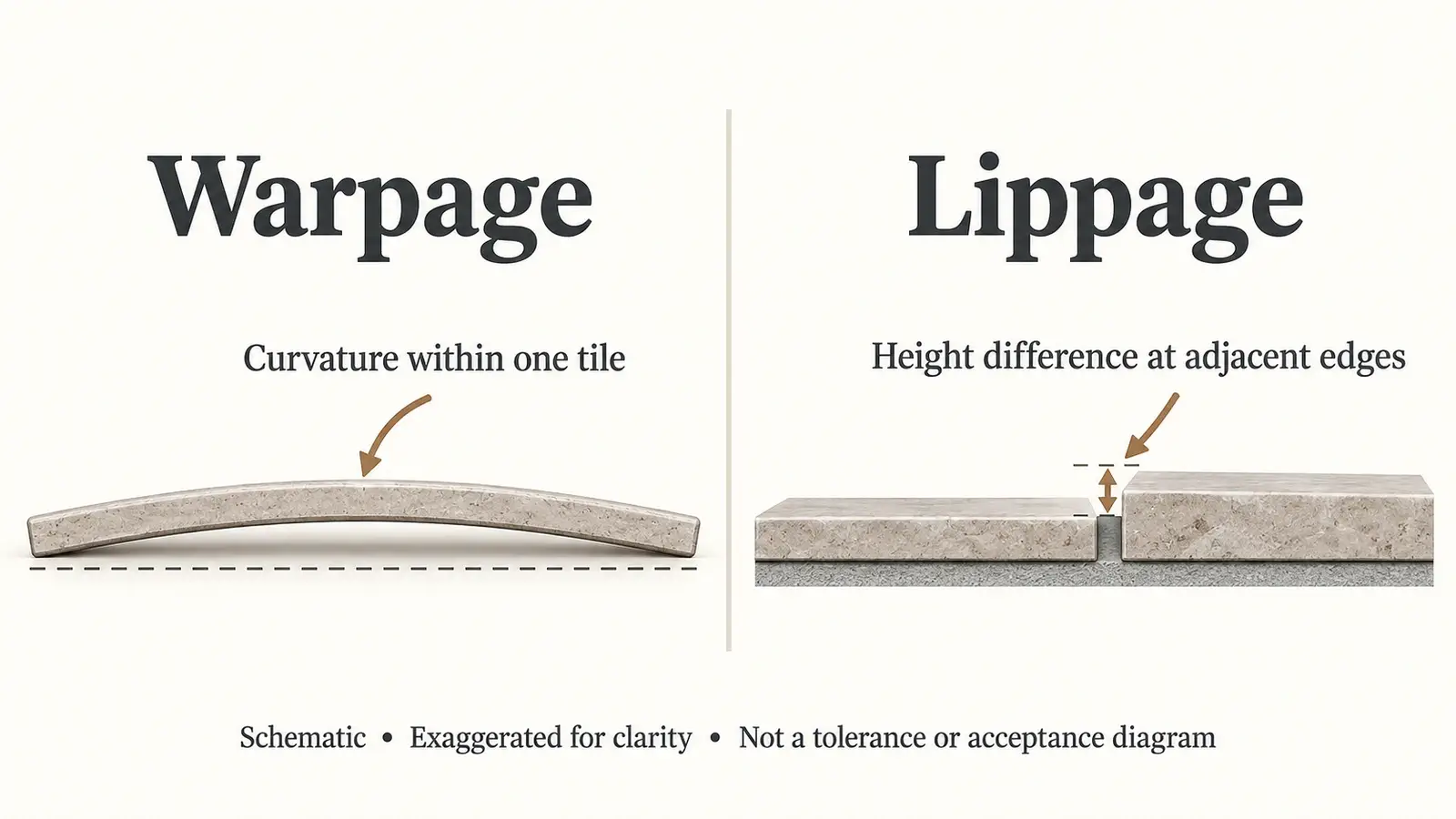
Warpage is curvature in an individual tile. Lippage is a difference in height between the edges of adjacent installed tiles. The finished result can be affected by tile curvature, substrate flatness, layout and setting technique. These are separate from how the edges were finished.
Where the design calls for a large format or a tight grid, agree how the installer will assess the substrate and check a representative mock-up. Our large format tile planning guide covers preparation, handling, joints and delivery coordination.
Check Offset Patterns Before Choosing a Stagger
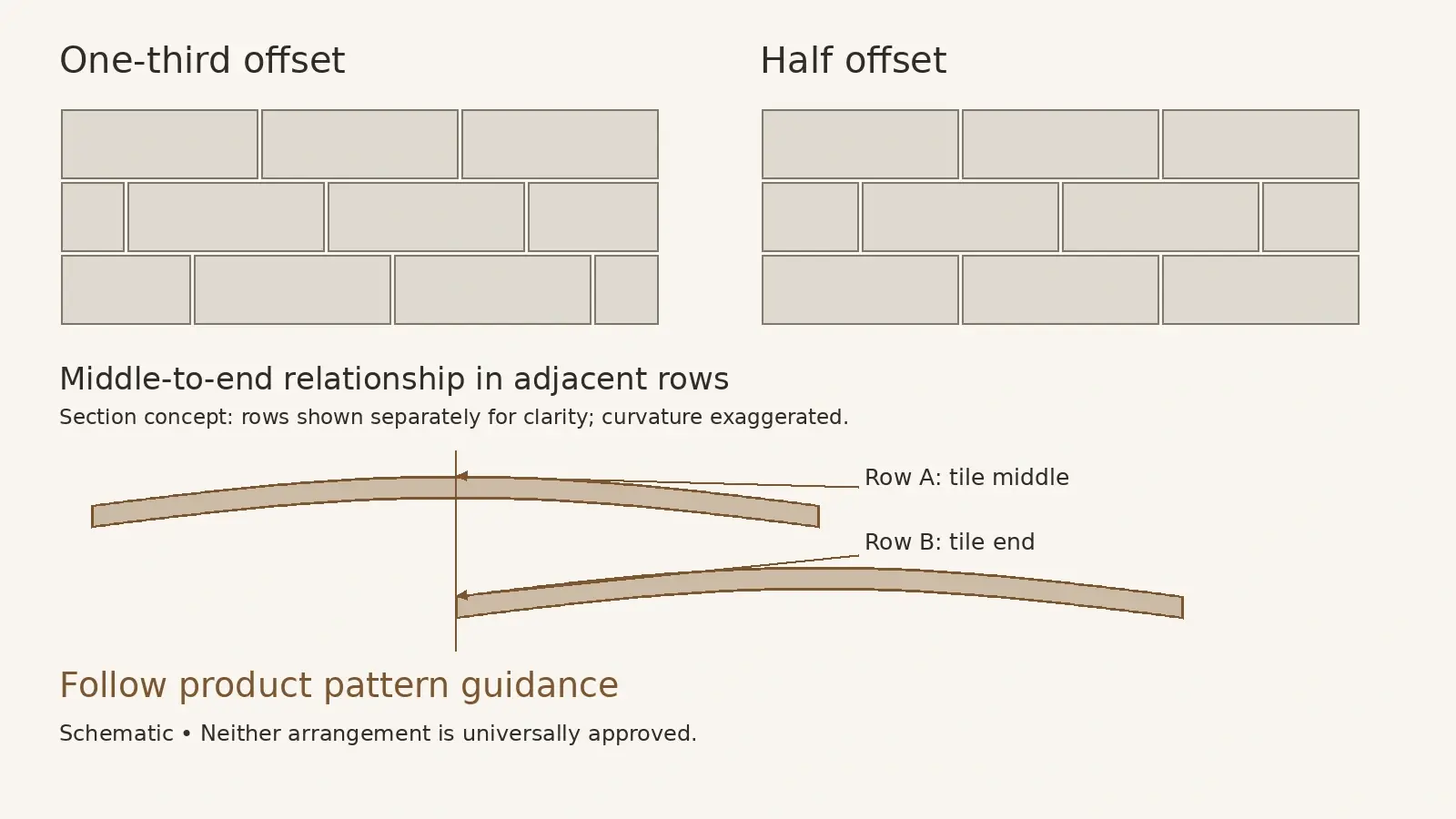
A 50 percent stagger can place the center of one rectangular tile beside the end of the next. If the tile is bowed, that arrangement can increase the height difference. Rectification does not remove this issue.
Follow the selected product's offset instructions. For example, Florida Tile's guidance for the larger rectangular offset installations it discusses encourages offsets no greater than 33 percent and recommends a minimum 3/16-inch joint for that type of installation. This illustrates why the pattern can affect the joint even when the tile is rectified. Agree any proposed departure with the responsible parties and review a mock-up.
Review Cuts and Transitions
Coordinate edges at thresholds, skirting, corners, drains and adjoining finishes. A field tile may need a trim, return or separately finished piece at an exposed edge. Include those items in the drawings and quotation. Do not assume the rectified factory edge provides every finishing detail the room needs.
Rectified Tile Pros and Cons
Advantages
- More consistent edges can support a regular grid and coordinated modular layout.
- An approved narrow joint can reduce the prominence of grout lines.
- Precise corners can suit geometric or contemporary designs.
Limitations
- Small alignment differences can be more noticeable beside straight edges and tight joints.
- Rectification does not correct tile curvature or substrate irregularities.
- Additional processing may affect price, while careful preparation and layout still influence labor.
Non Rectified Tile Pros and Cons
Advantages
- Formed edges can suit designs that benefit from a softer or more varied joint profile.
- A suitable wider joint gives the installer room to balance dimensional variation.
- A collection may offer the desired color, texture or format without rectification.
Limitations
- Greater dimensional variation can restrict how narrow the joint can be.
- Matching lines across a layout may require more adjustment.
- A larger visible grout area can change the appearance and cleaning routine, depending on the grout and finish.
Cost and Maintenance Comparison
Compare the complete installed scope rather than the tile price alone. Keep material, preparation, installation and delivery costs separate so suppliers and installers can price the same requirements.
| Cost item | What to compare |
|---|---|
| Tile supply | Exact product, edge type, actual dimensions, finish and quantity |
| Preparation | Substrate correction and the agreed waterproofing scope where needed |
| Installation | Format, pattern, cuts, joint width, trims and mock-up |
| Related materials | Setting products, grout, movement-joint materials and accessories |
| Order and delivery | Carton rounding, cutting allowance, spare stock, packing and transport |
Rectified tile may carry an additional manufacturing cost, but a premium non-rectified collection can cost more than a basic rectified one. Installation cost depends on the actual work. Avoid a fixed price premium or universal labor saving without comparable quotations.
For cleaning, the tile surface and grout system usually matter more than the edge label. A narrow joint reduces visible grout area but still needs proper cleaning and care. Confirm whether the selected grout or tile requires sealing, and retain spare tiles with their product and batch records for later repairs.
Which Tile Should You Choose for Each Room
Living Rooms and Open Plan Floors
Rectified tile may suit a broad, regular surface with matching grout. Non-rectified tile may be preferable when the collection's formed edge contributes to the design. Review both at room scale, including doorways and transitions, before selecting the joint.
Kitchens and Bathrooms
Check the selected product's floor or wall use, finish, cleaning requirements and wet-area suitability first. Tile edges alone do not establish slip resistance or waterproof the assembly. Bathroom falls, drains and wall boundaries may affect the practical format and layout.
For kitchen decisions, review our kitchen floor tile color and layout guide alongside the edge and grout comparison.
Outdoor and Commercial Areas
Confirm the exact exposure, traffic and project performance requirements. Review product data for the intended use, climate and cleaning regime. An outdoor textured tile or a hotel corridor tile should be selected on those requirements before the grout appearance is finalized.
Browse our project tile options to organize selections by application, size and finish.
How to Compare Samples Before Ordering
- Obtain several pieces of each proposed product and identify their product, shade and caliber references.
- Ask for nominal and actual dimensions, permitted variation and the current installation guidance.
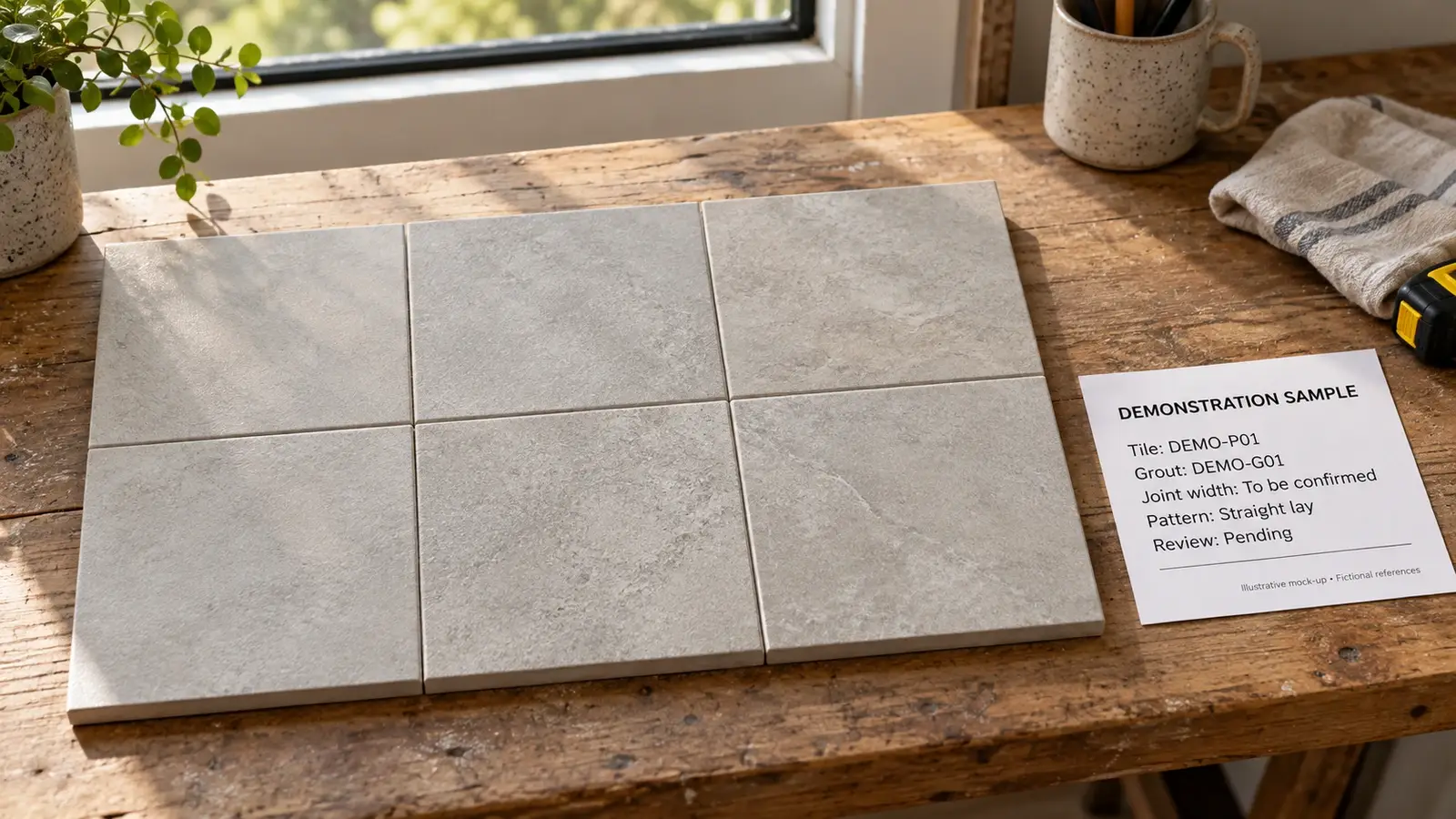
- Dry-lay the intended pattern to review joint consistency, directional graphics and cuts.
- Prepare a grouted sample or mock-up using the proposed joint and grout color.
- View it under the planned lighting, including light that falls across the surface.
- Record the accepted sample, limitations and any outstanding installation or quantity decisions.
Keep the approved reference connected to the room and drawing revision. The finish schedule template can record floor and wall codes and link them to the material details. Sample approval should remain traceable separately from authorization to order.
What to Include in a Tile Quotation Request
State the tile reference and location first, then specify the scope suppliers must price:
- Manufacturer or proposed supplier, collection, product code, color and surface finish.
- Edge type, nominal and actual dimensions, thickness and application area.
- Pattern, grout width, grout reference, trims, skirting and relevant drawing details.
- Required technical data, sample references, batch controls and inspection scope.
- Net area, ordering quantity, agreed cutting allowance, spare stock and carton increments.
- Delivery destination, phase sequence, packing labels and included or excluded transport scope.
Identify alternatives as separate offers. A substitute should be checked for dimensions, joint requirements and intended use before it replaces the selected reference. Our material procurement and coordination services explain how drawings, samples, production and delivery information can be connected.
Get Help Reviewing Your Tile Package
Send George House Material your room plans, tile schedule, quantities, reference images and delivery destination. We can review the available scope and identify the product, sample and quotation information still needed. Send your tile schedule or BOQ to start the review.
Frequently Asked Questions
Is Rectified Tile Better Than Non Rectified Tile
Neither edge type is universally better. Rectified tile offers more consistent edges, while a non-rectified product may provide the preferred appearance or value. Compare the exact tile's performance, joint requirements and installed scope.
Can Rectified Tile Be Installed Without Grout
No. Rectified tiles still need joints. Confirm the suitable width with the tile and grout manufacturers and installer before fixing the layout.
Is a 1/16 Inch Grout Joint Suitable for Every Rectified Tile
No. A narrow joint must be supported by the selected product, actual variation and installation requirements. The rectified label alone does not permit a 1/16-inch joint.
Is Non Rectified Tile Always Cheaper
No. Collection, finish, format, availability and installation scope all affect cost. Compare quotations for the same room and complete scope.
Does Rectified Mean Porcelain or Polished
No. Rectified describes the mechanically finished edges. Porcelain describes the tile body classification, and polished describes a surface finish.
Can You Mix Rectified and Non Rectified Tiles
They can appear in separate zones within a coordinated design. Mixing them in one continuous grid requires a review of actual dimensions, thickness, joint widths and transitions. Do not assume the same nominal size makes them interchangeable.