The main difference between SPC and WPC flooring is the core. SPC generally uses a dense, solid polymer composite core, while WPC uses an expanded or foamed polymer core. SPC usually feels firmer and can offer strong indentation resistance. WPC generally provides more cushioning. Neither label, by itself, establishes scratch resistance, acoustic performance or suitability for a particular room.
Choose between the actual products offered for your project. Compare the wear layer, complete plank construction, installation requirements and quotation scope before deciding. A thicker plank or a lower price is difficult to assess when the attached pad, permitted use or required floor preparation differs.
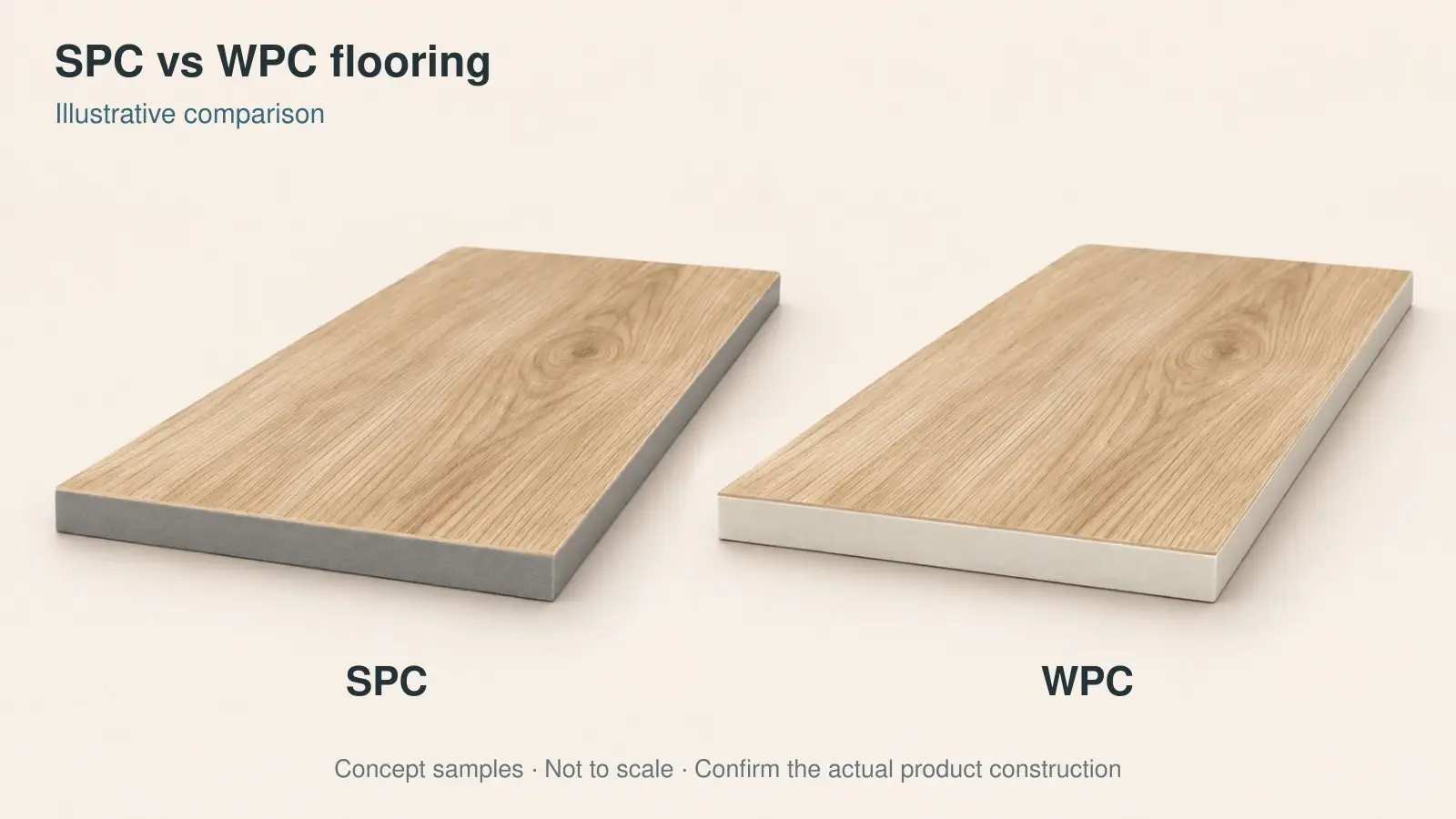
SPC vs WPC Flooring at a Glance
| Selection point | SPC flooring | WPC flooring |
|---|---|---|
| Core construction | Dense, solid polymer composite, commonly mineral filled | Expanded or foamed polymer composite |
| Underfoot feel | Generally firmer | Generally more cushioned |
| Indentation | Dense construction can help resist compression | Check the product rating for concentrated loads |
| Surface wear | Depends on the wear layer, coating and use | Depends on the wear layer, coating and use |
| Sound | Check the complete tested floor assembly | Cushioning may help, but assembly evidence still matters |
| Water and site conditions | Product claims do not remove substrate and installation checks | Product claims do not remove substrate and installation checks |
Both belong to the wider rigid-core vinyl flooring category. The comparison is a starting point for selection; the technical sheet and installation manual for the exact model determine what can be specified and installed.
How the Core Construction Differs
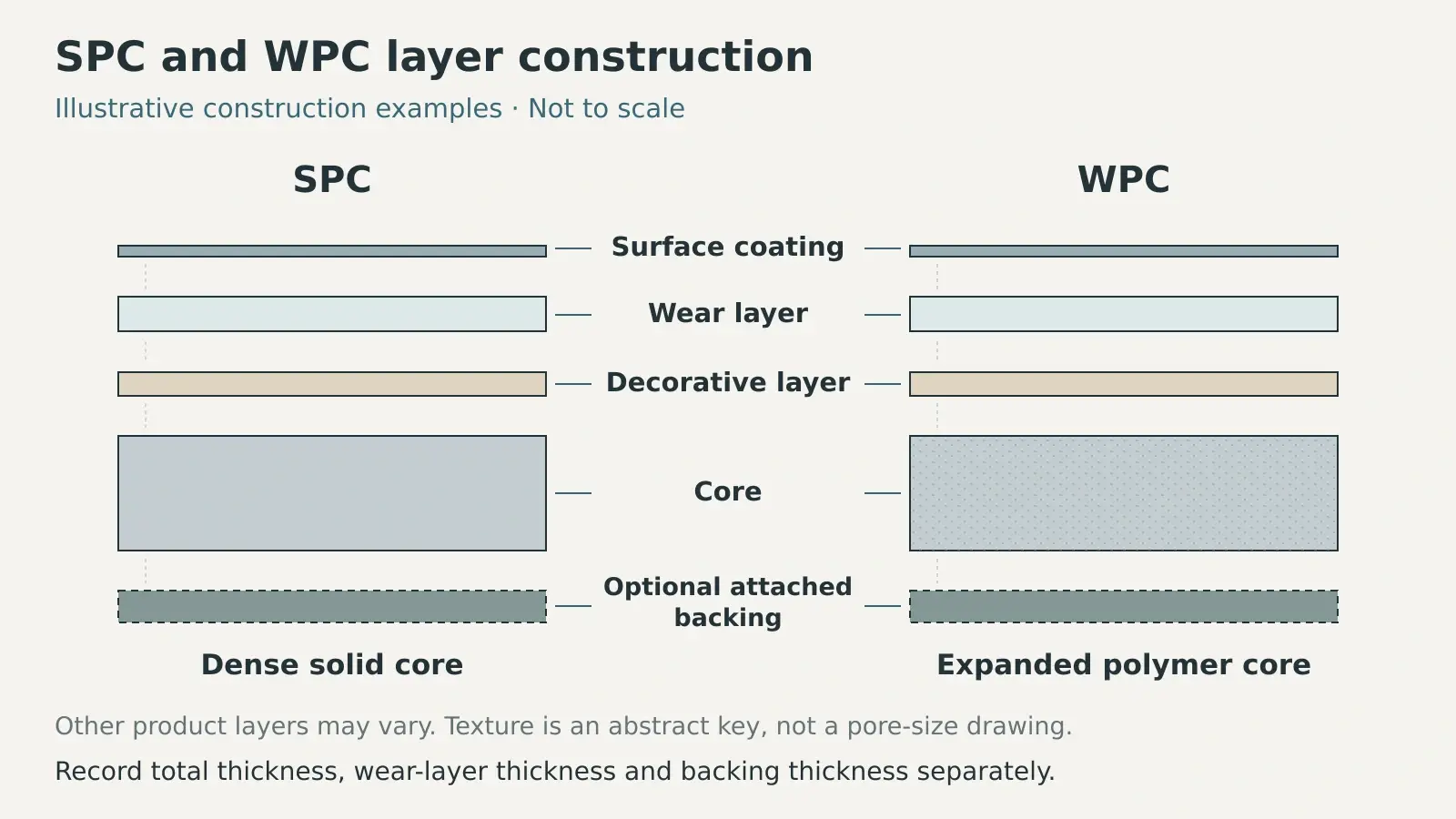
SPC uses a dense solid core
SPC is commonly marketed as stone plastic composite or stone polymer composite. Industry terminology also uses Solid Polymer Core. Many products combine mineral filler with PVC and other ingredients. Ask for the manufacturer’s construction description rather than treating one formulation as universal.
The dense core helps explain SPC’s firm feel and indentation resistance. It does not make the finished floor immune to damage. Narrow furniture feet, rolling loads, dropped objects and poorly supported joints can create different stresses, so review the permitted use and load-related guidance for the selected product.
WPC uses an expanded polymer core
WPC is often described commercially as wood plastic or wood polymer composite, but the initials do not guarantee that a flooring product contains wood. Expanded Polymer Core describes the foamed construction used in this rigid-core category. Confirm the actual composition with the supplier.
The cellular core can provide a more cushioned feel than a dense SPC construction. Attached backing and the rest of the plank also affect the experience. Compare full-size samples with their specified backing on a suitable support surface. A sample photograph cannot establish density, strength or a measured sound rating.
Product Specifications to Compare Before Ordering
Separate total thickness from the wear layer
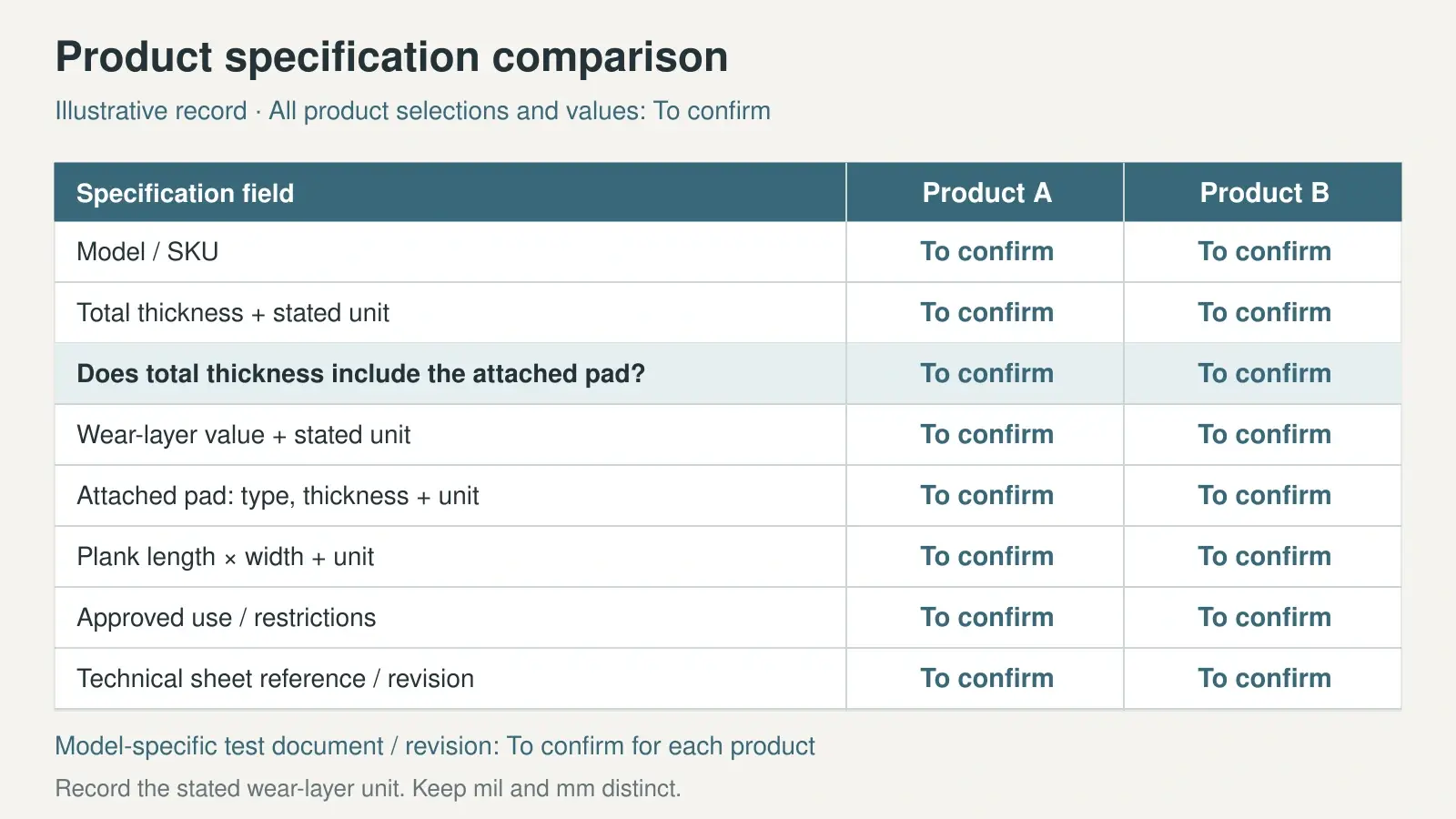
Record total plank thickness, declared core thickness where available, and attached-pad thickness separately. Confirm whether a quoted total includes the pad. A thicker WPC plank is not automatically a more wear-resistant floor than a thinner SPC plank, because the core and surface perform different jobs.
Wear-layer thickness describes a different part of the product. Where a specification uses mil, remember that a mil is one thousandth of an inch, not a millimetre. Keep the stated unit beside the value and ask for clarification when a quotation simply says thick wear layer or premium grade.
| Specification | Information to confirm |
|---|---|
| Product identity | Manufacturer, collection, model or SKU and technical-sheet revision |
| Layer construction | Total thickness, declared core thickness, wear layer, core description and attached-pad material and thickness |
| Plank format | Length, width, edge treatment, locking profile and pattern layout |
| Intended use | Approved residential or commercial application and relevant exclusions |
| Performance evidence | Required test reports, acoustic assembly and current product certification scope |
| Ordering basis | Area per carton, quantity, finish reference, batch requirements and matching trims |
Our SPC flooring product and installation guide explains the product records and site checks to request when assessing a particular SPC option. Use the same level of information for the WPC alternative so that the comparison remains useful.
Distinguish indentation from scratches and wear
Indentation concerns compression or a lasting impression under a load. Scratching and abrasion concern damage to the surface. A dense core can help with one aspect of performance without proving that its coating will resist every scratch. Match the documented surface performance, care requirements and warranty to the actual room use.
Request evidence for the exact product when the project requires emissions, fire, slip or other performance documentation. Check the named model, test method and certificate scope. A certificate for indoor emissions does not establish every other performance property or approve the whole installation.
Compare comfort and sound using the complete assembly
WPC’s cushioning can be attractive for bedrooms and living spaces. SPC can suit a preference for a firmer surface. Test samples rather than choosing solely from a category description, especially when attached pads differ.
For an apartment or hotel, ask for acoustic results that identify the floor covering, underlayment, supporting slab or deck and ceiling arrangement. Impact sound and airborne sound are different measures. Sound heard while walking in the room also differs from impact sound transmitted to the room below. Compare like-for-like test methods and assemblies with the project’s requirement; a headline rating from a different construction is not a reliable prediction for your building.
Installation Conditions That Can Change the Choice
Check subfloor flatness and moisture separately
A rigid core does not make an uneven or unstable substrate acceptable. Check the product’s flatness tolerance over its stated measuring length, inspect support and deflection, and identify repairs before installation. Flatness is different from level: a sloping surface can be flat, while a level room can still contain local dips and high spots.
Assess concrete or timber moisture conditions using the selected product’s instructions and the site’s requirements. Establish the permitted test method, limits and any specified vapor-control layer. An attached acoustic pad does not automatically replace a required moisture barrier. Keep the preparation and moisture-control scope visible in the quotation.
Existing flooring also needs review. Confirm that its material, attachment, condition and underlying substrate are permitted by the new floor’s manual. Do not assume that every tile, floating floor or cushioned covering can stay beneath SPC or WPC. Where timber flooring is another option, our engineered and solid hardwood comparison provides a separate assessment of wood construction and installation choices.
Confirm underlayment and movement details
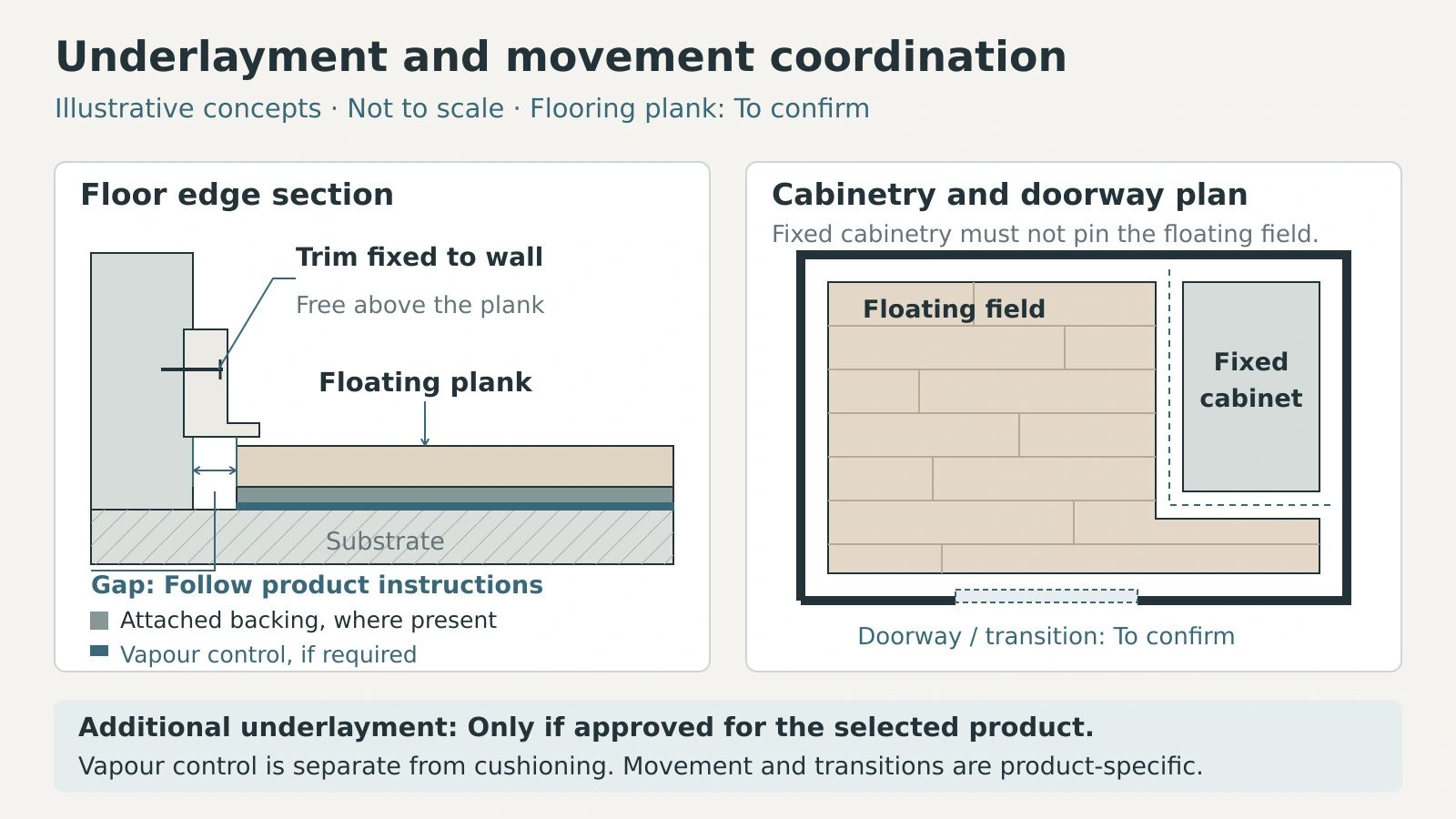
Many SPC and WPC products use floating click-lock installation, but the approved method is model specific. Identify the locking system, attached pad and any permitted separate underlayment. Do not add a soft layer unless the manufacturer approves that exact arrangement; extra cushioning can affect support at the joints.
Check perimeter gaps, maximum continuous installation areas and required transitions in the selected instructions. Coordinate doorways, thresholds, trims and fixed cabinetry so that the floating floor is not restrained contrary to those details. Record the installation sequence around permanent units rather than assuming the planks can run beneath everything.
Review temperature sunlight and room exposure
Confirm storage, installation and service-temperature requirements, together with the stated conditioning or acclimation procedure. Strong sunlight at glazing can produce conditions different from the room thermostat reading. SPC’s dense core is not a blanket approval for unconditioned rooms, conservatories or extreme heat.
For radiant heating, confirm that the selected floor and heating system are compatible, including the permitted temperature, control and operating procedure. Do not borrow a limit from a different collection. Follow the relevant product instructions for cleaning equipment, water exposure and maintenance as well.
Waterproof product marketing does not establish a waterproof room assembly. Check whether the model is permitted in the proposed bathroom, laundry or below-grade location and how its edges and penetrations must be detailed. A shower floor or area with standing water needs its own approved flooring and waterproofing solution. Compare the room requirements in our flooring options guide before treating either rigid-core category as suitable everywhere.
Compare SPC and WPC Flooring Quotations on the Same Basis
Align the specification and order quantity
Ask each supplier to quote identified products against the same room use, finish requirements and required documentation. Compare the wear layer, complete thickness breakdown, pad, plank format, locking system and warranty coverage. A price for a thin unpadded plank and one for a thicker padded construction cannot be explained by core type alone.
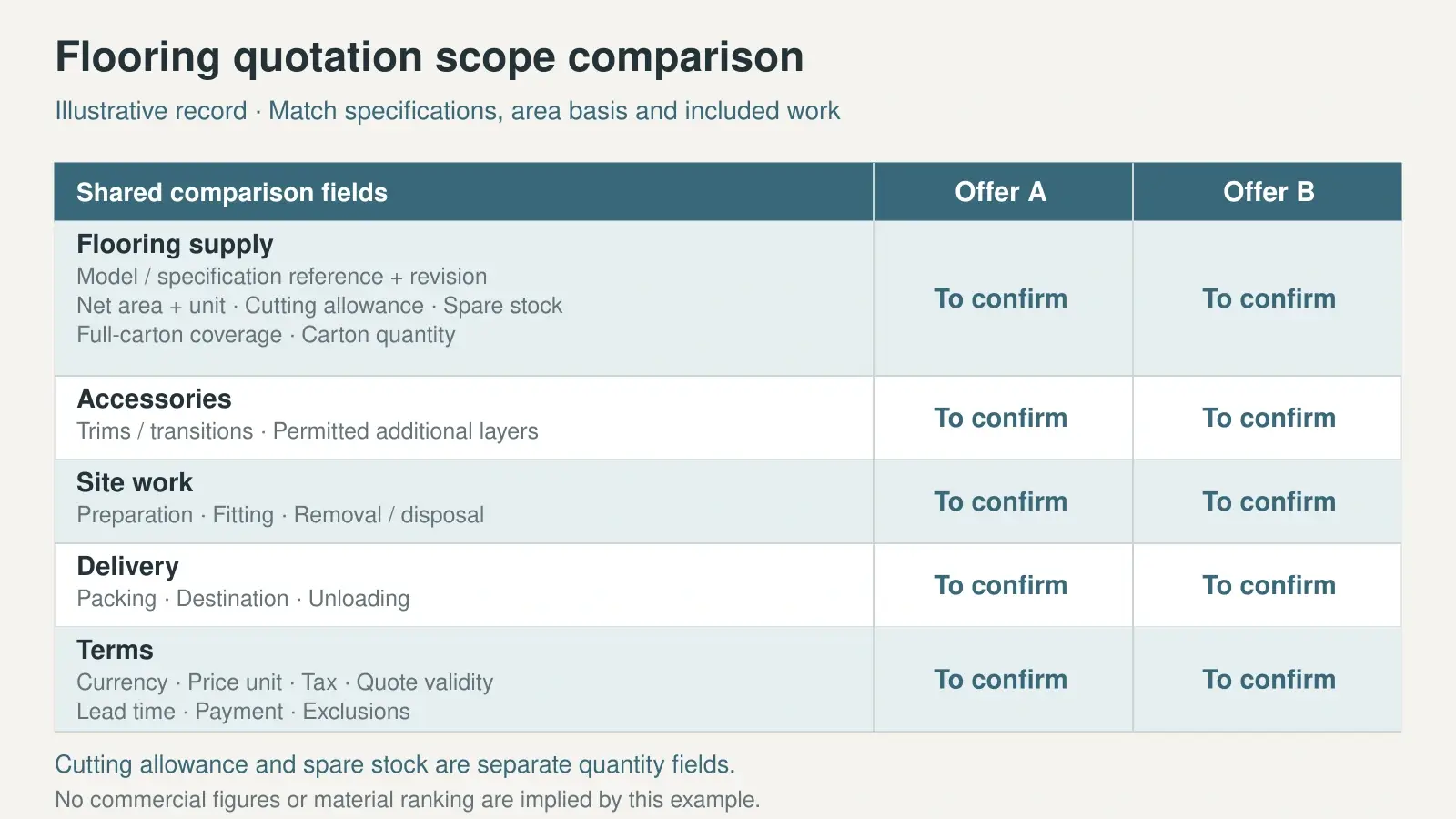
Use the same measured net area, layout assumptions and agreed cutting allowance. Convert the requirement into full cartons using each product’s stated carton coverage and confirm the actual order area. Separate spare stock from cutting waste so that the quantities are not counted twice. Avoid applying a universal waste percentage without reviewing the room layout and pattern.
Use a stable material code in the finish schedule template to connect each approved flooring selection to its rooms, samples and drawing references. Retain the supplier’s model or SKU as well as the project code.
Compare supply and installation costs separately
There is no dependable rule that every SPC floor costs less than every WPC floor. Collection, finish, documented performance, quantity and supply terms can change the result. Request the same cost breakdown for both alternatives rather than comparing only a headline price per square metre or square foot.
| Quotation item | Comparison check |
|---|---|
| Flooring supply | Currency, price unit, full-carton order area and product specification |
| Accessories | Matching trims, transitions, stair components and permitted separate layers |
| Site work | Removal, substrate repair, moisture control, installation and reinstatement |
| Delivery | Packing, transport scope, delivery location, applicable duties or taxes and unloading responsibility |
| Terms and support | Quote validity, lead time, warranty provider, exclusions and replacement-part or spare-stock arrangements |
For imported material, compare packing and shipment information alongside the product price. A denser construction can affect weight, but freight depends on the actual carton dimensions, gross weight, order volume and route. Request those figures rather than assuming the same delivery cost for both offers.
Our project material coordination services describe the information used to connect selections, drawings, supplier quotations and delivery scope. Confirm the agreed responsibilities for the actual project before accepting a combined supply-and-installation figure.
Which Flooring Should You Choose
Shortlist SPC when a firm feel and documented indentation performance suit the intended use. Shortlist WPC when cushioning is a priority and the selected product meets the required surface, load and installation conditions. For commercial or shared buildings, verify the relevant application and acoustic evidence for either option.
If moisture, substrate movement or temperature conditions remain unresolved, close those issues before choosing between the samples. The better offer is the one that meets the specification and installation conditions at a clearly defined project cost.
To compare products for a quotation, send your flooring schedule and project drawings. Include room areas, substrate information, proposed models, thickness breakdown, wear layer, pad, finish samples, required reports, trims and delivery location. Identify any missing site information so that it can be treated as an open item rather than an assumed condition.
Frequently Asked Questions
Is SPC flooring better than WPC flooring
SPC generally provides a firmer, denser construction, while WPC generally provides more cushioning. Compare the exact surface specification, permitted use, installation conditions and total quoted scope. Neither category wins every project requirement.
Is WPC flooring always made with wood
No. WPC is used commercially for wood plastic or wood polymer composite, while industry terminology also identifies this flooring category as Expanded Polymer Core. Confirm the manufacturer’s actual core description instead of inferring ingredients from the initials.
Can either floor go over an uneven subfloor
Only within the selected product’s stated substrate requirements. Check flatness, structural support, moisture and any existing covering. A rigid plank or thick pad does not remove the need to repair an unsuitable base.
Does a thicker wear layer make the floor dent proof
No. Wear-layer thickness concerns the surface layer, while indentation also depends on the complete construction, load and support. Confirm both the surface specification and the manufacturer’s load-related instructions.
Which is cheaper after installation
Compare identified products using the same quantities, preparation, accessories and delivery scope. An initial material saving can be outweighed by extra site work or exclusions. The actual quotation is more useful than a fixed price ranking between SPC and WPC.