For ordinary indoor bathrooms, documented 304 stainless steel can be a practical choice for accessories such as towel rails, hooks and holders. 316 adds molybdenum, which improves resistance to chloride-related pitting and crevice corrosion. It deserves closer consideration where salt deposits, corrosive exposure or difficult cleaning increase the demands on the product.
The useful comparison is the actual hardware assembly in its intended environment. Confirm the material of each relevant component, the finish, installation details and maintenance instructions before approving either grade. A shiny surface or a “marine grade” description does not establish those facts.
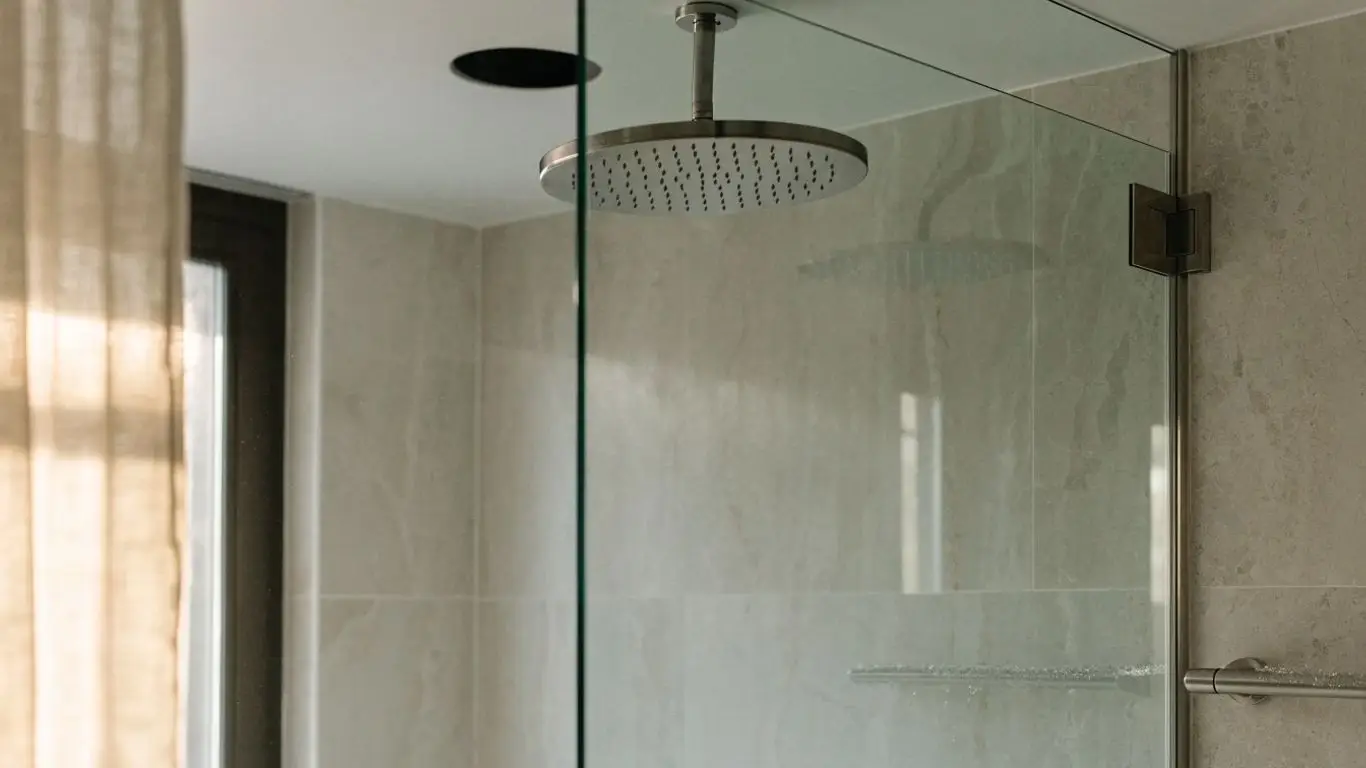
1 Compare 304 and 316 at a Glance
Both are chromium–nickel austenitic stainless steels. The key alloy difference is the deliberate molybdenum addition in 316, commonly 2–3% by weight. Full composition limits depend on the stated specification and product form; use the supplier’s applicable material documentation rather than a generic internet composition chart.
| Selection point | 304 stainless steel | 316 stainless steel |
|---|---|---|
| Alloy distinction | No specified molybdenum addition in the usual 304 specification | Deliberately alloyed with molybdenum |
| Typical bathroom context | Commonly used in indoor bathrooms | Consider for more corrosive exposure or harder-to-clean locations |
| Chloride resistance | Less resistant than 316 under comparable conditions | Improved pitting and crevice corrosion resistance; still has limits |
| Appearance | Available in multiple surface finishes | Can look identical to 304 with the same finish |
| Care and evidence | Needs suitable cleaning and component-specific material records | Needs the same checks; the grade is not a maintenance exemption |
Humidity alone is an incomplete selection criterion. Chlorides, deposits, temperature, drainage and cleaning access can change the exposure considerably. Neither grade is universally corrosion-proof.
2 Verify the Material Behind the Grade Claim
2.1 Identify the Components Covered
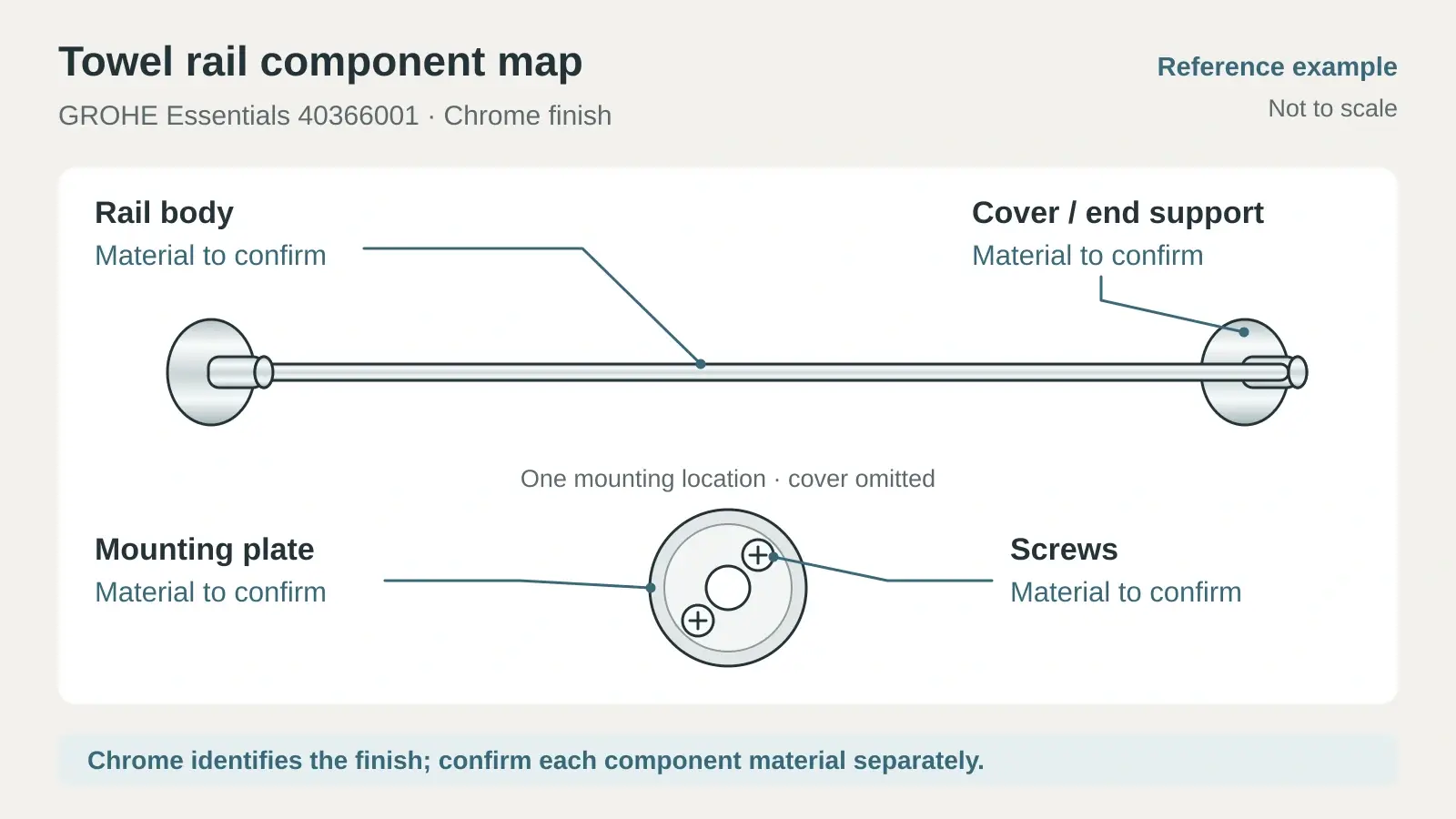
Ask whether “316” describes the main tube, the visible cover, the mounting plate or the complete assembly. Screws, springs, brackets and concealed parts may use different materials. A stainless-look coating on another metal is also different from a stainless steel substrate.
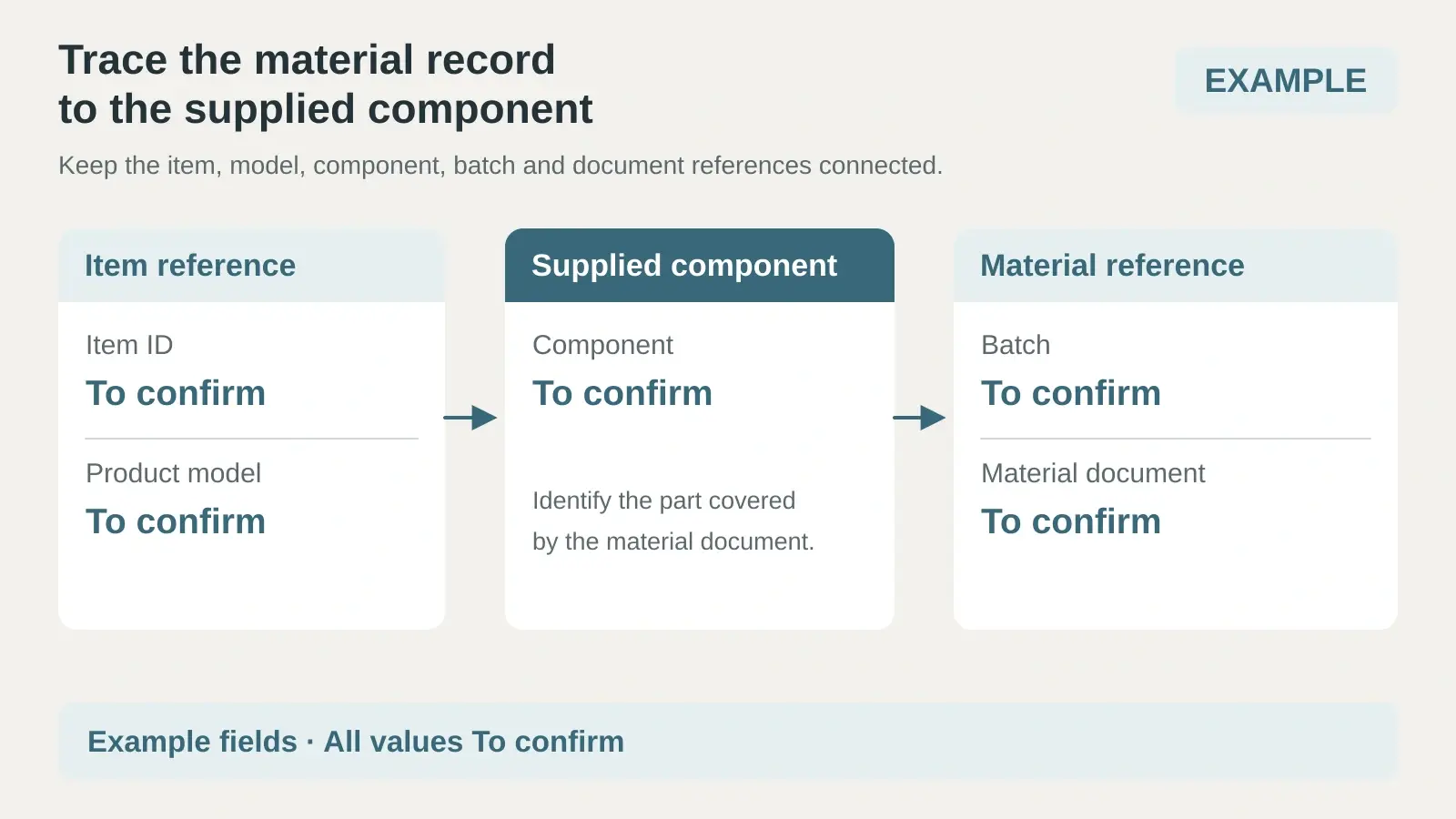
For each model, record the component, specified alloy, finish code and document reference. Keep a room or item ID so the requirement stays connected to the order. A bathroom fixture schedule template can connect accessories to their room, quantity and parent fixture; add component-level alloy fields where needed.
For example, a quotation that says “316 towel rail” still needs clarification if the backplate and supplied fixings are unspecified. Mark these as pending, then obtain a written response before accepting an “all 316” description.
2.2 Connect Certificates to the Supplied Product
Request a model-specific material declaration and the agreed supporting evidence. When mill certificates or material test reports are required, check the grade, applicable specification, heat or batch reference and the supplier’s traceability from that material to the delivered components. A report for unrelated stock does not establish the grade of your order.
Agree the evidence level before purchase. It may include traceable supplier records, material certificates and targeted testing, depending on the project. Record unresolved gaps explicitly. A chemical composition report alone does not establish coating durability, assembly strength or suitability for every bathroom environment.
2.3 Understand Magnet and PMI Limits
A magnet is not a reliable 304-versus-316 test. Cold working can make either grade attract a magnet, and appearance cannot identify the alloy reliably.
Positive material identification, or PMI, can help resolve an uncertain material claim. Handheld X-ray fluorescence testing can detect molybdenum and help distinguish these grades when the test location and sample condition are appropriate. Coatings, contamination and component geometry can affect the result. Record the tested part, sample or batch ID, method and locations; one reading does not cover every untested screw or bracket.
Handheld XRF cannot measure carbon, so it cannot by itself confirm the low-carbon distinction in 304L or 316L. If that distinction matters, agree a suitable carbon-capable method with the testing provider.
3 Match the Grade to the Bathroom Environment
Start with a description of the room and exposure, rather than a blanket rule that every wet room needs 316.
| Environment | What to check before selection |
|---|---|
| Ventilated indoor bathroom with low salt exposure | Documented 304 may suit the application. Confirm the product’s intended use, finish and cleaning guidance. |
| Shower area with repeated wetting and deposits | Check drainage, hidden gaps, water deposits and access for rinsing and drying. Wetting alone does not settle the grade choice. |
| Coastal bathroom exposed to salt-laden air | Consider 316 or a more resistant material with the supplier. Assess actual exposure, sheltering, finish and cleaning; distance from the sea alone is insufficient. |
| Hotel or public bathroom with frequent chemical cleaning | Review the actual cleaning products, concentration, contact time and rinsing procedure. Selecting 316 does not make every cleaner compatible. |
For changing rooms or bathrooms near pools, describe splash, airborne chemicals and cleaning access separately. Warm indoor chlorinated pool atmospheres require particular care: stressed, unwashed overhead supports have suffered corrosion cracking in both 304 and 316. Do not extend this ordinary bathroom-hardware comparison to concealed or overhead safety-critical pool supports; obtain specialist material selection for that scope.
4 Review Finish and Installation Details
A grade label cannot compensate for fabrication contamination, poorly finished welds or water-trapping details. Check that accessible surfaces and joints are clean, that the product can be maintained, and that installation follows the manufacturer’s fixing and sealing requirements. Do not add drainage holes or alter a concealed fixing arrangement without approval.
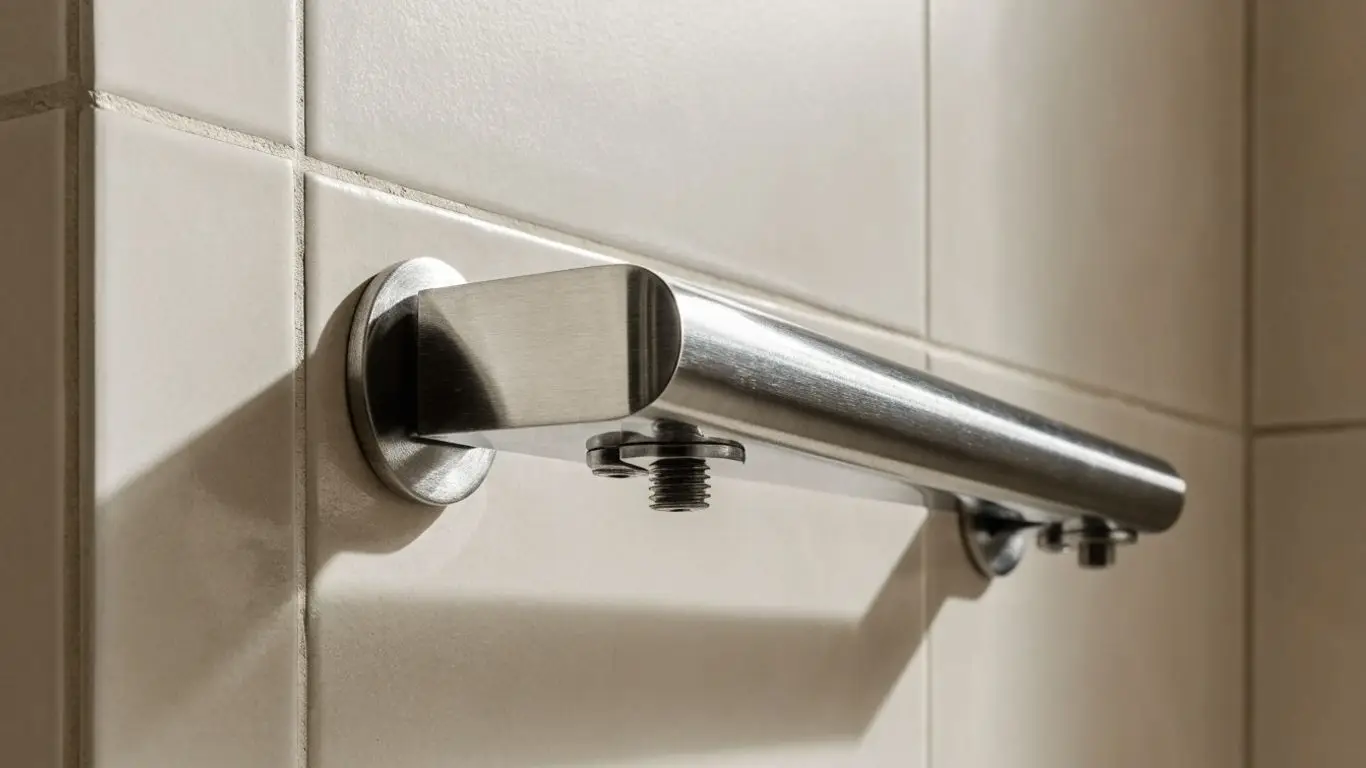
Approve a physical finish sample against the exact model and finish code. Brushed, polished and coloured products should be compared under consistent lighting. Use finish schedule and sample references to coordinate adjacent room finishes, while keeping the hardware’s alloy and coating specification in its product record.
For a wider package, coordinate bathroom hardware and shower-system specifications by model, mounting condition and included parts. A visible handle or trim finish does not identify the material of a valve body behind the wall. Check the shower valve service and replacement scope when access and future replacement affect the selection.
5 Maintain Both Grades Correctly
5.1 Establish Routine Cleaning
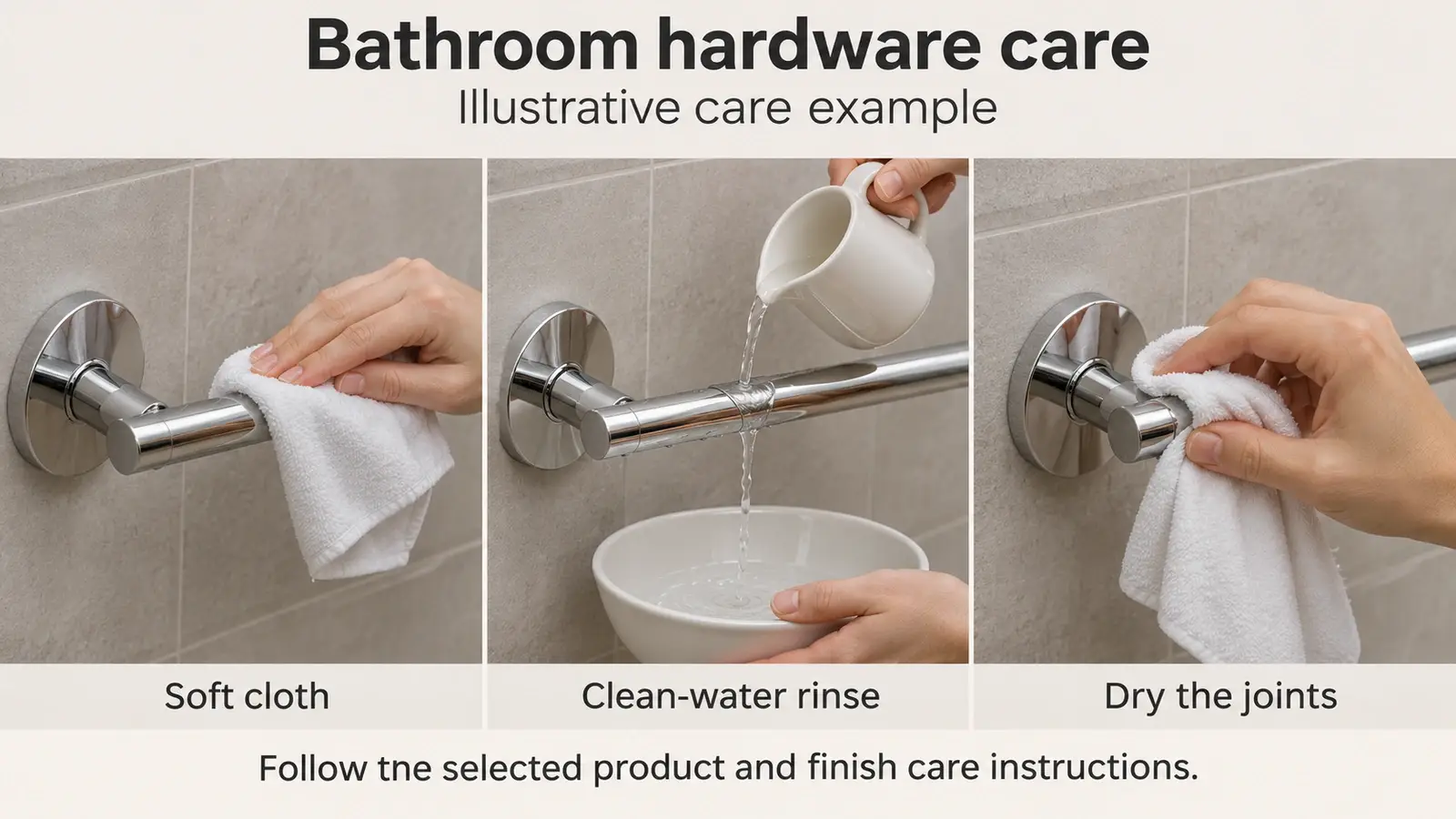
Follow the manufacturer’s care instructions for the exact product and finish, including any PVD or other coloured coating. For compatible uncoated stainless surfaces, routine care generally uses mild detergent, clean water and a soft cloth. Rinse away residue and dry accessible joints; follow the grain on brushed surfaces.
Avoid carbon-steel wool, contaminated metal tools and aggressive abrasive pads. Do not use hydrochloric-acid masonry cleaners. Avoid bleach-containing cleaners unless the hardware manufacturer expressly specifies a controlled, compatible process. Protect installed fittings during tiling and construction cleaning, and agree a cleaning routine with the handover team.
5.2 Investigate Recurring Brown Marks
Brown marks may involve surface contamination, deposits, tea staining or more serious corrosion. Do not assume every mark is harmless or that it proves the supplied grade is wrong.
If marks return, photograph the affected area and record the product ID, location, cleaning chemicals, exposure and material documents. Ask the supplier to assess the cause and an approved treatment. Visible pitting, damaged fixings or loose hardware need a prompt product and installation review; avoid abrasive or acid restoration that could damage the finish or obscure the evidence.
6 Compare Quotations on the Same Scope
Request 304 and 316 options against the same model, dimensions, quantity and finish where both are offered. Ask the supplier to identify any design differences. Compare included fixings, material evidence, finish samples, spare parts, warranty conditions and cleaning exclusions as well as the unit price.
Before releasing an order, confirm:
- Room and item IDs, model, dimensions and quantities.
- Alloy requirements for the body, mounting parts and fasteners.
- Finish code, accepted sample reference and coating description.
- Site exposure and the proposed maintenance method.
- Required documents, testing scope and approval status.
- Included installation parts, spare parts and replacement access.
For project procurement, agree drawing, sample and inspection coordination against these requirements. An appearance inspection can check a finish against a sample; alloy confirmation needs the agreed material evidence.
7 Frequently Asked Questions
7.1 Is 304 Stainless Steel Suitable for a Shower
It can be suitable for products designed for that use, but assess the complete assembly, chloride exposure, deposits, finish and care requirements. A shower location by itself does not prove that 304 will fail or that 316 is necessary.
7.2 Can 316 Stainless Steel Rust in a Bathroom
Yes. Unsuitable chemicals, concentrated salts, contamination and water-trapping crevices can still cause staining or corrosion. Investigate the cause and follow product-specific care instructions rather than treating the grade as a guarantee.
7.3 Is 316 Worth the Extra Cost
It may be worthwhile where the documented exposure calls for its additional corrosion resistance. Compare quotations for equivalent assemblies and finishes, then consider maintenance access and replacement disruption. There is no universal price premium or service-life multiplier for every bathroom product.
Preparing a bathroom hardware package? Send your bathroom hardware schedule and exposure requirements, including room references, quantities, preferred finishes and the material evidence you need, so the scope can be reviewed before quotation.