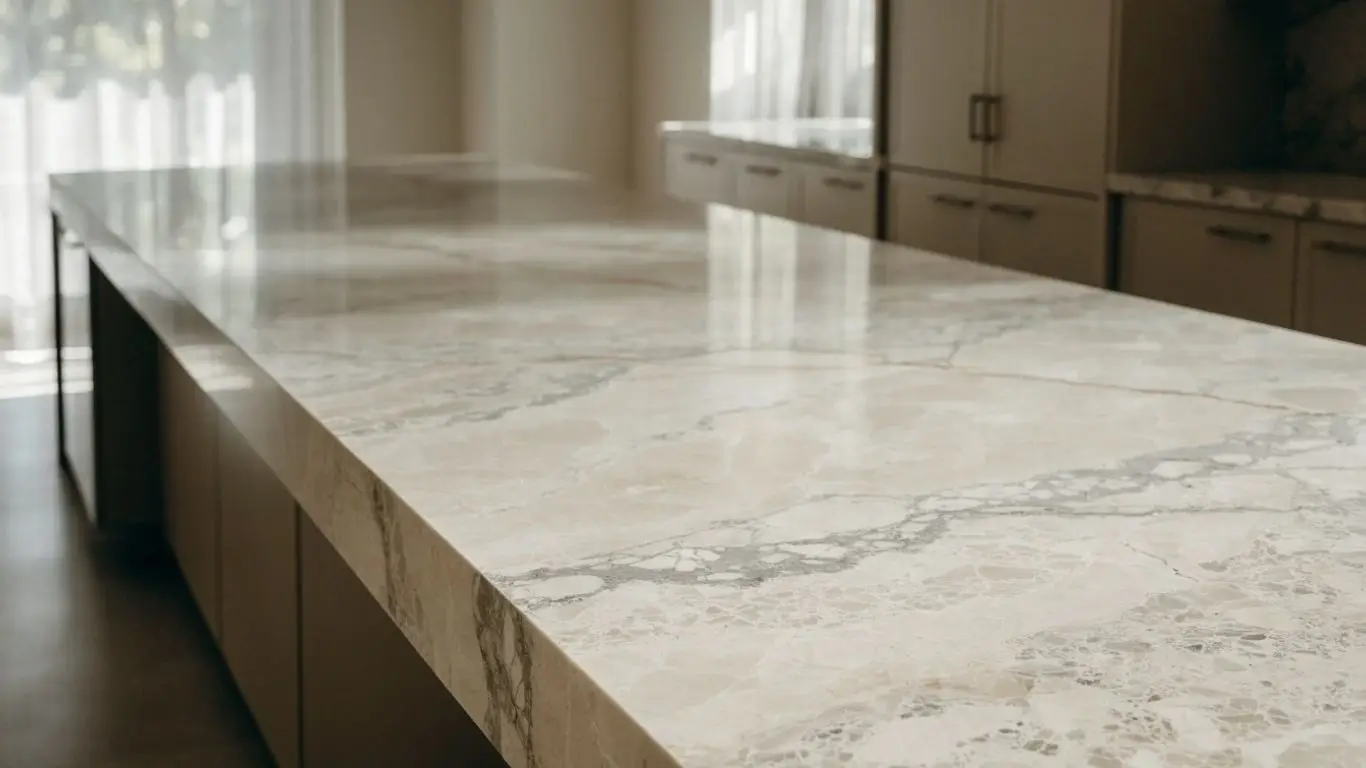
Quartzite is natural stone, while quartz countertops are engineered surfaces made with mineral aggregate, binders and pigments. Quartzite offers individually selected natural slabs; engineered quartz offers specified manufactured designs and generally does not require routine sealing. Both can work well as countertops when the material, fabrication and care requirements suit the project.
The useful comparison starts with the exact slab or product. Confirm what you are buying, how it will be cut and supported, what maintenance it needs and what the complete quotation includes. For a wider shortlist, use our countertop material selection guide.
1 Quartzite vs Quartz at a Glance
| Selection point | Natural quartzite | Engineered quartz |
|---|---|---|
| Material identity | Quarried natural stone; verify the geological identity behind the trade name | Manufactured surface; verify the brand, product code and current technical data |
| Appearance | Natural variation within and between slabs | Designed patterns; full slabs and production lots still need review |
| Sealing | Need depends on the selected stone, treatment and absorption | Generally no routine sealing; follow the product instructions |
| Heat and impact | Hard stone, but edges, repairs and thermal changes still require care | Binders and finishes have product-specific heat limits; edges can chip |
| Fabrication | Assess the actual slab, fissures, treatments, layout and support | Follow the exact product’s fabrication and installation requirements |
| Cost comparison | Slab selection, usable yield and fabrication affect the total | Product range, usable yield and fabrication affect the total |
Neither material is damage-proof. The name alone does not establish the performance of a finished countertop or make two quotations comparable.
2 Confirm Which Material You Are Buying
2.1 Identify the Natural Stone Behind the Trade Name
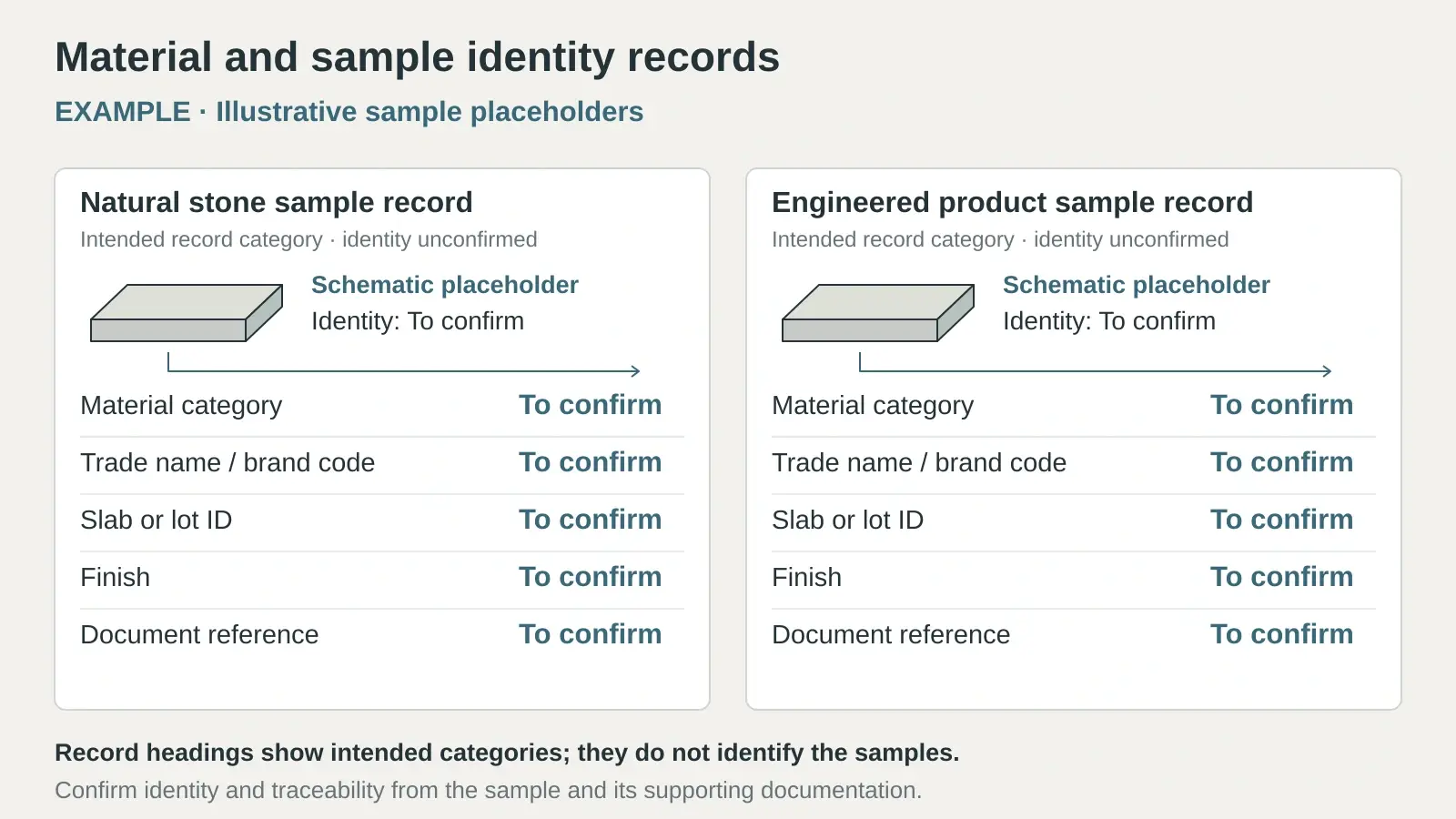
Quartzite forms when sandstone is changed by heat and pressure, producing an interlocking quartz-rich stone. Commercial labels can be misleading: marble, dolomitic marble and sandstone may be sold under a quartzite name. Terms such as “soft quartzite” need clarification rather than acceptance as a complete specification.
Record the supplier’s material classification, commercial name, source information where available, slab numbers, thickness and finish. Link full-slab photographs and a representative sample to those records. For stone slab and fabrication coordination, keep the actual material category visible even when the project uses a familiar trade name.
Also ask about resin filling, repairs, mesh backing and any applied treatment. Resin-treated natural stone can still be quartzite; resin or mesh alone does not prove that a slab is engineered quartz. These details belong in the review of appearance, fabrication and care.
2.2 Confirm the Engineered Product and Production Lot
Request the manufacturer’s name, product and colour codes, finish, thickness, slab dimensions, technical data, safety data sheet and care guide. Formulations vary, so do not apply a universal “93% quartz” description to every product offered in this category. If a supplier proposes a newer mineral surface instead, identify that product separately.
A sample establishes colour direction, not every vein across a finished island. Review the full design and available production lot, including edge appearance and pattern direction. Our white quartz product and sample selection guide covers the additional checks for pale backgrounds, undertones and sheen.
2.3 Use Screening Tests as Supporting Evidence
Appearance cannot reliably identify the stone. Hardness and acid-response checks may help a specialist investigate a questionable label, but a glass scratch alone does not prove geological quartzite: quartz-rich sandstone can also scratch glass and resist common food acids. The Natural Stone Institute’s quartzite properties guide explains this distinction.
If identity remains uncertain, agree an appropriate assessment with the supplier or a stone specialist. A petrographic examination can help identify mineral composition and texture; its usefulness depends on a representative, traceable specimen and a clear testing purpose. Do not scratch or apply acid to a showroom slab or installed countertop without permission. Any agreed sample assessment should use a supplier-approved offcut and record which slab it represents.
3 Approve Fabrication Before Comparing the Finished Result
3.1 Review Slabs and Seams Together
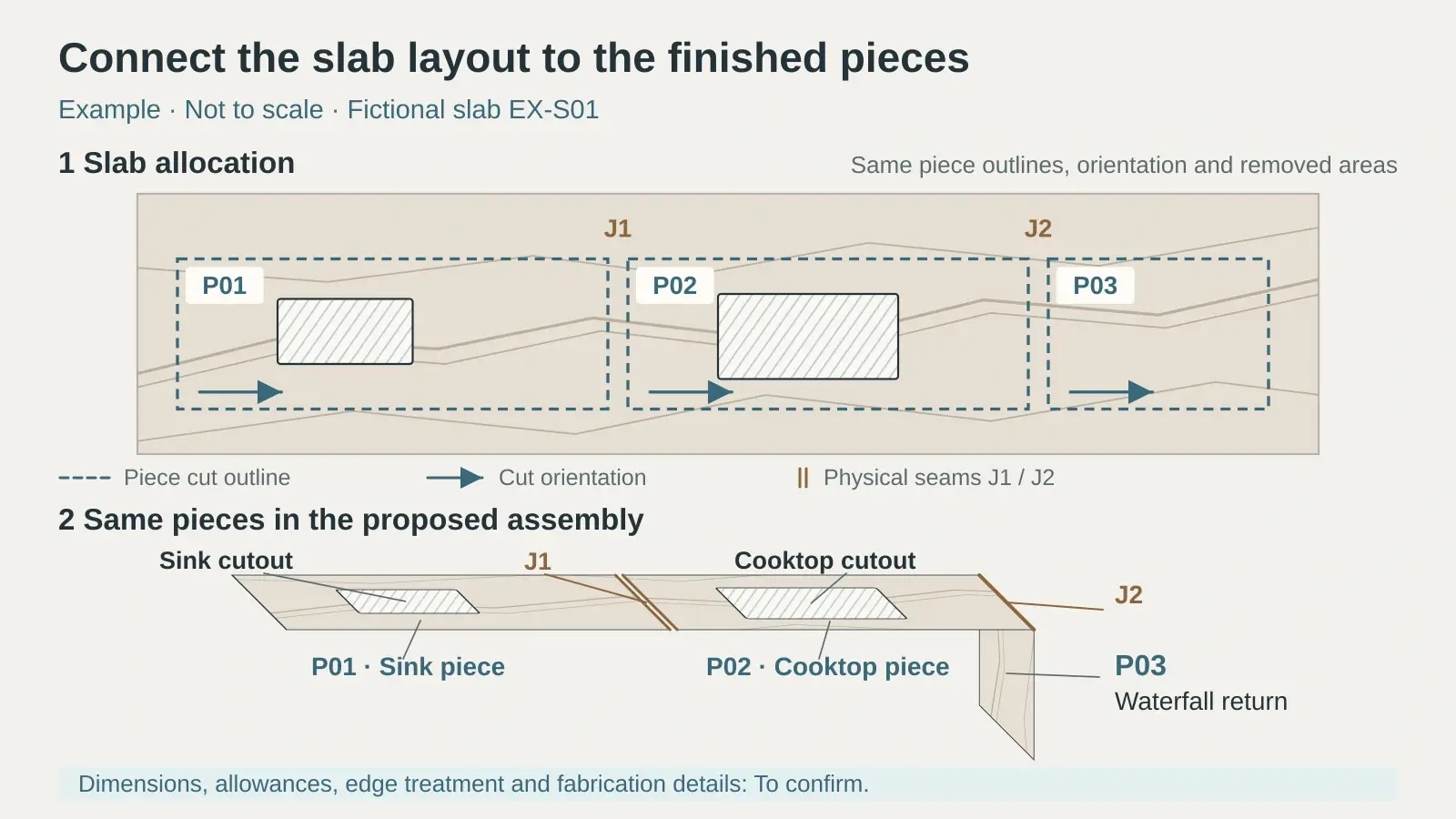
Approve the actual quartzite slabs or engineered quartz product and lot before cutting. Place the countertop outlines on the slab images, marking sink and cooktop openings, seam locations, exposed edges, upstands and waterfall returns. Natural variation and manufactured vein patterns both affect the usable layout.
Use slab layout and vein matching references when pattern continuity matters. A matching intention does not remove the physical joint or guarantee that a vein continues through every cut. Record the accepted layout revision and any areas of variation that the client has reviewed.
3.2 Confirm Edges Cutouts and Support
Quartzite’s hardness can make machining demanding, while fissures, repaired areas and the selected slab’s condition affect fabrication decisions. Ask an experienced fabricator to confirm edge feasibility and the proposed cutting approach. A complicated profile may not suit every stone or product. For absorbent quartzite, confirm the drying and treatment sequence after wet fabrication instead of assuming every slab follows the same turnaround.
For either material, confirm finished thickness, edge build-up, opening geometry, seam treatment, sink mounting and cabinet support against the applicable fabrication guidance. A deep mitred edge can create the appearance of a thicker top without making the entire slab that thick. Overhangs and cutouts need an approved support arrangement; avoid generic unsupported-span rules.
Agree final templating, appliance information, access and any site adjustment before production. Cutting or grinding either natural quartzite or silica-containing engineered surfaces can release respirable crystalline silica. Use professional fabrication with appropriate exposure controls and local requirements; this is not a dry-cutting DIY task. Treat fabrication safety information separately from normal use of an installed countertop.
4 Plan Care for the Selected Surface
4.1 Separate Acid Etching from Absorption Stains
Etching is a surface reaction; staining involves discolouration, often associated with absorbed substances. Genuine quartzite’s quartz-rich stone resists ordinary kitchen acids, unlike carbonate-rich marble. If a product sold as quartzite develops dull marks after food-acid exposure, have its identity, other minerals and surface treatments checked instead of simply prescribing more sealer.
A stone can resist ordinary food acids and still absorb oil or other liquids. Conversely, low absorption does not make an engineered surface immune to chemical damage. Neither surface should be cleaned with a strong chemical merely because it is described as durable.
4.2 Confirm Sealing and Everyday Cleaning
For quartzite, ask whether sealing is needed for the selected slab, whether it has already been treated and which product is compatible with its finish. Obtain guidance for worked edges and future checks. There is no universal annual sealing schedule for every quartzite. The Natural Stone Institute’s care guidance also explains that an impregnating sealer improves stain resistance rather than making stone stain-proof.
Engineered quartz generally does not need routine sealing. Follow its own care guide rather than applying natural-stone sealers or restoration products. For example, Caesarstone’s surface care instructions address approved cleaning, rinsing, heat protection and differences between finishes; other products need their own instructions.
For compatible finishes, routine care uses an approved mild cleaner and a soft cloth, followed by rinsing and drying. Blot spills promptly. Use cutting boards and trivets on both materials, including beneath heat-producing countertop appliances where the manufacturer requires protection. Seek an approved treatment for persistent marks rather than aggressive sanding, scraping or acid cleaning.
5 Compare the Complete Installed Quote
Quartzite is not automatically more expensive than every quartz product, and a low slab price does not establish the lower project cost. Compare the same countertop plan, finish and delivery scope. A premium engineered design, an extra slab needed for vein placement or difficult installation access can change the result.
Ask suppliers to itemize the following on the same basis:
| Quotation item | What both options should identify |
|---|---|
| Material and quantity | Exact slab or product, dimensions, thickness, number of slabs and pricing unit |
| Layout and usable yield | Agreed cutting layout, trims, defects or repairs to accommodate, and remnant ownership |
| Fabrication | Edge profile, seam work, waterfall returns, upstands, cutouts, holes and finishing |
| Installation | Templating, transport, access or lifting, fitting, supports, sealing where required and waste removal |
| Exclusions and delivery | Cabinet preparation, plumbing or electrical work, taxes, duties, freight and delivery terms as applicable |
| Aftercare and validity | Care instructions, warranty scope, spares or repair arrangements, currency and quote validity |
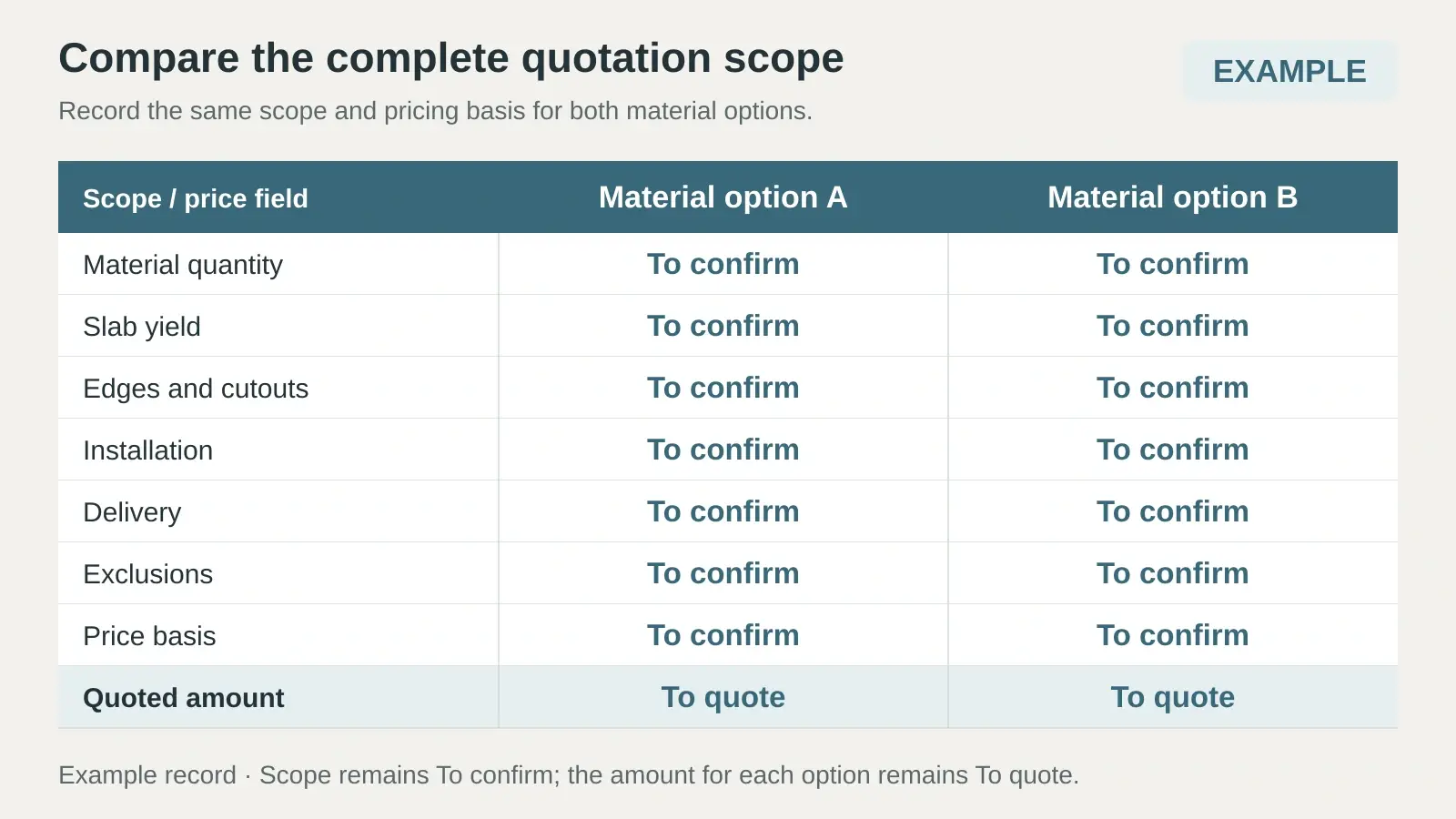
A quotation per square foot or square metre may use finished area, slab area or a minimum charge. Have that basis stated. Compare the full accepted scope rather than multiplying the visible countertop area by an unexplained rate.
Before release, confirm the material record, selected slabs or lot, sample, drawings, finished dimensions, seams and approval status. Agree drawing and material sample coordination with the responsible project team. A layout image or supplier quotation should not silently replace final dimensional and support approval.
6 Frequently Asked Questions
6.1 Is Quartzite the Same as Quartz
No. Natural quartzite is quarried stone; engineered quartz is a manufactured surface. A resin-filled natural slab is not automatically engineered quartz, and a marble-like pattern does not identify either material.
6.2 Which Surface Needs Less Maintenance
Engineered quartz generally avoids routine sealing. Quartzite’s sealing needs depend on the actual stone and treatment. Both need compatible cleaning, prompt spill removal and protection from preventable heat and impact damage.
6.3 Can You Put Hot Pans on Quartzite
Use a trivet. The natural stone’s heat tolerance does not guarantee the performance of resins, repairs, joints or an installed assembly under thermal shock. Use heat protection on engineered quartz as well and follow the selected product’s instructions.
6.4 Which Countertop Should You Choose
Consider quartzite if individually selected natural slabs and their documented care requirements fit the project. Consider engineered quartz if a specified manufactured design and generally no routine sealing are priorities. Approve the actual material, layout and complete quote before deciding.
Planning a countertop package? Send your countertop plan and slab references, with quantities, finish, edge details, sink and appliance information, project location and delivery scope, so the material and fabrication requirements can be reviewed together.