by George House/12,June,2025
Sourcing building materials in China works best when the project team starts with a controlled scope, not a supplier list. Build the BOQ and RFQ first, compare offers on the same basis, approve samples and drawings before production, then link quality control, packing and shipping to the approved documents. This process is more reliable than choosing products from photos or comparing headline unit prices.

1. Define the Project Scope Before Contacting Suppliers
Start with a room-by-room or system-by-system schedule. Each line should have a reference, location, quantity, dimensions, material, finish, accessories, performance requirements and required documents. Mark unresolved items clearly instead of allowing each bidder to make a different assumption.
| RFQ field | Example of the required definition |
|---|---|
| Reference and location | Door D-12, Level 2 corridor |
| Quantity and unit | Count, square metres, linear metres or sets |
| Size and configuration | Finished opening, product size, handing or layout |
| Material and finish | Substrate, surface, color reference and sample requirement |
| Accessories | Hardware, trims, sealants, spare parts and consumables |
| Performance | Project-specific test, rating or environmental criteria |
| Documents | Data sheet, report, shop drawing, sample and warranty terms |
| Delivery basis | Named place, Incoterms® rule and version, packing and schedule |
2. Build a Product and Supplier Map
China has manufacturing clusters for many construction-product categories, but a cluster name does not establish product quality or project suitability. Use regional knowledge to identify candidates, then qualify the actual legal entity, factory, product line and project capacity.
- Tiles and sanitary ware: review body composition, surface, calibration, color control, packaging and required test data.
- Windows and doors: compare profile systems, glass, hardware, drainage, finishes, drawings and project ratings.
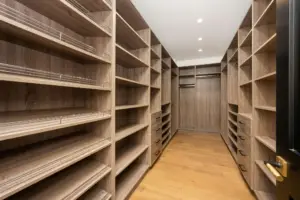
- Cabinets and wardrobes: define board construction, fronts, edge treatment, hardware, finishes and installation scope.
- Stone: confirm slab or tile selection, thickness tolerance, finish, reinforcement, dry layout and packing.
- Lighting and electrical products: verify the exact model, driver, photometric data, control protocol and destination-market requirements.
- Furniture and soft furnishings: control dimensions, construction, fabrics, color samples, fire or performance requirements and packing.
Relevant category pages include tiles, sanitary ware, windows and doors, cabinets and wardrobes, stone and lighting.
3. Verify the Supplier and the Exact Product Scope
- Confirm the legal company name and the entity that will sign the contract and receive payment.
- Check whether production is in-house, subcontracted or traded.
- Review relevant factory processes and quality-control records for the proposed product.
- Request recent, product-specific reports and verify the model, standard, laboratory and validity.
- Check sample consistency with the proposed production specification.
- Record exclusions, subcontractors and buyer-supplied items.
A factory visit or third-party audit can support due diligence, but it should be scoped to the product and risks. It does not replace sample approval, production checks or inspection of the finished order.
4. Compare Quotations on the Same Basis
Normalize each quotation into the project BOQ. Separate product price, accessories, tooling, samples, testing, inland transport, export packing, consolidation, freight, insurance, installation and taxes. Record currency, validity, lead-time assumptions, payment milestones and exclusions.
State the selected Incoterms® rule, named place and version in the contract. The International Chamber of Commerce explains that Incoterms® rules allocate defined costs, obligations and risk-transfer points; they do not define product quality, payment timing or every contract obligation.
5. Control Samples, Shop Drawings and Design Freeze
Create one submittal register covering samples, data sheets, drawings, mock-ups and open comments. Every approval should identify the item, revision, date and approver. “Approved” should not be used when dimensions, finishes, interfaces or performance documents are still unresolved.
- Physical finish and color samples
- Material and construction samples
- Hardware and accessory boards
- Shop drawings with dimensions and interfaces
- Product data and project-required reports
- Approved deviation list
- Signed design-freeze release
6. Link Production and Quality Control to Approved References
The purchase order, approved BOQ, shop drawings, samples and deviation log should be the inspection basis. Plan checkpoints according to risk: incoming materials, first-off production, in-process work, pre-shipment condition, quantity, operation, labeling and packaging.
Inspection results should identify the sample size, acceptance criteria, nonconformity, corrective action and release status. A generic “passed QC” stamp without a referenced checklist provides little control.
7. Plan Consolidation, Packing and Shipping Early
Multi-category projects need a packaging and consolidation schedule before production is complete. Record package dimensions and weights, lifting points, moisture and edge protection, crate or pallet construction, room or product labels, loading sequence and spare-part boxes. Coordinate shipping documents and destination import requirements with the project’s freight forwarder and customs adviser.
- Commercial invoice and packing list aligned with the order
- Bill of lading or transport document
- Country-of-origin or other destination documents when required
- Product reports and certificates required by the contract
- Photo record before closing crates and containers
- Receiving and damage-report procedure
Building Materials Sourcing Workflow
Project brief → BOQ and RFQ → supplier qualification → comparable quotations → samples and drawings → design freeze → production → quality control → consolidated packing → shipping documents → receiving.
See our project coordination services, completed project examples and one-stop supplier selection guide. To prepare a project review, send the BOQ, drawings and target delivery location.
Frequently Asked Questions
Should a buyer source directly from every factory?
Not necessarily. Direct contracts can provide control for major packages, while coordinated procurement can reduce interface, documentation and consolidation work. Compare the real scope, risk and delivered cost of each model.
What should be approved before production?
At minimum, approve the commercial scope, BOQ, product specification, dimensions, finish samples, accessories, shop drawings, required documents, packaging and deviations relevant to that package.
Is the lowest unit price the lowest project cost?
No. Compare delivered scope, accessories, testing, documentation, rework risk, packing, logistics and installation interfaces—not the unit price alone.