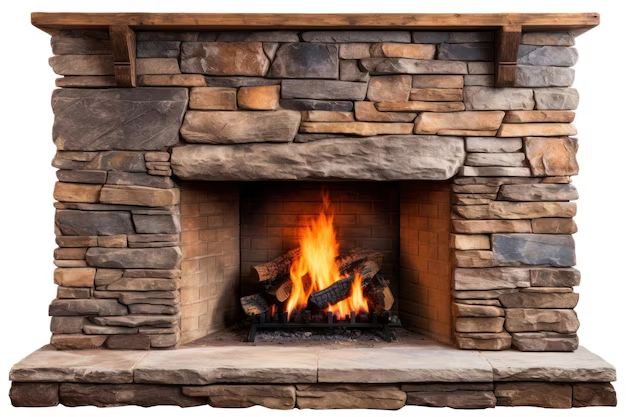
A stone fireplace should be specified as a coordinated assembly, not only as a stone color. The appliance or firebox, required clearances, substrate, fixing system, stone format, joints, hearth and mantel details all affect a safe and buildable result.
Define the Fireplace and Location
Record whether the fireplace is wood-burning, gas, electric or decorative, and whether it is indoors or outdoors. The selected appliance, local requirements and qualified project team establish the controlling conditions.
Compare Natural Stone Options
Limestone and Marble
These stones offer distinct color and veining but vary by source, finish and treatment. Review representative samples, expected variation and the supplier’s technical information. The marble collection provides a starting reference.
Granite and Other Stones
Granite, slate and other stones create different textures and joint patterns. Suitability depends on the exact product, thickness, finish and assembly rather than the material name alone.
Choose Full-Bed Stone or Veneer
Full-depth masonry and adhered or mechanically fixed veneer have different weights, supports and detailing. Compare these systems with the stone veneer fireplace guide.
Coordinate Heat and Clearances
Follow the listed appliance instructions, applicable codes and approved drawings for clearances to combustible materials, openings, vents and mantel projections. Decorative stone does not replace these requirements.
Review Substrate and Attachment
Confirm wall construction, support, movement, moisture exposure and compatible setting or anchoring materials. Require the installation system to suit the selected stone and fireplace condition.
Select Stone Format and Joint Style
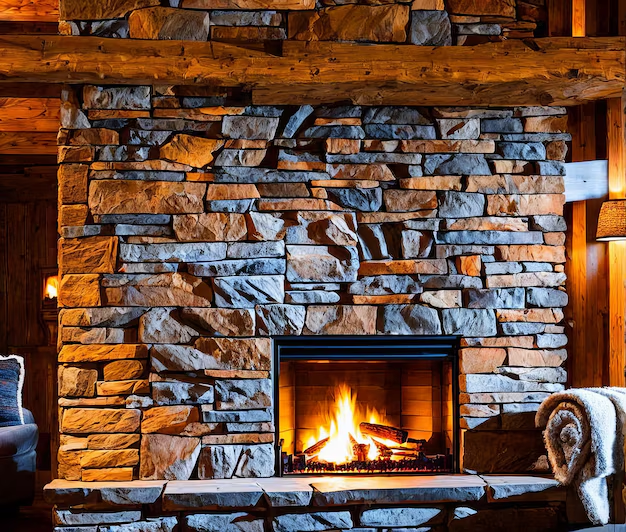
Slabs, cut pieces, stacked units and irregular stone produce different loads and joint rhythms. Define module, thickness, corner treatment, joint width, mortar color and surface finish.
Plan the Hearth, Mantel and Transitions
Coordinate hearth dimensions, edge profiles, mantel supports, floor junctions and adjacent wall finishes. Where tile is considered, use the fireplace tile selection guide.
Approve Samples and Dry Layouts
Approve the actual stone range, not one isolated piece. A dry layout or mockup helps control veining, color distribution, corners, joints and transitions before installation.
Coordinate Shop Drawings
Show appliance opening, stone modules, corners, anchors, joints, hearth, mantel and interfaces at cabinets, floors and ceilings. Large pieces may require fabrication and lifting details.
Build the Material Schedule
List stone source, product code, finish, thickness, quantity, edge work, joints, fixing system and approved sample. Coordinate large modules with the large-format surface guide.
Plan Cleaning and Sealing
Use the stone and treatment supplier’s instructions for cleaning, sealing and stain response. Test any treatment on a sample because it can alter color or sheen.
Final Stone Fireplace Check
Release the package only when the appliance, clearances, support, stone, layout, drawings and sample agree. For coordinated material review, send the fireplace model and drawings.