By George House/18,Oct,2025
Should you choose a buffet or sideboard? In current furniture catalogs, the two terms often overlap. Both usually describe a low storage cabinet with a usable top, doors, drawers or shelves. “Buffet” is commonly associated with serving and dining storage, while “sideboard” is often used more broadly in dining, living and entry spaces. These are useful tendencies, not universal construction standards.
The better decision is based on function, room dimensions, stored items, door clearance and finish. Treat the piece as part of the wider custom furniture package when its size, material or hardware must coordinate with other rooms.
Quick comparison
| Question | Buffet tendency | Sideboard tendency |
|---|---|---|
| Primary use | Serving surface and dining storage | General storage and display in several room types |
| Visual character | Often more traditional or substantial | Often lower, simpler or more contemporary |
| Internal layout | Drawers for cutlery plus enclosed tableware storage | Mixed drawers, shelves or doors for flexible storage |
| Placement | Dining room or serving zone | Dining, living, entry or circulation space |
| Selection rule | Choose by required serving and storage functions | Choose by room fit and the actual items to be stored |
A manufacturer may label the same basic cabinet a buffet, sideboard or credenza. Always compare the specification and drawing rather than assuming the product name determines depth, height, door type or internal fittings.
What is a buffet?
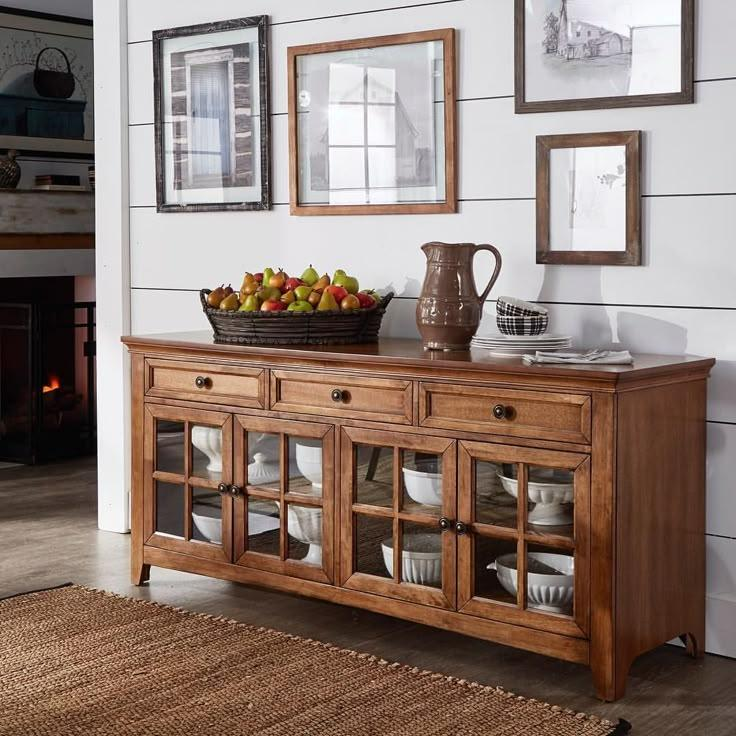
A buffet is typically a waist-height cabinet positioned near a dining table. Its top can act as a temporary serving surface, while the interior stores dishes, glassware, linens and serving pieces. Useful features may include shallow cutlery drawers, adjustable shelves or removable liners.
Before buying, measure the largest trays, plates and appliances that must fit. Check usable internal dimensions after hinges, drawer runners and shelf supports are deducted. A wide cabinet with poorly arranged dividers may hold less useful equipment than a smaller, better-planned unit.
What is a sideboard?
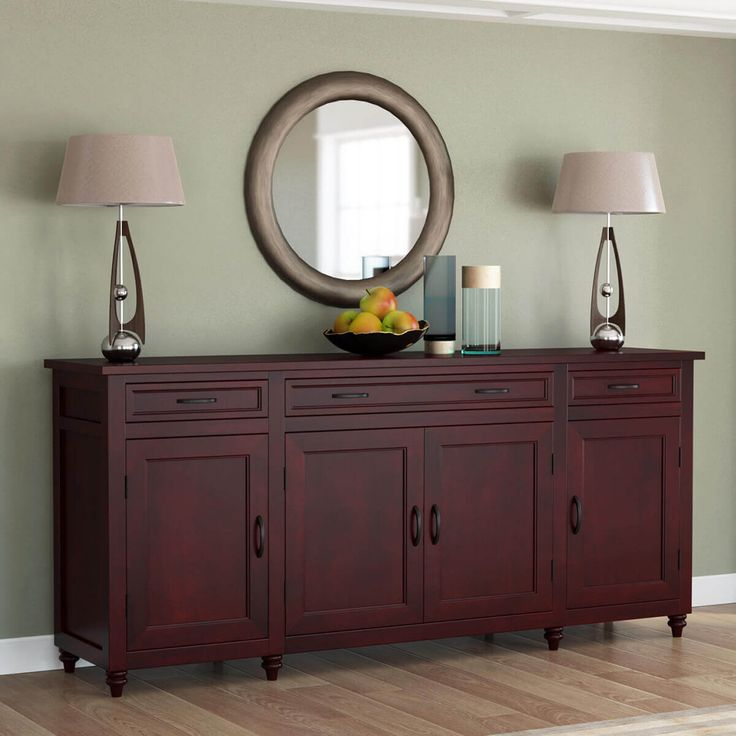
A sideboard uses a similar low-cabinet form but is frequently specified for more than dining. It can support lamps or art in a living room, hold keys and bags in an entry, or store media and household items. Door, drawer and shelf arrangements vary widely, so the intended use should lead the layout.
For a circulation zone, compare the cabinet with the room’s entryway furniture plan. A lower depth, sliding doors or recessed pulls may be more valuable than a label such as “sideboard.”
Dimensions and room clearance
There is no single standard buffet or sideboard size. Many products are roughly counter height or lower, but the correct height depends on serving use, nearby furniture and the user. Measure the exact product and room instead of ordering from a generic range.
- Record the available wall length after skirting, outlets, radiators, curtains and door trim.
- Measure the cabinet depth and add handle, door or drawer projection.
- Keep the required circulation route clear when doors and drawers are open.
- Check the top height against dining tables, window sills, switches, mirrors and artwork.
- Confirm delivery access through lifts, corridors, stairs and doorways.
- Allow for floor irregularity and any adjustable feet or plinth.
Use the same measured approach applied in interior space planning: draw the cabinet both closed and open, then test the route around it before approving the size.
Storage layout and hardware
Doors, drawers and shelves
Drawers are useful for smaller items, while adjustable shelves accommodate changing tableware or general storage. Hinged doors need swing space; sliding doors preserve the aisle but expose only part of the cabinet at a time. Check hinge opening angle, drawer extension, shelf adjustment increments and hardware replacement options.
Materials and finish
Solid wood, veneer, painted engineered panels, metal and glass can all work when detailed for the intended environment. Specify the visible finish, substrate, edge treatment, back panel, shelf construction and cleaning method. If natural timber is being considered, review movement, color variation and care alongside guidance for acacia wood furniture or the selected species.
Stability and wall restraint
A tall, narrow or heavily loaded cabinet may need wall restraint. Follow the product instructions and coordinate suitable backing or anchors with the wall construction. Do not let children climb on open drawers, and distribute heavy items low in the cabinet. The final safety approach depends on the unit, load and installation surface.
Buffet, sideboard or credenza?
Credenza is another overlapping term. It often describes a low cabinet with a long profile and may use sliding or hinged doors. Rather than relying on three rigid definitions, compare each proposed item against the same checklist: function, overall size, usable storage, opening method, hardware, finish, delivery route and installation requirements.
Custom-order checklist
- List the serving, display and storage functions.
- Measure the wall, aisle and delivery route.
- Schedule the largest items that must fit inside.
- Approve the front elevation, internal layout and opening clearances.
- Specify substrate, visible finish, edge treatment and back panel.
- Confirm hinges, slides, handles, shelf supports and any locks.
- Review anchorage, floor leveling and service openings.
- Approve a finish sample and inspect the completed unit against the drawing.
Which one should you choose?
Choose a buffet when the main requirement is dining storage and serving support. Choose a sideboard when the same cabinet form must work more flexibly in another room. If the available products use the terms differently, ignore the label and compare the dimensioned specification.
For a custom piece, send the room measurements, elevation, storage list and finish reference through the project quotation form so the cabinet can be priced against a defined scope.