By George House/29,Aug,2025
Navy blue kitchen cabinets can add depth without the visual harshness of pure black. The result depends on more than the color name: undertone, sheen, room light, cabinet construction, countertop, backsplash, flooring and hardware all change how the blue is perceived.
Begin with the complete kitchen design and cabinet layout. Color decisions become easier when the door style, appliance locations, worktops, wall finishes and lighting are already coordinated.
Choose the right navy, not just any navy
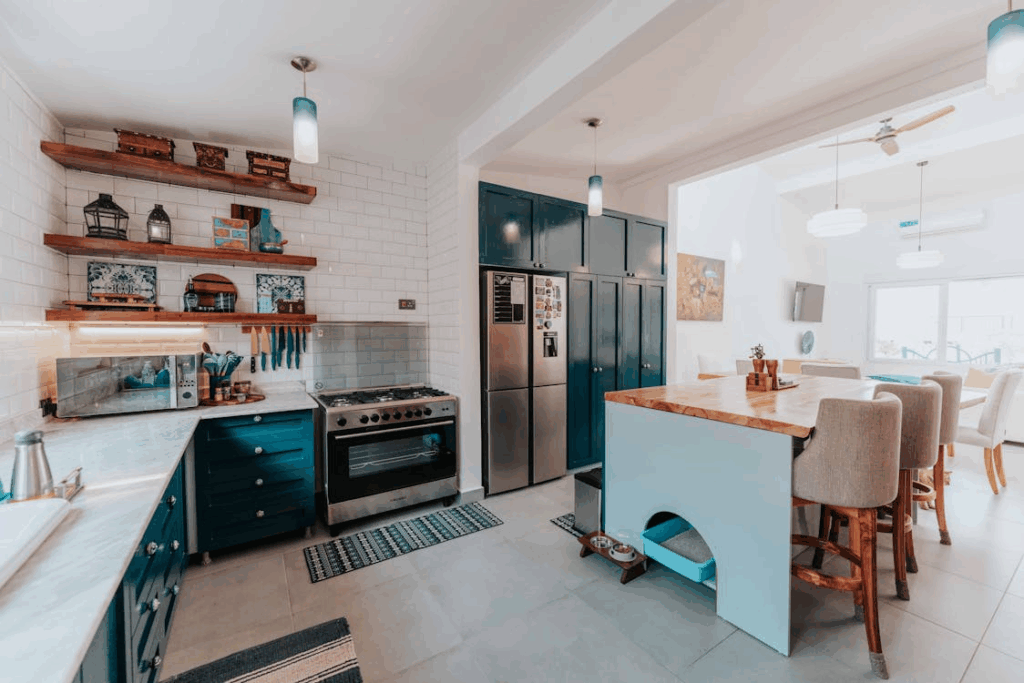
Navy samples range from cool blue to blue-gray and almost-black tones. A cool navy can feel crisp beside white or pale gray, while a warmer blue may sit more comfortably with timber, brass or cream surfaces. Product names are not a reliable color standard; record the actual manufacturer code and approved sample.
Test a larger sample vertically because cabinet doors receive light differently from a horizontal color chip. View it in daylight and under the planned artificial lighting. Compare morning and evening conditions, and place the sample beside the actual countertop, backsplash, floor and metal finishes.
(Source)
Coordinate navy cabinets with surrounding materials
White and light neutral surfaces
White, off-white and pale gray counters or walls create clear contrast and can keep a navy scheme visually balanced. Check the undertone: a cold white may exaggerate a warm blue, while a creamy white can look yellow beside a cool blue. Use the kitchen cabinet color guide to compare combinations before approving a palette.
Wood tones
Natural wood adds warmth and texture. Pale oak, ash or similar tones can lighten the composition, while darker wood creates a richer, more enclosed effect. If the room already has a timber floor, compare grain direction and color variation with the cabinet sample. Examples of light wood kitchen cabinets help show how wood can be used on an island, tall-unit niche or open shelf instead of throughout the room.
Countertops and backsplashes
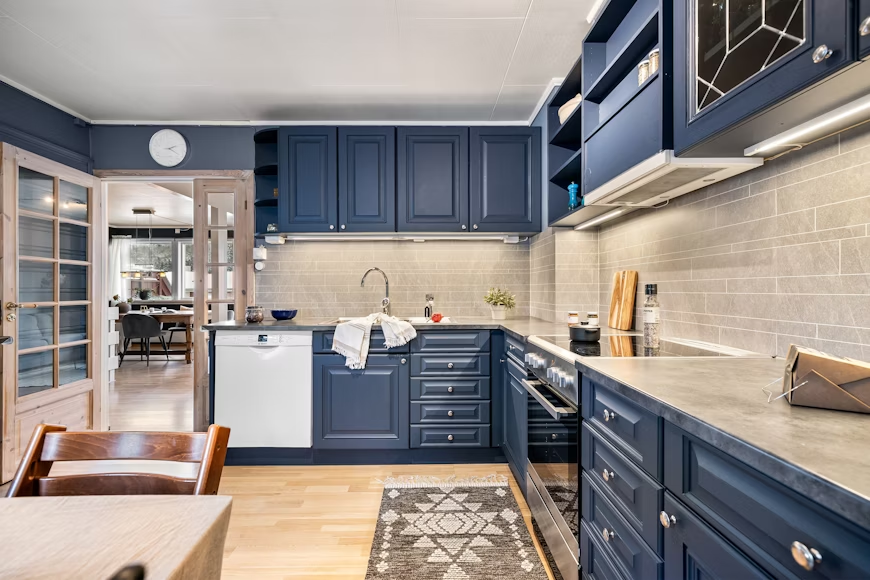
A quiet worktop lets the cabinet color lead; a strongly veined stone adds movement but requires careful slab selection. Confirm slab layout, edge profile, joint positions and splash height together. Small material samples can hide variation, so review an adequate representation of the final surface where possible.
(Source)
Select door style, sheen and hardware together
Flat slab fronts emphasize color and suit a minimal layout. Shaker or framed doors introduce shadow lines that can make a dark finish appear deeper. A low-sheen surface often gives a softer result; higher sheen reflects more light and may show fingerprints, waviness or touch-up differences more readily.
Hardware changes the character of navy. Brushed brass and warm metals create contrast; nickel and stainless steel connect with many appliances; black produces a quieter graphic effect. Confirm handle length, projection, fixing centers and placement on a full-size door or drawer front. Avoid relying on a loose handle sample without checking hand clearance and adjacent appliance doors.
Specify the cabinet and finish system
Navy is a finish choice, not a construction grade. Define the carcass and door substrate, exposed end panels, edge treatment, coating or laminate system, interior color, moisture-sensitive locations, hardware and acceptable sample. Review wood kitchen cabinet construction when comparing solid wood, veneer and engineered-panel options.
| Decision | Approval evidence |
|---|---|
| Color | Manufacturer code and signed physical sample |
| Sheen/texture | Approved sample under project lighting |
| Door construction | Style, substrate, edge and finish build-up |
| Hardware | Finish, dimensions, drilling pattern and placement |
| Interfaces | Counter, splash, floor, appliance and wall-clearance details |
Lighting and room balance
Dark cabinets absorb light, so plan task lighting for work surfaces and general lighting for the room. Color temperature and color rendering affect how navy and adjacent materials appear. Review under-cabinet lighting, shadows from tall units and reflections from glossy counters. In compact kitchens, using navy on lower cabinets or an island with lighter upper units can reduce visual weight without changing the core palette.
Cleaning, touch-ups and handover
- Use the finish supplier’s approved cleaner and avoid abrasive pads or aggressive chemicals.
- Confirm whether fingerprints, water marks and micro-scratches are more visible on the selected sheen.
- Keep a labeled touch-up material or repair procedure for the exact finish system.
- Check door and drawer alignment because uneven gaps are more noticeable on a continuous dark color.
- Record the approved sample, finish code and replacement-panel process in the handover documents.
Before mass production, approve one representative door and a small assembled corner showing the navy finish beside the interior cabinet color, edge detail and hardware. This makes it easier to judge color consistency, joint lines, gap tolerances and touch-up quality than a flat paint chip. For large projects, define how samples are labeled and how later replacement panels will be matched to the original batch.
During site installation, protect finished fronts from stone cutting, paint, adhesive and metal swarf. Check the first completed cabinet run for door gaps, end-panel color, handle alignment and light reflections before repeating the installation. If several factories or production lots are involved, agree on how color variation will be controlled and which signed sample remains the project reference.
Final design guidance
Navy blue cabinets work best when the color is approved as part of a complete material board. Coordinate undertone, sheen, lighting, door style, hardware and surrounding finishes before production. For a project-specific cabinet schedule, sample set and quotation, share the kitchen drawings and finish references for review.