By George House/09,Aug,2025
Kitchen cabinet color ideas should support the room’s light, surfaces and long-term useânot only a short-lived trend. A successful palette coordinates door profile, substrate, sheen, countertop, backsplash, floor, hardware and adjacent rooms.
This guide compares versatile color families, explains how finish changes perception and provides a sample and specification workflow. Use large project samples in the actual room before approving production.
Six Versatile Cabinet Color Directions
| Color Direction | Works Well With | Watch For |
|---|---|---|
| Warm white or cream | Stone, warm metals and classic profiles | Undertone conflict with cool white walls |
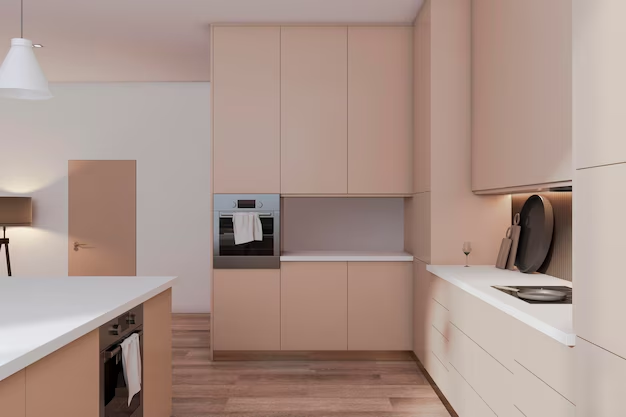
| Taupe or mushroom | Natural wood, greige floors and quiet interiors | Looking flat under low-color-rendering light |
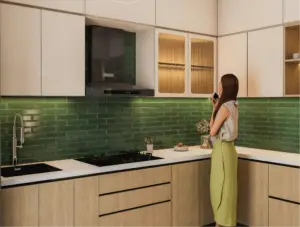
| Sage or olive | Warm white, timber and aged metal | Changing from gray to yellow across lighting conditions |
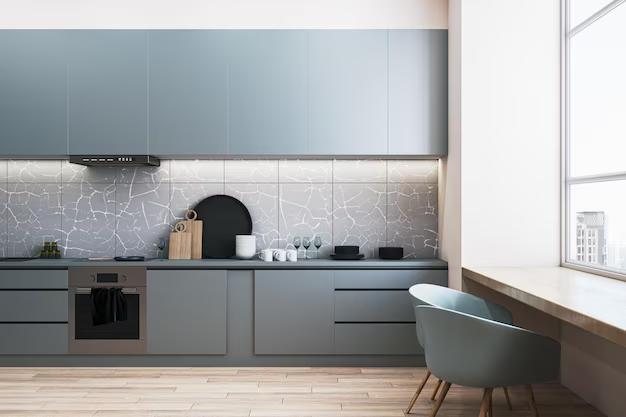
| Dusty blue or navy | White, pale wood and brass or nickel | Showing fingerprints and darkening a small room |
| Charcoal or black | Strong contrast, pale counters and modern hardware | Dust, edge damage and insufficient task lighting |
| Terracotta or clay | Plaster, stone and warm neutral palettes | Overpowering a room when used on every surface |
For a current but evidence-aware comparison, review the kitchen cabinet colors selection guide. Treat year labels as inspiration; the approved finish should still suit the project after the trend cycle changes.
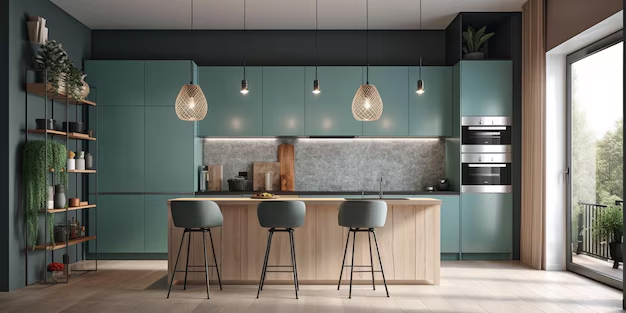
Warm Neutrals, Greens and Blues
- Warm white: keeps the envelope light but needs an undertone that works with countertop and wall paint.
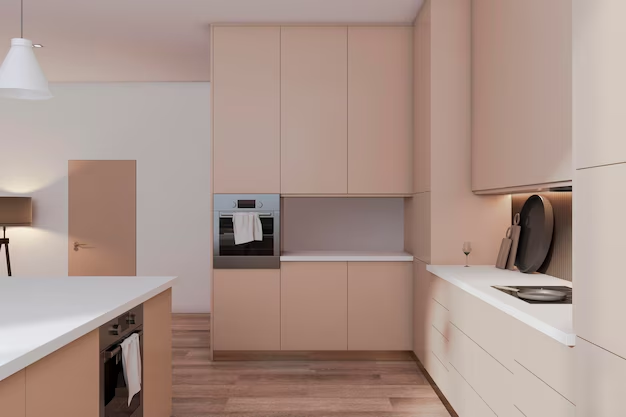
- Mushroom: bridges gray, beige and wood tones without the contrast of a deep color.
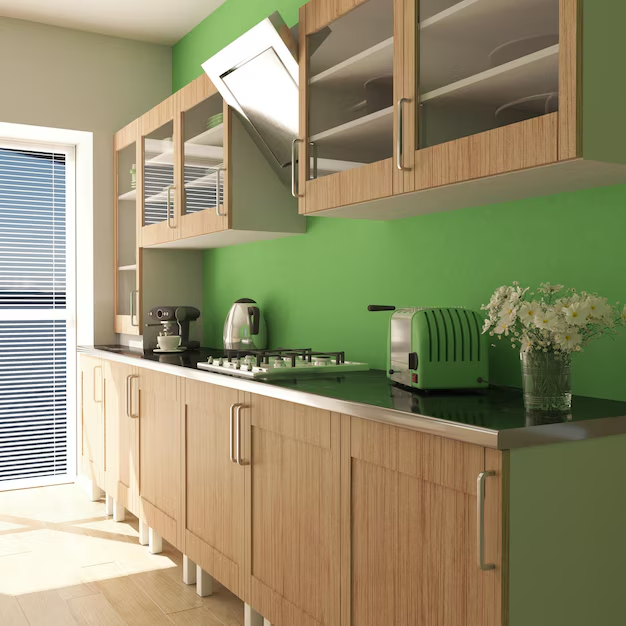
- Sage: adds muted color and can sit comfortably with oak, stone and brushed metal.
- Dusty blue: provides gentle contrast while remaining quieter than a saturated blue.
- Navy: creates depth on islands or lower cabinets, but benefits from balanced lighting and durable edge finishing.
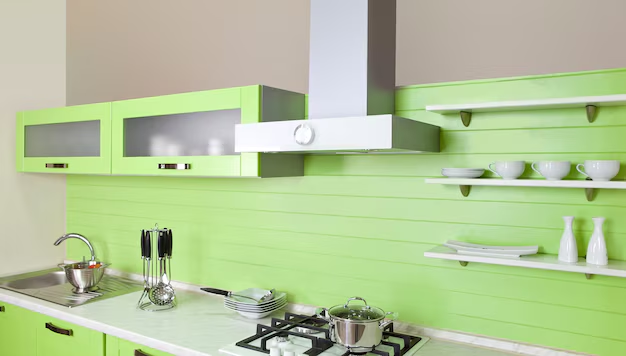
Dark Cabinets and Two-Tone Schemes
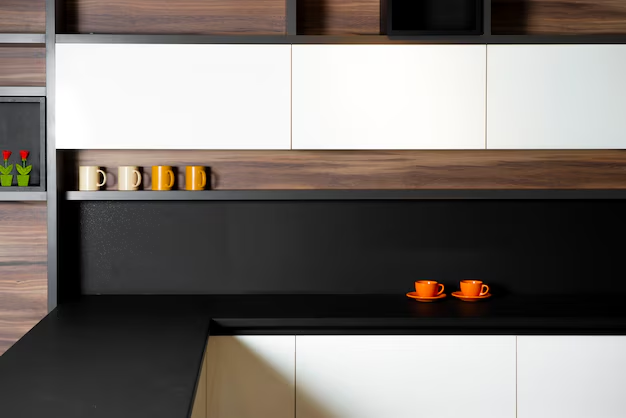
Dark cabinets can frame a room, ground an island or reduce visual noise around appliances. They also reveal dust, oil marks and edge wear more readily than many mid-tone finishes. Review the maintenance and lighting controls in the black kitchen cabinet guide.
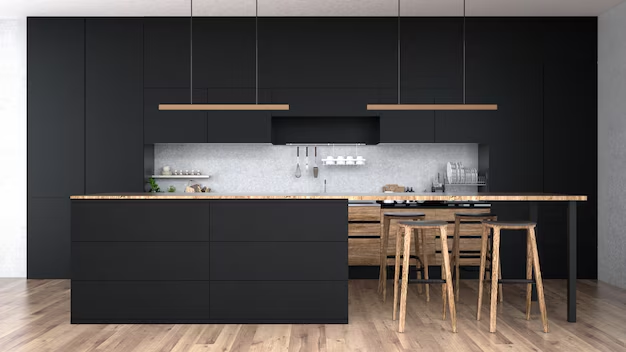
A two-tone arrangement works best when the change follows a clear architectural rule: island versus perimeter, tall units versus base units, or upper versus lower cabinets. Avoid scattering several unrelated colors across individual doors.
Color Is Only One Part of the Finish
| Finish Variable | Visual Effect | Practical Control |
|---|---|---|
| Matte | Soft, low-reflection surface | Check cleanability and burnishing on dark colors |
| Satin | Moderate sheen and balanced reflection | Approve gloss level on a large door sample |
| High gloss | Reflective, crisp and visually bright | Substrate preparation and scratch visibility are critical |
| Stained wood | Shows natural grain and color variation | Approve a range sample, not one selected board |
| Textured laminate | Consistent pattern with tactile depth | Coordinate pattern repeat, grain direction and edge band |
| Hand-applied effect | Intentional variation and crafted appearance | Define acceptable variation with a control panel |
Test the Palette in the Actual Kitchen
- Collect fixed samples for the floor, countertop, backsplash and wall.
- Select two or three cabinet color families with compatible undertones.
- Order production-representative door samples in the correct substrate and sheen.
- Place samples vertically and inspect them in daylight, task light and evening light.
- Compare the color beside hardware, appliance fronts and adjacent room finishes.
- Check fingerprints, cleaning and minor scratch visibility.
- Record the approved supplier code, batch controls and acceptable variation.
- Keep one signed control sample for factory and site comparison.
Door proportions and shadow lines influence how a color reads. Confirm the layout and standard cabinet modules using the standard kitchen cabinet size guide before approving a finish schedule.
Cabinet Finish Schedule Checklist
- Cabinet mark, room, elevation and quantity
- Door profile, substrate, edge detail and grain direction
- Color name, supplier code, sheen and coating system
- Interior carcass, exposed end, plinth and filler finish
- Countertop, backsplash, floor, wall and ceiling references
- Hardware material, color and hole pattern
- Approved sample size and permitted color or grain range
- Cleaning, stain, moisture, heat and scratch expectations
- Touch-up materials, spare fronts, batch control and warranty
- Mockup, inspection lighting and acceptance process
Counter height and backsplash proportions also affect the visible color balance. Coordinate them with the kitchen counter height planning guide and the approved kitchen elevations.
Build an Evergreen Cabinet Palette
The strongest kitchen cabinet color ideas connect architecture, materials and maintenance. Start with the fixed surfaces, compare large door samples and specify the complete finish rather than a color name alone. Use the kitchen design hub to coordinate the palette with the full cabinetry package.