By George House/21,Aug,2025
Solid wood exterior doors offer natural grain, repairable finishes and substantial visual depth. Their suitability depends on more than the timber name. Species, moisture condition, stile-and-rail construction, lamination, panel design, finish, exposure, hardware, frame and installation determine how the complete entrance behaves.
Coordinate the door leaf with its frame, threshold, weatherseals and hardware through a complete door-and-window package. Mixing independently selected components can leave unresolved clearances, finish edges and water-management details.
Species and construction are separate decisions
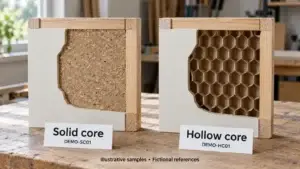
Species influences color, grain, density, machining and finishing, but the construction controls much of the door’s dimensional behavior. Ask whether the leaf is solid-laminated, traditional stile-and-rail, engineered-core with real-wood faces, or another documented assembly. Confirm the species and grade of visible faces, lippings, rails, stiles, panels and concealed components.
- Review moisture content and conditioning for the production and service environment.
- Check lamination quality, grain selection and repair limits on visible faces.
- Confirm panel movement details and minimum material around locks, pivots and hinges.
- Use an approved control sample to set expectations for natural variation.
Account for moisture movement and exposure
Wood exchanges moisture with surrounding air and can change dimension. Door width, height, thickness, grain direction, panel design, finish continuity and local climate affect the amount and consequence of movement. Large, dark or highly exposed leaves require especially careful review.
Compare the assembly with the exposure-led questions in the guide to the best exterior door material for harsh weather. An overhang, recessed opening and sheltered orientation can materially change the service conditions.
Specify finish on every relevant surface
State whether the finish is transparent, stained or opaque and whether it is factory or site applied. Approve color and sheen on the actual species. Coordinate preparation, primer or sealer, coat system, end-grain treatment and treatment of top, bottom, faces, edges, glazing rebates and hardware cutouts.
A maintenance schedule should come from the finish and door manufacturer and reflect exposure. Periodic inspection is more useful than a universal time interval: look for coating wear, open joints, water traps, failed sealant, damaged edges and hardware movement, then address them before moisture enters the assembly.
Coordinate dimensions and clearances
A nominal 36-by-80 exterior door reference does not define the rough opening or the manufactured leaf. Record structural opening, frame outside, leaf size, threshold level, floor finish, head and jamb clearances, handing and swing. Allow for seals and movement without creating excessive air or water gaps.
Treat glazing, hardware and security as a system
Glazed openings change weight, stiffness, safety treatment and edge distances. Confirm glass make-up, bead or stop arrangement, drainage and replacement method. Hinges or pivots, locks, multipoint mechanisms, closers, pulls and access control should be selected for the exact leaf size, mass, exposure and use frequency.
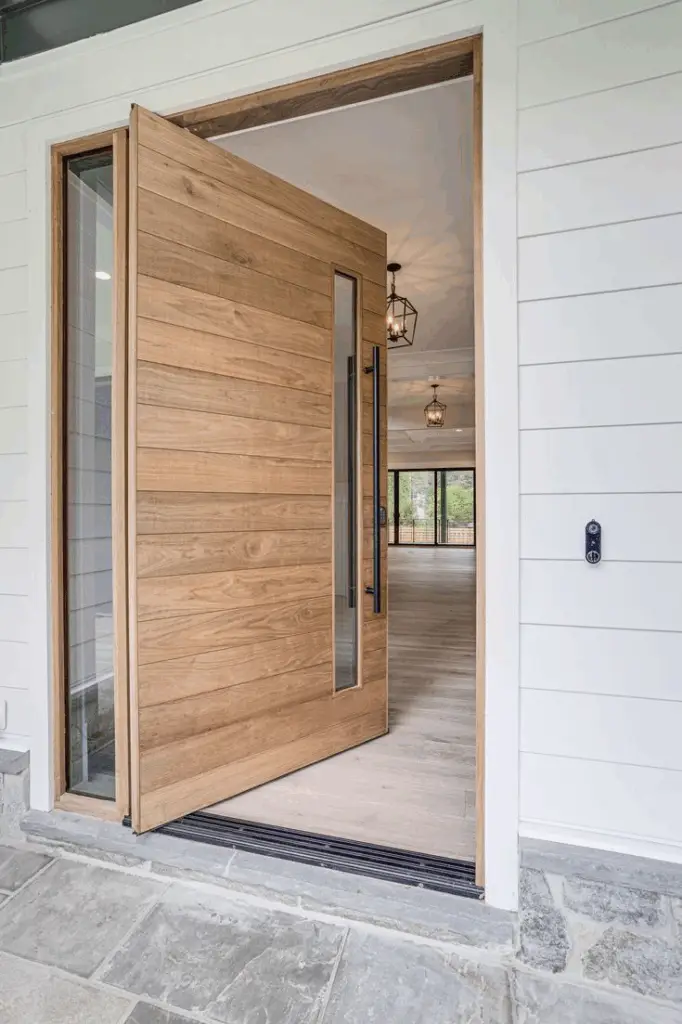
Contemporary entrance concepts may use oversized slabs or concealed hardware. The modern exterior door design guide can support appearance choices, but the shop drawings must still resolve structure, operation, weathering and access.
Review frame, threshold and weatherseals
Specify frame material and section, anchors, threshold, sill pan, drip details, perimeter seals and interfaces with the wall. Weatherstripping should be replaceable and continuous at corners. Check that drainage paths lead water outward and that interior and exterior seal lines align with the wall’s air and water control layers.
Install and protect the completed door
Survey the opening and verify plumb, level and substrate before installation. Use approved packers, anchors, flashings, insulation and sealants without distorting the frame. Adjust the leaf and hardware, test latching and seals, and document acceptable operating force. Protect the finish from wet trades, tape residue and impact.
Solid wood exterior door schedule
- Identify leaf construction, visible species and grade, dimensions, handing and quantity.
- State exposure, approved finish sample, coating system and maintenance documents.
- List frame, threshold, seals, glazing and complete hardware set.
- Require coordinated shop drawings, samples and applicable performance evidence.
- Define packing, delivery, installation, adjustment, protection, spares and closeout responsibilities.
To review a solid-wood entrance against the opening and hardware schedule, contact George House Material.