By George House/07,Feb,2026
A staircase is not just for linking floors. It facilitates everyday movement, forms safety, and gives a home personality. Many homeowners admire a staircase with a wooden railing but never fully understand how each piece works together.
Everything counts, even the steps you are walking on or the rails your hand rests on. Outdoor areas also depend on wood railings and strong handrails for stairs for balance and comfort.
Learning the parts of a staircase with a wooden railing helps with repairs, upgrades, and safety planning. This guide simplifies all this in simple terms so that all homeowners feel informed and confident.
Main Parts of a Staircase
(Source)
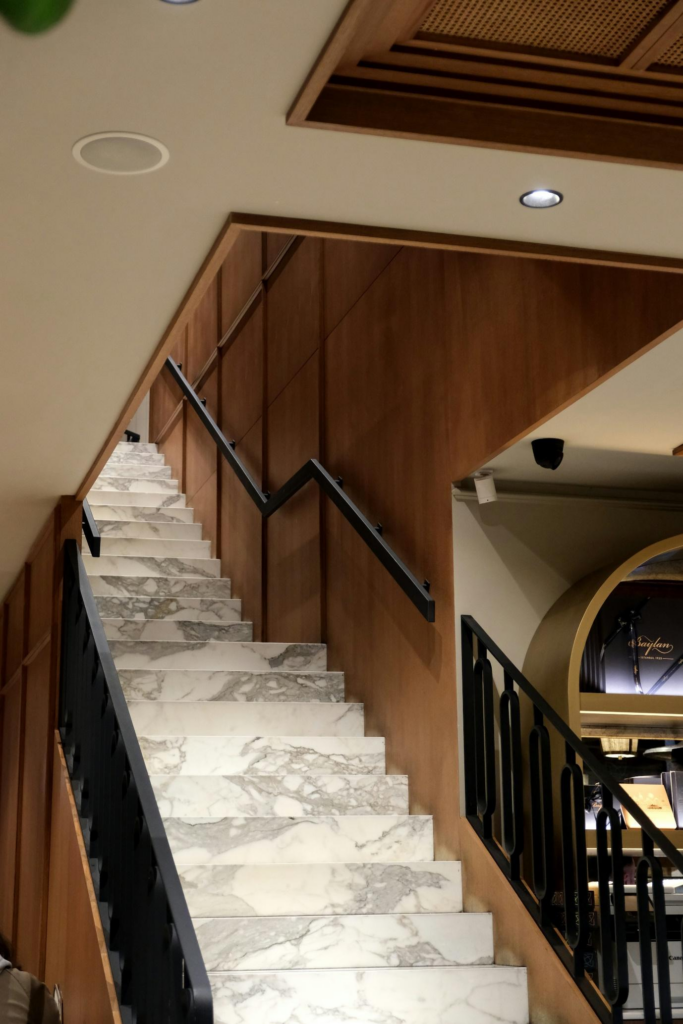
The primary structure makes all the other things make sense. The parts of a staircase work together like a team. Both works promote motion, stability, and security. Below is an explanation of the parts of a stair that people see and use every day.
Treads
Many people ask, “What are stair treads?” Well, they are the most visible part. Stair treads refer to the flat surfaces on which feet fall with every step. Each time they climb and descend, they carry their body weight.
When properly done, wood treads are warm to the feet and offer a good foot hold. Wooden treads that are well-maintained minimize the risk of falls. Stairs are made easier by deep and even treads that can be used by children and older adults without any issues.
Risers
Another question that Homeowners often ask is “What are stair risers?” The boards between the treads are vertical and are known as risers. They regulate step height and rhythm. Even riser height assists users in moving without stumbling.
term stairs and risers often appear together because they work as one unit. Hardwood risers are also used to seal any gaps that provide protection to pets and small children.
Stringers
The secret power of each staircase is the stringers. They are the inclined boards that hold treads and risers at the bottom. Stairs would not last long without good stringers. The majority of staircases have two or three stringers, depending on the width.
Stringers made of wood should be cut precisely. In addition to that, spacing should be done properly to ensure that steps are stable and quiet. Stringers, though invisible, establish the durability and long-term safety of any type of staircase.
Handrails
Stair handrails are used to direct movement and avoid falls. They are particularly significant to children and the elderly. Several building codes mandate the use of handrails on stairs that have over three risers.
For outdoor areas, handrails for stairs outside must resist weather and moisture. Design is also influenced by indoor handrails. The finishes are usally smooth, which eliminates splinters and enhances grip.
Balusters
Balusters are vertical posts between the handrail and the stair base. They prevent people from slipping through open sides. Balusters are usually spaced at a distance of less than four inches as required by building codes.
Balusters made of wood are decorative and create a visual rhythm. They also hold the handrail downwards. Loose balusters should be repaired in a hurry over time.
Newel Posts
The entire railing system is anchored by newel posts. These are larger vertical posts at the beginning and the end of a staircase or landing. They take the load of handrails and balusters. Railings are loose with no strong newel posts. Newel posts made of wood are also characterful in their shape and detail.
What Is the End of a Handrail?
(Source)
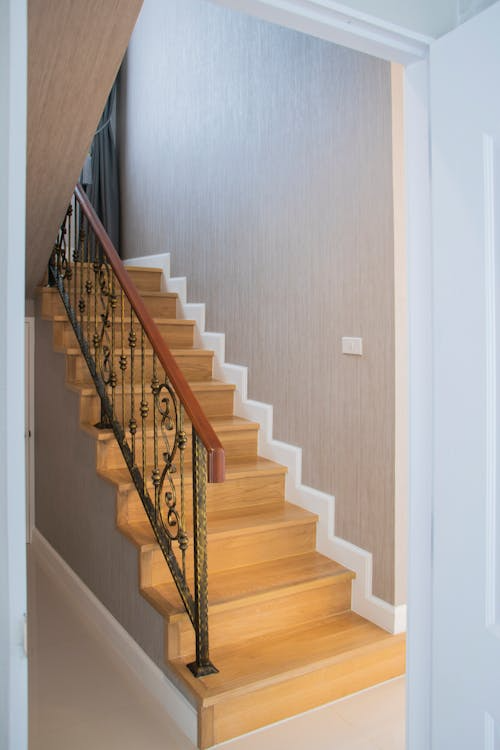
The termination of a handrail is sometimes referred to as a handrail return. This part is important as open rail ends may trap clothes or injure. Safety codes promote curved back returned ends into a wall or post.
The Americans with Disabilities Act (ADA) emphasize endings of smooth rails to ensure no issues for anyone. Well-designed handrail terminals enhance safety and provide a complete look that is deliberate and safe.
Total Disassembling of Stair Handrail Parts
(Source)
A handrail system has more than a single visible item. These parts collaborate to aid grip, balance, and structure. Knowing the stairs’ component names helps homeowners understand repairs and upgrades. Here discuss the reasons why wooden railing systems remain safe and dependable with time.
Handrail
The handrail is the one that is held when climbing or descending. It has to be smooth and stable. Height can be specified between 34 and 38 inches. Wooden handrails are comfortable and warm.
For exterior stairs, wood railings for stairs outside require sealed finishes to handle rain and sun. The presence of a powerful handrail will facilitate the daily use and decrease the risk of falls in all age categories.
Newel Post
The newel post of a handrail system is the primary anchor. It promotes landings and turns handrails. This post takes up the lateral force of leaning and holding. In its absence, railings would have been wobbly.
Newel posts made of wood should be well fixed to the framing at the bottom. The U.S. Forest Service states that the movement of wood is affected by the change of moisture, and the secure installation is important. The entire railing system is guarded by a stable newel post.
Baluster
Balusters are used to join the handrail to the stair base. They maintain the railing in an upright and secure position. Wooden balusters should be able to withstand the weight of bodies leaning on them.
The four-inch rule of spacing does not allow little children to slip through. The term stairs component’s name often includes balusters due to their safety role. Balusters that have been damaged must be replaced as soon as possible. Powerful balusters ensure visual and safety balance.
Shoe Rail
Balusters have a shoe rail along their bottom. It assists in aligning them and provides support. This article prevents the wear of stair surfaces. Small gaps are also concealed in the base of wooden shoe rails.
This is an aspect that many homeowners do not pay attention to, but it brings about stability. Shoe rails form clean lines and assist in ensuring that balusters are firmly in place over time.
Handrail Termination
The termination of handrails is the manner in which the rail is terminated at walls or posts. Returned ends minimize the risk of injuries. Open ends may get hold of clothing or result in falls.
Wooden terminations are a combination of style and safety for your staircase design. Adequate termination maintains the railing system in a compliant and comfortable condition to be used daily.
Fillet
A fillet is a small scrap of trim that is fitted between balusters on the handrail or shoe rail. It seals the cracks and gives strength. Fillets help avoid dust accumulation and movement.
They are small but help in long-term stability. Wooden fillets are also used to improve the visual flow of the railing. The neglect of fillets may cause loose balusters in the long run.
Handrail Bracket
The rail is fixed to the walls using handrail brackets. They are weight-bearing and do not sag. Codes usually need brackets at a distance of four feet.
Wooden handrails are based on metal brackets. Loose brackets are to be tightened within a short period. Rails are maintained reliably and safely through proper support.
Return
A return is a curved or angled piece of rail that leads the handrail back to a wall or post. Returns prevent sharp edges. They enhance continuity of grip as well. Wooden returns combine functionality and looks. An adequate turn keeps hands dry and movement free.
Final Thoughts
Learning the parts of a staircase with a wooden railing builds confidence and safety at home. Clear knowledge is a source of intelligent repairs and permanent comfort.
George Group provides reliable workmanship and considerate designs of staircases that are safe and comfortable. Call now to introduce sanity and love to each process in your home.