Door & Window Guide
The best wood depends on where the door will be installed, how large and heavy it will be, the finish you want, and the capacity of the track and supporting wall. This guide compares eight common choices without treating one species as universally best.

Compare Common Barn Door Woods
| Wood | Typical character | Points to check | Often considered for |
|---|---|---|---|
| Pine | Light, easy to machine and paint | Softer surface; dents and knots vary by grade | Painted interior doors |
| Cedar | Warm color, aromatic, relatively light | Species and exposure matter; exterior use still needs suitable detailing and finish | Rustic designs and selected sheltered applications |
| Oak | Pronounced grain and hard surface | Heavier door; track and wall capacity must be coordinated | Stained feature doors and frequent-use interiors |
| Alder | Even texture and warm stain response | Softer than many hardwoods | Stained interior doors |
| Maple | Fine grain and light, clean appearance | Stain can appear uneven without proper preparation | Painted or clear-finished modern doors |
| Walnut | Dark color and distinctive grain | Higher material cost; color changes naturally with light and age | Statement doors |
| Reclaimed wood | Weathered texture and varied character | Confirm species, moisture, embedded metal, movement and structural suitability | Rustic decorative faces or carefully engineered doors |
| Douglas fir | Straight grain and useful strength-to-weight balance | Grade, moisture content and construction affect stability | Wide doors and custom builds |
Start With Door Construction, Not Species Alone
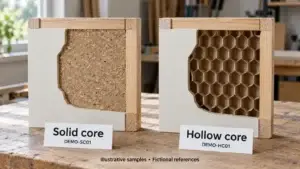
A solid-looking door does not always need to be made from one solid slab. Wide timber members can move as indoor humidity changes. Depending on the design, a framed, laminated or engineered construction may offer better control of weight and movement. The final shop drawing should identify the door build-up, thickness, reinforcement, edge details and hardware preparation.

A sliding barn door also differs from a hinged door: it needs clear wall space beside the opening, projects from the wall, and normally does not seal the opening as tightly. Confirm privacy, light, sound and air-gap expectations before selecting the system.
Eight Wood Options and Their Trade-Offs

1. Pine
Pine is lightweight, workable and widely used for interior joinery. It accepts paint well, while knots and grain can support a rustic finish. Because the surface is relatively soft, clarify the expected level of dents and wear in busy areas.

2. Cedar
Cedar is valued for its color, scent and relatively low weight. Some cedar species have useful natural durability, but that does not make every cedar door weatherproof. Exterior suitability depends on species, grade, construction, finish, drainage, shelter and maintenance.

3. Oak
Oak provides a strong grain and a harder surface than pine or alder. It can create a substantial door, but the added weight must be included when selecting the track, rollers, fasteners, blocking and wall support.

4. Alder
Alder has a fine, generally even texture and is often chosen for stained interiors. It is easier to machine than many denser hardwoods, although its softer surface can mark in demanding locations.

5. Maple
Maple suits clean, contemporary doors and provides a relatively hard wearing surface. Its tight grain can respond differently to stain, so approve a finish sample on the specified material before production.

6. Walnut
Walnut is selected for its deep brown tones and expressive grain. It works well as a focal element. Natural wood color can change with light and age, so compare samples under the project lighting rather than relying only on a screen image.

7. Reclaimed wood
Reclaimed boards offer varied texture, nail marks and patina. Their condition is also variable. They should be checked for moisture, insects, contaminants, embedded metal, cracks and movement before being incorporated into a door.

8. Douglas fir
Douglas fir has a straight grain and can be useful where a good strength-to-weight balance is required. Stability still depends on lumber grade, moisture conditioning, member selection, door construction and finish.
How to Choose the Right Wood
1. Interior or exterior exposure
Identify whether the door is fully internal, in a humid room, sheltered outdoors or directly exposed to rain and sun. For exterior work, ask the supplier to confirm the complete door system—not just the species—is suitable for the intended exposure.
2. Door size, weight and wall support
Provide the rough opening, required overlap, door thickness and available slide space. The track rating, roller set, fasteners, head clearance and structural blocking must suit the completed door weight. Do not select hardware from the timber species alone.
3. Moisture and dimensional movement
Confirm target moisture content, acclimatization requirements and the proposed construction. Wood movement cannot be eliminated, but appropriate material preparation, joinery and finishing can reduce risk.
4. Finish and sample approval
Paint, stain and clear finishes behave differently across species and grades. Approve a physical sample showing the specified wood, color, sheen and surface preparation. Reclaimed and character-grade materials need an agreed range rather than a single perfect reference board.
5. Operation and privacy
Coordinate floor guides, stops, handles, locks and soft-close options. If the opening serves a bedroom or bathroom, review edge gaps, sound transfer and locking expectations before ordering.
Information to Include in a Barn Door RFQ
- Opening size, wall thickness and finished floor level
- Single, double or bypass configuration and slide direction
- Door design, construction, species or approved alternatives
- Finish reference, sheen and acceptable natural variation
- Track finish, hardware set, locks, handles, guides and stops
- Indoor or outdoor exposure and project location
- Required drawings, samples, packaging and delivery sequence
Coordinate the Complete Door Package
Send the opening schedule, elevations, finish references and hardware requirements for a project-specific review. Final materials and performance should be confirmed in the quotation and approved shop drawings.