For a busy kitchen, engineered quartz is often selected for its relatively consistent appearance, low routine maintenance and nonporous surface. Marble is chosen for natural veining and a unique patina, but it can etch when exposed to acids and may require more attentive care. Neither material is scratch-proof, heat-proof, stain-proof or impact-proof.
The best choice depends on the exact slab or product, finish, color, edge profile, sink and hob cutouts, support, cleaning expectations, sample approval and manufacturer guidance. This comparison separates general material tendencies from the information that must be checked for a project.
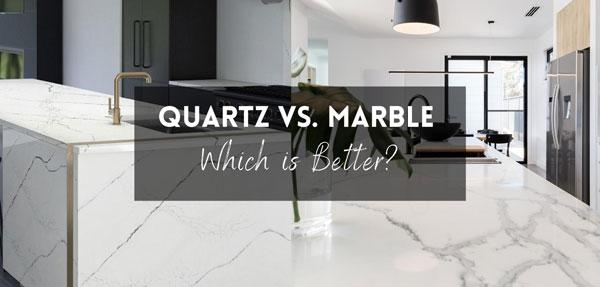
Quartz vs Marble: Quick Comparison
| Factor | Engineered quartz | Marble | Project check |
|---|---|---|---|
| Material | Manufactured surface containing mineral particles and binders; formulation varies | Natural calcareous stone with unique veining and variation | Exact brand, collection, slab and technical data |
| Appearance | Generally more controlled pattern and color | Each slab is naturally different | Full slab or representative production sample |
| Acid exposure | Not affected like calcareous stone, but chemicals can damage resin or finish | Lemon, vinegar and other acids can etch the surface | Care guide and intended kitchen use |
| Heat | Hot cookware can damage resin or cause thermal stress | Stone tolerates heat differently, but thermal shock and finish damage remain possible | Use trivets; follow manufacturer or stone supplier guidance |
| Stains | Nonporous products are commonly stain resistant, not stain-proof | Stain response varies; an impregnating sealer may be recommended | Product data, sample test and maintenance plan |
| Care | Usually no routine sealing; approved cleaner required | Use pH-neutral care; sealing needs vary by stone and finish | Written cleaning and maintenance instructions |
What Is Engineered Quartz?
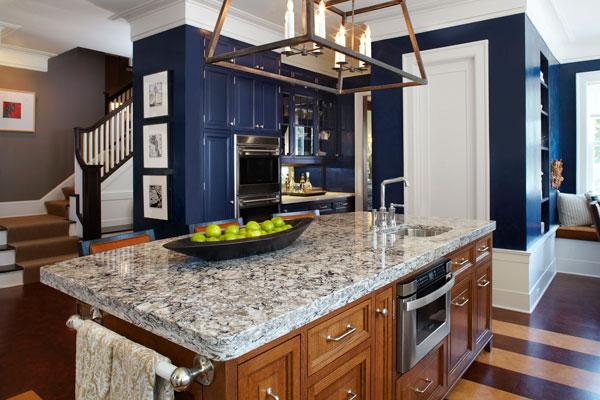
Engineered quartz is a manufactured surfacing product made from mineral content combined with binders, pigments and other components. The proportions and formulation vary, so a universal “90–95% quartz” statement should not be applied to every current product. Use the selected manufacturer’s technical and safety documentation.
Its controlled production can provide relatively consistent color and pattern. The surface is generally nonporous and commonly does not require sealing, but it can still be marked by pigments, hard-water deposits, aggressive chemicals, abrasion or heat. Use a cutting board and trivets, wipe spills promptly, and follow the approved care guide.
What Is Marble?
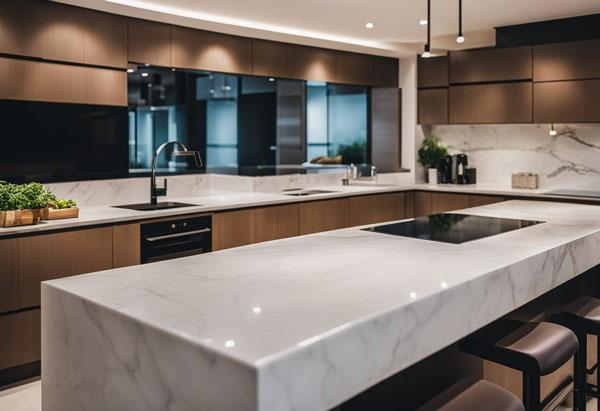
Marble is a natural stone composed mainly of calcite or dolomite, depending on the stone. Its veining, background color, fissures and mineral features vary from slab to slab. This variation is part of the design value, but it requires slab selection and clear expectations.
Calcareous stone can etch when exposed to acids. The Natural Stone Institute notes that lemon, vinegar and other acidic products may dull or etch these stones. An impregnating sealer can improve stain resistance where appropriate, but it does not make stone stain-proof. See the Natural Stone Institute care guidance and confirm instructions for the selected marble and finish.
Durability Comparison for Kitchen Use
Scratch and abrasion
Engineered quartz is commonly scratch resistant, but knives, abrasive cleaners and hard particles can still mark the surface. Marble is softer and can scratch or lose polish more readily. Use cutting boards and approved cleaning tools for both materials.
Heat and thermal shock
Quartz surfaces contain binders that can discolor or be damaged by intense heat. Marble is not made with polymer resin, but concentrated heat and rapid temperature change can still affect the stone, finish, seams or installation. Use a trivet under hot pans regardless of the selected surface.
Stains and etching
Quartz is generally less absorbent, yet “nonporous” does not mean that every mark is impossible. Dyes, hard-water deposits and unsuitable chemicals can affect some products. Marble may stain and can etch even when sealed because etching is a chemical reaction with the stone, not simply liquid absorption.
Impact and vulnerable areas
Both materials can chip or crack, especially near sink and hob cutouts, unsupported overhangs, narrow strips, corners and seams. The risk depends on slab thickness, fabrication, reinforcement, support, transport and installation. Do not describe either countertop as unable to crack.
Water and sink areas
Quartz is generally nonabsorbent, but a countertop assembly still includes seams, cutouts, sealants, edges, cabinets and wall interfaces. Water can collect or leak at these locations. Marble may need a stain-management strategy, but the exact requirement varies by stone and finish. Coordinate sink cutouts, faucet holes, sealant and cabinet protection for both options.
Maintenance and Cleaning
- Engineered quartz: use mild soap, water and products approved by the manufacturer; avoid direct high heat and harsh chemicals.
- Marble: use a pH-neutral stone cleaner, wipe acidic spills promptly and follow the stone supplier’s guidance on sealing and refinishing.
- Both: use cutting boards, trivets and non-abrasive tools; keep seams and sink edges dry and clean.
Manufacturer care instructions should be retained with the project handover documents. For example, current quartz care guidance explains that high heat can damage resin-containing surfaces and that stain resistance is not the same as stain-proof performance. The exact selected brand’s document should control.
Appearance, Samples and Slab Selection
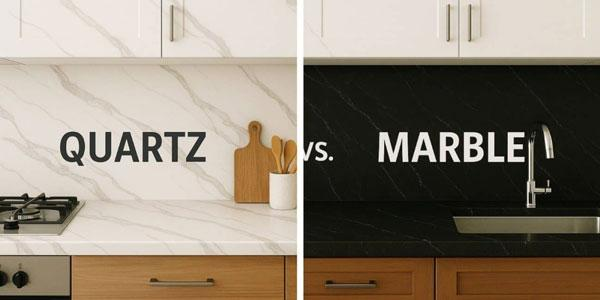
Quartz samples can show a controlled pattern, but large slabs may reveal repeats, vein direction or batch differences. Marble requires individual slab review because each piece is unique. Photograph approved slabs and record how seams, waterfall ends, backsplashes and book-matched elements will be cut.
- View full slabs where pattern placement matters.
- Mark approved faces, orientation and cut locations.
- Review seam positions and edge profiles on shop drawings.
- Check color with the cabinets, backsplash, floor and lighting.
- Agree how natural fissures, resin fills or repairs will be assessed.
Fabrication and Cabinet Support
Countertop durability depends on more than the surface material. Cabinets must be level and adequately support the slab. Sink and hob openings, overhangs, seams and edge profiles should be designed within the supplier’s requirements. Final measurements should be taken after the relevant cabinets and site conditions are ready.
- Confirm the selected surface, thickness, finish and slab size.
- Issue the cabinet plan, appliance data and sink or hob templates.
- Prepare shop drawings showing cutouts, seams, edges, overhangs and supports.
- Approve samples or slabs and record their references.
- Check fabrication before packing, including visible edges and cutout areas.
- Protect slabs during handling, transport and site storage.
- Verify support, level, sealant and final care instructions at handover.
Quartz and Marble RFQ Checklist
- Kitchen plans, elevations and cabinet dimensions
- Surface type, collection, color, thickness and finish
- Full slab or production-sample approval requirement
- Countertop areas and backsplash scope
- Sink, hob, faucet and appliance data
- Edge profiles, seams, waterfall ends and overhangs
- Support, reinforcement and cutout requirements
- Care, sealing and handover information
- Quantities, spare material, packing and delivery destination
Explore the marble project range and coordinate the countertop with the kitchen cabinet design package. Send drawings, material references and quantities through the project enquiry page for a scope review.
Frequently Asked Questions
Is quartz more durable than marble?
Engineered quartz is usually easier to maintain and less vulnerable to acid etching, but both materials can be scratched, chipped, stained or heat damaged. Compare the exact product, fabrication and use conditions.
Does marble always need sealing?
Not every stone or finish has the same requirement. An impregnating sealer may improve stain resistance, but it does not make marble stain-proof or prevent acid etching. Follow the stone supplier’s recommendation.
Can hot pans be placed directly on quartz or marble?
Use trivets for both. Direct or concentrated heat can damage quartz resin and can create thermal or finish risks for natural stone and the wider countertop installation.