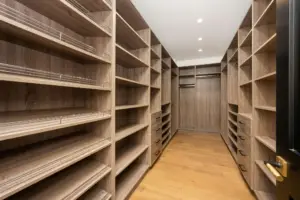
A standard closet depth for hanging clothes is commonly planned at about 24 inches (610 mm), while shelves for folded items may use roughly 14 to 18 inches (355 to 455 mm). The final depth should match the hanger size, clothing type, door system and usable room space. Custom wardrobes should be dimensioned from the actual storage brief rather than one universal number.
Standard Closet Depth Chart
| Storage use | Common planning depth | What to verify |
|---|---|---|
| Full-width hanging rail | About 24 in / 610 mm | Hanger and garment projection, back panel and door clearance |
| Folded clothing shelves | About 14–18 in / 355–455 mm | Folded item size and reachable shelf depth |
| Shoe shelves | About 12–14 in / 305–355 mm | Footwear length, shelf angle and door clearance |
| Wardrobe drawers | Project-specific | Drawer box, slide length, handle and standing clearance |
| Children’s storage | Project-specific | Reach height, changing needs and safe hardware |
| Shallow closet | Less than 24 in / 610 mm | Consider front-facing or pull-out hanging systems |
These are design starting points. Panel thickness, back construction, doors and hardware reduce the usable internal depth, so the outside cabinet depth and clear storage depth should both appear on the drawing.
How Closet Depth Is Measured
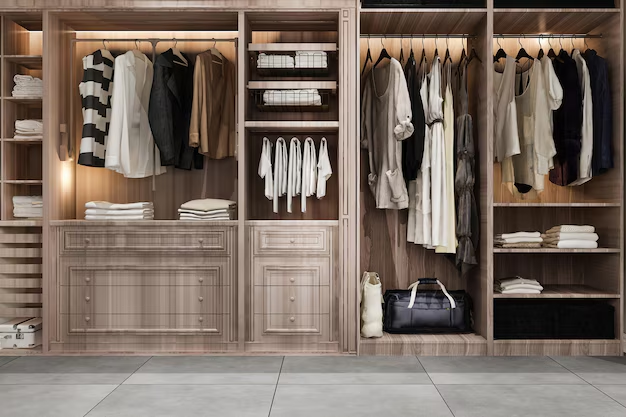
Closet depth is measured from the back wall or cabinet back to the front line of the closet. For built-in joinery, distinguish between:
- Overall depth: the outside dimension of the complete cabinet, including doors.
- Carcass depth: the cabinet body before the door or applied front is added.
- Usable internal depth: the clear space remaining after the back, door, hinges and fittings are installed.
A nominal 24-inch wardrobe may not provide 24 inches of clear internal storage. This distinction matters when full-size hangers, pull-out accessories or thick door profiles are used.
Factors That Change the Required Depth
Clothing and hanger size
Coats, structured jackets and large hangers need more room than shirts or children’s clothing. Measure the actual items where possible and allow space so garments do not rub against the doors.
Door type
Hinged doors project into the room and need swing clearance. Sliding doors avoid an outward swing but use overlapping tracks and can reduce access to part of the cabinet. Folding and pocket systems have their own hardware zones and installation requirements.
Wall and room conditions
Skirting, sockets, columns, sloped ceilings and uneven walls can change the usable cabinet envelope. Check circulation between the wardrobe and the bed, desk or other furniture with doors and drawers open.
Internal accessories
Pull-out shoe racks, trouser racks, baskets, mirrors and drawer slides require defined clearances. Select the accessory model before freezing the cabinet depth and internal drilling pattern.
How to Measure Closet Depth

- Measure the available depth at the left, centre and right.
- Record finished wall, floor and ceiling conditions.
- Mark skirting, trim, sockets, access panels and obstructions.
- Allow for the selected door and handle projection.
- Check the remaining room passage with doors and drawers open.
- Confirm the overall and usable internal dimensions on the shop drawing.
Solutions for Shallow and Deep Closets
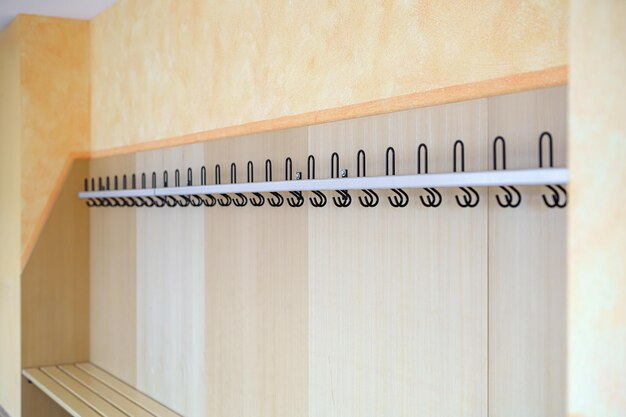
In a shallow closet, consider front-facing hanging rails, pull-out rails, adjustable shelving or folded storage. In a deep closet, use drawers, pull-outs or clearly divided zones so that items at the back remain accessible. More depth does not automatically create better storage.
Compare door, panel and storage options on the custom wardrobe design page. For room-specific dimensions, send plans and storage requirements through the project enquiry page.
Frequently Asked Questions
Is 20 inches deep enough for a closet?
It may suit shelves or a front-facing hanging arrangement, but it is often tight for standard side-to-side hanging. Test the actual hanger and garment projection before finalizing the design.
Does a 24-inch closet have 24 inches of usable space?
Not necessarily. The back, doors, hinges and construction details reduce the clear internal depth. Review both outside and inside dimensions.
How deep should a closet shelf be?
Folded-clothing shelves commonly start around 14 to 18 inches, while shoe shelves may be shallower. The correct depth depends on the stored item and reach.