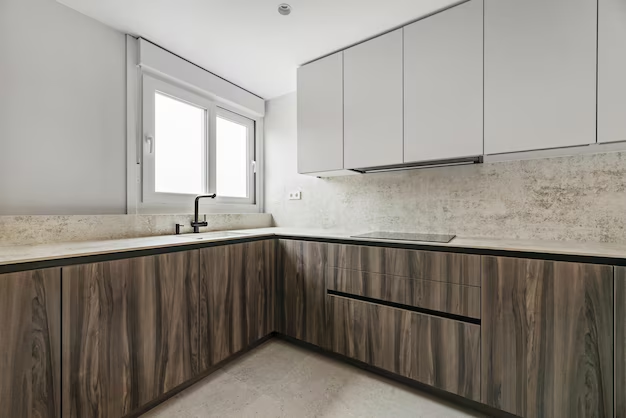
Walnut kitchen cabinets should be selected by more than a dark color reference. Confirm the wood format, grain direction, finish, cabinet construction, hardware and approved sample so the completed kitchen has controlled variation and repeatable quality.
Define the Walnut Cabinet Scope
List cabinet locations, door and drawer fronts, exposed end panels, fillers, plinths and decorative panels. State which visible parts require walnut and which concealed parts may use another specified material.
Compare Veneer and Solid Walnut
Walnut Veneer
Veneer can provide consistent panels and controlled grain matching over a stable core. Record veneer species, cut, matching method, core, edge treatment and finished sample.
Solid Walnut Components
Solid wood may suit frames, trims or selected fronts, but movement, board selection and joinery still need review. Compare the complete construction with the broader wood kitchen cabinet guide.
Review Grain and Natural Color
Walnut can vary between boards and between heartwood and lighter sapwood. Decide whether the design accepts contrast or requires tighter selection, then show grain direction on elevations.
Select Cabinet Construction
Review carcass material, back panels, shelves, drawer boxes, connectors and moisture-prone areas separately. A walnut face does not define the performance of the complete cabinet.
Coordinate Door Style and Grain
Flat panels emphasize continuous grain, while framed doors divide the pattern into smaller fields. Compare profiles and proportions with the cabinet door style guide.
Specify the Finish
Record stain or clear-coat reference, sheen, approved substrate and application system. Review the finish under project lighting because dark timber can appear different beside floors, worktops and wall colors. The dark wood cabinet guide provides related coordination points.
Plan Acceptable Color Variation
Agree on variation boundaries before production. Keep the approved control sample and document any areas where consecutive grain matching or balanced panel selection is required.
Approve Samples and a Mockup
Approve a representative door sample with the specified core, edge, finish and hardware. For a large kitchen, a small run of adjacent fronts helps the team judge grain continuity.
Review Shop Drawings and Hardware
Check module widths, appliance openings, fillers, hinge clearances, drawer loads and handle drilling. Coordinate these decisions with the overall kitchen cabinet design guide.
Build the BOQ and Quote
Separate cabinet quantities, visible walnut surfaces, finish, hardware, accessories, delivery and installation. Ask suppliers to identify substitutions instead of comparing totals without a common specification.
Plan Cleaning and Repair
Follow the approved finish supplier’s cleaning guidance. Keep a labeled sample and touch-up information so later repairs can be assessed against the original appearance.
Final Walnut Cabinet Check
Release the walnut cabinet package only after materials, grain, finish, construction, hardware, drawings and samples agree. For project-specific quotation support, send the cabinet schedule and drawings.