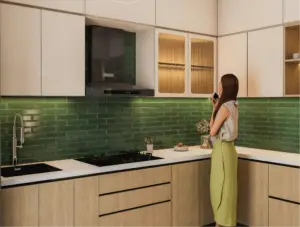
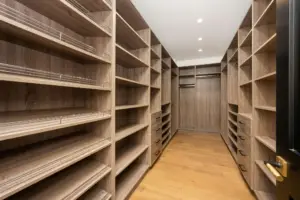
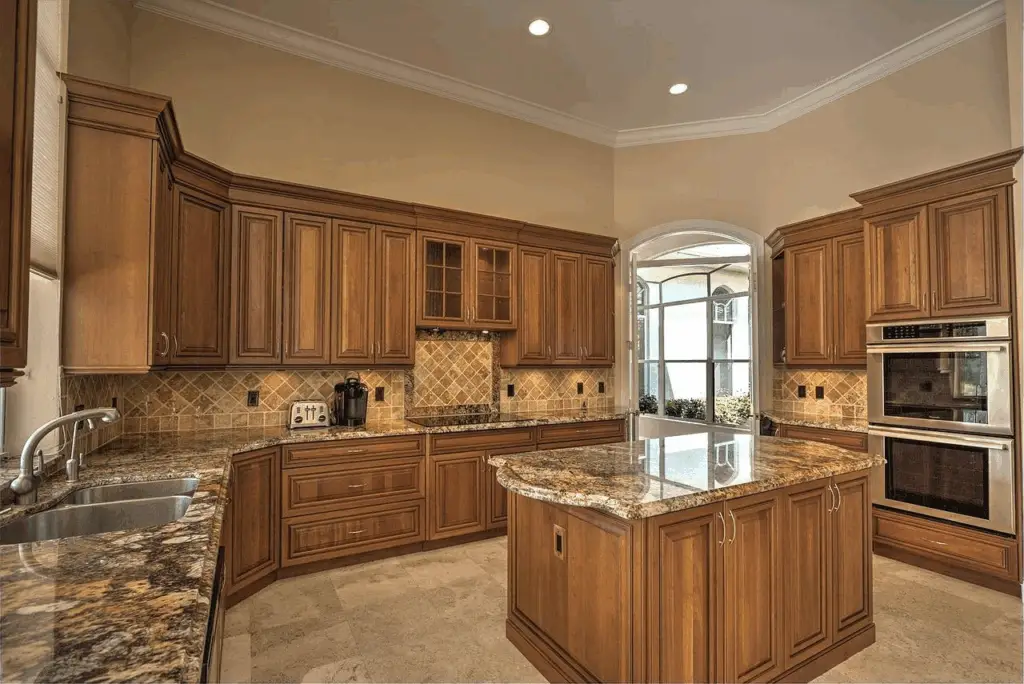
Dark wood kitchen cabinets can give a kitchen visual depth, but the color alone does not define the result. Species, veneer matching, stain tone, sheen, door construction, lighting and adjacent surfaces all change how the cabinetry looks after installation. A useful selection process therefore moves from inspiration images to samples, drawings and a clear finish schedule.
What Counts as a Dark Wood Kitchen Cabinet?
“Dark wood” can describe naturally deep timber, a dark-stained lighter species, real-wood veneer, or an engineered panel with a wood-look finish. These are different products. Confirm the substrate, visible face material, edge treatment and finish system instead of approving a cabinet from the color name alone. The broader wood kitchen cabinet guide explains the main construction options.
Compare Species, Veneers and Wood-Look Surfaces
Walnut and Dark-Stained Oak
Walnut may show chocolate, grey or warm brown variation. Oak has a more pronounced grain and can be stained to a darker tone. Specify whether the approval sample represents the expected range or only one selected board.
Natural Veneer and Recon Veneer
Natural veneer preserves real variation. Recon veneer can provide more regular grain and color. For either option, define grain direction, leaf matching, panel sequence and acceptable variation across doors and exposed ends.
Laminate and Wood-Look Panels
Decorative panels can provide a consistent dark wood appearance with a different maintenance profile. Check the face, matching edge band, reverse face and repair limitations before substituting them for veneer.
Choose Stain, Paint or Factory-Applied Finish
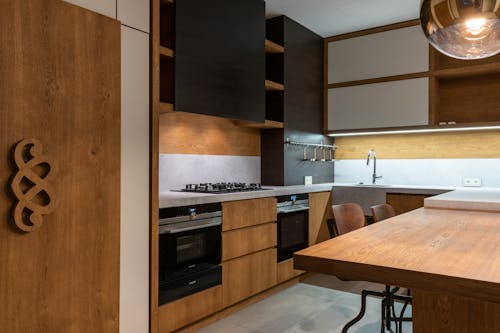
A stain changes the tone while keeping the grain visible. A painted finish produces a more uniform surface and should not be described as natural dark wood. Factory-applied lacquer, polyurethane and other systems have different build-ups and sheen levels. Record the approved system, color reference and sheen in the finish schedule.
Define Door Construction and Grain Direction
Flat-panel, framed and routed doors create different shadow lines. A Shaker cabinet also needs rail, stile and center-panel proportions. On flat veneered doors, specify whether grain runs vertically or horizontally and how it continues across drawers and paired doors.
Door size can also change how a dark finish reads. Large uninterrupted panels show more grain and color variation, while narrow frames create more joints and edge details. Confirm the construction of tall pantry doors and appliance panels, including any reinforcement, allowable tolerances and alignment with neighboring fronts. These details should be visible in the elevation and representative sample.
Review Dark Cabinets Under Project Lighting
Dark surfaces absorb more visible light than pale finishes, so the same sample may appear different under daylight, ceiling lighting and under-cabinet lighting. Review a representative door with the proposed light temperature and adjacent finishes. Do not approve the cabinet color from a screen image alone.
Coordinate Countertops and Backsplashes
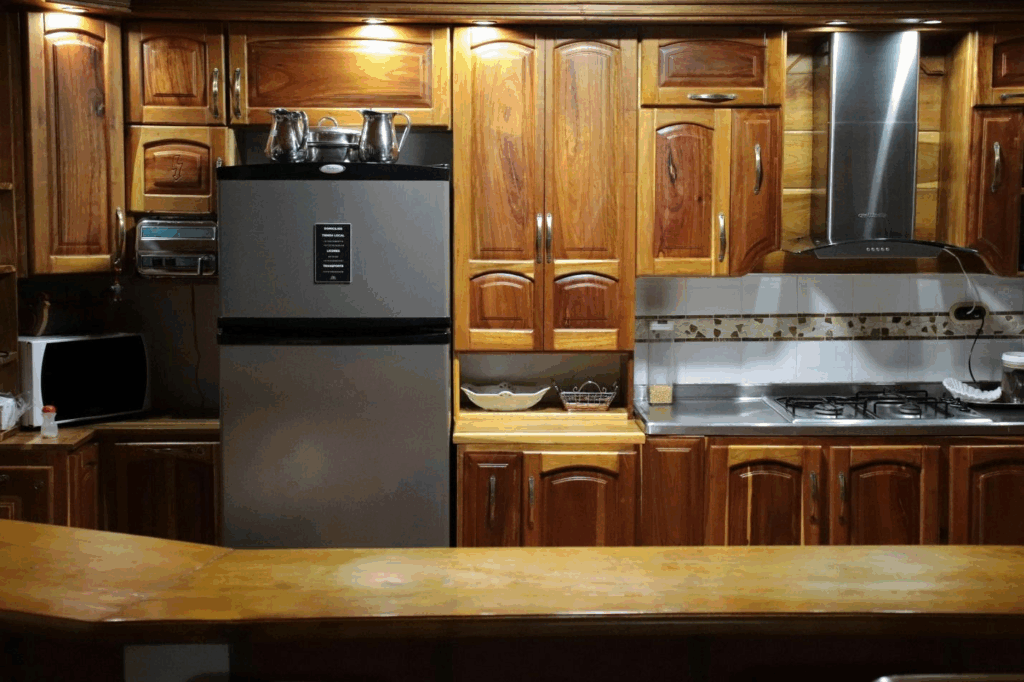
Light counters can create contrast, while mid-tone or dark surfaces produce a quieter palette. Compare veining scale, undertone and joint locations instead of relying on “light” or “warm” labels. If quartz is being considered, use the white quartz countertop guide to review pattern, edge and sample requirements.
Plan Two-Tone and Mixed-Material Layouts
A dark island with lighter perimeter cabinets can separate functions without making every elevation visually heavy. Another option is to use dark base cabinets with lighter wall units. Compare the proposal with the light wood kitchen cabinet guide, then show every finish transition on the elevations.
Select Hardware and Sheen Together
Black hardware may blend into a dark door, while stainless, nickel or warm-metal finishes create contrast. Handle length, projection and fixing position also affect use. Review handles on the representative door because a finish chip alone does not show the final relationship.
Check Cabinet Interiors, Edges and Exposed Panels
The exterior may be dark wood while cabinet interiors use a lighter, cleanable finish. Confirm the finish of exposed ends, fillers, plinths, open shelves, glass-door interiors and appliance panels. Edge color and lipping thickness should match the approved appearance and intended use.
Use Drawings and Samples Before Production
Cabinet drawings should identify module sizes, appliances, fillers, panels, grain direction, hardware and service openings. Approve a representative door or sample panel that includes the substrate, face finish, edge and hardware. The kitchen design service page outlines the information needed to coordinate a cabinet package.
For projects with several rooms or cabinet runs, create a coded finish schedule and connect each code to the elevations and BOQ. Record the approved sample reference, approval date and any accepted variation. This reduces the chance that similar descriptions such as dark walnut, smoked oak or espresso are treated as interchangeable during procurement.
Prepare a Complete Dark Cabinet RFQ
- Room plans, elevations and appliance schedule
- Door style, substrate and visible face material
- Species or veneer reference, grain direction and matching method
- Stain or coating reference, sheen and acceptable variation
- Countertop, backsplash, exposed-panel and interior finishes
- Hardware schedule, quantities, packing and delivery requirements
Final Selection Check
Dark wood kitchen cabinets work best when the approval covers more than color. Confirm the construction, grain, finish system, lighting, hardware, adjacent surfaces and drawing details as one coordinated package. That process gives the supplier a clear basis for quotation and gives the project team a practical reference for production and inspection.