By George House/21,November,2025
Good entryway furniture ideas start with the daily routine: where shoes are removed, where bags and keys are placed, what needs to be locked away and how people move through the door. A console, bench or cabinet should solve those tasks without narrowing circulation or interfering with the door swing, switches, vents or access panels.
Measure the Entryway Before Choosing Furniture
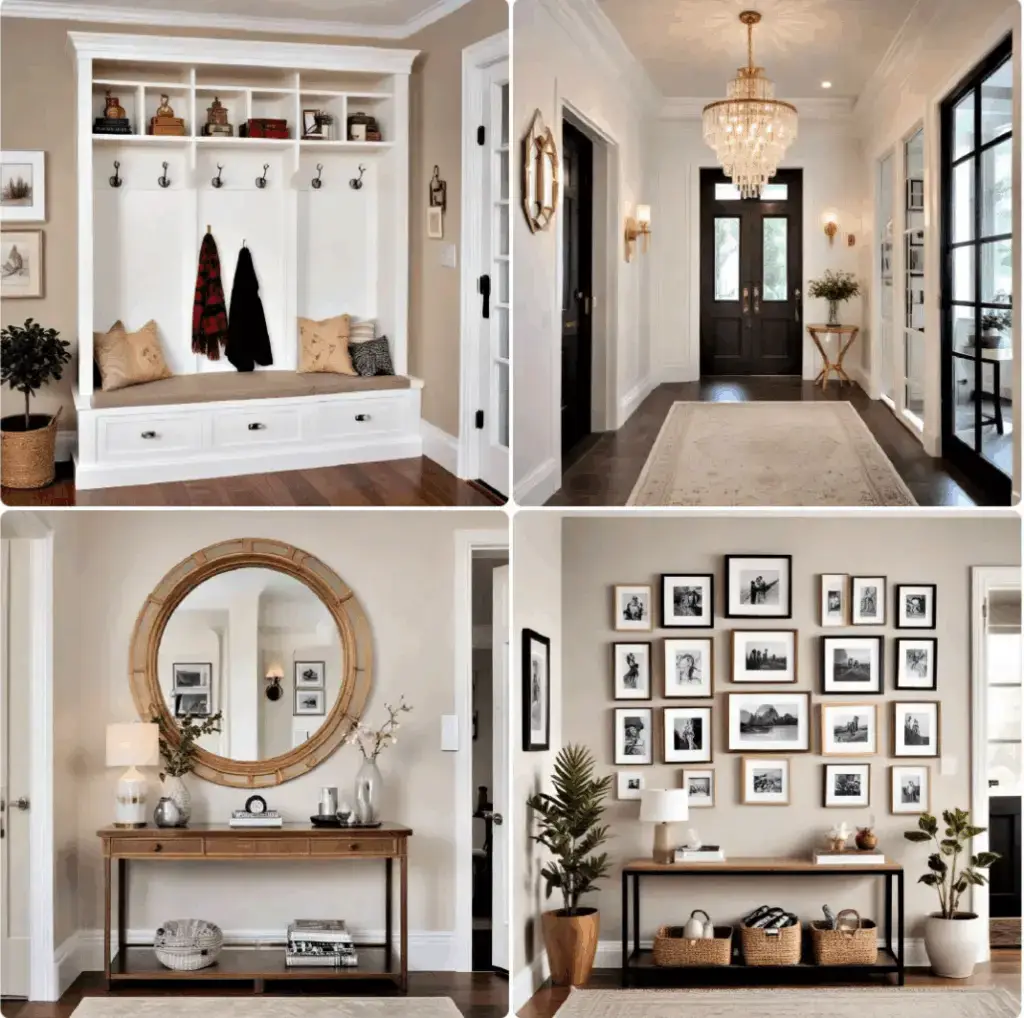
Record the wall length, available depth, door swing, clear walking route, skirting, outlets and nearby stairs. Mark the proposed furniture footprint with tape and test the entrance with doors and drawers open. Required accessibility and egress clearances are project-specific, so the responsible designer and local requirements remain in control.
| Furniture type | Useful planning reference | Key coordination point |
|---|---|---|
| Slim console | About 12–16 in. deep | Leave room for circulation and drawer or door opening. |
| Entry bench | About 16–20 in. deep and 17–19 in. seat height | Confirm user needs, cushion thickness and shoe storage. |
| Closed cabinet | Depth follows stored items | Check shelves, ventilation, door swing and wall restraint. |
| Wall shelf or hooks | Set from actual user reach | Coordinate fixings, loads, artwork and switches. |
These dimensions are starting references rather than universal rules. Custom pieces should follow the measured room and approved elevation.
Match the Furniture Type to the Storage Task
Console Table
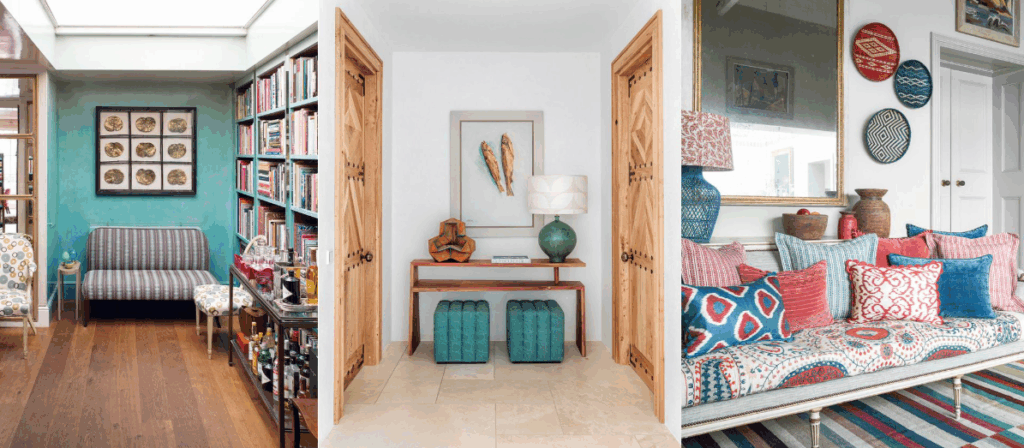
A console provides a landing place for small items and can visually anchor a mirror or artwork. Add a shallow drawer if keys and mail should be concealed. In a narrow hall, rounded corners or a wall-mounted design can reduce projections into the walking route.
Bench With Shoe Storage
A bench supports shoe changes and can combine open cubbies, drawers or lift-up storage. Open storage is quick to use but remains visible; closed storage looks quieter but needs sufficient hardware clearance. Compare additional configurations in the mudroom bench planning guide.
Tall or Wall-Mounted Storage
Tall cabinets can organize coats, cleaning items and seasonal accessories. Wall-mounted units preserve visible floor area, but the wall construction and fixings must suit the cabinet load. Restrain tall furniture as required and keep heavy items in stable, accessible positions.
Plan for Small and Busy Entryways
- Prioritize one clear route from the entrance to the next room.
- Use vertical hooks or shelves only where they will not snag clothing or obstruct switches.
- Assign a defined place for shoes, bags, keys, umbrellas and deliveries.
- Use open storage for frequent items and closed storage for visual control.
- Provide a drip tray or moisture-tolerant base where wet footwear is expected.
- Check that doors, drawers and baskets can open while someone is seated.
For a wider view of furniture groups, see the types of furniture guide. The home office planning guide also illustrates how circulation, storage and cable needs can shape compact furniture layouts.
Select Materials, Finishes and Hardware
Entry furniture is exposed to shoes, bags, wet coats and repeated contact. Compare substrate, edge treatment, finish system, cleaning method and replaceable hardware. Request physical samples under the entryway lighting and coordinate the finish with the door, floor, wall and adjacent cabinetry. Upholstery should be selected for the expected use and maintenance plan rather than appearance alone.
Entryway Furniture RFQ Checklist
- Dimensioned plan, wall elevation and site photos
- Furniture reference, quantity and room location
- Overall size, storage layout and required clearances
- Substrate, visible edges, finish, upholstery and color sample
- Hinges, slides, handles, hooks and load requirements
- Wall restraint, concealed fixings, skirting and service interfaces
- Packaging, room labels, assembly and installation responsibility
- Shop drawing, sample, warranty and replacement hardware
Review custom options through the project furniture hub. To receive a comparable quotation, send the room dimensions, reference images and storage brief.