By George House/22,Nov,2025
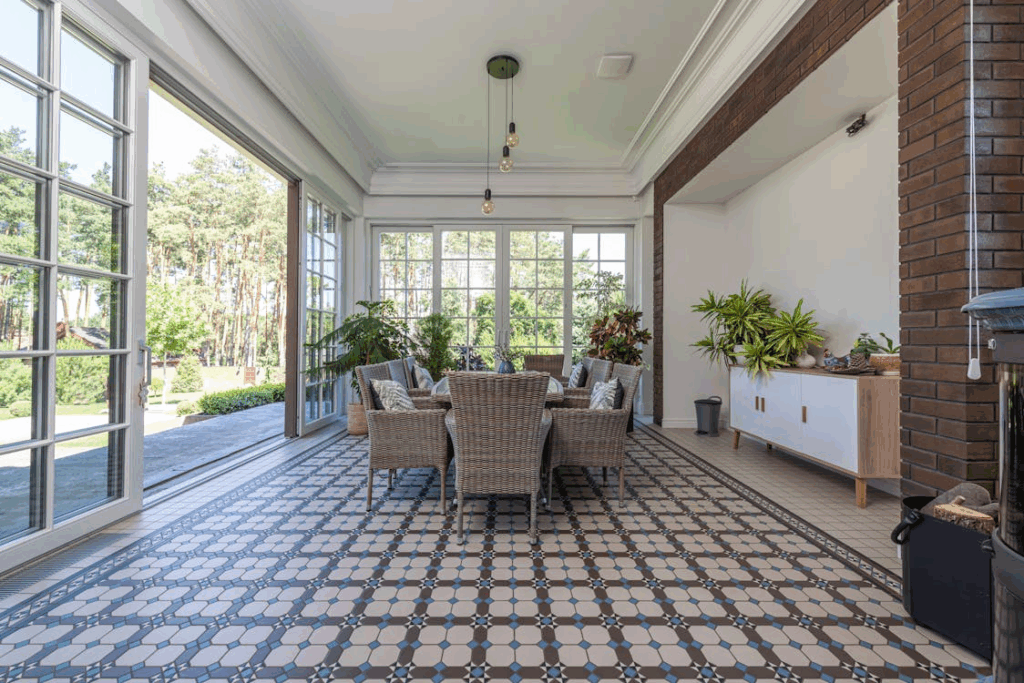
Sunroom furniture ideas must respond to strong daylight, temperature change, condensation risk and routes to the exterior. A piece that performs well in a typical living room may fade, move or deteriorate faster beside extensive glazing.
This guide organizes seating, tables, materials, layout and care into a practical selection process. Classify the room as fully conditioned, seasonally conditioned or unconditioned before choosing upholstery, timber, metal or woven furniture.
Define the Sunroom Environment
| Room Condition | Furniture Implication | Question to Resolve |
|---|---|---|
| Fully conditioned | Many indoor products may be suitable | How much direct sun reaches each piece? |
| Seasonally conditioned | Choose materials tolerant of a wider temperature and humidity range | Will the room be closed and damp during part of the year? |
| Unconditioned enclosure | Indoor-only upholstery and finishes may be unsuitable | Can rain, condensation or insects reach the furniture? |
| Indoor-outdoor transition | Lightweight and cleanable pieces support flexible use | Which paths must remain open to doors and the garden? |
Large glass areas influence both comfort and furniture durability. Review solar exposure, shading and maintenance access with the floor-to-ceiling windows guide before fixing a layout.
Select Seating for the Main Activity
- Reading: use a supportive chair, side table and controllable task light without blocking the best view.
- Conversation: arrange seats within comfortable speaking distance and keep a clear route around the group.
- Dining: allow chair pullback and a direct path to the kitchen or serving area.
- Family use: modular seating can adapt to games, guests and everyday lounging.
- Plants and display: use stable stands and protect furniture from irrigation water and damp pots.
Do not size a sectional from the wall length alone. Include arm depth, recliner movement, side tables, floor registers and door swing. The circulation and storage methods in the entryway furniture guide also apply to compact sunroom transitions.
Sunroom Tables and Flexible Pieces
| Furniture | Useful Feature | Control Point |
|---|---|---|
| Coffee table | Central surface for lounge seating | Height, corner safety and route clearance |
| Side table | Keeps drinks and lighting within reach | Stability on rugs and resistance to rings |
| Bistro table | Compact dining or work zone | Chair pullback and glare on screens |
| Console | Display and shallow storage | Wall anchoring and sun exposure |
| Storage bench | Combines seating and seasonal storage | Ventilation, hinge safety and load |
| Nesting or folding piece | Supports changing activities | Locking, pinch points and storage position |
Choose Materials for Light and Moisture
| Material | Potential Strength | Verify |
|---|---|---|
| Powder-coated metal | Clean lines and easy wiping | Coating quality, corrosion exposure and hot surfaces in sun |
| Solid or veneered wood | Warm appearance and broad style range | Movement, finish, direct sun and condensation risk |
| Natural woven fiber | Light texture and relaxed character | Humidity sensitivity, cleaning and structural condition |
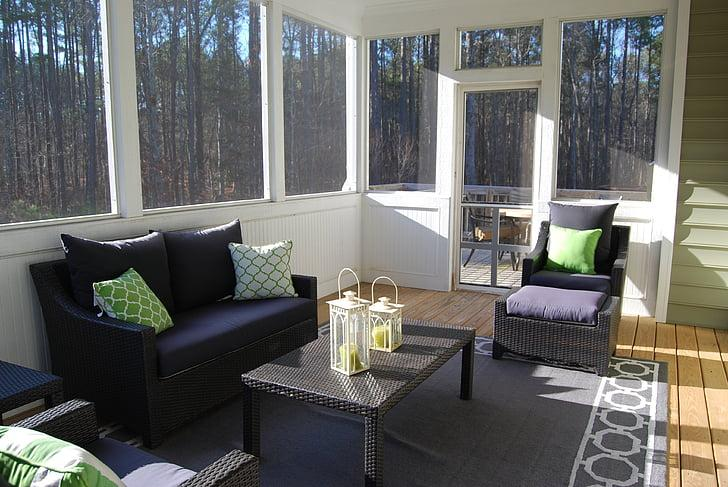
| Synthetic woven material | Often easier to clean and moisture tolerant | UV stability, frame quality and indoor appearance |
| Upholstery | Comfort, acoustic softness and color | Fade resistance, removable covers, cleaning and cushion drying |
| Stone or glass top | Durable surface and visual lightness | Weight, edge safety, glare and support |
Wood species alone does not determine durability. If acacia is under consideration, compare construction and finish using the acacia wood furniture guide after this page is published.
Decor Without Blocking Performance
- Use a rug sized to anchor the seating group without creating a trip edge at the door.
- Layer ceiling, wall, floor and task lighting for cloudy days and evenings.
- Select washable pillow and throw covers where doors open to the garden.
- Keep planters on waterproof trays and away from vulnerable wood joints.
- Do not cover floor registers, drainage details or window operating hardware.
- Use shading to manage glare and protect finishes while preserving the intended view.
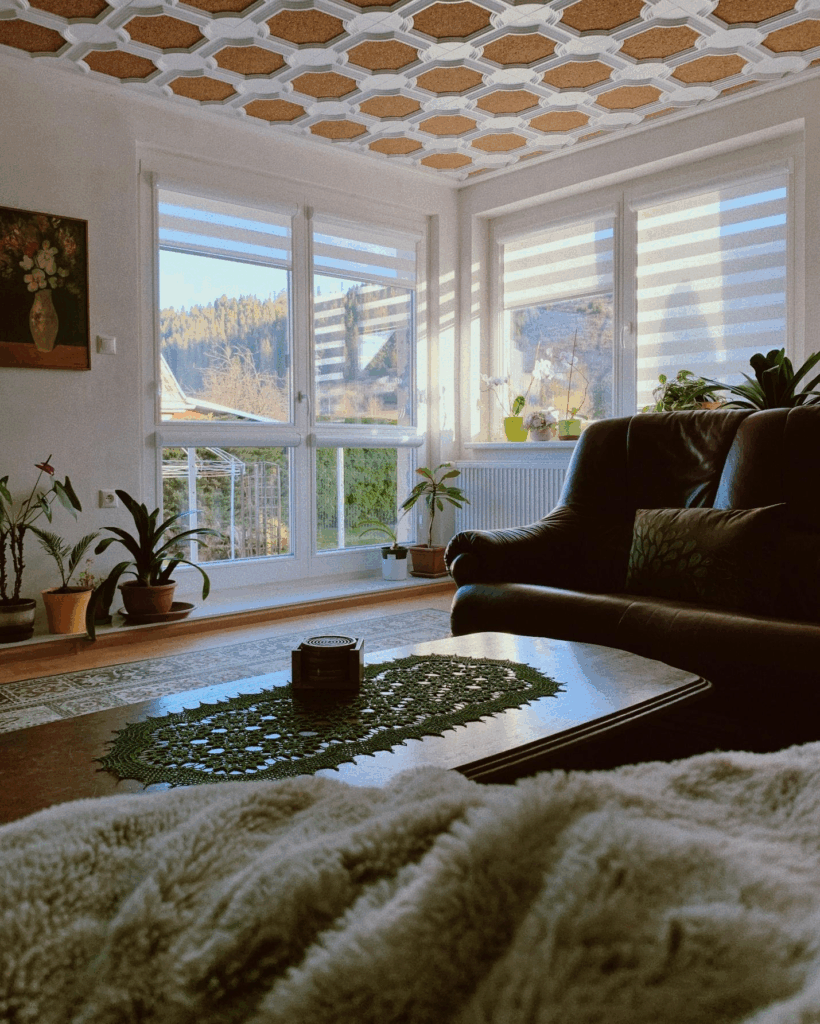
Plan the Layout in Five Steps
- Measure the room, doors, windows, sills, outlets and floor registers.
- Mark the main route between the house and exterior and keep it clear.
- Choose the primary activity and place its largest furniture first.
- Add side tables, lighting and storage within comfortable reach.
- Test glare, door operation, cleaning access and the view from each seat.
Where the sunroom opens to a terrace, coordinate threshold, panel movement and furniture clearance with the patio door manufacturer guide.
Furniture Selection and RFQ Checklist
- Furniture mark, quantity, overall size and intended activity
- Indoor, seasonal or indoor-outdoor environmental classification
- Frame, panel, weave, upholstery and cushion materials
- Color, texture, sheen and approved sample range
- UV, moisture, stain, abrasion and cleaning expectations
- Load, stability, anti-tip and moving-part safety
- Removable covers, replacement cushions and spare hardware
- Doorway, stair, lift and final-position delivery dimensions
- Packaging, assembly, floor protection and waste removal
- Care instructions, warranty and replacement-part period
For another built-in seating and storage example, review the mudroom bench planning guide, then adapt its dimensions and material controls to the cleaner but brighter sunroom environment.
Create a Durable Sunroom Retreat
The best sunroom furniture ideas begin with the room’s real environmental conditions. Protect circulation, select materials for the light and moisture exposure, and approve representative samples before ordering. A coordinated plan creates a comfortable room that remains easy to use, clean and maintain.