By George House/23,Nov,2025
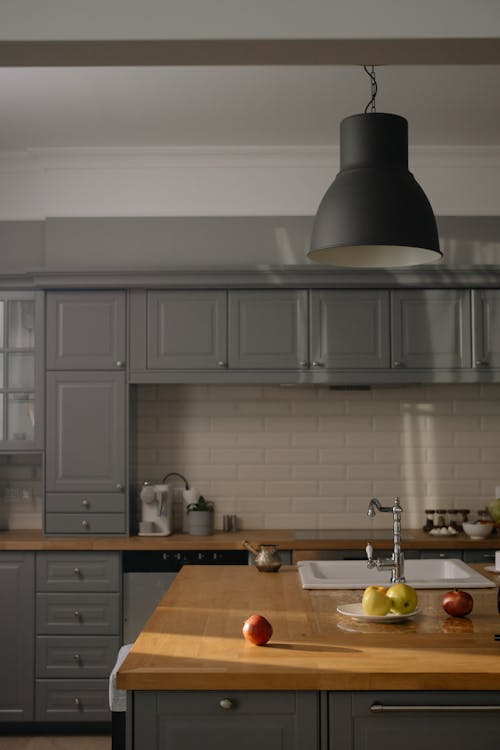
Gray kitchen cabinets can work with contemporary, transitional and traditional interiors, but “gray” is not one fixed finish. Undertone, value, sheen, lighting and nearby materials determine whether a sample appears warm, cool, green, blue or nearly beige in the completed room.
Select the finish as part of the complete cabinet assembly. Door construction, edge treatment, substrate, coating, hardware and approved variation all affect the result. Review physical samples beside the actual countertop, backsplash, floor and metal finishes before releasing production.
Gray Cabinet Directions at a Glance
| Gray direction | Typical effect | Coordination check |
|---|---|---|
| Light warm gray | Soft, pale appearance with beige or taupe influence | Compare with warm stone, timber and cream walls |
| Light cool gray | Crisp appearance with blue or green influence | Check daylight, cool LEDs and stainless finishes |
| Mid-tone gray | Balanced cabinet color with visible contrast | Review door profile, shadows and countertop value |
| Charcoal | Strong visual weight and deeper contrast | Confirm lighting, fingerprints, edge coverage and room balance |
| Gray wood grain | Neutral color with visible natural or printed texture | Define grain direction, matching and acceptable variation |
Choose the Undertone in the Project Lighting
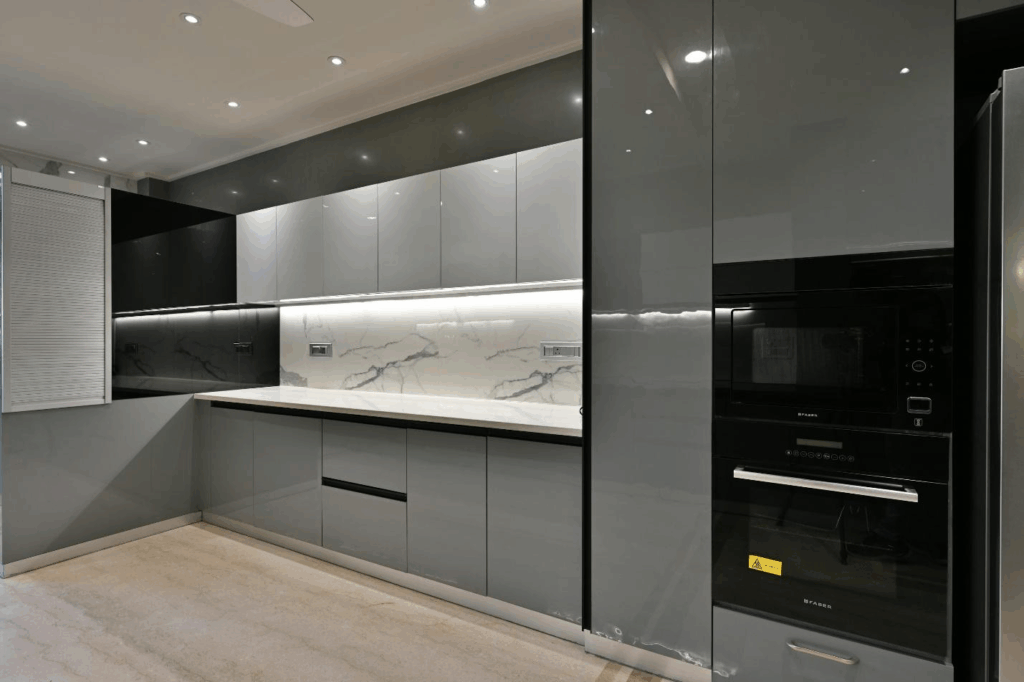
Place candidate samples vertically where the cabinets will be installed. Review them in daylight and under the proposed artificial lighting at different times. A gray selected from a screen or small horizontal chip can shift noticeably once it covers full-height doors and reflects surrounding colors.
Use the broader kitchen cabinet color guide to compare undertones and sample methods. Keep this page gray-specific by recording the approved gray reference, allowable range and relationship to the project palette.
Compare Light, Mid-Tone and Dark Gray
Light Gray Cabinets
Light gray creates less contrast than charcoal and can support a quieter room. Check whether the undertone conflicts with white appliances, walls or stone. On framed doors, shadows around rails and panels may make the installed color appear darker than the flat sample.
Mid-Tone and Charcoal Cabinets
Mid-tone gray provides a visible anchor without reaching the depth of charcoal. Dark gray can work on an island, lower cabinets or a full composition when the room has suitable light and material balance. Test fingerprints, dust visibility and touch-up appearance on the proposed sheen before approval.
Coordinate Door Style and Cabinet Construction
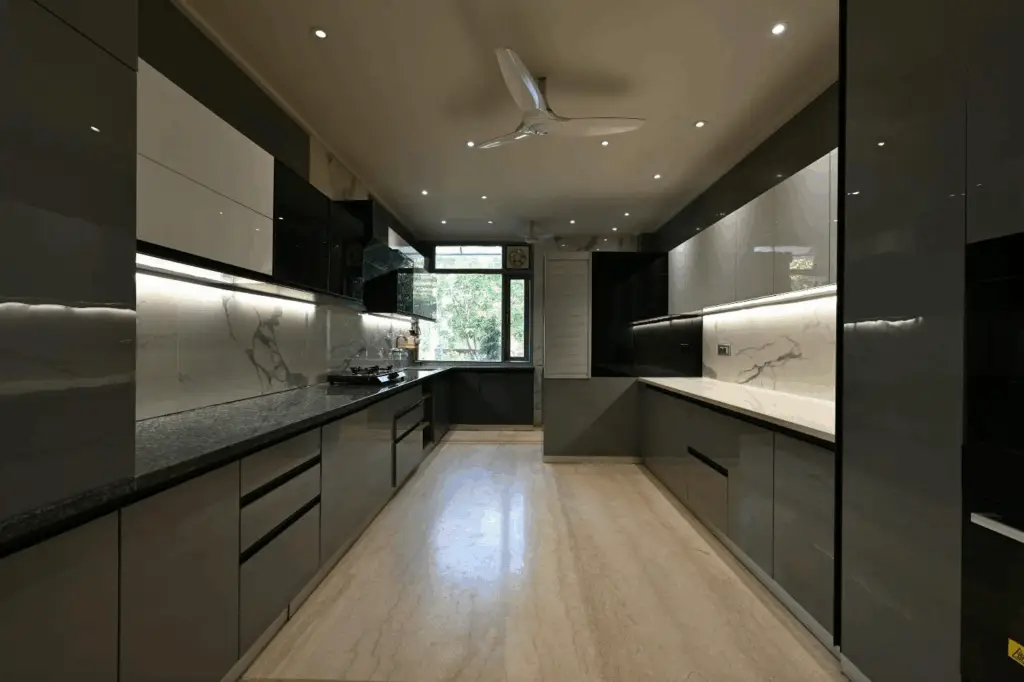
Flat-panel doors make color, joint alignment and surface flatness prominent. Shaker and other framed doors create more shadow and expose finish coverage at profiles and inside corners. The cabinet door style guide explains how profiles, reveals, hinges and finishes work as one assembly.
Specify whether the gray is painted, stained, laminated, veneered or factory-coated. Record the door substrate, back-face finish, edge treatment, cabinet interior, end panels, fillers, plinths and exposed accessories. A color name alone does not make two suppliers’ quotations comparable.
Select Sheen and Texture with Maintenance in Mind
Matte, satin and higher-sheen finishes reflect light differently and can change the apparent gray. Matte surfaces may reduce glare, while smoother finishes can show fingerprints or surface variation differently. Request the manufacturer’s cleaning and repair guidance for the exact coating rather than assuming one maintenance rule applies to every finish.
Pair Gray Cabinets with Counters and Backsplashes
Compare large samples because stone veining, aggregate and background color may introduce undertones that are not visible in a small chip. A pale counter can create contrast with charcoal cabinets; warmer stone or timber can soften cool gray; a restrained backsplash can keep several patterns from competing.
Use the quartz and marble countertop comparison to review care and material differences. Approve the cabinet, counter, backsplash, grout and wall color as one sample group.
Coordinate Hardware, Fixtures and Metals
Nickel, stainless steel, black, bronze and brass can all work with gray, but finish consistency matters more than a generic pairing rule. Compare cabinet pulls, hinges, taps, appliance trims, lighting and nearby door hardware under the project lighting. Record manufacturer, finish code and sheen where matching is required.
Use Gray with White, Taupe or Wood Selectively
Two-color schemes need a clear boundary. An island, tall-cabinet wall or lower-cabinet band can carry gray while another finish remains dominant. Compare the gray with the white cabinet selection guide or the taupe cabinet finish guide when those colors are part of the palette.
Approve a Representative Sample and Mock-Up
Approve the gray on the actual door material, profile and sheen. Include an exposed edge, inside corner and adjacent end panel. For wood grain or stone pairings, define acceptable natural or printed variation. A small mock-up with the selected light source, counter and hardware can reveal conflicts before full production.
Gray Cabinet Finish-Schedule Checklist
- Room, elevation, cabinet marks and quantities
- Gray reference, undertone, approved range and sheen
- Door style, substrate, edge and back-face finish
- Cabinet interiors, exposed ends, fillers, plinths and trims
- Countertop, backsplash, grout, wall and floor samples
- Pulls, hinges, fixtures, appliances and metal finish codes
- Lighting type and sample review conditions
- Cleaning, touch-up and replacement-panel requirements
- Approved sample or mock-up reference and sign-off
Gray Kitchen Cabinet FAQ
Should Gray Cabinets Be Warm or Cool?
Neither direction is universally better. Compare the sample with the room light, counters, floor, walls and metals. The correct undertone is the one approved against the complete project palette.
How Large Should the Finish Sample Be?
Use a sample large enough to show the actual substrate, profile, edge and sheen. For final approval, a full representative door or agreed mock-up provides more reliable evidence than a small color chip.
Finalize the Gray Cabinet Package
Successful gray kitchen cabinets come from controlled undertone, construction, sheen and material coordination rather than a trend label. Freeze the approved finish schedule, sample and shop drawings together so the manufactured cabinets match the room palette and the quotation basis.