By George House/17,Nov,2025
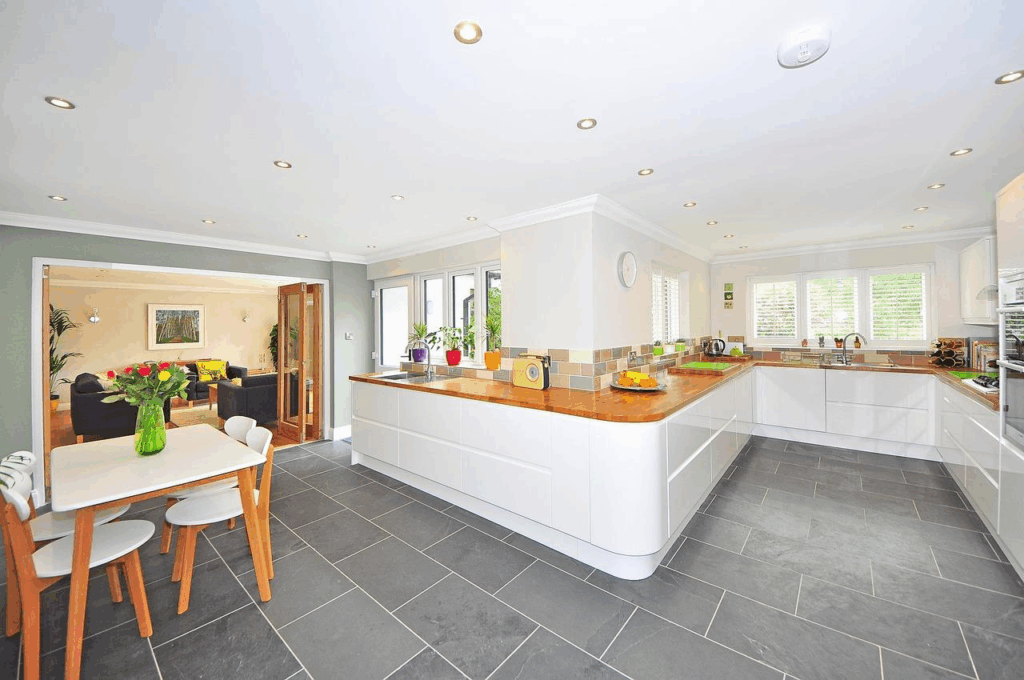
The best white kitchen cabinets ideas start with the exact white, not the word “white” alone. Warm whites, neutral whites and cooler whites react differently to daylight, artificial light, countertops, backsplashes and flooring. Door profile, sheen, substrate and hardware then determine whether the finished kitchen feels traditional, transitional or contemporary.
Treat the cabinet finish as part of a coordinated material palette. Review physical samples in the room, record the approved color and sheen, and confirm the full cabinet construction before ordering. This avoids a visually clean concept turning into mismatched whites, visible edge differences or an incomplete quotation.
White Kitchen Cabinet Ideas at a Glance
| Design direction | Useful starting point | Coordinate with | Check before approval |
|---|---|---|---|
| Warm white | Creamy or soft white undertone | Warm wood, beige stone, aged brass | That the cabinet does not turn yellow beside a cooler counter |
| Neutral white | Balanced white without a strong undertone | Gray, taupe, mixed metals and many stones | How it changes under daylight and task lighting |
| Cool white | Crisp white with a blue or gray undertone | Cool gray, charcoal, stainless steel | That adjacent whites do not look dull or discolored |
| White and wood | White perimeter with a wood island or accent | One controlled wood species and grain direction | Veneer matching, finish sample and visible edges |
| White and color | White uppers with a darker island or base cabinets | Navy, green, gray or another approved accent | Where the color changes and how end panels are finished |
(Source)
Choose the White Undertone in the Actual Room
A cabinet sample can look balanced in a showroom and noticeably warmer or cooler on site. Compare it against the installed or approved countertop, backsplash, floor, wall paint and appliance finish. View the sample vertically because light strikes a cabinet door differently from a horizontal worktop.
Check the sample in morning and afternoon daylight and under the specified task and ambient lighting. Keep the final sample large enough to show sheen and texture. For a wider palette process, use the kitchen cabinet color and finish selection guide, while keeping this page focused on white cabinet decisions.
Match the Door Style to the Cabinet Construction
White Shaker Cabinets
A Shaker-style door uses a framed profile with a recessed center panel. Rail and stile width, inside-edge detail and panel construction change the result considerably. Confirm whether the door is solid wood, painted fiberboard, a mixed construction or another manufactured assembly, and approve a sample that includes the edge and back.
White Slab Cabinets
Flat slab fronts suit a quieter, contemporary elevation, but they make panel flatness, edge treatment, joint alignment and reflected light more visible. Handleless profiles also need coordinated finger pulls, rails or push-latch hardware. Compare these options in the cabinet door style and finish guide.
Raised-Panel and Detailed White Cabinets
Raised panels, applied moldings and decorative end panels add shadow lines and suit many traditional schemes. Record which faces receive the detail, how fillers and scribes are treated, and whether the finish is uniform or intentionally glazed. More detail also means more edges and recesses to clean.
Pair White Cabinets with Counters, Wood and Color
(Source)
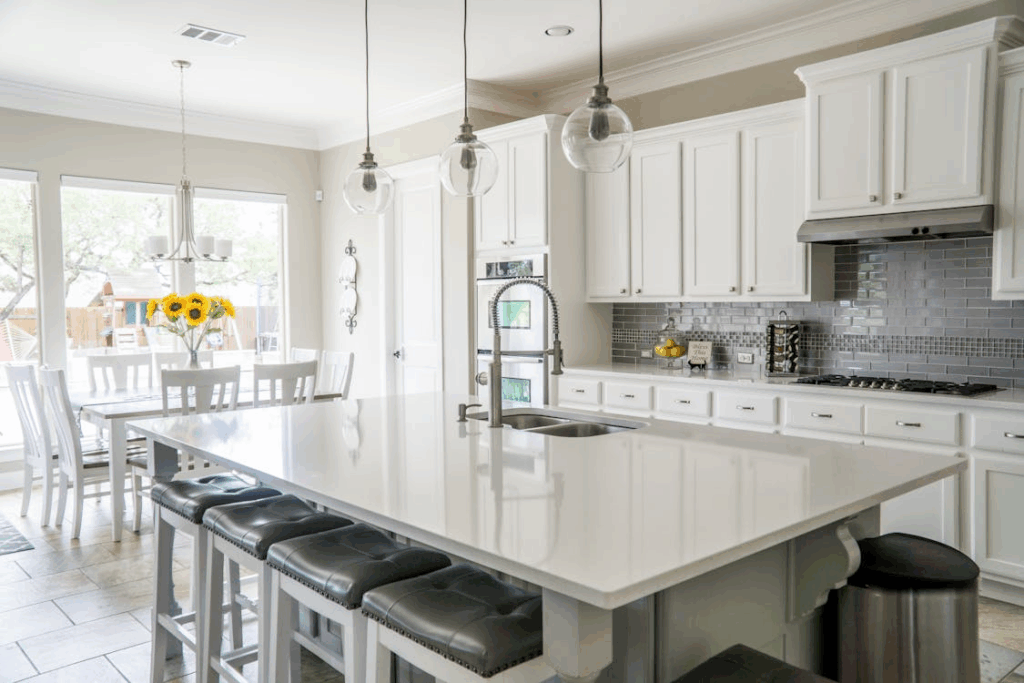
White and Wood
A wood island, open shelf or tall-cabinet bank can warm a white scheme. Specify the wood species or decorative surface, grain cut, matching method, stain or clear coating and acceptable variation. The white oak cabinet specification guide explains why solid wood, veneer and oak-look panels should not be treated as the same material.
White and Navy or Another Accent Color
A darker island or base cabinet can ground an otherwise white kitchen. Define exactly where the finish changes, including exposed ends, fillers, toe kicks and appliance panels. For a blue accent, the navy kitchen cabinet finish guide covers undertone, sheen and material coordination.
Coordinate Hardware, Sheen and Lighting
(Source)
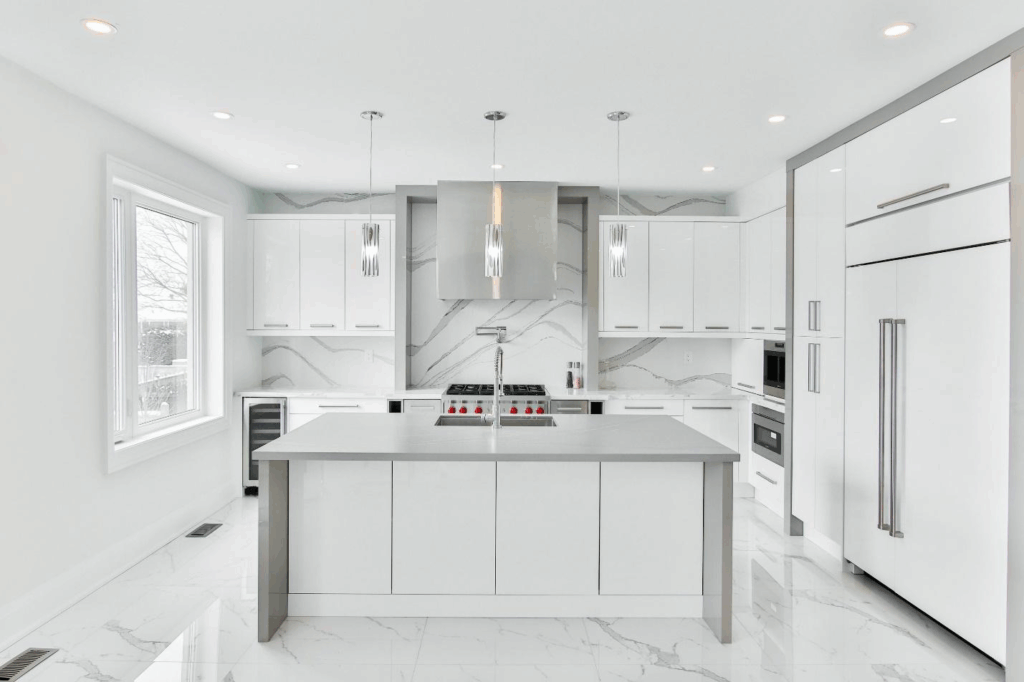
Hardware finish should be checked beside faucets, appliances, lighting and other visible metalwork. Also confirm pull length, drilling centers, projection and placement. A handle can look proportionate on one door but become awkward on a narrow drawer or conflict with an adjacent panel.
Matte and low-sheen finishes reduce strong reflections but can show burnishing or cleaning marks depending on the coating. Higher sheen reflects more light and can reveal substrate or application imperfections. Ask for the coating system, sheen reference, cleaning guidance and a representative finished sample rather than choosing from a small color chip alone.
White Cabinet Sample and Approval Checklist
- Approved white color reference and undertone
- Door profile, panel construction, edge and back finish
- Carcass, shelf, drawer and exposed-end construction
- Coating type, sheen, texture and cleaning method
- Countertop, backsplash, floor and wall samples viewed together
- Hardware model, finish, drilling and door-clearance check
- Two-tone finish boundaries and wood-grain direction
- Lighting color temperature and under-cabinet details
- Finish schedule, elevation mark and sample approval record
White Kitchen Cabinet FAQ
Should White Cabinets Be Warm or Cool?
Neither is universally better. Select the undertone that works with the room’s daylight and fixed materials. A physical sample placed beside the countertop and backsplash is more reliable than a screen image or color name.
Are White Cabinets Hard to Maintain?
White surfaces can make spills and grime easier to see, but cleaning performance depends on coating quality, texture, sheen, edge details and the approved cleaner. Request care instructions for the exact finish.
Confirm the Complete White Cabinet Package
A successful white kitchen coordinates color, cabinet construction, door profile, hardware, lighting and every adjoining finish. Use the custom kitchen cabinet design overview to prepare elevations, samples and a comparable cabinet schedule before quotation.