An outdoor fireplace should be planned as part of the patio rather than added as an isolated decoration. The fuel, firebox, chimney or venting method, finishes, seating, drainage and service access all affect whether the feature works comfortably over time. A design that looks appropriate in a photograph may not suit the wind, roof, circulation or local rules at a particular property.
Start with the site and the intended use. Then compare fireplace types and fuel options before selecting a finish. The ideas below cover permanent masonry fireplaces, listed gas or propane units, outdoor-rated electric models and compact fire bowls or chimineas. Each option has a different installation scope and should be coordinated with the product instructions and the local authority responsible for permits and fire safety.
Plan The Site Before Choosing A Design
Define How The Fireplace Will Be Used
Decide whether the fireplace will support quiet family use, larger gatherings or a formal entertaining area. Record the usual number of seats, the preferred view, the times of day the patio is occupied and whether the fireplace should face the house, the garden or a second outdoor zone. These choices determine the width of the seating area and whether a single-sided, corner or double-sided arrangement is practical.
Keep movable furniture in the plan even when permanent seat walls are proposed. A fixed bench can define the space, while loose chairs make it easier to respond to wind, heat and group size. Avoid placing the fire feature where everyone must cross directly in front of it to enter the house, reach the garden or access an outdoor kitchen.
Map Clearances Circulation And Service Access
Do not select a universal clearance from a generic diagram. Required distances depend on the appliance listing, fuel, opening, chimney or vent, nearby construction and local code. Mark walls, eaves, pergolas, screens, planting, fences, furniture and storage on a scaled plan. For a listed appliance, use the manufacturer installation manual as the starting point and obtain local approval where required.
Leave working access to gas valves, electrical connections, cleanout points and removable panels. A feature that fits visually but cannot be serviced will create avoidable maintenance work. Service routes should not pass through locked storage or behind finishes that must be demolished for inspection.
Check Wind Drainage And Exposure
Coordinate the hearth and surrounding outdoor patio tiles so water drains away from the firebox and does not collect at the seating edge. Confirm that the supporting slab or foundation suits the weight and construction method. Observe prevailing wind on site; walls, hedges and adjacent buildings can redirect smoke or flame even when regional wind data suggests another direction.
Consider rain, freeze-thaw exposure, salt air and direct sun when choosing finishes and metal components. Covers can protect some units during inactive periods, but they should not conceal drainage problems or trap moisture against masonry and metalwork.
Choose The Right Outdoor Fire Feature
Masonry Wood Burning Fireplace
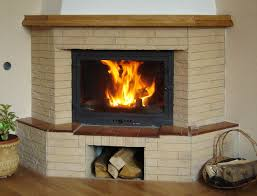
A wood-burning masonry fireplace creates a defined focal wall and the sound and aroma many owners expect from a traditional fire. It also requires the most coordination. The foundation, firebox, smoke chamber and chimney must work as a system, and the outer brick or stone finish is not a substitute for a properly detailed refractory assembly. Smoke direction, ash removal, wood storage and local burn restrictions all affect daily use.
Gas Or Natural Gas Fireplace
A listed outdoor gas fireplace offers predictable ignition and avoids firewood storage and ash cleanup. It requires a correctly sized fuel supply, an accessible shutoff, drainage and service access. The burner, media and enclosure should be used only in the configuration allowed by the manufacturer. A qualified installer should coordinate the gas work and any required inspection.
Propane Fireplace
Propane can serve sites without a permanent natural-gas connection, but the tank and regulator cannot be treated as decorative afterthoughts. Their location, ventilation, protection and access must follow the appliance instructions and local rules. Concealed cylinders should remain accessible and should never be enclosed in an improvised unventilated cabinet.
Outdoor Rated Electric Fireplace
An outdoor-rated electric model can suit projects that want a flame effect without combustion or on-site fuel storage. Confirm that the product is listed for the intended outdoor exposure. Coordinate the circuit, weather protection and controls with the electrical design. An indoor electric fireplace should not be moved outdoors simply because it fits the opening.
Fire Bowl Or Chiminea
A fire bowl or chiminea can be useful where a built-in fireplace would dominate a small patio. It is a separate product type, not a smaller version of every masonry fireplace. Check the fuel, stable base, spark or ember control, weather exposure and required distances in the product instructions. Preserve a clear route around the unit and keep it away from locations where it can be knocked or moved while hot.
Compare Fuel Options
Fuel choice affects the project before the finish is selected. The table below is a planning comparison, not a substitute for a product manual or local approval.
| Fuel | Planning implications | Operation and maintenance | Typical fit |
|---|---|---|---|
| Wood | Foundation, firebox, chimney, dry storage and smoke path | Ash removal, chimney or flue inspection and dry seasoned fuel | Projects that accept active fire management and local wood-burning rules |
| Natural gas | Permanent gas supply, shutoff, listed burner and service access | Burner and control inspection; minimal solid-fuel cleanup | Frequently used fixed installations with an available gas service |
| Propane | Listed appliance, cylinder or tank location, regulator and ventilation | Fuel replacement plus burner and connection checks | Sites without natural gas where approved propane storage can be accommodated |
| Electric | Outdoor-rated unit, suitable circuit and weather-protected electrical details | Cleaning and electrical inspection according to the product manual | Flame-effect applications where combustion is not required |
Choose Materials As A Complete Assembly
Firebox Chimney And Vent Components
Heat-facing components must be selected for their actual role. A masonry unit may require refractory firebrick and compatible mortar inside the firebox, while a factory-built unit relies on its tested enclosure and vent components. Do not replace specified parts with visually similar products. Detail movement joints, drainage and transitions so the decorative finish does not bridge locations that need access or movement.
Brick
Brick can support traditional and contemporary designs, but the specification should separate the refractory lining from the exterior facing brick. Confirm exposure grade, color range, joint profile and cleaning method. Use a full-size sample panel when brick, mortar and adjacent paving must align across a large patio.
Natural Stone And Stone Veneer
Stone introduces texture and can connect the fireplace to retaining walls or landscape features. Review thickness, support, corner treatment, moisture movement and freeze-thaw suitability as part of the assembly. The stone fireplace materials should be selected together with the substrate, anchors or setting system and joints rather than as an isolated color choice.
Concrete Stucco And Porcelain
A minimalist concrete fireplace can use cast concrete, concrete-look cladding or a rendered exterior around an approved firebox. Ordinary concrete should not be assumed to be a refractory lining. Stucco and porcelain can create a quieter surface, but edges, control joints, support, heat exposure and water entry still require project-specific detailing. Obtain physical samples because large flat surfaces make color and texture variation easy to see.
Outdoor Fireplace Ideas By Layout
Use The Fireplace As A Patio Edge
Positioning a fireplace at the outer edge of a patio can create a strong backdrop without dividing the main circulation zone. This works well when the view behind the fireplace is limited or when a solid wall can screen neighboring services. Check that the structure does not block an important garden view or create a wind pocket at the seating area.
Extend The Hearth Into Seat Walls And Storage
Low seat walls can organize a larger gathering area and reduce the number of loose chairs. Keep seating surfaces outside the appliance clearances and avoid placing cushions or firewood where heat, sparks or moisture can reach them. Storage for tools may be useful, but gas controls, vents and drainage openings must remain accessible and unobstructed.
Connect Two Zones With A Double Sided Unit
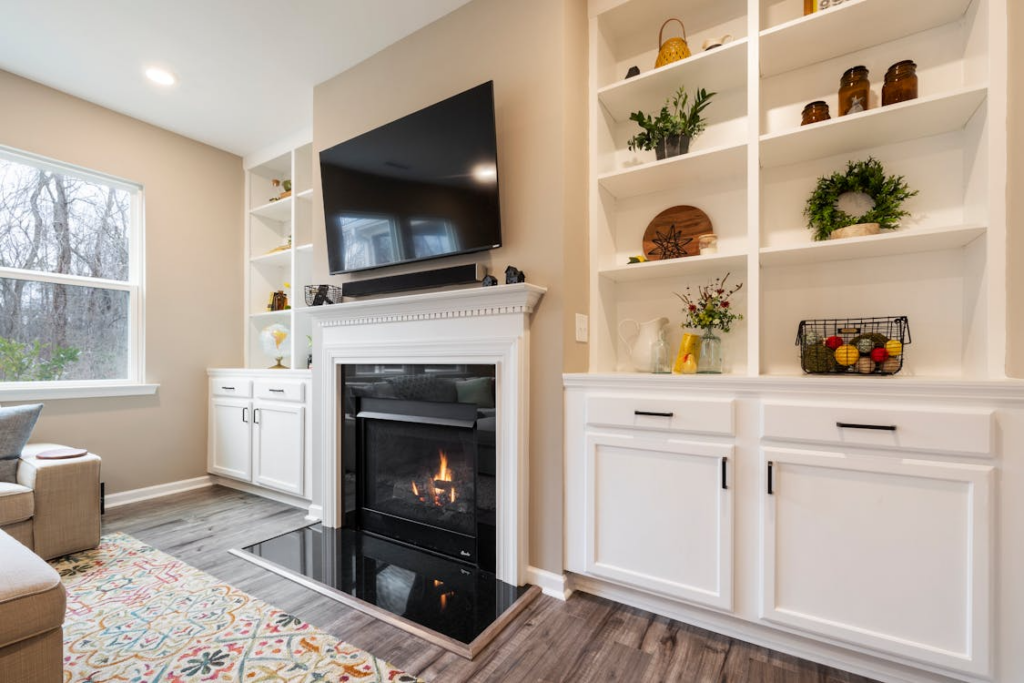
A double-sided fireplace can serve a lounge on one side and a dining or poolside zone on the other. The idea works only when both faces have adequate circulation and safe furniture positions. Confirm the listed configuration, structural support and weather exposure from both directions. A decorative opening should not be added to a single-sided unit.
Treat Screened And Covered Patios As A Separate Condition
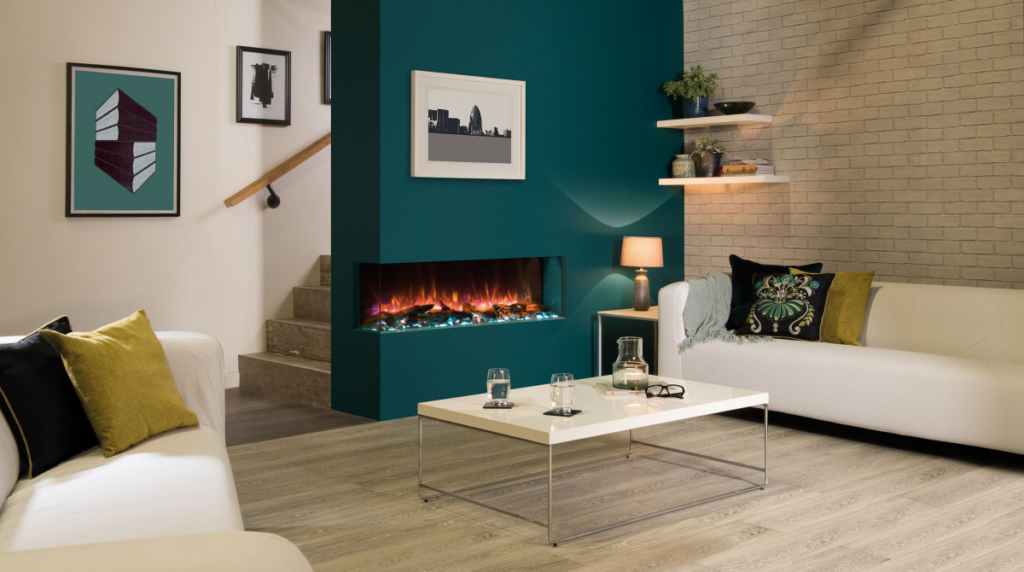
A screened porch or roofed patio changes ventilation and overhead-clearance conditions. Use a fireplace in a covered space only when the appliance listing and installation manual permit that exact application and the local authority accepts it. Coordinate roof framing, combustible finishes, screens and ventilation before fixing the fireplace position. Moving an open-air concept under a roof without redesign is not a safe substitution.
Use A Minimalist Concrete Form For Contemporary Projects
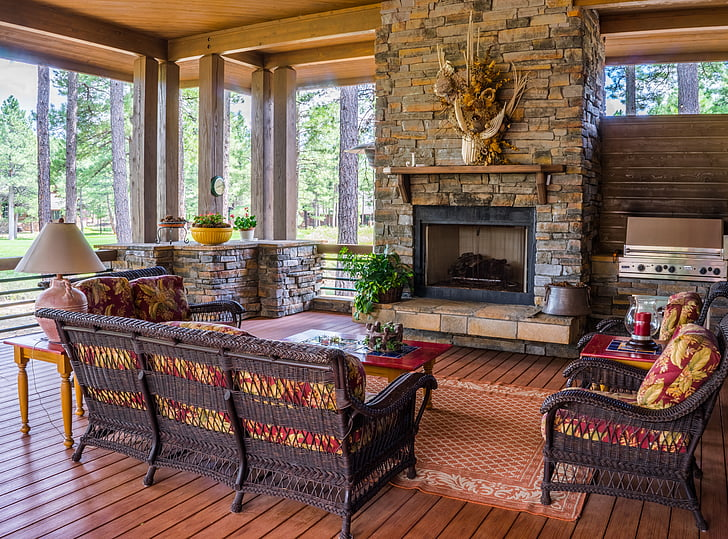
A simple concrete or rendered volume can work with modern architecture when its proportions follow the patio rather than becoming an oversized object. Align the opening with seated eye level, adjacent walls and paving joints. Conceal access panels carefully but keep them removable. Limit decorative grooves and projections where water and soot can collect.
Use A Fire Bowl Or Chiminea For A Compact Flexible Plan
A compact fire bowl or chiminea can preserve more usable floor area and allow the seating layout to change. Plan its normal operating position instead of treating it as furniture that can be placed anywhere. Mark the noncombustible base, nearby planting, overhead elements and travel route. Store or cover the unit only after it has cooled and according to the product instructions.
Coordinate Seating Lighting And Adjacent Features
Firelight does not replace task or route lighting. Provide low-glare light at steps, paths, controls and storage without directing bright fixtures into the seated view. Keep switches and controls easy to reach but outside hot zones. If the fireplace shares a patio with a grill or outdoor kitchen, separate the work route from the main seating arrangement and confirm that smoke and heat from one appliance do not interfere with the other.
During design development, compare the fireplace, paving, furniture, lighting and planting on one coordinated plan. Review relevant building material products and use project coordination services when drawings, finishes and supplier information need to be aligned before ordering. Completed projects can help define a visual direction, but the final details still need to respond to the specific site and selected appliance.
Check Permits Local Rules And Safe Use
Check zoning, building and fire requirements before buying the appliance or starting masonry work. Local rules may address permits, setbacks, chimney construction, gas or electrical work, burn bans, smoke and nuisance conditions. Homeowners associations can add separate restrictions. Requirements vary by jurisdiction, so a rule from another city should not be copied into the project specification.
Wood-burning restrictions can also change with air-quality conditions. The US Environmental Protection Agency maintains a historic collection of state and local wood-burning ordinances and links to local agencies, but the current local authority remains the controlling source for the project.
Operate only the approved fuel in the approved appliance. Do not burn garbage, plastic or pressure-treated wood. Do not use a fireplace for cooking unless the product is specifically designed and approved for that purpose. Keep controls, shutoffs and extinguishing equipment accessible, supervise the fire and follow any temporary burn restriction.
Maintain The Fireplace By Fuel And Material
Wood Burning Maintenance
Remove ash only after it has cooled and store it in a suitable metal container away from combustible materials. Inspect the firebox, joints, chimney or flue and cap at the intervals required for the system. The EPA's archived Learn Before You Burn guidance recommends dry seasoned wood and warns against burning garbage, plastic or pressure-treated wood. It also advises checking local air-quality conditions before burning.
Gas Propane And Electric Maintenance
Keep burner ports, drainage openings and air inlets free from debris. Arrange professional inspection of gas connections, valves, regulators and controls at the intervals specified by the manufacturer or local rules. For electric units, inspect weather seals, covers and electrical protection. Shut down the unit and obtain service if ignition, flame pattern, controls or electrical operation becomes abnormal.
Masonry Finish And Drainage Maintenance
Inspect cracked joints, loose veneer, corrosion, staining and blocked drainage before small defects spread. Use cleaning products compatible with the finish and burner or firebox. Seal stone or masonry only when the specified system calls for it; a sealer cannot correct failed flashing, joints or drainage. After severe weather, check covers and caps before the next use.
Outdoor Fireplace Selection Checklist
- Confirm whether the project needs a permanent fireplace or a compact fire bowl or chiminea.
- Check permits, fire rules, air-quality restrictions and HOA requirements before procurement.
- Select the fuel after reviewing available services, storage, smoke and maintenance expectations.
- Use the appliance listing and installation manual to set clearances and covered-space conditions.
- Coordinate the foundation, firebox, chimney or vent, drainage and decorative finish as one assembly.
- Place seating and circulation on a scaled plan for both normal use and servicing.
- Confirm access to shutoffs, controls, cleanouts and removable panels.
- Review finish samples with the patio paving, furniture, lighting and nearby walls.
- Record maintenance responsibilities and replacement access before construction closes the assembly.
- Inspect and approve the installed work before regular use.
Frequently Asked Questions
What Is The Best Material For An Outdoor Fireplace
There is no single finish that suits every project. The best assembly uses a firebox or listed appliance appropriate to the fuel, a structure suitable for the site and a finish rated for the local exposure. Brick and stone are common, while concrete, stucco and porcelain can support contemporary designs when their substrates, joints and heat conditions are correctly detailed.
Is Wood Or Gas Better For An Outdoor Fireplace
Wood offers a traditional active fire but requires fuel storage, ash handling, smoke planning and compliance with burn restrictions. Gas provides quicker operation and less solid-fuel cleanup but needs an approved supply, shutoff and professional installation. The better choice depends on local rules, available services and how often the fireplace will be used.
Can An Outdoor Fireplace Go Under A Covered Patio
Only when the selected appliance is listed for that covered application and its installation requirements can be met. Roof framing, ceiling finishes, screens, ventilation and clearances must be reviewed together. Confirm the proposal with the local authority before construction.
Is A Chiminea The Same As An Outdoor Fireplace
No. A chiminea is usually a smaller freestanding appliance with a contained fire chamber and short chimney. A built-in outdoor fireplace is a permanent assembly or factory-built unit installed into a structure. Their bases, clearances, fuel limits and maintenance requirements should be checked separately.
Can Every Outdoor Fireplace Be Used For Cooking
No. Use a fireplace for cooking only when the manufacturer identifies and approves that function. Decorative gas fireplaces and many fire features are not cooking appliances. An improvised grate or cooking surface can interfere with safe operation and may expose food to unsuitable materials or combustion products.
How Can Wood Smoke Be Reduced
Use dry seasoned wood, maintain the appliance and chimney, avoid restricted fuels and do not burn during local air-quality restrictions. Wood smoke contains fine particles and other pollutants, as summarized in the EPA's archived wood smoke and health guidance. If smoke repeatedly affects the house or neighboring property, stop using the fireplace until the cause is reviewed.
Plan The Fireplace With The Whole Patio
A successful outdoor fireplace begins with a coordinated site plan, a suitable fuel and a buildable assembly. George House Material can help align product information, finishes, drawings, packing and delivery requirements across the wider project scope. Contact George House Material with the patio plan, preferred fuel, reference images and project location so the team can identify the information required for a coordinated quotation.