By George House/12,Dec,2025
Outdoor patio tiles should be selected for the actual climate, traffic, drainage and installation build-up—not by appearance alone. The same tile may perform differently on a covered terrace, an exposed poolside area or a freeze-thaw patio.
Use this guide to compare materials, document measurable requirements and coordinate the tile, substrate, joints, edges and drainage before ordering.
Start With Exposure and Use
| Project Condition | Check Before Selection | Approval Evidence |
|---|---|---|
| Open patio | Rain, solar exposure, temperature range and drainage path | Product data for exterior use and applicable climate |
| Pool or wet zone | Wet barefoot use, slope, edges and cleaning regime | Relevant wet-slip classification and sample finish |
| Freeze-thaw climate | Water absorption, installation system and movement joints | Applicable test data for the exact tile and system |
| Driveway or heavy traffic | Expected loads, thickness, substrate and edge restraint | Load/application rating and approved installation detail |
| Covered terrace | Wind-driven rain, furniture loads and indoor-outdoor transitions | Full-size sample and coordinated threshold detail |

(Source)
For a broader product overview, use the project tile selection page to align the patio finish with other floor and wall packages.
Compare Outdoor Tile Materials
Porcelain Tile
Porcelain is available in many colors, textures and formats. Confirm that the exact product is rated for the intended exterior exposure; do not assume that every porcelain tile is suitable for wet, freezing or high-load conditions. Record actual size, thickness, surface classification, caliber, shade range and recommended installation method.
Natural Stone
Granite, slate, limestone and travertine vary by source, finish, porosity and strength. Review the supplied stone rather than relying on the material name alone. The types of stone guide explains how use, finish, variation and maintenance affect selection.
Concrete Pavers and Other Modular Units
Concrete pavers can support modular layouts and localized replacement, but performance depends on unit type, base preparation, edge restraint, drainage and joint material. Confirm dimensional tolerance, color variation, load class and the complete laying system.
Specify Performance Without Broad Claims
Terms such as waterproof, non-slip, weatherproof or maintenance-free are not complete specifications. Ask which test method, classification and use condition support the claim. A textured surface may provide grip in one test condition yet still require appropriate slope, cleaning and footwear assumptions.
- Slip: state the applicable wet or dry test, required classification and user condition.
- Water: confirm tile absorption together with the waterproofing, drainage and joint system.
- Climate: review freeze-thaw, heat, UV and salt exposure where relevant.
- Loads: coordinate tile or paver thickness, substrate, traffic and point loads.
- Maintenance: approve cleaning chemicals, sealing needs and replacement access.
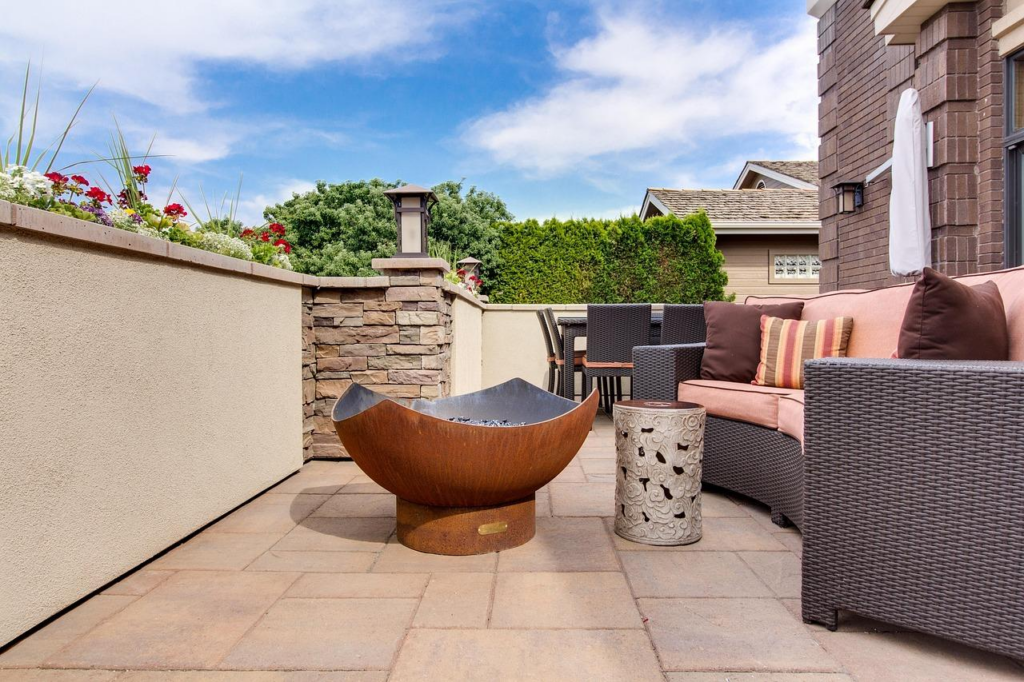
Coordinate the patio palette with wall, roof and opening interfaces using the exterior home finishes guide.
(Source)
Plan Layout, Drainage and Movement
Set out the patio from surveyed dimensions and finished levels. Confirm falls, drains, thresholds, steps, columns, planters and perimeter edges before approving the module. Review the patio floor ideas as layout references, then test the preferred pattern against actual tile size and joint width.
- Prepare a dimensioned layout with control lines and cut locations.
- Keep surface falls and drainage paths clear of decorative pattern changes.
- Coordinate movement joints with the substrate and visible grid.
- Resolve transitions to doors, drains, landscaping and adjacent materials.
- Confirm edge profiles, stair nosings and accessible level changes.
- Allow for shade variation and batch allocation across connected areas.
Approve Samples and Installation Controls
| Stage | Control | Record |
|---|---|---|
| Sample | Color, texture, variation, cleanability and wet appearance | Signed sample with product and batch reference |
| Mock-up | Pattern, joints, cuts, slope, drainage and edge detail | Approved mock-up location and photographs |
| Substrate | Level, slope, curing, cracks, waterproofing and compatibility | Pre-installation inspection |
| Installation | Adhesive or bedding method, coverage, joints and protection | Method statement and site checks |
| Handover | Cleaning, sealer if required, spare tiles and maintenance | Closeout package linked to supplied batch |

(Source)
If a timber appearance is preferred, compare the surface, variation and layout controls in the wood-look tile selection guide.
Outdoor Patio Tile RFQ Checklist
- Area schedule, drawings, dimensions, levels and intended use
- Product manufacturer, code, format, actual size, thickness and finish
- Exterior, wet-use, slip, climate and load requirements with test method
- Shade, caliber, variation range, batch control and sample approval
- Substrate, waterproofing, drainage, adhesive or bedding and grout system
- Movement joints, thresholds, trims, steps, edges and interfaces
- Wastage basis, spare quantity, packing, delivery sequence and protection
- Cleaning, sealing, maintenance, warranty and closeout documents
Make the Patio a Coordinated Assembly
The best outdoor patio tile decision connects appearance with exposure, measurable performance and installation detail. Approve the exact product and batch through samples and a representative mock-up, then keep the layout, drainage, joints and maintenance requirements linked to the order.