Curtain wall design turns an architectural façade concept into a coordinated exterior enclosure. The design must connect elevation grids, framing, glass, opaque zones, anchors, movement, drainage, perimeter interfaces, thermal conditions, testing and installation sequence.
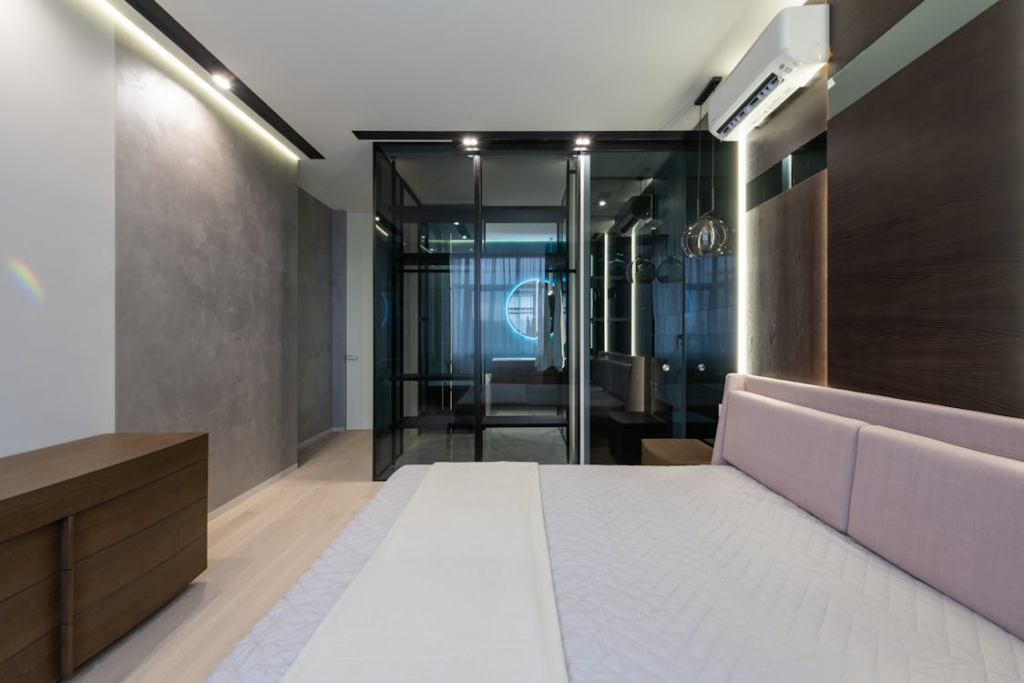
An interior glass partition is a different system. It may use framed or frameless glazing to divide rooms, but it should not be described as an exterior curtain wall or assumed to provide the same structural, air, water and drainage functions.

What Is a Curtain Wall?
A curtain wall is generally a non-load-bearing exterior enclosure. It transfers its own weight, wind and other applicable façade loads to the supporting building structure through designed framing and anchors. The final load path, glass, connections and performance criteria are project-specific and require qualified professional review.
Curtain wall should also be distinguished from storefront. Storefront framing is commonly considered for lower-height, protected or interior commercial applications. It should not replace curtain wall without reviewing height, exposure, structural loads, drainage and the required performance.
Choose the System Type

| System | Typical coordination focus | Questions before selection |
|---|---|---|
| Stick-built curtain wall | Site-assembled mullions, transoms, splices, glazing and perimeter work | How will floor-to-floor geometry, access, anchors and field glazing be managed? |
| Unitized curtain wall | Factory-assembled modules, slab-edge anchors and inter-panel joints | Are module size, tolerances, transport, lifting and installation sequence resolved? |
| Storefront | Lower-height or protected commercial glazing and entrances | Does the location and required performance suit this system? |
| Interior glass partition | Room division, privacy, doors and interior acoustic expectations | Is the scope clearly separated from the exterior façade? |
See the project overview for curtain wall and storefront systems when defining the façade package and quotation inputs.
Coordinate the Complete Façade Assembly
Elevation grid and structure
Align mullions and transoms with floor levels, slabs, columns, walls, ceilings, partitions and architectural datum lines. Confirm slab-edge conditions, embeds, anchor zones, construction tolerances and access for installation and adjustment.
Glass and opaque zones
Define vision glass, coatings, tint, frit, laminates, heat treatment, safety locations and edge requirements. Coordinate spandrel glass, metal panels, backpans, insulation, shadow boxes and interior appearance where the façade crosses floors or opaque construction.
Anchors, joints and movement
Allow for structural deflection, inter-story movement, thermal movement, seismic criteria where applicable and fabrication or installation tolerances. These requirements influence anchor slots, mullion splices, module joints, glass clearances, perimeter seals and adjacent finishes.
Drainage and perimeter interfaces
Curtain wall drainage depends on the selected system and detailed continuity of pressure chambers, seals, end dams, weeps, flashings and perimeter waterproofing. Assign responsibility for frame-to-wall seals, sill and head flashings, fire safing, interior closures and transitions to roofs, canopies, louvers and other cladding.
Performance Criteria Must Be Project-Specific
A curtain wall should not be described as automatically watertight, energy efficient or code compliant. The project needs defined criteria and an agreed evidence path for the complete proposed assembly.
- Structural: design pressures, deflection limits, glass, framing, anchors and supporting structure.
- Air and water: test pressures, specimen, chamber or spray procedure, duration and acceptance criteria.
- Thermal and condensation: climate, interior conditions, framing, thermal breaks, glass edges and opaque zones.
- Acoustic: façade target, glass, framing, seals and adjacent construction.
- Safety and fire: glazing locations, fall protection, perimeter fire safing, entrances and local requirements.
- Maintenance: access, cleaning, drainage inspection, sealant replacement and glass or component replacement.
Laboratory and field testing must follow the project specification. FGIA publishes methods including AAMA 501 laboratory criteria and AAMA 503 field testing; the project team should confirm the applicable edition, procedure, specimen and acceptance basis.
Curtain Wall Shop Drawings and Submittals
Shop drawings should translate the approved architectural design and performance criteria into coordinated production and installation information. They are not a substitute for project design responsibilities, and their required scope should be defined before quotation.
| Submittal | Typical content |
|---|---|
| Elevations | Grid references, floor levels, modules, corners, entrances, vents and opaque zones |
| Plans and sections | Profile build-up, glass position, caps, spandrels, slab edges and interior closures |
| Details | Anchors, splices, joints, drainage, perimeter seals and adjacent interfaces |
| Schedules | Glass, aluminum finish, panels, gaskets, sealants, fasteners and hardware |
| Calculations and evidence | Project-required structural, thermal or other documentation and applicable reports |
| Samples and mock-ups | Finish, glass, sealant, visual assembly and performance mock-up requirements |
Common Curtain Wall Coordination Risks
- Façade grids do not align with slab edges, partitions or ceiling lines.
- Structural movement and construction tolerances are missing from joint details.
- Glass schedules omit coatings, heat treatment, safety or spandrel requirements.
- Entrance doors, operable windows and louvers interrupt drainage or support paths.
- Perimeter sealant, flashing, fire safing and interior closures have no assigned scope.
- Test reports do not cover the proposed system, size, glass or configuration.
- Testing is requested without an agreed specimen, pressure, procedure or acceptance basis.
- Module size, lifting access, racks and delivery sequence are defined too late.
Curtain Wall RFQ Checklist
- Architectural plans, façade elevations, grids and sections
- Building location, height, exposure and applicable project criteria
- Structural information, slab edges, anchors, movements and tolerances
- Preferred system type, profile expression and finish references
- Vision glass, spandrel, panels, entrances, vents and louvers
- Air, water, wind, thermal, acoustic, fire or other required values
- Shop drawings, calculations, samples, mock-ups and testing scope
- Perimeter seals, flashing, fire safing, installation and site-work responsibilities
- Inspection, labeling, packing, lifting and delivery sequence
- Programme milestones and approval dates
George House Material can coordinate façade quotations, system information, drawings, samples, inspection and protected packing within an agreed project scope. Review the wider window and door package, then send available elevations, criteria and quantities through the project enquiry page.
Frequently Asked Questions
Is curtain wall the same as an interior glass wall?
No. Curtain wall is an exterior enclosure coordinated for building loads, movement, drainage and environmental performance. Interior glass partitions divide rooms and have different requirements.
Is curtain wall load-bearing?
It generally does not carry floor or roof loads. It transfers its own weight and applicable façade loads to the building through designed framing and anchors.
When should curtain wall testing be planned?
Testing requirements should be defined during design and quotation so the specimen, sequence, access, method, acceptance criteria and corrective-action process can be coordinated before production and installation.