By George House/25,Aug,2025
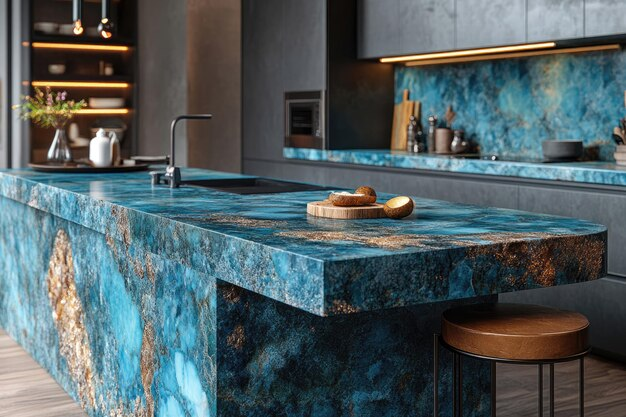
Aqua Fusion quartzite is a commercial stone name associated with dramatic blue-green, grey, cream and darker movement. Because trade names can vary by quarry, supplier and market, select the actual slabs rather than relying on a name or one photograph. Confirm the geological classification and technical information supplied for the offered lot.
If you are still comparing natural-stone families, review the overview of types of stone before narrowing the kitchen finish.
Approve the actual slab lot
Natural stone varies within a slab and between lots. View full-slab images with labels, then inspect selected slabs in person or through a documented digital approval process. Record slab number, dimensions, thickness, finish and defects or filled areas. Ask whether mesh, resin or other reinforcement is present and how it affects fabrication and appearance.
- Use control samples to discuss color range and surface finish.
- Mark the acceptable face and orientation of each selected slab.
- Identify fissures, veins, resin areas and shade transitions before cutting.
- Reserve enough material for seam matching, breakage risk and agreed spares.
Plan the kitchen before the slab layout
Cabinet level, support, appliance positions and service cutouts should be resolved through the kitchen design package before templates are finalized. Confirm finished cabinet dimensions, end panels, fillers, wall conditions, overhangs and access routes.
Large islands and waterfall ends can make the stone pattern a dominant feature. Decide whether veins should continue across seams and mitred returns, and recognize that exact matching may require extra material or a revised cutting layout.
Choose the finish and edge together
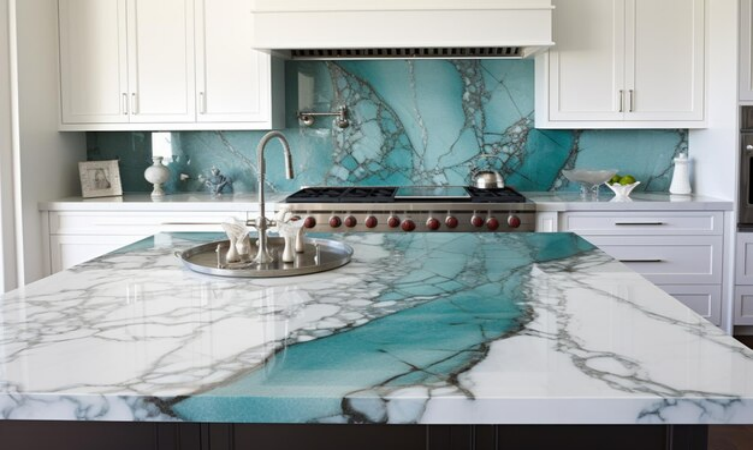
Polished, honed, leathered and other finishes change color depth, reflection, texture and cleaning behavior. Availability depends on the selected material and fabricator. Approve a representative finished sample. Edge shape and build-up should suit the design, slab thickness, fabrication method and areas of concentrated handling.
Coordinate seams, cutouts and support
A fabricator should review slab dimensions, vein direction, handling, support and access before cutting. Locate seams with the cabinet arrangement and pattern in mind. Confirm sink and cooktop cutouts, corner radii, faucet holes, tap clearances, edge distances and any reinforcement required by the proposed fabricator.
- Use templates taken from completed, level and secured cabinets.
- Confirm support at cabinets, overhangs, joints, appliances and openings.
- Avoid changing appliance or sink models after cutout approval.
- Plan lifting paths, temporary protection and site storage before delivery.
Quartzite is not quartz engineered stone
Natural quartzite and engineered quartz are different product categories. Do not infer composition or performance from similar naming. Also avoid assuming that every stone sold as quartzite behaves identically. Use supplier documentation, testing where required and fabricator experience with the exact slab lot.
For comparison with another familiar natural-stone category, see the marble material overview and the practical guide to marble for countertops. The same sample, fabrication and care discipline applies even though the materials differ.

Care and protection
Request the stone supplier’s and sealer manufacturer’s instructions for the approved slab and finish. Test any cleaner or sealer on a sample or inconspicuous area. Wipe spills promptly, use boards and trivets, and avoid abrasive or incompatible chemicals. Sealing needs should be determined from the stone, finish, product and use—not a fixed universal schedule.
What a complete quotation should identify
- Trade name, source information, slab numbers, dimensions, thickness and finish.
- Approved images and samples, reinforcement and disclosed filled or repaired areas.
- Cutting layout, pattern direction, seams, edges, cutouts and support assumptions.
- Templating, fabrication, delivery, installation, protection and acceptance responsibilities.
- Sealer, care documents, repair approach and retained spare material.
For slab review, coordinated shop drawings and a project-specific quotation, contact George House Material.