By George House/26,Dec,2025
Marble for countertops is chosen for natural veining, tactile character and the way each slab makes a surface unique. It also requires informed expectations: marble can etch, stain, scratch or chip depending on the stone, finish, use and care.
A reliable selection process compares actual slabs, coordinates fabrication and support, and records cleaning and maintenance requirements before approval.
Confirm the client’s tolerance for natural variation and everyday marks early, because those expectations influence stone selection, finish, layout and long-term satisfaction.
Decide Where Marble Is Appropriate
| Location | Main Considerations | Approval Focus |
|---|---|---|
| Kitchen worktop | Acidic foods, oils, heat, impact, seams and cleaning | Sample finish, stain/etch expectations and care plan |
| Island or feature counter | Slab size, vein direction, overhang and visible edges | Slab layout drawing and support detail |
| Bathroom vanity | Cosmetics, water, tap holes, basin cutout and sealants | Cutout, edge, splashback and joint coordination |
| Commercial counter | Traffic, cleaning chemicals, hygiene and repair access | Use-specific performance and maintenance acceptance |

(Source)
For project-scale product coordination, begin with the marble product overview and request documents for the exact stone, finish and supplied batch.
Compare the Exact Stone, Not Only the Name
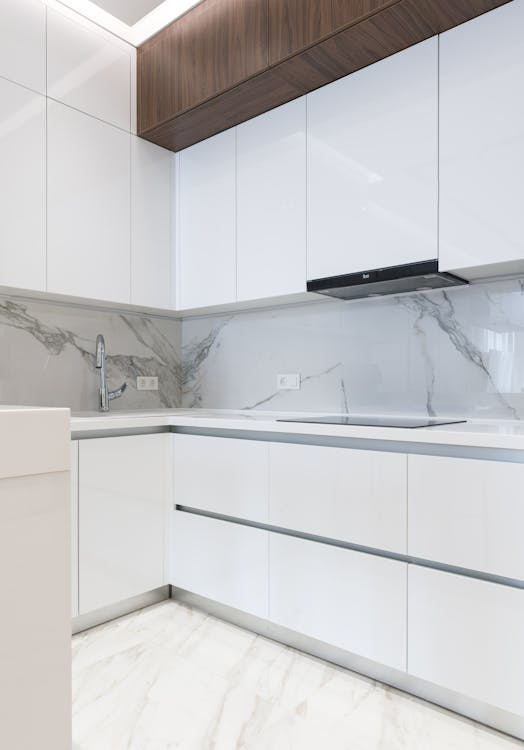
Commercial names may cover stone from different quarries or selection ranges. Color, veining, fissures, resin treatment, absorption and available slab size can vary. Review full slabs or an agreed digital slab inventory and link approved slab numbers to the cutting schedule.
- Source and selection: quarry or supply source, commercial name, grade and available quantity.
- Slab data: length, width, thickness, finish, repairs, mesh or resin treatment.
- Appearance: base color, vein range, inclusions, natural fissures and acceptable variation.
- Use evidence: relevant physical data, stain/etch expectations and supplier limitations.
- Batch control: slab photographs, identification numbers and allocation by room.
The types of stone guide provides a broader framework for comparing stone families, finishes and applications.
(Source)
Choose Finish, Vein Layout and Edge Details
Polished, honed and textured finishes change color depth, reflectivity and how marks appear. Approve a representative sample with the intended finish. For prominent veins, prepare a slab layout showing direction, book-matching where required, seams, cutouts and visible edges.
| Detail | Coordinate | Common Risk |
|---|---|---|
| Edge profile | Radius, build-up, polish and exposed underside | Chipping or inconsistent visual thickness |
| Seams | Location, width, color and vein transition | Unexpected joints across focal areas |
| Sink and hob cutouts | Template, corner radius, support and sealant | Stress concentration or water entry |
| Splashback | Height, outlets, corners and joint alignment | Poor vein continuity or difficult cuts |
| Overhang | Projection, stone thickness and concealed support | Unsupported load and cracking |

(Source)
When marble meets ceramic finishes, use the marble and tile coordination guide to review scale, tone, joints and transitions.
Coordinate Cabinets, Support and Fabrication
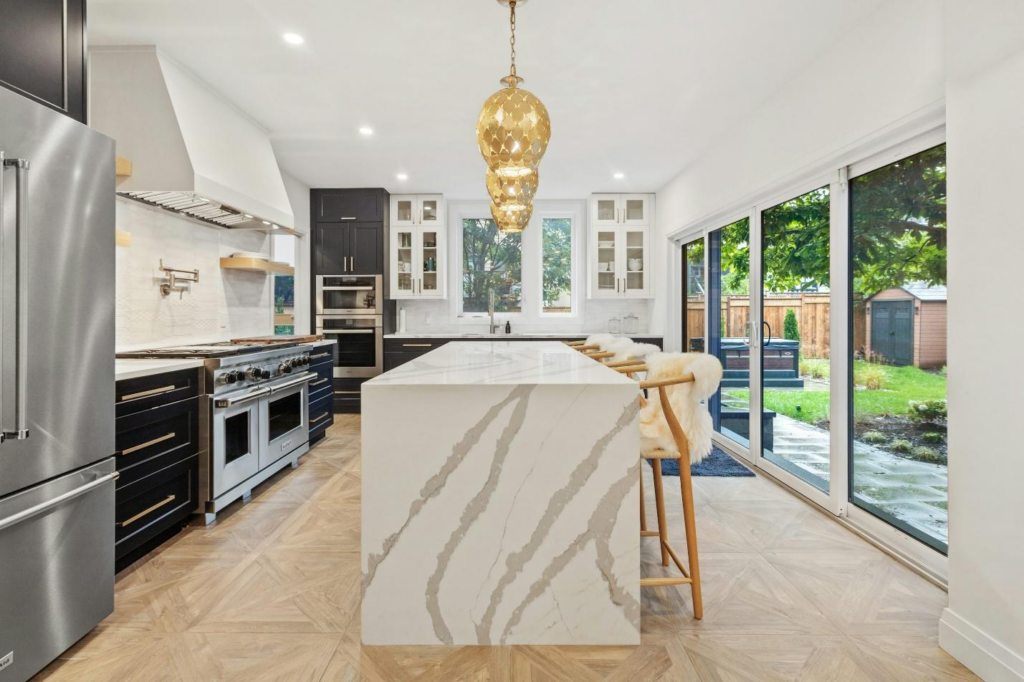
Base units must be level, stable and capable of supporting the selected stone and its overhangs. Verify cabinet dimensions after installation, then release final templates. Do not fabricate from design drawings alone when site dimensions, wall angles, services or appliances can change.
- Freeze cabinet, appliance, sink, tap and service selections.
- Survey installed bases and wall conditions.
- Prepare templates and a numbered cutting layout.
- Review seams, veins, edges, cutouts and reinforcement.
- Approve fabrication drawings and slab allocation.
- Plan lifting, access, protection, installation and final sealing.
Coordinate the stone release with the custom kitchen cabinet design process so cabinet, appliance and countertop dimensions use one approved set.
(Source)
Set Realistic Care Expectations
Sealing may reduce absorption but does not make marble immune to etching, staining or physical damage. Confirm a compatible sealer, application method and renewal guidance for the exact stone. Use pH-appropriate cleaners, wipe spills promptly and protect the surface from cutting, abrasion and concentrated heat.
If the client prioritizes lower sensitivity to acids and simpler routine care, compare the decision criteria with white quartz kitchen countertops while checking heat, seams and manufacturer instructions for the exact product.

(Source)
Marble Countertop RFQ Checklist
- Room schedule, drawings, design intent and measured quantities
- Stone name, source, selection, slab size, thickness and finish
- Approved range for color, veining, fissures, repairs and resin treatment
- Slab photographs, identification numbers and room allocation
- Templates, cutting layout, seams, edge profiles, cutouts and reinforcement
- Cabinet support, overhangs, wall interfaces, appliances and service openings
- Sealer, adhesive, backing, joint and compatible cleaning requirements
- Packing, handling, installation, protection, spares, warranty and care documents
Approve the Slab and the Complete Detail
Marble for countertops works best when the natural material is treated as a variable product, not a uniform catalog image. Approve the actual slabs, fabrication layout, support and maintenance expectations together so the installed surface matches the design and use conditions.