By George House/08,Oct,2025
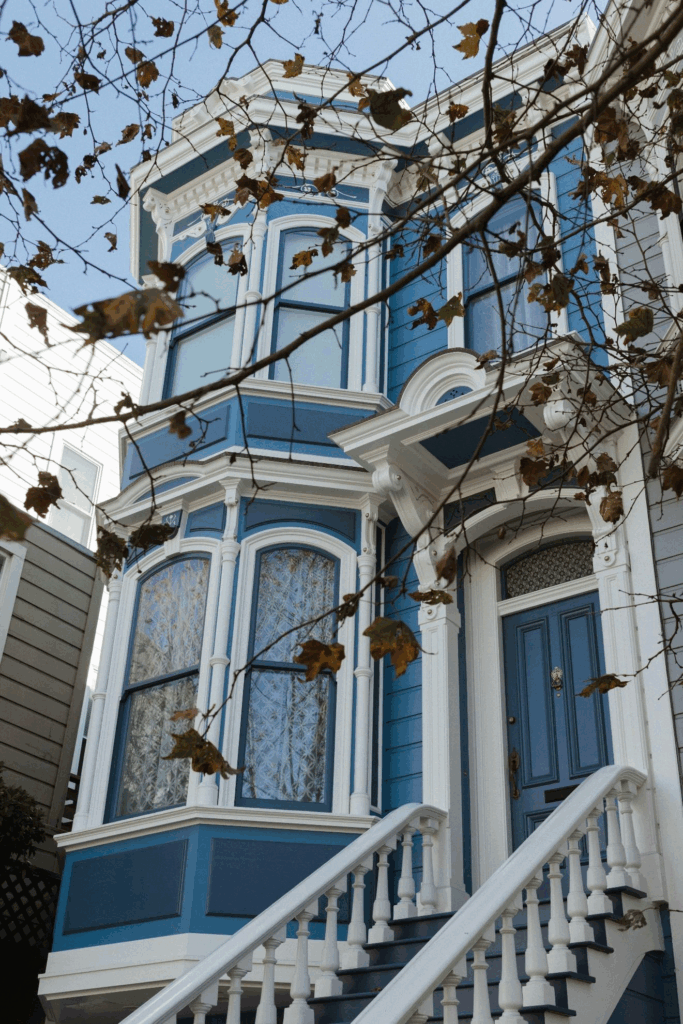
Blue front door colors range from near-black navy to muted gray-blue, clear mid-blue, teal and pale coastal blue. The right choice depends on the door substrate, sun and rain exposure, surrounding brick or siding, trim, roof, paving and visible hardware. A color name or screen image cannot show how the finish will look on the actual elevation.
Start with the fixed exterior materials, shortlist two or three blue families, then test large coated samples vertically beside the door. Approve the exact manufacturer color, sheen and coating system together. This creates a repeatable finish schedule instead of relying on general claims about mood, popularity or property value.
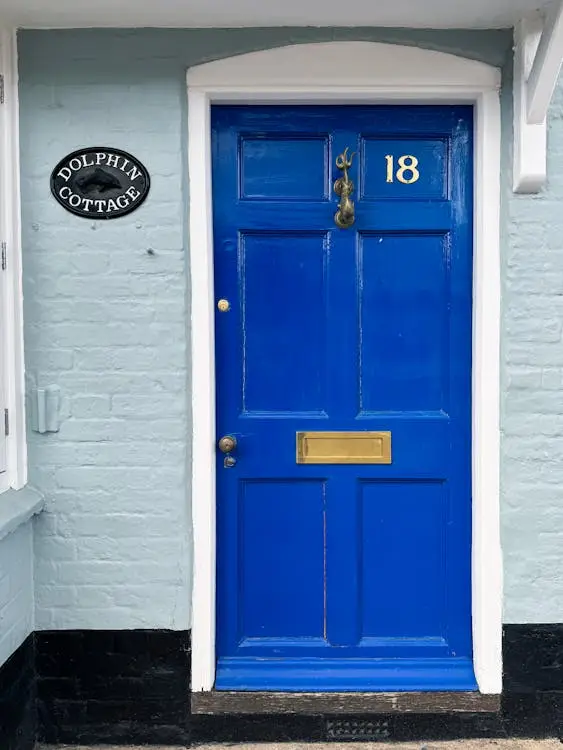
Blue Front Door Shades at a Glance
| Blue family | Undertone and effect | Useful pairings | Exposure check |
|---|---|---|---|
| Deep navy | Dark, restrained blue that can read almost black in shade | White trim, red or brown brick, brass or stainless hardware | Check surface temperature, fading and sheen on sun-exposed doors |
| Gray-blue | Muted blue with less saturation | Cool gray siding, pale stone, charcoal accents | Confirm it remains visibly blue under overcast light |
| Clear mid-blue | More saturated and noticeable from the street | White, light gray, neutral render and simple metalwork | View at distance and beside the roof and paving |
| Teal or blue-green | Green undertone with a stronger color statement | Warm timber, cream, sand-colored stone and aged brass | Compare carefully with landscaping and green-tinted glass |
| Pale blue | Soft, light-reflective finish | White trim, weathered wood and light neutral facades | Check that bright daylight does not wash out the color |
(Source)
Choose the Blue on the Actual Elevation
Daylight and Orientation
Direct sun, shade, reflected light and entry depth change perceived color. Place each sample in the same plane as the door and view it in the morning, midday and late afternoon. If the door sits behind a porch, test it inside that shade rather than on an exposed wall.
Fixed Exterior Materials
Bring brick, stone, render, siding, roof, trim and paving into the decision. Identify whether those materials read warm, cool or neutral. The door can contrast with the facade, but the undertones should still look intentional. Review the exterior door material and exposure guide before specifying the coating.
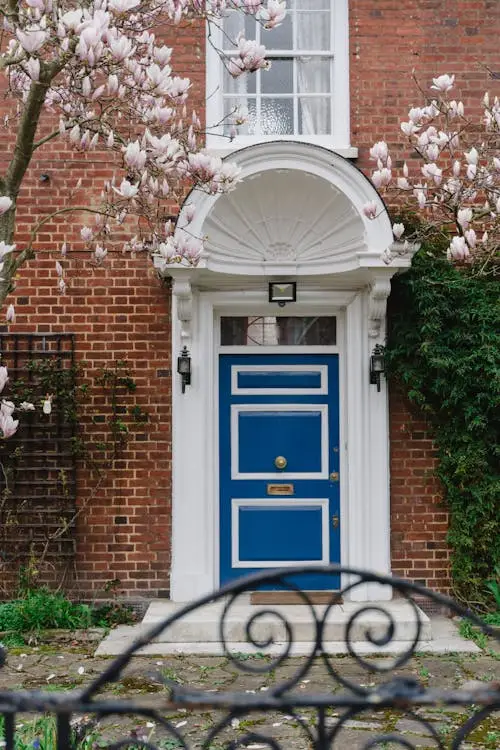
Blue Door Color Pairings
(Source)
Blue and White
White trim creates a clear edge around navy, mid-blue and many pale blues. Compare the white undertone with the facade and door; a very cool white can exaggerate green or gray in the blue. Record whether the frame, sidelight, transom and threshold receive the trim color or the door color.
Blue and Gray
Gray-blue doors can create a quiet transition on gray siding, while a clearer or darker blue gives stronger contrast. Test the two colors side by side because a blue that is too close in value can disappear, and competing undertones can look accidental.
Blue with Brick, Stone or Wood
Navy and muted blue often work with red, brown or buff brick because the door provides a controlled contrast. Teal can complement warm timber, but the wood species and coating change over time. View both fresh and weathered finish references where appearance over time matters.
For comparison with other color families, see the completed guides to green front door shades, yellow front door colors and black front door finishes. Keep the final selection tied to the same elevation and sample process.
Specify the Door Substrate and Coating System
Paint performance depends on the substrate and preparation. Timber, steel, aluminum, fiberglass and previously coated doors need different cleaning, repair, primer and topcoat systems. Follow the door and coating manufacturer’s instructions, especially for factory finishes and warranty conditions.
Record coastal salt, strong UV, driving rain, freeze-thaw exposure and the amount of shelter. Dark colors can reach higher surface temperatures in direct sun, and some door manufacturers restrict dark finishes on certain products. Confirm permitted colors and coatings for the exact door rather than relying on a universal repaint interval.
Coordinate Sheen, Glazing and Hardware
Higher sheen can emphasize panel profiles and improve wipeability, but it also reveals surface defects. Lower sheen gives a quieter appearance but may show handling or cleaning marks depending on the product. Approve sheen on a sample prepared over the same substrate and texture.
Place the sample beside the selected handle, escutcheon, hinges, kick plate, mail slot and lighting. Brass can warm a navy door; black hardware creates a stronger graphic contrast; stainless finishes may suit cooler blues. Also verify hardware function, corrosion class and compatibility instead of choosing by color alone.
Preparation, Application and Care
(Source)
- Identify the substrate, existing coating and any damage or corrosion.
- Remove or mask hardware, glazing seals and weather strips as required.
- Clean, abrade, repair and prime according to the specified system.
- Apply the stated number of coats within the temperature and drying limits.
- Inspect edges, panel recesses, the top and bottom of timber doors, and contact points.
- Allow the coating to cure before seals and hardware can mark the finish.
- Clean with products approved by the coating manufacturer and inspect exposure damage periodically.
Blue Front Door Finish Schedule Checklist
- Door mark, material, construction and factory finish
- Blue color manufacturer, code and approved sample
- Primer, intermediate and topcoat products
- Sheen, texture and acceptable color variation
- Faces, edges, frame, glazing beads and trim finish boundaries
- Exposure, preparation and application conditions
- Hardware, seal and threshold coordination
- Cleaning, touch-up material and maintenance guidance
Blue Front Door Color FAQ
What Is the Best Blue for a Front Door?
There is no universal best blue. Select it against the facade, trim, roof, paving, light and exposure. A large vertical sample on the actual entrance gives the most useful evidence.
How Often Should a Blue Door Be Repainted?
Use the coating manufacturer’s maintenance guidance and inspect the finish. Exposure, substrate, preparation, color, film build and use can change the service interval, so a fixed number of years is not reliable.
Approve Color and Coating as One System
Choose the blue from the completed elevation, then record the substrate, preparation, coating, sheen, hardware and maintenance requirements. The project windows and doors overview can help coordinate the entrance with the wider opening package.