By George House/10,Jan,2026
Green kitchen cabinets can make a kitchen feel calm, natural or dramatic, depending on the shade and surrounding materials. The color name alone is not enough for a reliable decision. Undertone, sheen, cabinet construction, daylight, artificial lighting, countertops, flooring and hardware all affect the finished result.
Start with the complete kitchen design and cabinet layout. Approving the elevation, door style, appliance positions and material palette before selecting the final green reduces conflicts and makes the color easier to judge.
Compare dark, light and sage green cabinets
Dark green
Forest, bottle and deep olive tones create strong visual weight. They often work well on lower cabinets, an island or a tall-unit wall where lighter surfaces can balance the composition. In a compact or poorly lit room, a dark finish may need lighter upper cabinets, reflective worktops or a carefully planned lighting scheme.
Light green
Mint, pale eucalyptus and soft gray-green finishes can make the cabinetry feel lighter. Their undertones become more obvious beside white stone, warm timber or cool gray flooring. A small color chip may appear different across a full bank of doors, so review a larger vertical sample under the actual room lighting.
Sage green
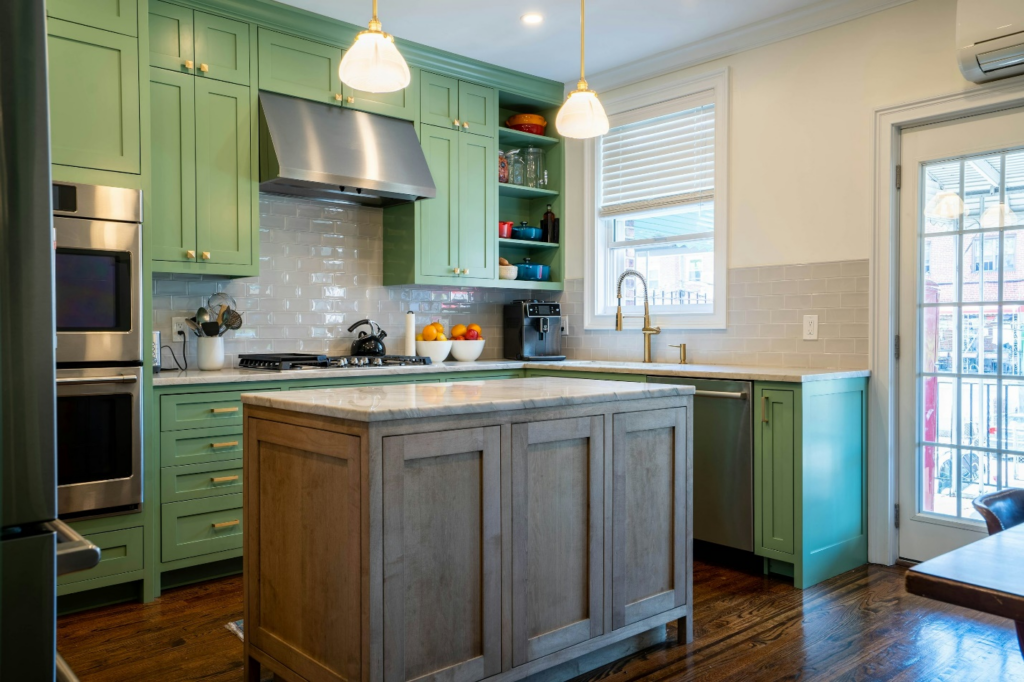
Sage sits between green and gray and can coordinate with both warm and cool materials. Some samples lean yellow beside a cool white, while others read almost gray beside oak or brass. Compare several coded samples rather than relying on the word sage, then retain the approved sample as the production reference.
(Source)
Choose the finish and cabinet construction together
Painted finishes
Paint provides controlled color across doors, end panels and fillers, but the finished appearance depends on the substrate, primer, coating build-up, edge treatment and curing process. Ask how the finish is applied and how later touch-ups or replacement fronts will be matched. A signed door sample is more useful than a loose paint swatch.
Stained or wood-grain finishes
A green stain or translucent coating allows natural or printed grain to remain visible. Variation may be part of the intended appearance, especially on real veneer or solid wood. Approve the acceptable range, grain direction and panel matching before production. If natural timber is part of the palette, examples of light wood kitchen cabinets can help define where wood and green should meet.
Matte, satin and gloss
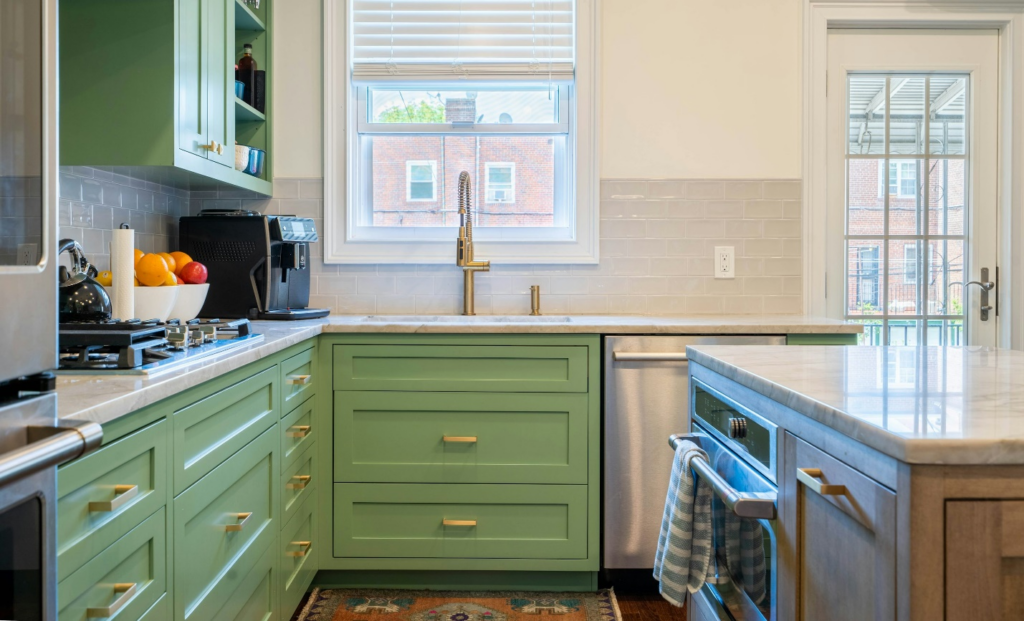
Matte and low-sheen surfaces soften reflections, while gloss increases reflection and makes surface waviness, fingerprints or repair differences easier to notice. The best choice depends on the coating system and maintenance expectations. Review the finish under both daylight and the proposed task lighting.
(Source)
Coordinate counters, backsplashes and hardware
Light neutral counters create clear contrast with deep green. Warm white, beige and timber can soften the palette, while gray or black surfaces make it more graphic. Veined stone introduces movement, so review the slab or an adequate representation of it beside the cabinet sample. The kitchen cabinet color guide provides a broader method for comparing undertones and adjacent finishes.
Hardware can change the character of the same green. Brushed brass adds warmth, nickel connects with many appliances, and black creates a quieter outline. Confirm finish, handle length, projection, drilling centers and placement on a representative door. Compare a darker reference such as navy blue kitchen cabinets when deciding whether the room needs green as the main color or a deeper accent.
Plan where the green should appear
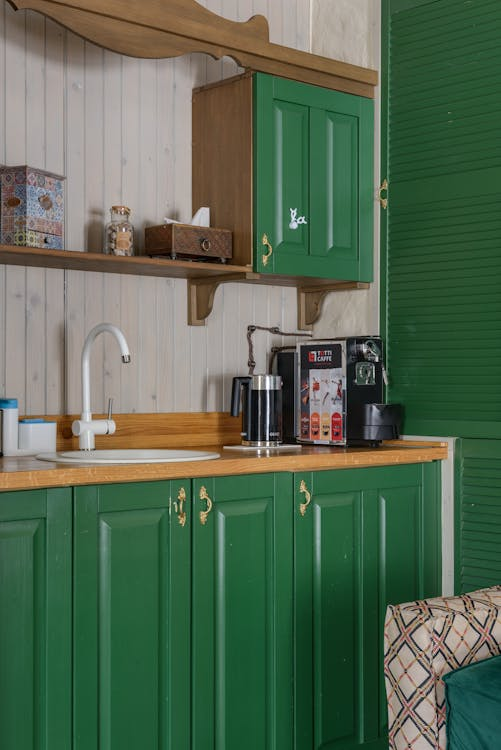
Using one green across all cabinets creates continuity, but it is not the only option. Green lower cabinets with light uppers can reduce visual weight. A green island can act as a controlled focal point. Tall cabinets in green may frame an appliance or doorway, while open shelves in timber can break up a large colored wall. Check these options on a full elevation rather than selecting each unit separately.
(Source)
Approval checklist
| Decision | What to record |
|---|---|
| Color | Manufacturer code and signed physical sample |
| Finish | Sheen, texture, coating system and approved cleaning method |
| Construction | Door style, substrate, edge treatment and exposed end panels |
| Interfaces | Counter, splash, floor, appliance, wall and lighting coordination |
| Hardware | Finish, size, fixing centers, location and collision clearance |
| Handover | Touch-up method, replacement-front process and retained sample |
Approve one full-size door and, where possible, a small assembled corner showing an end panel, internal finish and hardware. During installation, protect the fronts from stone cutting, paint, adhesives and metal swarf. Check the first completed run for color consistency, gaps, handle alignment and reflections before the same detail is repeated.
Final selection guidance
Green cabinets work best as part of a coordinated material board. Resolve the shade, sheen, construction, lighting and adjacent surfaces before production, then keep the approved sample available for inspection. For a project-specific schedule, sample set or quotation, share the kitchen drawings and finish references for review.