By George House/25,Mar,2026
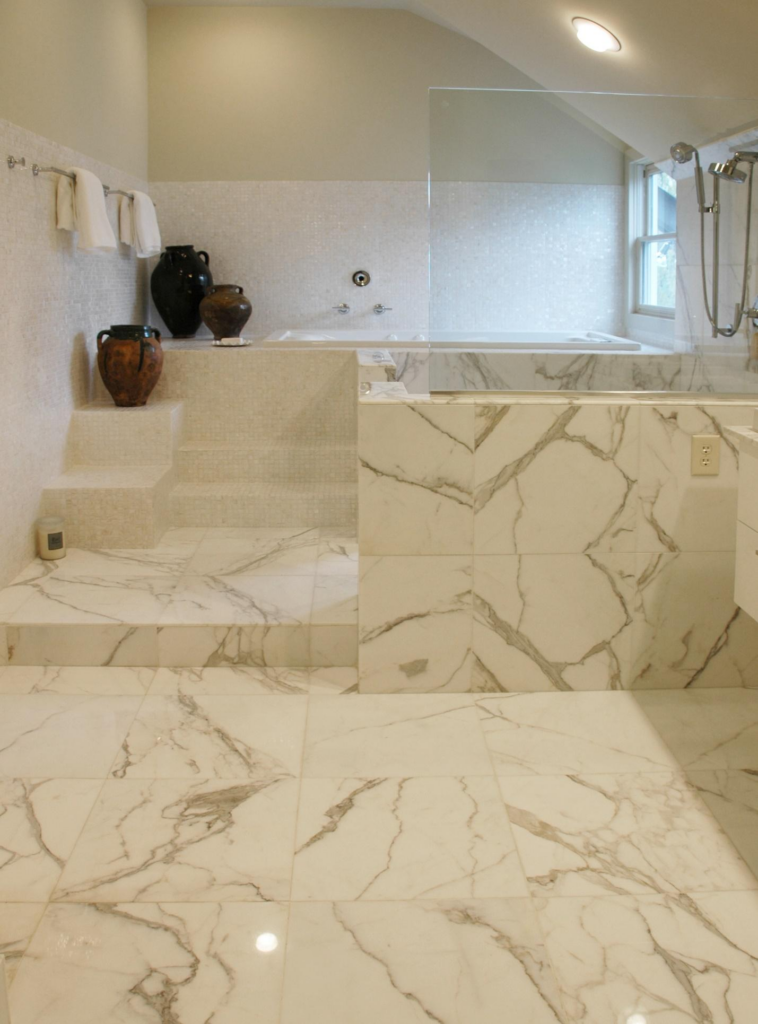
Calacatta marble is selected for its light background and expressive gray, gold or brown veining. Because it is natural stone, no name or small sample guarantees one uniform appearance. A reliable specification identifies the actual slabs, finish, thickness, vein layout, fabrication details and acceptable variation before cutting begins.
Start with the broader marble project guide to coordinate slab selection, shop drawings and fabrication. If several materials are under consideration, the types of stone guide helps compare appearance and practical project requirements without treating every stone as equivalent.
Confirm what material is being offered
Calacatta is used in the market for multiple natural-marble selections and is also referenced in the names of quartz, porcelain and sintered-stone designs. Ask whether the offered material is natural marble, its quarry or supplier designation, slab dimensions, batch or block references and available quantity. Lookalike products may have different joints, edge details, heat limits, repair methods and care requirements.
Review high-resolution slab photographs only as a first step. Color can shift with cameras and screens, while resin, mesh backing, filled areas, fissures and surface finish may be difficult to judge remotely. Inspect the slabs in person or use a controlled approval record that identifies every slab by number and confirms which natural features are accepted.
Evaluate variation, finish and thickness
Compare the background color, vein width, vein direction, tonal areas and contrast across the full slab set. Decide whether variation should be mixed, grouped by room or reserved for focal pieces. A polished finish increases reflection and color depth; a honed or textured finish changes the visual effect and can respond differently to handling and use.
Specify nominal and actual thickness, dimensional tolerances and any resin treatment or backing. Mesh-backed slabs may require fabrication and adhesive methods compatible with that construction. Obtain the fabricator’s guidance for large cut-outs, narrow rails, long overhangs, edge build-ups and reinforcement.

Plan the vein layout before fabrication
Use slab-layout drawings or digital templates to position the most visible veins, cut-outs, edges and seams. For bookmatched walls, confirm the intended mirror sequence and whether neighboring slabs truly support it. For islands and worktops, show sink and hob locations, tap holes, joints, end panels and waterfall returns on the same layout.
Countertop requirements deserve specific review. The marble countertop guide covers selection and care considerations for working surfaces. Seam locations should reflect slab size, access, support, handling limits and the fabricator’s method, not only the pattern.
Coordinate substrate, handling and installation
- Verify base cabinets, walls or floors are stable, level and ready for the specified system.
- Confirm lifting paths, crate sizes, site access and temporary support before delivery.
- Approve adhesive, grout, sealant and anchoring products for the stone and exposure.
- Protect finished edges and faces from metal swarf, mortar, paint and standing water.
- Inspect the dry layout and critical joints before irreversible fixing where practical.

Set realistic use and care expectations
Natural marble can be affected by acidic substances, abrasive contact, staining materials and unsuitable cleaners. A sealer may reduce absorption for some stones and exposures, but it does not make marble impervious to stains, scratching or acid etching. Follow the stone supplier, sealer manufacturer and fabricator instructions for preparation, application and renewal decisions.
Use neutral, compatible products and address spills promptly according to the approved care sheet. Test an unfamiliar cleaner on a spare sample. The surface care guide explains why maintenance must follow the actual material rather than a universal household remedy.
Agree how completed work will be inspected. Review background tone, vein continuity, joint width, edge quality, cut-out corners, polish consistency, lippage and protection under suitable lighting. Natural features accepted during slab approval should not be confused with fabrication defects, so the signed slab record and layout drawing need to be available at inspection.
Store spare pieces with the slab identifier and orientation marked. Offcuts may help with future repairs, color comparison or testing a maintenance product, although a seamless match cannot be assumed because natural variation continues across the stone.
| Approval stage | What to record |
|---|---|
| Material | Natural or manufactured product, supplier name and slab or batch IDs |
| Appearance | Accepted range, finish, vein direction and focal areas |
| Fabrication | Thickness, edges, cut-outs, reinforcement, seams and layout drawing |
| Installation | Substrate, support, fixing materials, joints and protection |
| Handover | Care sheet, sealer record if used, spare pieces and repair contact |
Final selection guidance
Choose Calacatta marble from the slabs and fabrication plan, not from the name alone. When the material identity, variation, layout, supports and care expectations are approved together, the finished work is easier to evaluate. For slab options, layout coordination or a project quotation, share the drawings, quantities and finish references for review.