By George House/24,Oct,2025
Tile, marble and wood surfaces need different cleaning and maintenance methods. A product that is safe for glazed porcelain may damage polished stone or a coated timber surface. The most reliable approach is to identify the material and finish, follow the supplier’s care instructions and record what has been used.
This guide covers routine tile surface maintenance together, marble care, grout cleaning and finished wood protection. Always test a new cleaner in a small concealed area and keep the product label and project handover information available.
(Source)
Identify the material and finish
Confirm whether the surface is natural stone, glazed ceramic, porcelain, cement-based tile, engineered stone, sealed timber, lacquered veneer or laminate. Also identify the grout, sealant and coating. Appearance alone is not enough: two similar surfaces can react differently to moisture, acids, solvents, heat or abrasion.
Keep a simple finish register with the room, product name, finish code, supplier, approved cleaner and repair contact. This is especially useful when the same project includes polished marble, textured bathroom tile and wood cabinetry.
Caring for marble and natural stone
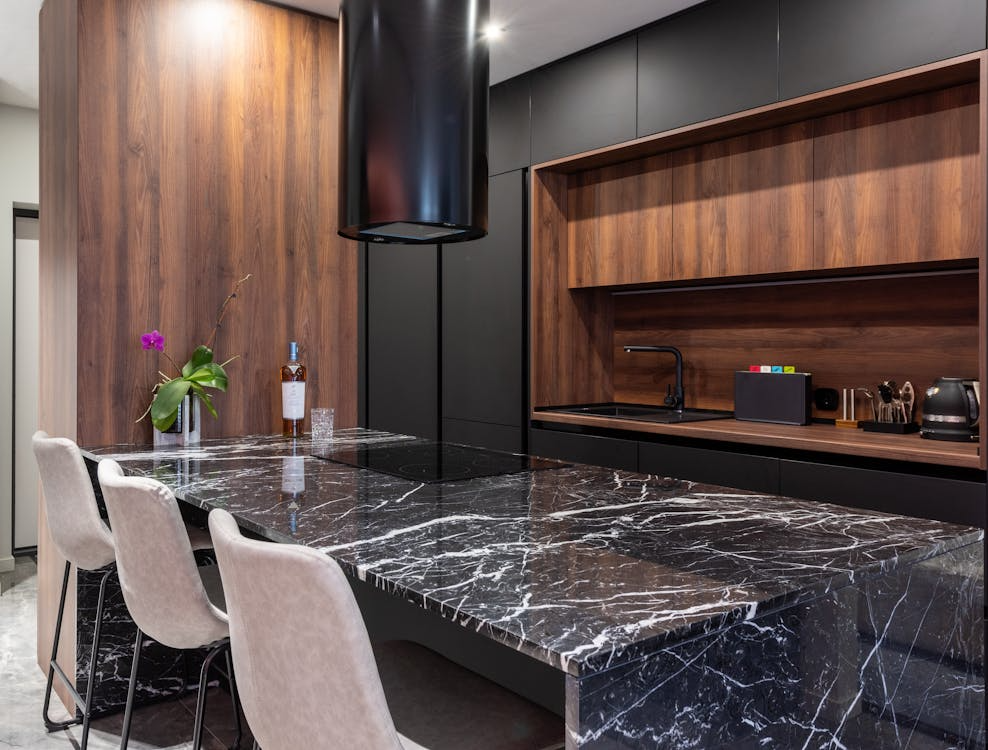
Marble can be sensitive to acidic products. Blot spills promptly, remove loose grit with a clean soft tool, and use a cleaner approved for the specific stone and finish. Avoid assuming that vinegar, lemon or a general limescale remover is suitable. Etching, staining and scratching are different problems and may require different remedies.
Sealer need and renewal interval depend on the stone, finish, product and exposure. Do not reseal only because a fixed calendar period has passed. Inspect performance and follow the installer or sealer manufacturer’s guidance. The marble countertop guide explains how selection, finish and care relate.
Cleaning tile and grout
Begin with dry soil removal so grit is not dragged across the surface. Use the cleaner concentration, contact time and rinse method specified for the tile and grout. Textured tiles may need a soft brush, while polished or coated surfaces can require gentler tools. Do not use abrasive pads without confirming compatibility.
Grout and sealant joints should be inspected for staining, cracking, debonding and water paths. Persistent discoloration may indicate trapped moisture or a failed joint rather than a cleaning problem. In wet rooms, the selection principles in the bathroom floor tile guide help distinguish surface texture, joint layout and maintenance access.
Wood-look porcelain is maintained as tile, not as timber. Review the tile body, surface texture and grout rather than using wood oil or polish. See the wood-look tile guide for layout and material-selection details.

(Source)
Protecting finished wood surfaces
Use a soft dry or lightly damp cloth where the finish supplier permits it, then remove residual moisture. Avoid soaking joints, edges and cutouts. Heat, standing water, harsh solvents and abrasive cleaners can damage many coatings. The correct method depends on whether the surface is painted, lacquered, oiled, veneered or laminated.
Cabinet doors and end panels also need alignment and edge checks. Water around sinks, kettles or dishwashers can enter damaged edges. The wood kitchen cabinet guide provides more context on substrates, veneer, solid wood and finishes.
Common maintenance errors
- Using one cleaner on stone, tile, grout, sealant and wood without checking compatibility.
- Applying vinegar, lemon, strong alkali or solvent-based products as universal remedies.
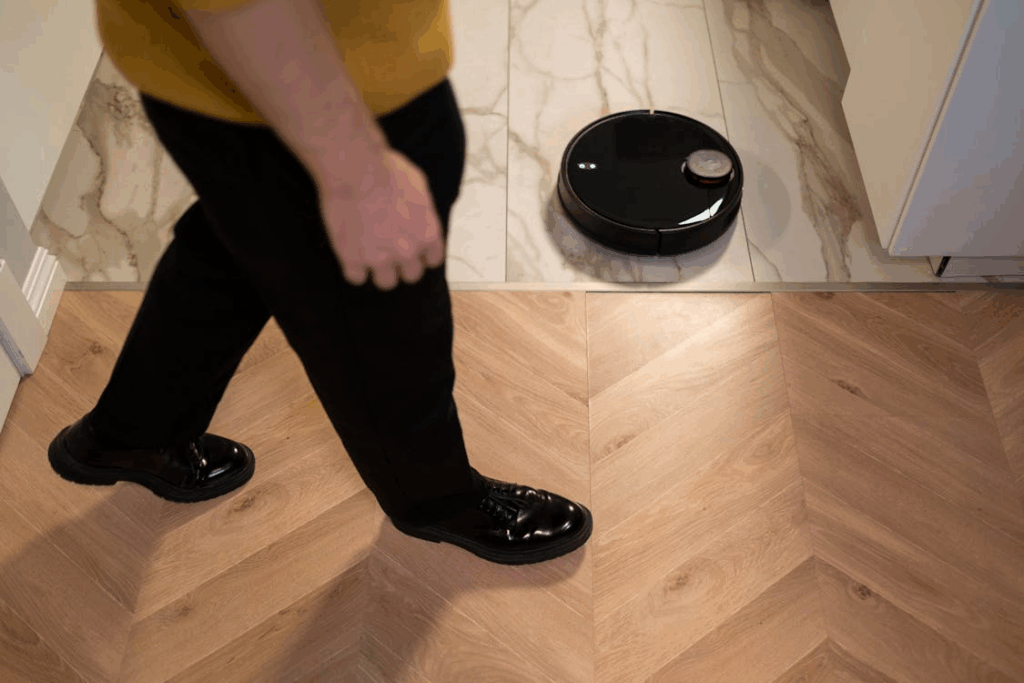
- Leaving grit on the floor before wet cleaning or using a contaminated mop across materials.
- Flooding wood edges, cabinet joints or damaged grout lines with water.
- Polishing over stains, etching or coating failure before identifying the defect.
- Following a fixed resealing or polishing interval without checking the product and exposure.
(Source)
Create a practical inspection schedule
| Surface | Routine check | Escalate when |
|---|---|---|
| Marble or stone | Spills, grit, etching, stains and joint condition | Damage remains after approved cleaning or the finish changes |
| Tile | Loose soil, chips, surface residue and slip-sensitive areas | Tiles crack, move or sound loose |
| Grout and sealant | Cracks, gaps, staining and moisture paths | Joints fail repeatedly or water enters adjacent construction |
| Finished wood | Water marks, coating wear, edge swelling and scratches | Coating lifts, veneer releases or edges swell |
Record the defect location, date, cleaner used and result. Photographs help distinguish recurring damage from a one-time spill. Stop aggressive cleaning when the material is uncertain or the damage is increasing, then ask the supplier or a suitable restoration specialist to inspect it.
Final care guidance
Good surface care starts with correct identification and compatible products. Remove loose grit, respond to spills, protect vulnerable edges and joints, and repair defects based on the material rather than a universal remedy. For project-specific care schedules or finish documentation, share the material list and affected areas for review.