Different types of cabinet hinge suit different door positions, opening angles, loads and adjustment needs. A hinge should be selected from the cabinet construction and door specification, then recorded as part of the complete hardware schedule.
Define the Cabinet Door Condition
Confirm whether the door is full overlay, half overlay, inset, face-frame or frameless. Record door thickness, dimensions, weight, edge profile and required opening angle before choosing a hinge.
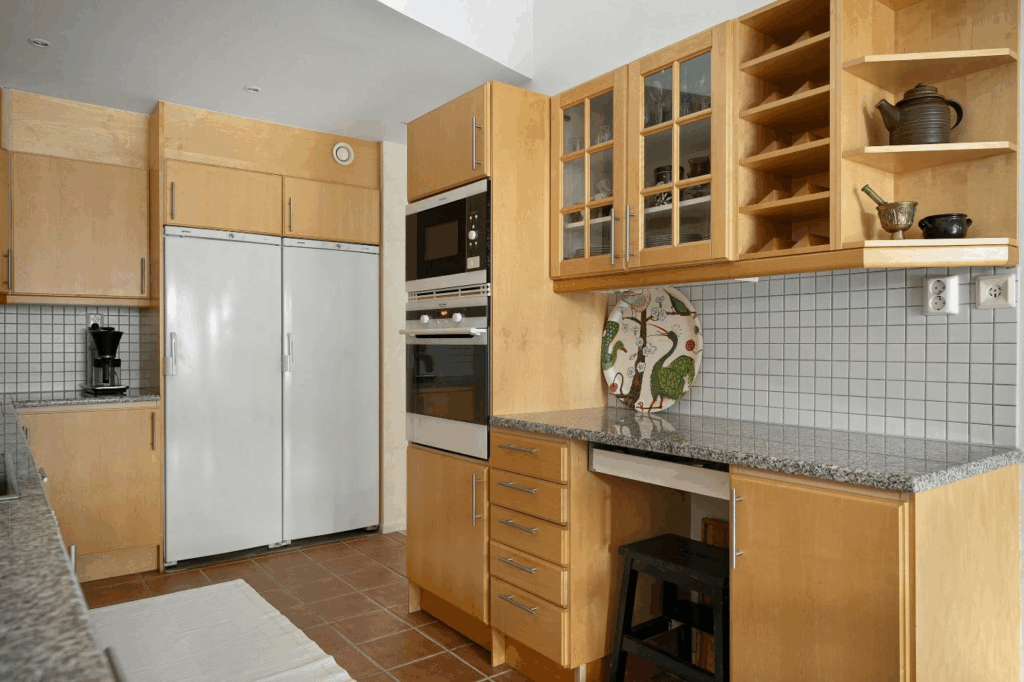
Compare Concealed European Hinges
Concealed hinges are widely used on modern cabinets and often provide multi-direction adjustment. Match the hinge cup, mounting plate, overlay geometry and drilling pattern to the cabinet system.
Review Butt and Surface-Mounted Hinges
Butt, strap and decorative surface hinges may remain visible and can suit traditional or special cabinet details. Confirm leaf dimensions, recesses, fixing positions and finish on the shop drawing.
Choose Overlay or Inset Geometry
Overlay Doors
Overlay hinges must match how far the door covers the cabinet side or partition. Adjacent doors require coordinated gaps and mounting plates.
Inset Doors
Inset doors sit within the opening and need controlled reveals. Verify the hinge movement against face frames, shelves and interior fittings.
Set the Required Opening Angle
Standard, wide-angle and restricted-opening hinges serve different layouts. Check doors beside walls, appliances and pull-out fittings so handles and fronts do not collide.
Confirm Load and Hinge Quantity
Use supplier data for the door size, weight and intended use. Do not apply a universal hinge count; tall, heavy or unusual doors require a verified schedule.
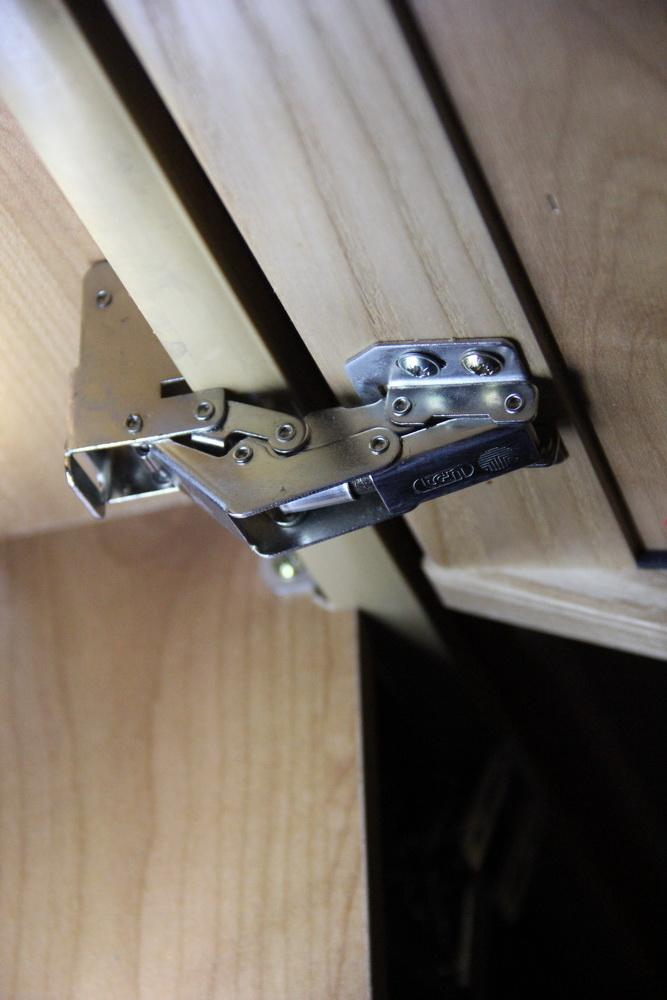
Specify Closing and Opening Features
Soft-close, self-close, push-to-open and free-swing functions affect operation and compatibility with handles or latches. Confirm the complete arrangement on a sample cabinet.
Coordinate the Hinge Finish
Record the material and finish where hardware is visible or exposed to moisture. Verify supplier care guidance and compatibility with adjacent screws and plates.
Prepare the Drilling and Hardware Schedule
Show cup diameter, setback, fixing pattern, mounting plate and hinge positions. Coordinate the schedule with the kitchen cabinet design guide and the Shaker cabinet guide.
Test a Representative Cabinet
Approve a sample door and cabinet with the specified hinge, handle and internal fittings. Check gaps, alignment, adjustment, opening clearance, closing action and access for future replacement.
Build the Cabinet Hardware RFQ
- Cabinet and door drawings
- Door material, dimensions and weight
- Hinge type, angle and closing function
- Mounting plates, screws and drilling data
- Finish and environmental conditions
- Samples, spares and packaging
Final Hinge Selection Check
Select cabinet hinges as part of the complete joinery system. Review related cabinet scope through the kitchen design category, corner cabinet guide and walk-in closet guide.