Wood look tile gives a room a timber-inspired appearance on a ceramic or porcelain surface. Its strongest appeal is the combination of a wood grain visual and a tile-based cleaning routine. The tradeoffs are equally practical: a hard surface underfoot, grout to maintain, product-specific wet-use limits and an installation that may require substantial preparation.
The right decision depends on how the room feels and functions. Start with barefoot comfort, daily dirt, water exposure and the existing floor construction. A convincing grain pattern does not resolve those conditions, and a bathroom photograph does not establish that a particular tile is suitable for your shower.
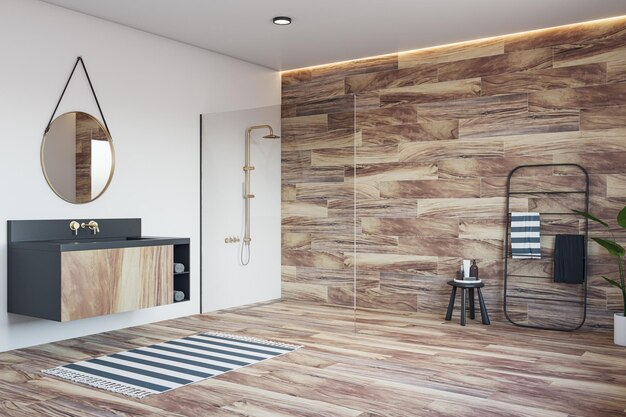
Understand What the Wood Look Describes
Wood look describes the surface design, not the tile’s performance classification. Ceramic and porcelain products can both carry a wood grain visual. Vinyl plank can also imitate wood, but it belongs to a different flooring category. The products are not interchangeable merely because their photographs look similar.
The Tile Council of North America explains the porcelain classification using a water absorption limit of 0.5 percent or less under ASTM C373. That describes the tile body; it does not establish the grip, waterproofing or frost suitability of a finished floor. Read the exact product’s declared use and instructions.
Use this article to decide whether the material’s tradeoffs suit your room. Once it remains a candidate, the separate wood look tile types and layout guide covers plank proportions, product data, layout and selection in more detail.
Compare the Advantages With Their Limits
| Your priority | Potential advantage | Limit to accept or check |
|---|---|---|
| Timber-inspired appearance | Grain and tone can coordinate adjoining spaces. | Printed repeats, texture and grout remain visible. Inspect several pieces together. |
| Routine floor cleaning | A suitable tile finish can support a practical sweep and clean routine. | Grout and pronounced texture need attention. Follow compatible care instructions. |
| Rooms exposed to splashes | A product approved for the intended use can be considered. | The tile face does not replace waterproofing, drainage or wet-use evidence. |
| A firm walking surface | Tile offers a rigid surface rather than a cushioned one. | Hardness can be a drawback for barefoot use, extended standing or dropped objects. |
| Keeping the same surface design | The grain visual does not require timber refinishing. | Tile is not sanded back to fresh wood. Damage may require a localized replacement. |
| Updating an existing room | A wood visual may coordinate with retained doors and cabinetry. | Substrate preparation, finished height and transitions can outweigh the visual benefit. |
These are reasons to evaluate an actual product, rather than promises for every wood look tile. The same surface can be acceptable in one room and inconvenient in another. A household that prioritizes barefoot softness may reject it even when its color and cleaning routine fit the brief.
Judge Foot Feel and Sound Before Appearance
Hardness and Barefoot Comfort
Tile is a hard surface. Consider where you stand for long periods, where children play on the floor and whether you normally walk barefoot. A rug or standing mat may address a particular area, but its cleaning, edges and placement become part of the room plan.
Tile can feel cool underfoot; the actual sensation depends on the room, floor temperature and heating arrangement. A warm-looking grain does not create a warm-feeling floor. If underfloor heating is proposed, have the tile, adhesive, grout, substrate and heating-system requirements checked together. Do not assume that every assembly is compatible.
Sound Depends on the Whole Floor
For an apartment or upper floor, distinguish sound within the room from impact sound transmitted below it. The tile label alone cannot predict either outcome. Ask the project team to check the complete floor construction and any building acoustic requirement before choosing the finish. An unspecified underlay should not be treated as a guaranteed solution.
If soft foot feel or sound control is the main reason for changing the floor, compare other candidates through the broader flooring options guide before committing to the wood visual.
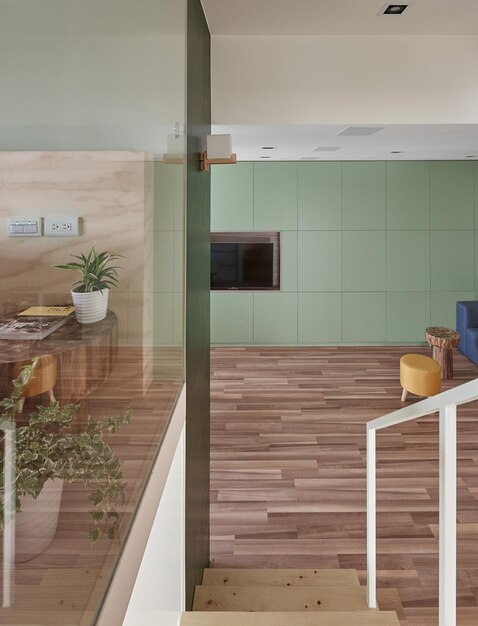
Include Grout and Texture in the Cleaning Decision
Wood look tile is not maintenance-free. A realistic grain texture may be appealing while also changing how easily dirt can be removed. Grout lines add another surface with its own cleaning needs. Before approving a finish, ask to assess a representative tile and grout combination using the manufacturer’s permitted cleaning method.
Routine care should remove loose grit before wet cleaning, use a cleaner compatible with both tile and grout, and avoid leaving residue. Daltile’s ceramic and porcelain care guidance also notes that these surfaces are not damage-proof. Use the care instructions for the product actually supplied; another manufacturer’s guide is not its warranty.
In an entrance, think about tracked-in grit. In a kitchen, think about grease and food spills. In a bathroom, think about soap residue. Select a surface you can keep clean under those conditions rather than relying on a dark color to hide dirt. A concealed spill still needs cleaning.
Confirm whether the selected grout or tile finish requires sealing, what cleaners are permitted and how damaged joints should be repaired. Do not apply a blanket rule that all porcelain or all grout must be sealed. Narrow-looking joints still need to comply with the product and installation requirements.
Check Wet Areas as a Complete System
Water Exposure and Slip Conditions
A dry bathroom area, a shower floor and an uncovered terrace present different conditions. Ask for the exact product’s intended-use declaration and relevant slip information. TCNA’s guidance on dynamic coefficient of friction explains that a test result is only one factor in slip assessment. Water, contaminants, footwear, drainage and maintenance also matter.
Neither a wood grain texture nor a matte label establishes suitability for every wet location. Avoid treating a single number as a guarantee that nobody will slip. Where water or grease is expected, the proposed finish and the cleaning plan need to match the actual use.
Waterproofing and Drainage
Low tile-body absorption does not make the room waterproof. Schluter explains why tile and grout do not replace a shower waterproofing system. The project must resolve the membrane, connections, penetrations and drainage beneath and around the finish.
A long plank format may also complicate a shower floor that must fall toward a drain. Have the designer or installer confirm how the pieces fit the slope and drain arrangement. Use the bathroom floor tile guide for the wet-zone planning questions; an adjoining dry floor does not automatically qualify the same format for the shower.
For exterior use, obtain explicit approval for the location, including its weather and freeze exposure where relevant. Do not extend an indoor product’s claims to a terrace simply because it is described as porcelain.
Resolve Renovation Limits Before Ordering
A replacement floor changes more than the visible surface. Review the existing base, the proposed floor build-up and the finished levels at doors, cabinets, appliances and adjoining rooms. A thin-looking tile sample does not represent the total installed thickness.
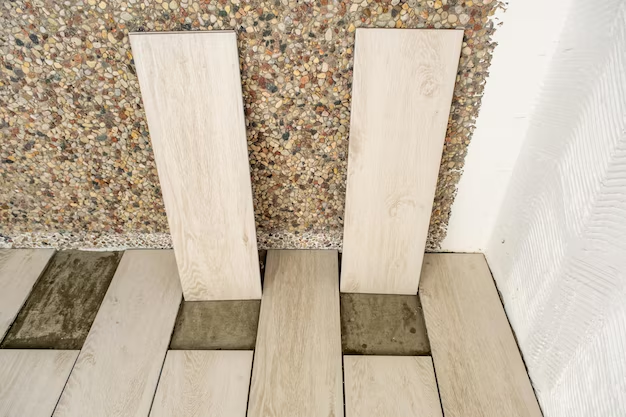
Ask the installer to assess flatness, movement, cracks, moisture conditions and the suitability of the existing layers for the proposed assembly. Covering an old floor should be an assessed option, not the default. Removal, repair or a different finish may be necessary when the base cannot support the intended installation.
Long planks can make an uneven base particularly noticeable at their edges. The large format tile guide provides the broader preparation and installation questions. Use the exact tile and setting-system instructions for decisions about joints, layout and permissible substrate conditions.
For a renovation budget, compare complete scopes: removal, preparation, any required waterproofing, setting materials, labor, transitions and disposal as well as the tile. A low material price does not establish a lower installed cost. Retain agreed spare pieces for possible repairs, while recognizing that replacement access and visual matching may still be difficult.
Know When Another Material Deserves a Comparison
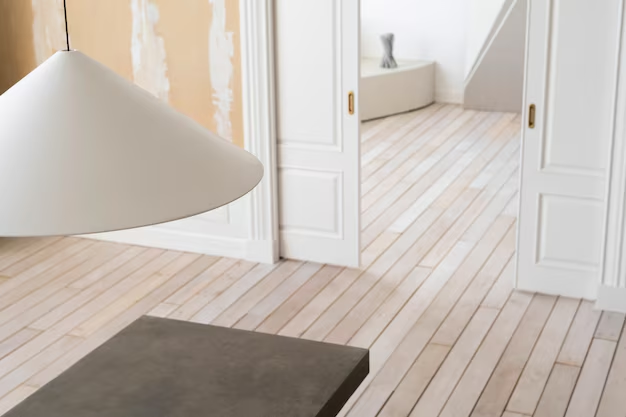
Compare alternatives against the reason you want wood look tile, rather than assuming that tile wins every category. A different material can be the better candidate when its comfort, repair method or installation requirements suit your room more closely.
| Alternative | Reason to compare it | Question for the actual product |
|---|---|---|
| Solid or engineered wood | Natural grain, tactile preference or future refinishing may be priorities. | What moisture conditions, finish care and refinishing limits apply to this construction? |
| Vinyl plank | A different foot feel or floor build-up may suit the renovation. | What do its wear layer, substrate limits, heating rules and repair method allow? |
| Natural stone | Natural variation may matter more than a timber-inspired appearance. | What cleaning, staining, scratching or acid sensitivity applies to this stone and finish? |
Stone is not universally stain-proof or scratch-proof. The Natural Stone Institute’s care guidance distinguishes stone types and notes that sealing does not create a stain-proof surface. Compare documented requirements for each candidate instead of making a category-wide durability or price claim.
Use a Short Suitability Check
- Describe the room’s real use, including standing time, barefoot use, spills and any exterior exposure.
- Accept or reject the hard foot feel before choosing a grain color.
- Confirm a cleaning routine you can maintain for the proposed texture and grout.
- Verify intended-use and slip information; resolve waterproofing and drainage where required.
- Have the existing base, total build-up and transitions assessed before comparing installed costs.
- Review several actual pieces together and decide whether visible repetition, joints and localized replacement limits are acceptable.
If a wet-use approval is missing, the base remains unresolved or the surface feels wrong for daily use, pause the tile selection. Changing the color does not solve those problems. If the practical checks pass, move on to the detailed layout guide and coordinate the palette through the kitchen floor tile ideas guide where relevant.
Discuss the Room Conditions With George House Material
Explore the tile range, then contact George House Material with the room use, preferred appearance, existing floor details and any wet-area or heating requirements. Ask for documentation for the exact proposed product and an explanation of its limits. Confirm installation conditions with the responsible project team before ordering.