Living room color ideas work best when wall paint, floors, furniture, curtains, joinery and lighting are reviewed together. Instead of selecting a palette from isolated images, build a room-specific finish schedule and test the key colors under the project lighting.
Begin With Fixed Room Elements
Identify the finishes that are difficult to change, such as flooring, stone, windows, doors and built-in cabinets. Use their undertones and reflectance as constraints for the palette.
Define the Palette Structure
Base Colors
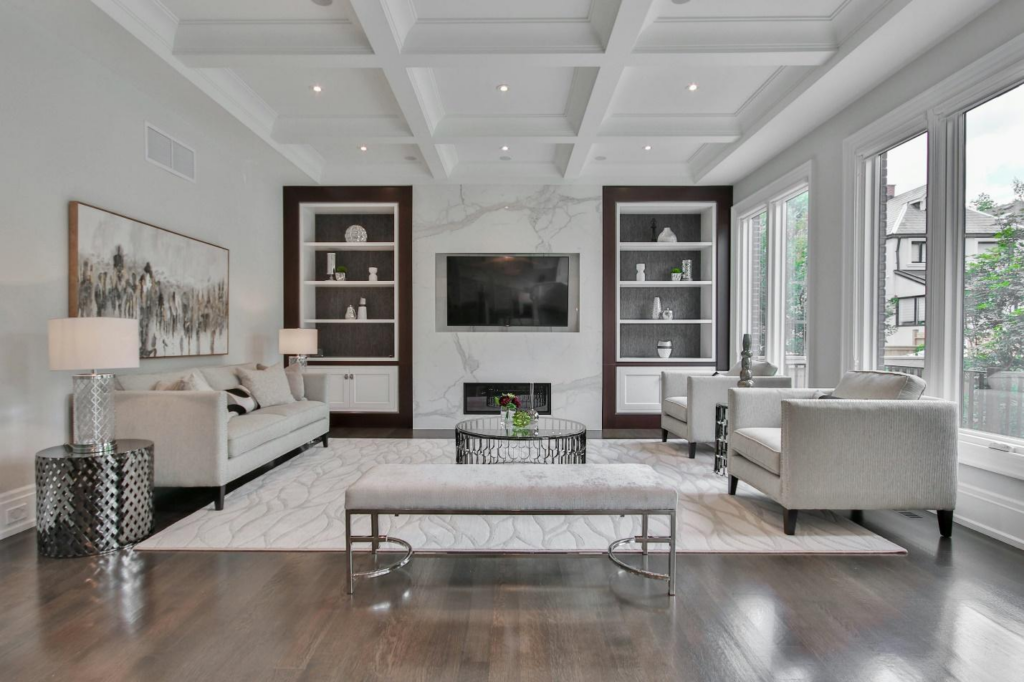
Base colors usually cover larger surfaces and establish the room background. Compare warm, cool and neutral options beside the actual floor and daylight conditions.
Accent and Contrast Colors
Use accent colors on smaller, controlled elements such as cushions, artwork, occasional furniture or selected joinery. Record where each accent appears to prevent an unbalanced result.
Coordinate Walls and Ceilings
Specify paint color, sheen and substrate preparation separately. Large sample boards reveal undertone and gloss more reliably than small chips, especially near windows and artificial lighting.
Compare Floor Undertones
Wood, tile, stone and resilient floors can shift the appearance of nearby colors. The light wood floor guide provides one example of finish coordination.
Coordinate Furniture Upholstery
Approve upholstery beside wall and floor samples. Consider pattern scale, texture, piping and leg finish as part of the palette. Confirm furniture dimensions separately using the standard couch size guide.
Review Curtains and Soft Furnishings
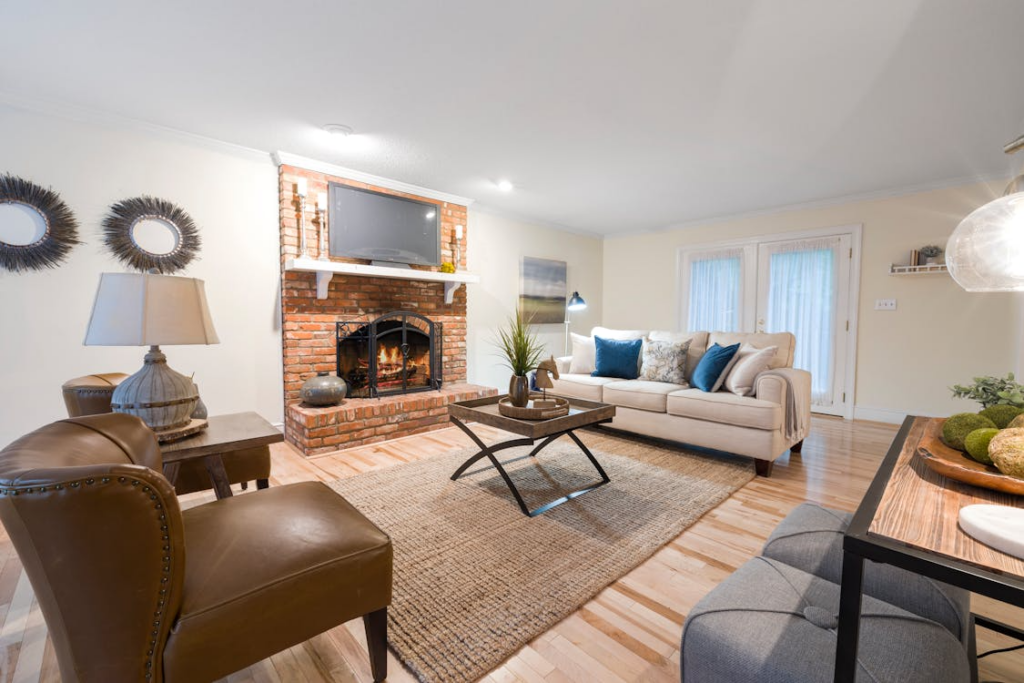
Check curtain fabric, lining, rugs and cushions at their intended scale. Translucent fabrics can change in daylight, so review samples against the window and under evening lighting.
Test Colors Under Project Lighting
Observe sample boards under daylight and the specified lamps. Color appearance changes with lamp characteristics, dimming and surrounding finishes. Coordinate decisions with the interior lighting guide.
Use Texture Without Losing Control
Timber grain, woven textiles, stone and matte paint add variation even within a restrained palette. List material, finish and location rather than describing the room only by color names.
Prepare a Finish Schedule
Give each finish a code, supplier reference, location, substrate and approved sample. Link the schedule to elevations and the furniture plan so installers and suppliers use the same selections.
Build a Room Sample Board
Assemble wall, floor, joinery, upholstery, curtain, metal and stone samples in their approximate proportions. Photograph the approved board, but retain physical samples for comparison during production and installation.
Final Palette Check
Approve the living room palette from coordinated samples and a documented finish schedule. Related decisions can be checked with the interior design styles guide and the furniture and finishes guide.