Choose aluminum or uPVC windows by comparing complete systems that meet the same project requirements. Aluminum is often shortlisted for slender frame options and particular opening configurations. uPVC offers a less conductive frame material and may provide a competitive package price. Neither material name establishes the performance or quality of the finished window.
This aluminum vs uPVC windows guide compares frame construction, maintenance, finishes, whole-window performance and quotation scope. Aluminum is also spelled aluminium, while uPVC is commonly described as PVC-U or vinyl in some markets. Check the actual profile system behind those labels.
Start with the opening sizes, operation, exposure and required performance. Then review the frame, glazing, hardware, seals and installation together, rather than choosing from a photograph or a price per square metre alone.
Aluminum vs uPVC Windows at a Glance
| What to compare | Aluminum windows | uPVC windows |
|---|---|---|
| Frame construction | Metal profiles; thermal-break design varies by system | Hollow polymer profiles; chambers and reinforcement vary by system |
| Visible frame | Slim sightlines are available; check the actual sections | Sightlines depend on the frame, sash and reinforcement design |
| Thermal review | Distinguish thermally broken from non-thermally-broken products | Lower material conductivity does not replace whole-window ratings |
| Finish options | Powder coating, anodizing or other specified factory finishes | White profiles, laminated foils or other approved color systems |
| Maintenance | Follow the finish and hardware care instructions for the exposure | Follow the profile, color-surface and hardware care instructions |
| Size and operation | Limits depend on profiles, glass, hardware and design loads | Limits also depend on reinforcement, finish and system rules |
| Cost comparison | Include the complete specified system and installation scope | Compare the same project requirements and included work |
Our project window and door systems guide connects product selections with dimensions, glazing, hardware and approval information.
Compare Frame Construction and Opening Design
Review the Frame and Sash Sections
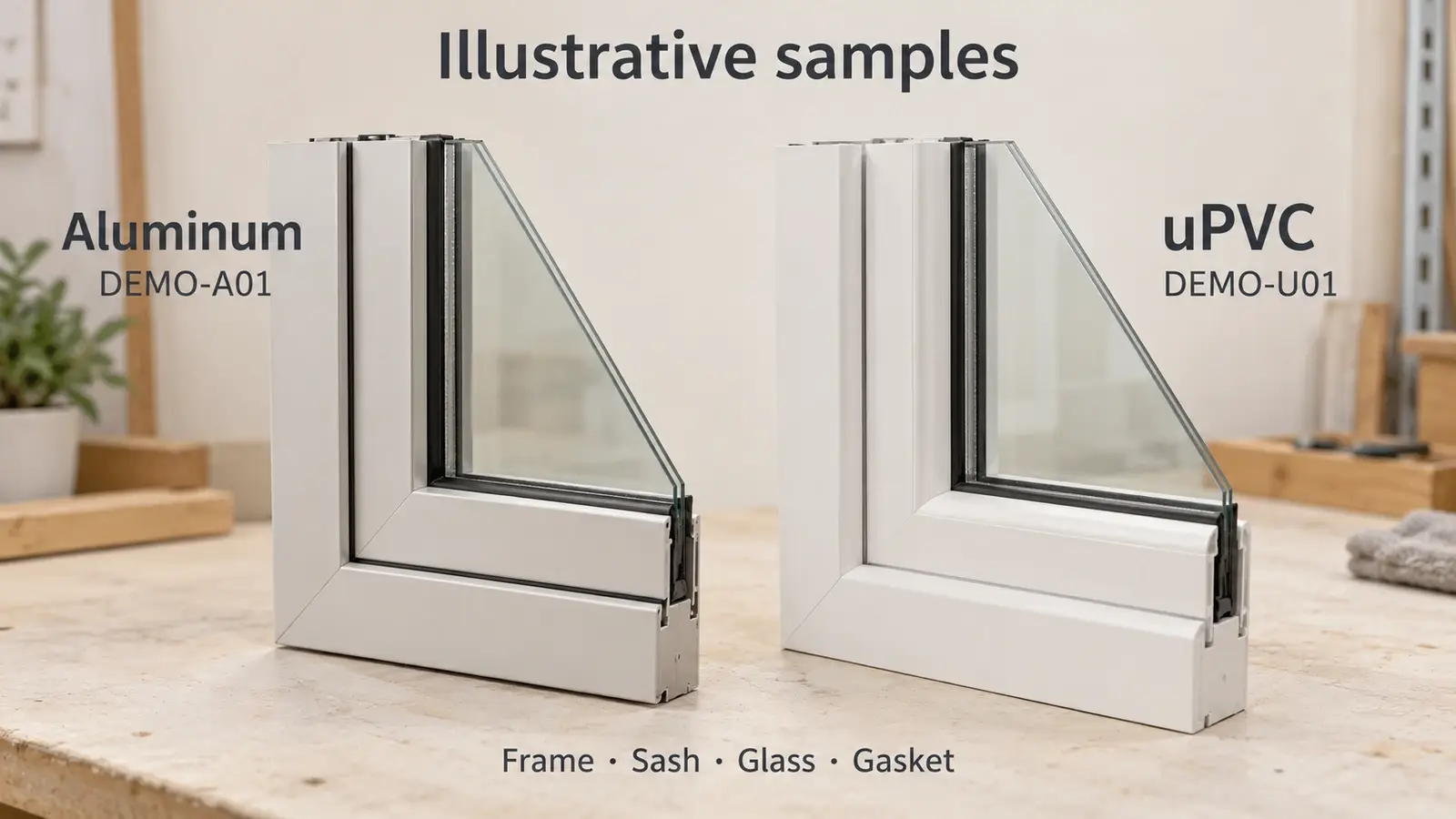
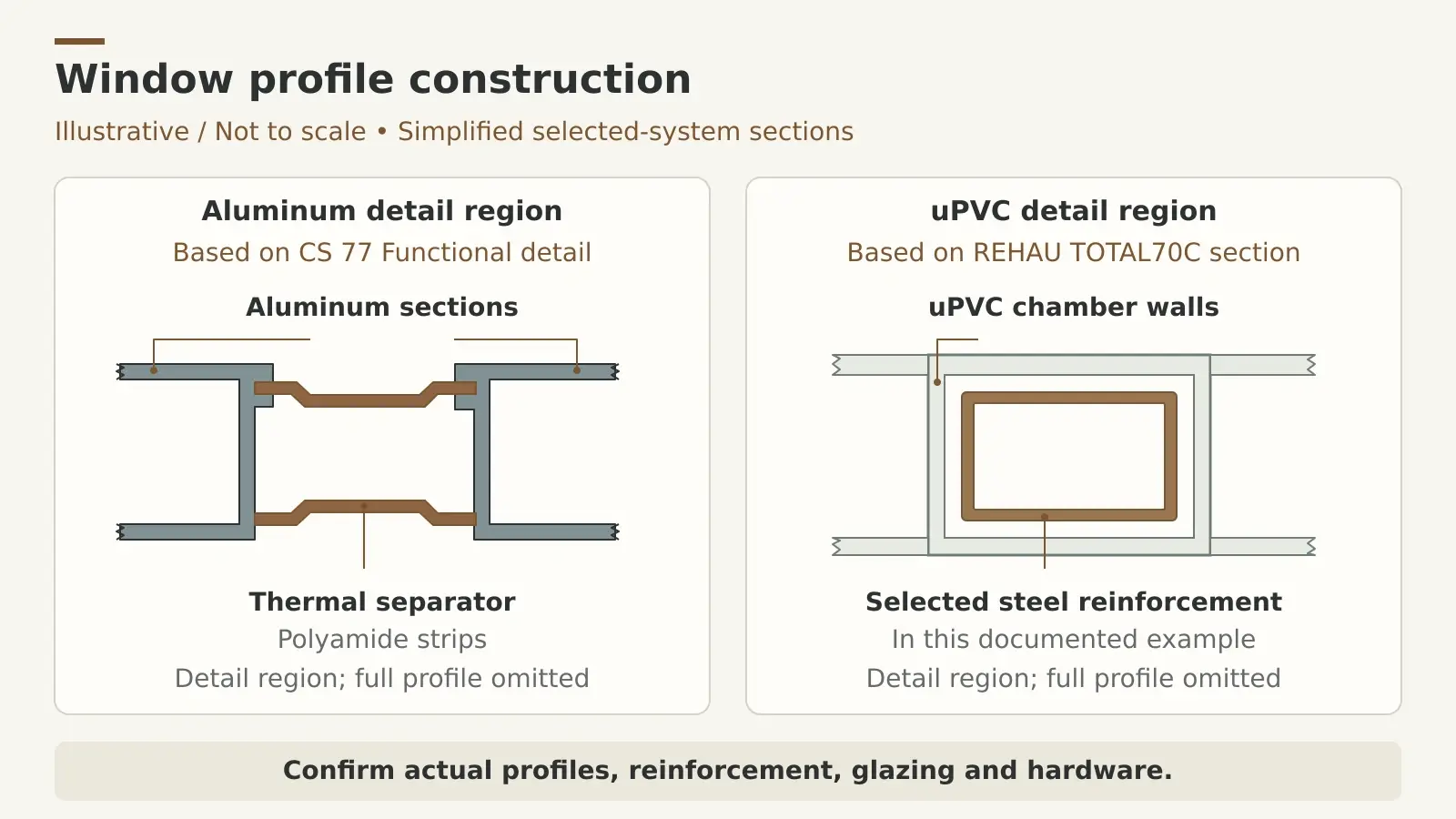
The outer frame, opening sash and any mullions affect the visible width and the glass area. Aluminum systems can offer narrow sections, but a larger opening, heavier glass or higher design load may require different profiles. A slim catalog image is not a dimensioned proposal for every window.
uPVC profiles commonly contain internal chambers and may use steel reinforcement or another engineered reinforcement approach. Not every polymer system uses the same construction. Ask for the proposed sections and reinforcement schedule rather than ranking windows by chamber count alone.
Check the Same Size and Opening Configuration
Compare fixed, casement, sliding or tilt-and-turn units separately. Their seals, hardware and usable openings differ, even when the frame material is the same. Use the window size and opening-type guide to organize the schedule before comparing systems.
Have the supplier verify permitted frame and sash sizes, glass weight and hardware capacity for each configuration. Color, reinforcement and exposure can affect the permitted arrangement, particularly for larger units. A maximum size from one system or finish should not be transferred to another.
Maintenance and Exposure
Clean the Finish and Preserve Drainage
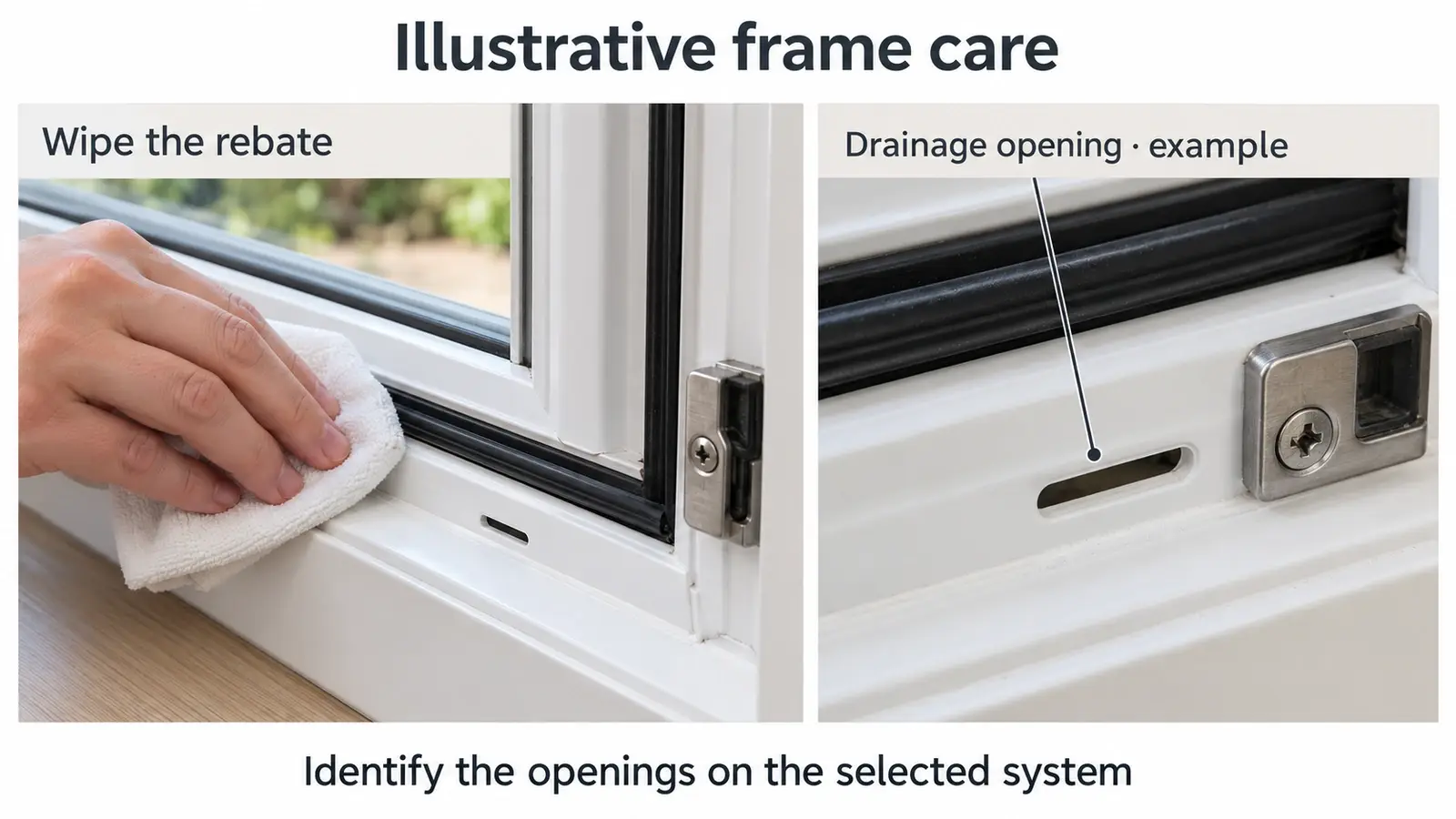
A soft clean cloth and the manufacturer’s approved cleaning solution are a practical starting point for either frame. Follow the care sheet for the actual finish. Solvents, abrasive pads and strong cleaners can damage particular coatings or uPVC surfaces; a cleaner suitable for glass may not be suitable for the surrounding frame.
Keep accessible drainage slots, tracks and frame rebates clear as instructed. Do not seal drainage openings while touching up perimeter joints. Inspect gaskets, handles, locks and hinges, and use only the specified lubrication and adjustment methods. A frame that needs little decorative upkeep still has moving and replaceable parts.
Plan Care for Coastal or Heavily Exposed Locations
Salt deposits, pollution and construction residue can increase cleaning needs. For aluminum, confirm the finish specification, pretreatment, hardware and maintenance requirements for the location. Corrosion resistance is not a reason to leave salt or damaged finishes unattended.
uPVC does not corrode in the same way as metal, but its hardware, reinforcement and fixings may include metal components. Its color surface and profile construction also need to suit the exposure. Ask for the applicable warranty, care schedule and local service arrangements for each quoted system, rather than adopting a universal lifespan figure.
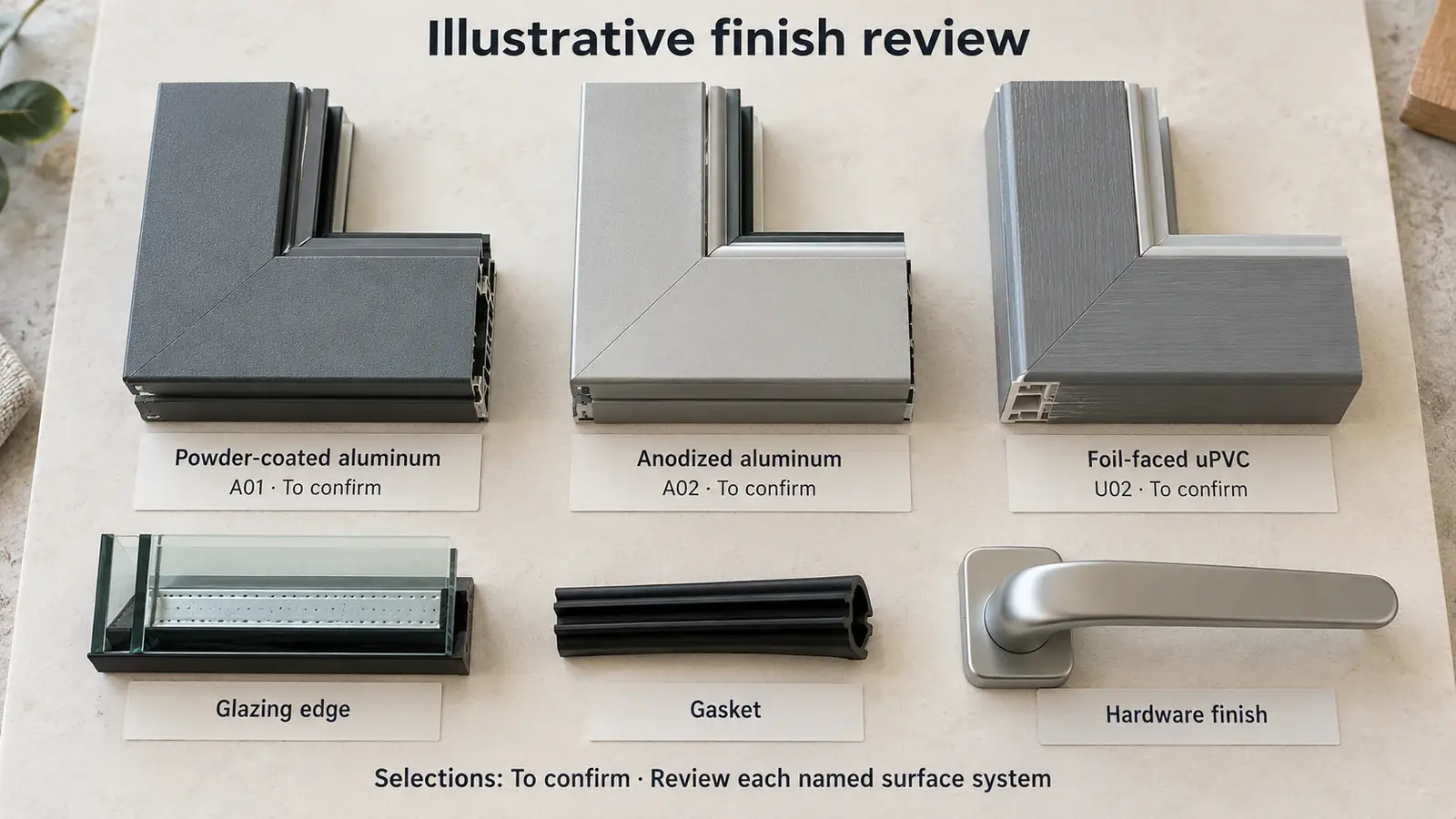
Compare Finishes on Actual Samples
Identify the Factory Surface System
For aluminum, distinguish powder coating from anodizing and other specified treatments. Record the finish product or specification, color, sheen and texture, including any separate interior and exterior requirements. A shared color reference does not guarantee an identical appearance across coatings, substrates or batches.
For uPVC, identify whether the visible surface is the base profile, a laminated foil or another approved finish. Review welded corners, end details, exposed edges and any color change between the face and underlying profile. Ask whether the selected color changes the system’s fabrication or size restrictions.
Approve the Visible Parts Together
View a frame corner sample with the proposed glass, gaskets and hardware under representative daylight and interior lighting. Review the inside and outside faces, corner joints, drainage covers and adjacent trims. Photographs and small digital color swatches are useful for shortlisting, but the identified physical sample should control the appearance review.
Connect the selected finish to the room or elevation references in the finish schedule and sample records. Keep the surface product, color code and approved sample reference together. Obtain product-specific advice before repainting, polishing or repairing either frame type.
Compare Whole Window Performance
Separate Glass Frame and Whole Window U Values
Aluminum conducts heat more readily than uPVC. A thermal break separates conductive sections of an aluminum frame to reduce heat transfer through that path. The complete thermal result still depends on the frame design, glazing, spacer and geometry. The thermal-break aluminium window guide explains the frame distinction in more detail.
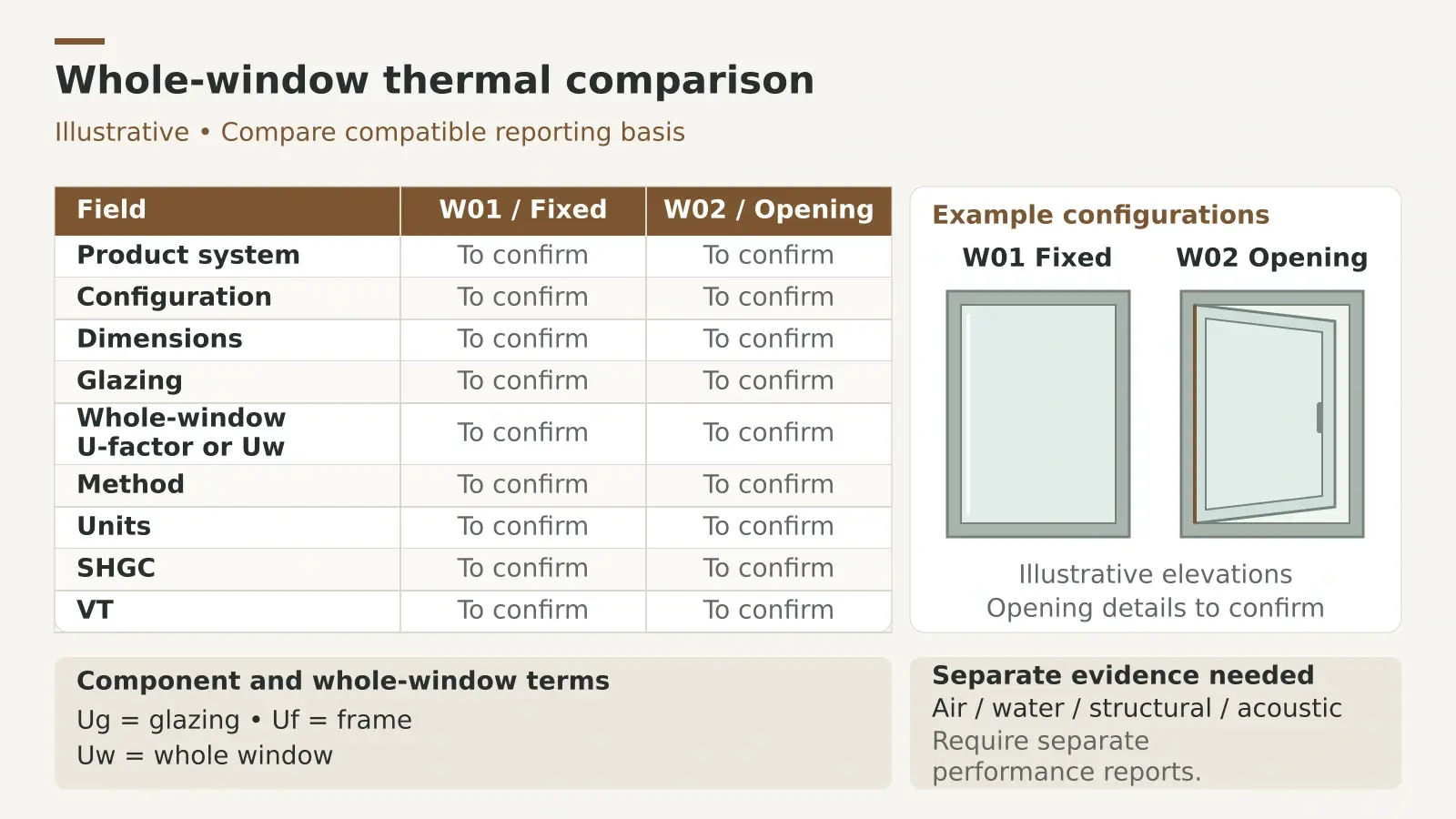
Check what each quoted value describes. In commonly used European notation, Ug refers to glazing, Uf to the frame and Uw to the whole window. A glass-only value should not be presented as the performance of the assembled window. NFRC U-factor ratings also describe a defined product configuration, so retain the supporting product reference.
Lower U-factor or U-value means less non-solar heat transfer when the measurement basis is comparable. Record the units, method, rated dimensions, opening type and glass package. Do not compare an SI value in W/(m2 K) directly with an imperial value in Btu/(h ft2 F), or transfer a rating to a different size without an appropriate basis. Different rating methods may use different conditions and reference sizes; unit conversion alone does not make their results equivalent.
Review Solar Heat and Daylight Separately
Solar heat gain coefficient, or SHGC, describes solar heat admitted through a product. Visible transmittance, or VT, describes transmitted visible light. They answer different questions from U-factor. Climate, orientation, shading, glare and room use help determine suitable targets; the lowest number is not the objective for every measure.
Check whether the supplied figures apply to glass alone or to the complete product under the stated rating method. More glass area or a darker frame does not, by itself, demonstrate better daylight or solar control. Compare the proposed units using the same reporting basis and the actual design brief.
Ask for Evidence Beyond Thermal Ratings
Air leakage, water penetration resistance and structural performance need their own documented basis. Check the test or classification method, specimen configuration, pressure and applicability to the proposed units. A thermal rating does not establish weather resistance, security or suitability for every building exposure.
For noise control, review the complete window construction, seals, vents and installation with an appropriate acoustic rating. Do not assume that a thicker frame, extra glazing pane or laminated glass guarantees a particular room result. Our window glazing construction guide helps separate glass makeup and safety considerations from the frame decision.
Condensation also depends on indoor humidity, surface temperatures, glazing edges and installation details. Neither frame type is automatically condensation-free. Coordinate ventilation and the window-to-wall junction alongside product selection.
Compare Complete Window Quotations
Use One Window Schedule for Both Alternatives
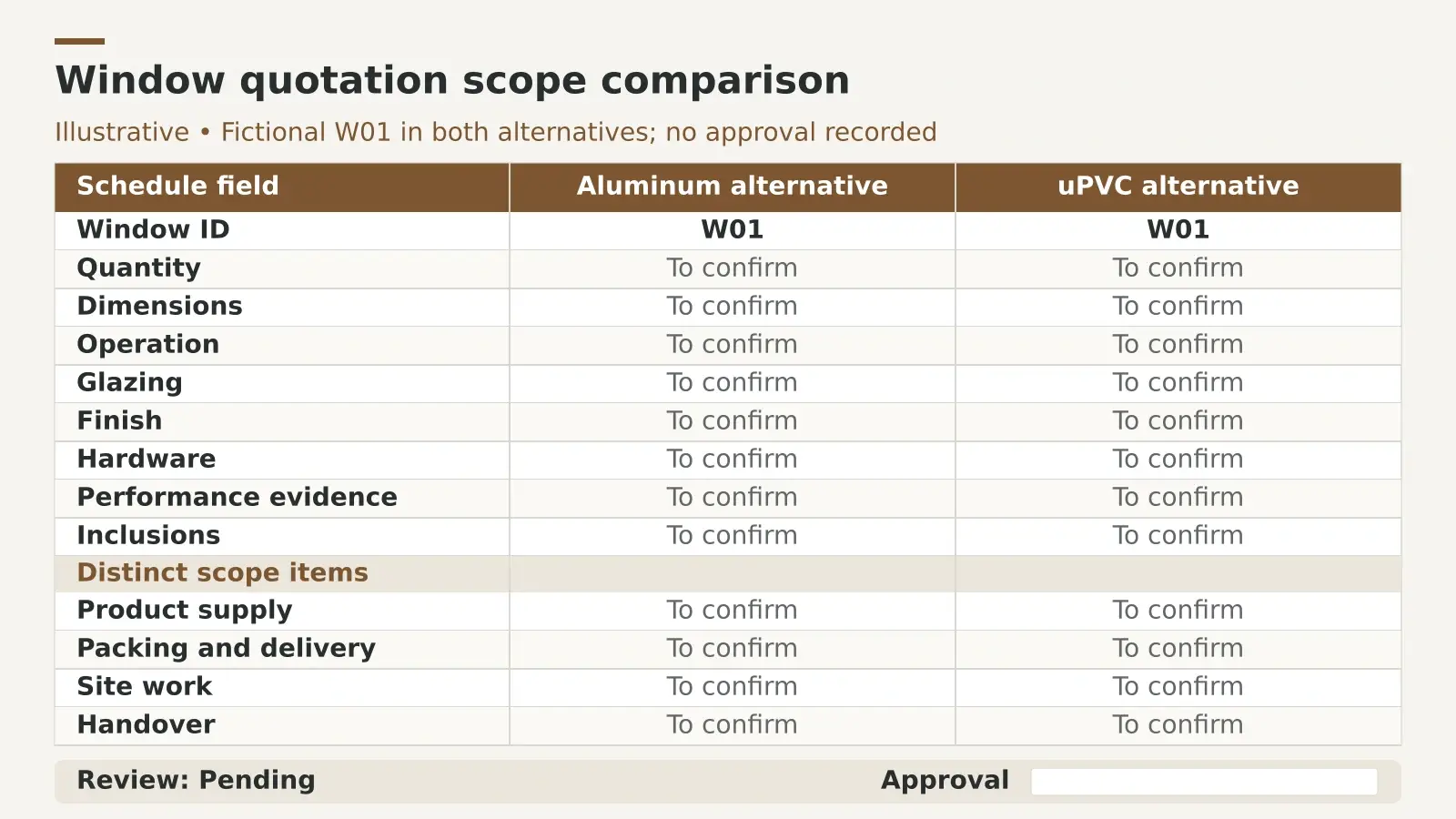
Issue the same window identifiers, quantities, dimensions and opening configurations to each supplier. Define the required performance, appearance and included accessories. If the technical solutions differ, have each supplier state how its complete proposal meets the same requirements rather than disguising the difference inside a single total.
The double-pane window quotation guide covers related glass and scope checks. A quote for fixed units with basic glass cannot be compared directly with opening units that include different glazing, screens and upgraded hardware. A price per area also needs a clear measurement rule and an identified product scope.
Separate Product Supply From Site and Delivery Work
uPVC may offer a lower initial price in some comparisons, but there is no universal material discount or aluminum premium. Profile series, thermal breaks, reinforcement, glass, finish, fabrication, hardware, size and quantity all influence the offer. Compare the specified packages before attributing the price difference to the frame material.
For replacement work, identify whether the existing frame remains or the opening is stripped back. Include removal, disposal, support, fixings, flashing or sill details, perimeter seals, wall repairs and access equipment where required. Installation must suit both the window and the wall assembly; one generic fixing or gap detail will not cover every system.
For delivered products, separate packing, transport, insurance, taxes or duties as applicable, and site unloading from the factory supply price. State the delivery term and destination. Keep installation and commissioning responsibilities clear, including any work performed by others.
What to Confirm Before Ordering
Keep Drawings Samples and Quotation Aligned
| Comparison item | Information to record for each alternative |
|---|---|
| Window schedule | Window ID, quantity, dimensions, opening direction and operation |
| Frame system | Manufacturer, series, profiles and thermal-break or reinforcement details |
| Glazing | Pane makeup, coatings, cavities, gas where specified, spacer and safety requirements |
| Performance evidence | Whole-window ratings, units, method, configuration and applicable test or certification references |
| Finish | Surface system, color, sheen, inside and outside faces and approved sample |
| Hardware and accessories | Locks, hinges, handles, gaskets, screens, restrictors and vents where required |
| Installation interfaces | Support, fixings, drainage, sill or flashing details and perimeter sealing |
| Commercial scope | Currency, validity, delivery term, packing, included work, exclusions and payment terms |
| Handover and changes | Care documents, service parts, warranty terms and approval of substitutions |
Use drawing and sample coordination to keep the approved window schedule, elevations, sections and finishes tied to the same revision. A sample establishes appearance; the technical documents and appropriate evidence establish the specified performance. Review changes to glass, reinforcement or hardware before releasing an alternative for production.
Select the System That Meets the Brief
Shortlist aluminum where the proposed sections, opening options and finish meet the architectural and technical requirements. Shortlist uPVC where its actual profile proportions, performance, maintenance needs and complete quotation suit the project. Make the final choice between identified systems with an agreed installation approach.
For a coordinated review, send your window schedule for comparison, including drawings, quantities, project location, glazing and finish preferences, performance targets and delivery requirements. Mark unresolved information so it can be checked before the quotation becomes an order.
Frequently Asked Questions
Are Aluminum or uPVC Windows More Energy Efficient
Compare the complete products. Thermal-break design, reinforcement, glass, spacers and geometry affect their ratings. Use comparable whole-window values with the same units and reporting basis rather than treating the frame material as an efficiency score.
Are uPVC Windows Always Cheaper Than Aluminum
No fixed price relationship applies to every project. Compare the same window schedule, performance requirements, finish, hardware and supply or installation scope. A lower total may reflect omitted items or a different system.
Which Window Frame Requires Less Maintenance
Both can require relatively little decorative upkeep, but finishes, drainage, seals and hardware still need care. Follow the selected products’ instructions and exposure-related cleaning requirements. Check service access and replacement parts before ordering.
Can Aluminum and uPVC Windows Have the Same Color
They can be selected in similar colors, but the surface systems, texture, sheen and joints may look different. Review physical samples together and identify the inside and outside finishes instead of relying on a color name alone.
Which Material Is Better for Large Windows
The answer depends on the specific system, dimensions, design loads, glass weight, reinforcement and hardware. Ask the supplier to verify the proposed units within the system’s permitted limits. A material label or chamber count does not establish an allowable size.